Table of Contents
Key Takeaway
- 🎯 The Philippines formally joined the Pax Silica Declaration in April 2026: A US-led initiative building secure, resilient supply chains for semiconductors, AI, critical minerals, and advanced manufacturing among trusted allies — positioning the Philippines inside a global network it was previously outside.
- 📊 A 4,000-acre AI-native industrial hub will be built in New Clark City: Designated as the first “Golden Node” — a new model for AI-driven investment acceleration hubs where technology firms, research institutions, and government converge to build the industries of the future.
- 💼 BCDA granted a two-year grace period on lease payments as an unconditional in-kind contribution: After year two, annual lease rates will be determined under a separate agreement. The US has an option for up to a 99-year lease — a term that has sparked both investment excitement and sovereignty debate.
- 🔧 The hub will host critical minerals processing, semiconductors, advanced manufacturing, and AI facilities: Not a data center alone — a full industrial ecosystem designed to move the Philippines from resource extraction to higher-value, technology-driven manufacturing.
- ⏱️ Groundbreaking targeted within two years, with phased development: BCDA President Joshua Bingcang called it “a magnet for all other industries to come” — but both countries have yet to agree on construction costs, precise boundaries, and operational terms.
Pax Silica Philippines is the most significant geopolitical technology development for the country in a generation. It places the Philippines inside a US-led network for semiconductor and AI supply chains — the same networks that are reshaping the global balance of technological power between the United States and China.
On April 16, 2026, the Philippines formally joined the Pax Silica Declaration, a United States-led initiative seeking to build secure, resilient, and innovation-driven silicon supply chains covering critical minerals, semiconductors, AI, and advanced manufacturing. As part of its commitment, the Bases Conversion and Development Authority (BCDA) allocated a 4,000-acre lot in New Clark City, Tarlac, to serve as a Pax Silica Coordination Office — designated as the first “Golden Node,” a new model for AI-native investment acceleration hubs.
For Filipino professionals — engineers, investors, policymakers, and technology leaders — Pax Silica Philippines is not an abstract diplomatic agreement. It is a concrete industrial project that will determine whether the Philippines becomes a participant in the global AI supply chain or remains a bystander while Singapore, Malaysia, and Vietnam capture the opportunity.
What Pax Silica Philippines Actually Is: The Framework Explained
Pax Silica was established in December 2025 as a US-led framework for building secure supply chains among trusted allies. The Philippines became the 13th member in April 2026, joining a network that spans critical minerals, semiconductors, advanced manufacturing, and AI.
| Element | Detail | Why It Matters for the Philippines |
|---|---|---|
| Founded | December 2025 | New framework — Philippines is an early member |
| Members | 13 countries (as of April 2026) | Philippines is the newest — inside a trusted network |
| Scope | Critical minerals, semiconductors, AI, advanced manufacturing | Covers the full technology supply chain |
| Philippine commitment | 4,000-acre hub in New Clark City | First physical Pax Silica project globally |
| Designation | “Golden Node” — first of its kind | New model for AI-native investment acceleration |
| Broader framework | Luzon Economic Corridor (US-Japan-PH trilateral) | Links Clark, Subic, Manila, Batangas — 80% of PH port traffic |
The Luzon Economic Corridor (LEC) is the broader trilateral framework — launched in April 2024 at the inaugural US-Japan-Philippines Leaders Summit — within which Pax Silica sits. The LEC links former American bases at Subic Bay and Clark through Manila to Batangas, handling 80% of Philippine port traffic. Pax Silica is the technology layer on top of this logistics backbone.
The Golden Node: What Makes Pax Silica Philippines Different
The Pax Silica Philippines hub is not a standard industrial park. The Pax Silica Philippines designation as a Golden Node makes it unique. It is designated as a “Golden Node” — a term coined by US Undersecretary of State for Economic Affairs Jacob Helberg to describe a new category of AI-native investment acceleration hub.
“The Golden Node is not about recreating the factories of the last century,” Helberg said in a statement. “It is about building the manufacturing ecosystems of the next century — AI-native from day one, anchored in the rule of law, and integrated into a network of trusted nations that will define global supply chain resilience for decades to come.”
This is a critical distinction. Traditional industrial zones build factories first and add technology later. The Golden Node is designed AI-native from the start — meaning AI systems are embedded in the manufacturing processes, supply chain management, and quality control from day one. This requires a fundamentally different workforce: not just factory workers, but AI-literate engineers, data scientists, and process automation specialists.
The hub will host four categories of industrial activity:
| Category | What It Includes | Career Opportunities |
|---|---|---|
| Critical Minerals Processing | Nickel, copper, cobalt processing for semiconductor and battery supply chains | Materials engineers, process specialists, quality control |
| Semiconductors | Assembly, testing, packaging — with pathway to IC design | Links directly to PH semiconductor roadmap |
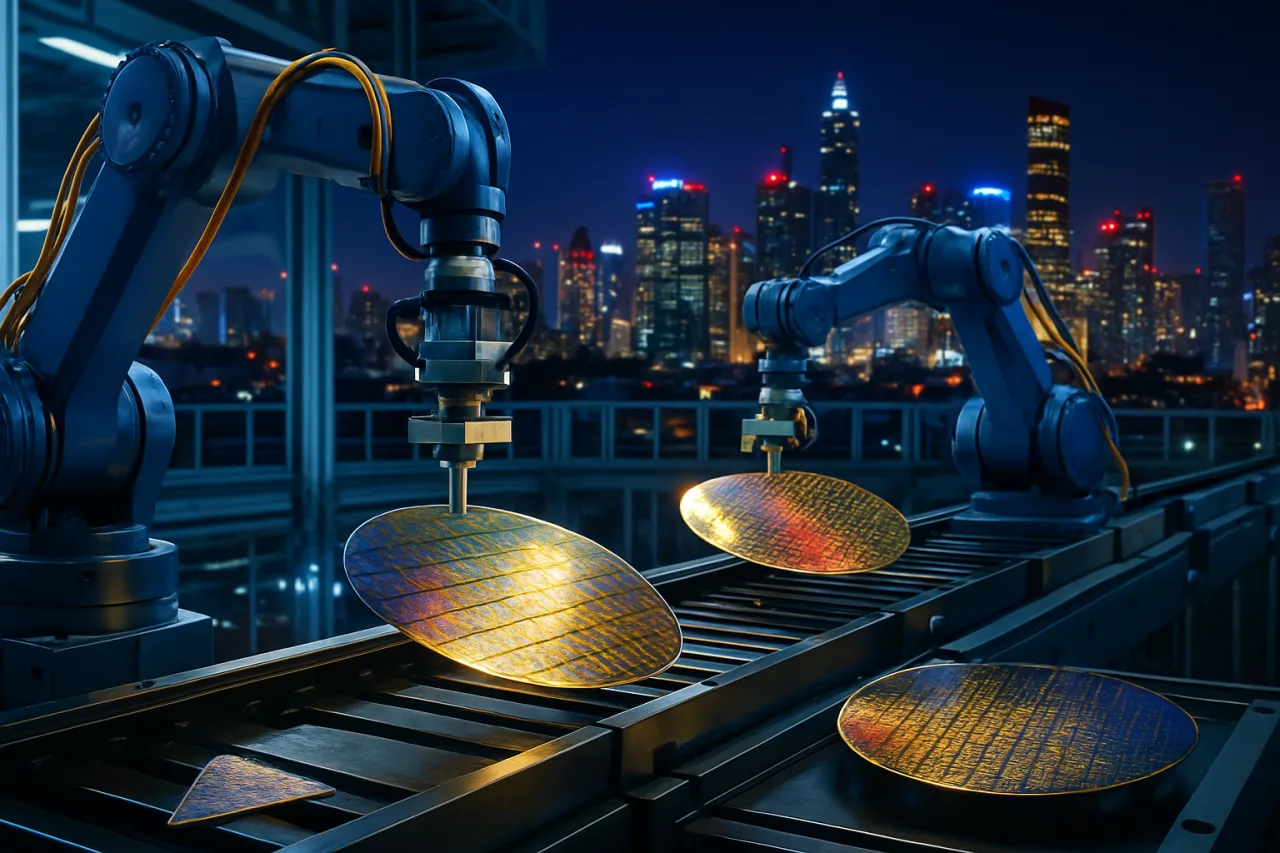
| Advanced Manufacturing | AI-integrated production systems, robotics, automation | Manufacturing engineers, robotics specialists, AI process engineers |
| Artificial Intelligence | AI research, model deployment, data center capacity | AI engineers, data scientists, infrastructure specialists |
How Is Pax Silica Philippines Different From Other Data Center Projects?
The comparison that matters: existing Philippine data center projects sell floor space; Pax Silica Philippines proposes to build an ecosystem. A conventional build — Vitro’s expansions, Equinix’s carrier hotels — wins on delivered megawatts and proven lease models. The Pax Silica Philippines framework bets one level higher: not a building but a zone, not tenants but an industrial chain, with AI-native design standards, economic-security framing, and U.S. partnership structure that no domestic project carries. The distinction has practical consequences. If the ecosystem thesis holds, the hub captures value data centers never touch — manufacturing adjacent to compute, talent pipelines, standards influence. If it does not, the project collapses into a very large conventional data center park with unusual politics. Investors and professionals should therefore track one leading indicator above all: signed anchor tenants with deliverable timelines. Anchor tenants convert blueprints into ecosystems; their absence keeps every figure here a projection. The difference, in one sentence: other projects are real estate with servers; Pax Silica Philippines is an industrial-policy experiment wearing a data center’s clothes.
Related: Philippines Ransomware 2026: AI Now Writes the Attacks — the Five Move
The Lease Structure: Investment Terms and Sovereignty Questions
The Pax Silica Philippines lease structure has been the subject of both investment excitement and political debate in the Pax Silica Philippines context. the subject of both investment excitement and political debate. Here are the facts.
BCDA granted a two-year grace period on lease payments, treated as an unconditional in-kind contribution to support the development of economic cooperation initiatives between the two countries. From the third year onward, the annual lease rate will be determined under a separate agreement. Upon expiration of the initial lease period, the lease is renewable upon mutual written consent of both governments.
BCDA President and CEO Joshua Bingcang confirmed that the US requested a long-term lease arrangement, with reports suggesting up to a 99-year term. The property reverts to the Philippine government upon termination or expiration of the lease.
The sovereignty debate is real. Critics have compared the arrangement to historical extraterritoriality agreements. Supporters argue that the lease structure is standard for large-scale industrial investment and that the Philippines retains sovereign ownership while granting operational control to attract the scale of investment required.
The practical reality: without a long-term lease commitment, major technology companies will not invest billions in facilities on land they could lose. The lease structure is the price of admission to the Pax Silica network — and the Philippines has decided that the economic benefits outweigh the sovereignty concerns.
How Pax Silica Connects to Existing Philippine AI Infrastructure
The Pax Silica Philippines hub does not exist in isolation. The Pax Silica Philippines initiative connects to several existing projects. It connects to several existing initiatives that together form the Philippines’ AI infrastructure strategy.
1. The Clark AI Hub: The Philippines AI Hub Clark — a $10 billion investment project creating jobs for returning professionals — is the existing foundation. Pax Silica builds on this by adding the geopolitical supply chain framework and the Golden Node designation.
2. PAIIM 2033: The Philippines AI Infrastructure Masterplan targets $30 billion in AI and digital infrastructure investment. Pax Silica is a concrete project within this broader framework — the physical manifestation of the PAIIM 2033 vision.
3. Semiconductor Roadmap: The PSEI Roadmap targets $110 billion in semiconductor and electronics exports by 2030, including training 128,000 professionals and building three national laboratories. Pax Silica provides the international partnership framework to support this transition from assembly to design.
4. Data Center Market: The Philippines data center market is growing at 22.50% CAGR. The Pax Silica hub will require significant data center capacity for its AI-native manufacturing operations — driving further growth in the domestic data center market.
5. ASEAN AI Summit: The ASEAN AI Summit in September 2026 will address the “sovereign compute gap” — the lack of domestic computing infrastructure in most ASEAN nations. Pax Silica is the Philippines’ answer to that gap: building AI infrastructure through international partnership rather than domestic investment alone.
The Geopolitical Context: Why Pax Silica Philippines Matters
The Pax Silica Philippines partnership must be understood within the broader Pax Silica Philippines geopolitical context. within the broader US-China technology rivalry. The US is actively building a network of trusted allies to diversify semiconductor and AI supply chains away from China-dependent pathways. The Philippines offers several strategic advantages.
| Advantage | Why It Matters to the US | What the Philippines Gets |
|---|---|---|
| Geographic location | Proximity to Taiwan, South China Sea — strategic positioning | Investment, technology transfer, job creation |
| Existing semiconductor base | PH already does assembly/testing for TI, Panasonic, Samsung | Pathway to higher-value manufacturing |
| Critical minerals | PH accounts for 25.41% of global nickel exports (2024) | Domestic processing — moving up from raw extraction |
| English-speaking workforce | Seamless integration with US companies and standards | Training and upskilling opportunities |
| US-Philippines alliance | Existing military and economic partnership | Preferred partner status in supply chain diversification |
| Clark as former US base | Existing infrastructure, familiar terrain | Redevelopment of former military assets into tech hubs |
The critical minerals connection is particularly significant. In 2024, the Philippines accounted for 25.41% of global nickel exports, supported by reserves estimated at 444 million metric tons. Philippine mineral exports rose from $6.20 billion in 2024 to $7.62 billion in 2025. The Pax Silica hub ensures these resources undergo domestic processing and value addition — rather than being exported raw and processed elsewhere.
This is the core economic logic of Pax Silica for the Philippines: move from exporting raw materials to processing them domestically, using AI-native manufacturing to capture more value within the country. Finance Secretary Frederick Go put it directly: “By joining Pax Silica, the Philippines is ensuring that our mineral resources and strategic location are not simply supporting global industries from the margins, but are actively harnessed to build the industries of the future.”
The Investment and Job Creation Potential
The Pax Silica Philippines hub is expected to attract significant investment in the Pax Silica Philippines framework. significant investment, though specific figures depend on negotiations still underway. What we know:
| Metric | Figure | Source |
|---|---|---|
| Land allocated | 4,000 acres (1,618 hectares) | BCDA |
| Location | New Clark City, Tarlac — Luzon Economic Corridor | BCDA |
| Lease grace period | 2 years (unconditional in-kind contribution) | BCDA proposal |
| Groundbreaking target | Within 2 years (phased development) | BCDA President Bingcang |
| Interested companies | 5 companies from East Asia and America expressed interest | Trade Undersecretary Rodolfo |
| Mineral exports (2025) | $7.62 billion (up from $6.20B in 2024) | BOI |
| Nickel export share | 25.41% of global | BOI |
| US FDI increase | 91% year-on-year (Jan-Oct 2025) | BOI |
Trade Undersecretary Ceferino Rodolfo told reporters that five companies from East Asia and America have already reached out to express interest, citing the significance of Pax Silica to their investment plans. The hub is not exclusive to American locators — companies from any Pax Silica member nation can participate.
BCDA President Bingcang described the project’s broader economic vision: “The partnerships have been forged. Now comes the work. We will put the Philippines at the center of the global AI supply chain, not at its edges. The 4,000-acre AI-native industrial acceleration hub in the Luzon Economic Corridor is a statement of where this nation is headed: toward AI, toward advanced manufacturing, toward genuine economic sovereignty.”
What Filipino Professionals Should Do Now
1. Engineers: Develop AI-Native Manufacturing Skills
The Golden Node will need engineers who understand both manufacturing and AI. If you are a manufacturing engineer, learn how AI integrates into production systems — predictive maintenance, quality inspection, process optimization. If you are an AI engineer, learn manufacturing processes. The intersection is where the highest-value roles will be.
2. Investors: Watch the Lease Agreement and Locator Announcements
The specific terms of the lease — annual rate after year two, precise boundaries, operational conditions — will determine the project’s financial structure. When specific companies announce locator status, investment opportunities will follow. The VITRO REIT IPO and the broader data center market are connected investment vehicles.
3. Policy Professionals: Engage with the Sovereignty Debate
The 99-year lease question is a legitimate policy issue. Filipino professionals in law, public policy, and international relations should engage with this debate — not to obstruct the project, but to ensure the terms protect Philippine interests while attracting the investment needed.
4. Students: Choose Programs Aligned with Pax Silica Industries
Materials engineering, semiconductor design, AI engineering, and advanced manufacturing are the skill areas the Golden Node will demand. The AI talent gap means these skills are already in shortage. Students who choose these programs now will graduate into a market desperate for their skills.
5. Entrepreneurs: Identify Service Gaps in the Golden Node Ecosystem
A 4,000-acre industrial hub needs supporting services: construction, logistics, equipment maintenance, workforce training, catering, transportation, and security. Filipino entrepreneurs wh
… [OUTPUT TRUNCATED – 26,500 chars omitted out of 76,427 total] …
y building a network of trusted allies to diversify semiconductor and AI supply chains away from China-dependent pathways. The Philippines offers several strategic advantages.
| Advantage | Why It Matters to the US | What the Philippines Gets |
|---|---|---|
| Geographic location | Proximity to Taiwan, South China Sea — strategic positioning | Investment, technology transfer, job creation |
| Existing semiconductor base | PH already does assembly/testing for TI, Panasonic, Samsung | Pathway to higher-value manufacturing |
| Critical minerals | PH accounts for 25.41% of global nickel exports (2024) | Domestic processing — moving up from raw extraction |
| English-speaking workforce | Seamless integration with US companies and standards | Training and upskilling opportunities |
| US-Philippines alliance | Existing military and economic partnership | Preferred partner status in supply chain diversification |
| Clark as former US base | Existing infrastructure, familiar terrain | Redevelopment of former military assets into tech hubs |
The critical minerals connection is particularly significant. In 2024, the Philippines accounted for 25.41% of global nickel exports, supported by reserves estimated at 444 million metric tons. Philippine mineral exports rose from $6.20 billion in 2024 to $7.62 billion in 2025. The Pax Silica hub ensures these resources undergo domestic processing and value addition — rather than being exported raw and processed elsewhere.
This is the core economic logic of Pax Silica for the Philippines: move from exporting raw materials to processing them domestically, using AI-native manufacturing to capture more value within the country. Finance Secretary Frederick Go put it directly: “By joining Pax Silica, the Philippines is ensuring that our mineral resources and strategic location are not simply supporting global industries from the margins, but are actively harnessed to build the industries of the future.”
The Deeper Question: Economic Sovereignty or Strategic Dependency?
The Pax Silica Philippines hub raises a question about the Pax Silica Philippines long-term impact. that every Filipino professional and policymaker must grapple with: does joining a US-led supply chain network build economic sovereignty or create strategic dependency?
The answer depends on execution. If the Philippines uses Pax Silica to build domestic capability — training engineers, establishing national laboratories, developing indigenous AI and semiconductor expertise — then it strengthens sovereignty. If the hub becomes an enclave where foreign companies operate with foreign workers on Philippine soil, it replicates the colonial economic model that the country has spent decades trying to escape.
The Microsoft Philippines AI agenda, the AI automation roadmap, and the BPO transformation are all parallel efforts that must align with Pax Silica. Building AI infrastructure requires building chips. Building chips requires building engineers. Building engineers requires building the education and training infrastructure that the semiconductor roadmap envisions.
The window is narrow. Bingcang said groundbreaking is targeted within two years. The ASEAN AI Summit in September 2026 will shape the regional framework. The cloud computing market is growing at 22.50%. The pieces are in motion. Whether they come together as an integrated strategy or remain disconnected initiatives will determine whether Pax Silica becomes the foundation of Philippine economic sovereignty — or another chapter in the country’s complex relationship with foreign power.
The New Clark City Hub: Numbers vs. Ground Truth
The pitch document is extraordinary. A 4,000-acre AI-native industrial hub in New Clark City — already home to government-backed infrastructure, a railway connection to Manila, and master-planned room to expand — projected to draw $40–70 billion in investments and generate 130,000-plus jobs, as the Inquirer’s editorial analysis of the initiative details. BCDA President Joshua Bingcang has said groundbreaking for the first phase could occur within two years, before the end of the Marcos administration in 2028 — a deadline that is simultaneously a commitment device and a political clock.
The ground truth, per the Avasant assessment of the program: as of late April, neither government had disclosed anchor tenants, specific investment commitments, or a construction timeline. Five companies — in AI-tech manufacturing, transition energy, and infrastructure — had expressed interest through the Board of Investments, but none formally named. Defense Secretary Gilberto Teodoro Jr. confirmed publicly that “there are no firm documents yet.” None of this makes the project unreal; it makes it young. The distance between a signed framework and a functioning fab is measured in years, financing rounds, and one ingredient New Clark City has not yet secured: a marquee tenant whose name moves capital the way a headline can’t.
Why the Peso Story and the Pax Silica Philippines Bet Collide
Here is where the industrial policy meets your wallet. On August 27, the Bangko Sentral ng Pilipinas raised its policy rate to 5 percent as the peso sank to new lows — and in the same news cycle, BSP Governor Eli Remolona pointed to two structural supports for the currency: export growth and, by name, Pax Silica. The logic is straightforward: the peso’s structural weakness reflects an import-heavy, remittance-dependent balance of payments, and the cure every administration has chased for decades is the same — export industries that bring dollars in at scale. Semiconductor and electronics exports are the Philippines’ largest goods export category, and a successful AI-supply-chain hub would deepen exactly that account.
This is also why the initiative matters beyond the industrial estates. Our recent coverage of the LEAP 2026 Riyadh summit documented how aggressively Gulf capitals are buying into AI infrastructure, and the Philippine AI infrastructure buildout is the domestic chapter of the same global race: countries are competing to host the physical layer of artificial intelligence — the fabs, data centers, and power plants — because hosting the layer means capturing the jobs, the investment, and the currency flows. The BSP’s rate decision is monetary defense; Pax Silica is the industrial offense. A peso-earning professional should read them as one strategy wearing two uniforms.
Is Pax Silica Philippines a Good Investment?
Honest framing: Pax Silica Philippines is a development bet, not a stock — retail Filipinos cannot buy it directly today, and the investment question resolves in stages. Stage one is the lease and anchor-tenant structure (the state developer’s terms decide whether the hub fills with paying tenants or stays a blueprint). Stage two is the listed proxies: construction firms, power generators, and telco-data center players that the 4,000-acre buildout would feed — the trades our data center and AI-infrastructure coverage tracks. Stage three, years out, is whether the hub mint companies reach listing age. The disciplined read: treat every dollar figure — $40-70 billion projected attraction, 130,000+ jobs — as a projection attached to a timeline that has not yet broken ground, and size expectations accordingly. The investment case improves materially when groundbreaking is announced with named anchor tenants; until then, the honest answer to whether it makes you money is: not directly, and not yet — but the second-order winners (power, construction, connectivity) are tradeable while the main event is still a blueprint.
Who Actually Gets the 130,000 Jobs
The Pax Silica Philippines jobs projection deserves its own audit, because “130,000 jobs” is a headline, not a hiring list. The hub’s design connects technology firms, research institutions, and government agencies around semiconductors, AI, and advanced manufacturing — which means the demand will concentrate in three skill layers. First, fab-adjacent technical roles: semiconductor assembly and test operators, equipment technicians, quality engineers — the traditional strength of Philippine export-processing zones, and the easiest pipeline to fill. Second, the AI-native layer: data-center operations, model-support engineering, and the AI-oversight roles our coverage of AI’s reach into management identified as this decade’s appreciating skill set. Third, the construction-and-services halo: energy, water, logistics, housing, and the entire service economy that follows 100,000 workers into a corridor.
The sequencing matters for career planning. Anchor-tenant announcements will trigger the first wave — facility engineers, commissioning specialists, and the BPO-adjacent administrative layer. Construction itself will employ tens of thousands, but the durable middle class comes from the second and third hiring cycles, when suppliers cluster and training pipelines mature. The professionals who earn semiconductor and data-center certifications in the next 24 months — before the hub’s demand peaks — will meet the first wave with credentials already in hand, mirroring the readiness gap our outsourcing AI readiness analysis flagged for the country’s services sector.
The Risks: What Could Keep Pax Silica Philippines on Paper
Three risks could hold the Pax Silica Philippines project at rendering-stage, and honest analysis names them. First, capital reality: $40–70 billion is a figure larger than the Philippines’ entire annual foreign direct investment inflow — the projection only works with sustained U.S. corporate commitment, and U.S. corporate commitment follows incentives, subsidies, and geopolitical stability, none of which are Philippine variables to control. Second, the anchor-tenant vacuum: industrial hubs are chicken-and-egg systems — suppliers follow anchor manufacturers, workers follow suppliers, and without the first anchor, every subsequent commitment defers. Third, precedent: the Philippines has announced ambitious tech corridors before, and the difference between announcement and operation is precisely the execution machinery — power reliability, permitting speed, and the unglamorous infrastructure that investors audit before breaking ground.
Against those risks stands one structural fact: the geopolitical engine behind Pax Silica is not Filipino enthusiasm but American supply-chain anxiety. The initiative exists because Washington wants trusted semiconductor capacity outside concentrated East Asian supply chains — and treaty-ally geography, English-speaking technical talent, and existing electronics exports make the Philippines one of the few credible candidates. That tailwind does not guarantee the hub gets built. It does mean the world’s largest economy has reasons to keep the conversation alive — and reasons to keep sending delegations, signing frameworks, and issuing announcements like April 16’s.
FAQ: Pax Silica Philippines 2026
What is Pax Silica?
Pax Silica is a US-led initiative established in December 2025 to build secure, resilient, and innovation-driven supply chains for semiconductors, AI, critical minerals, and advanced manufacturing among trusted allied nations. The Philippines became the 13th member in April 2026.
What is the Golden Node in the Philippines?
The Golden Node is the designation for the 4,000-acre AI-native industrial acceleration hub in New Clark City, Tarlac. It is the first physical Pax Silica project globally — a new model where technology firms, research institutions, and government agencies converge to build AI-integrated manufacturing ecosystems.
How large is the Pax Silica Philippines hub?
The hub covers 4,000 acres (approximately 1,618 hectares) within New Clark City, located in the Luzon Economic Corridor. It is the first Pax Silica Coordination Office established globally.
What is the lease arrangement for the Pax Silica hub?
BCDA granted a two-year grace period on lease payments as an unconditional in-kind contribution. From year three, annual lease rates will be determined under a separate agreement. The US has an option for up to a 99-year lease, with the property reverting to the Philippine government upon expiration.
What industries will the Pax Silica hub host?
The hub will host four categories: critical minerals processing (nickel, copper, cobalt), semiconductors (assembly, testing, packaging with pathway to IC design), advanced manufacturing (AI-integrated production), and artificial intelligence (research, deployment, data centers).
When will the Pax Silica hub break ground?
BCDA President Joshua Bingcang stated that groundbreaking for the first phase is targeted within two years. Development will be phased. Both countries have yet to agree on construction costs, precise boundaries, and operational terms.
How does Pax Silica relate to the Clark AI Hub?
The Clark AI Hub is the existing $10 billion investment project. Pax Silica builds on this by adding the geopolitical supply chain framework and the Golden Node designation. Together, they form an integrated AI infrastructure strategy for the Clark-New Clark City region.
Why did the US choose the Philippines for Pax Silica?
The Philippines offers geographic proximity to Taiwan and the South China Sea, an existing semiconductor assembly base (Texas Instruments, Panasonic, Samsung), critical minerals (25.41% of global nickel exports), an English-speaking workforce, and an existing US-Philippines alliance with military and economic ties.
What are the sovereignty concerns around Pax Silica?
The 99-year lease option has raised comparisons to historical extraterritoriality arrangements. Critics worry about foreign control of Philippine land. Supporters argue the lease structure is necessary to attract the scale of investment required, and that the Philippines retains sovereign ownership while granting operational control.
How can Filipino professionals benefit from Pax Silica?
Engineers should develop AI-native manufacturing skills. Investors should watch lease agreements and locator announcements. Students should choose programs in materials engineering, semiconductor design, and AI. Entrepreneurs should identify service gaps in the 4,000-acre hub ecosystem.
This article is based on announcements from the Bases Conversion and Development Authority (BCDA), the Board of Investments (BOI), US State Department statements, and publicly available Philippine government data. Investment figures and timelines are estimates and may change as negotiations between the Philippines and the United States continue.