Table of Contents
Key Takeaway
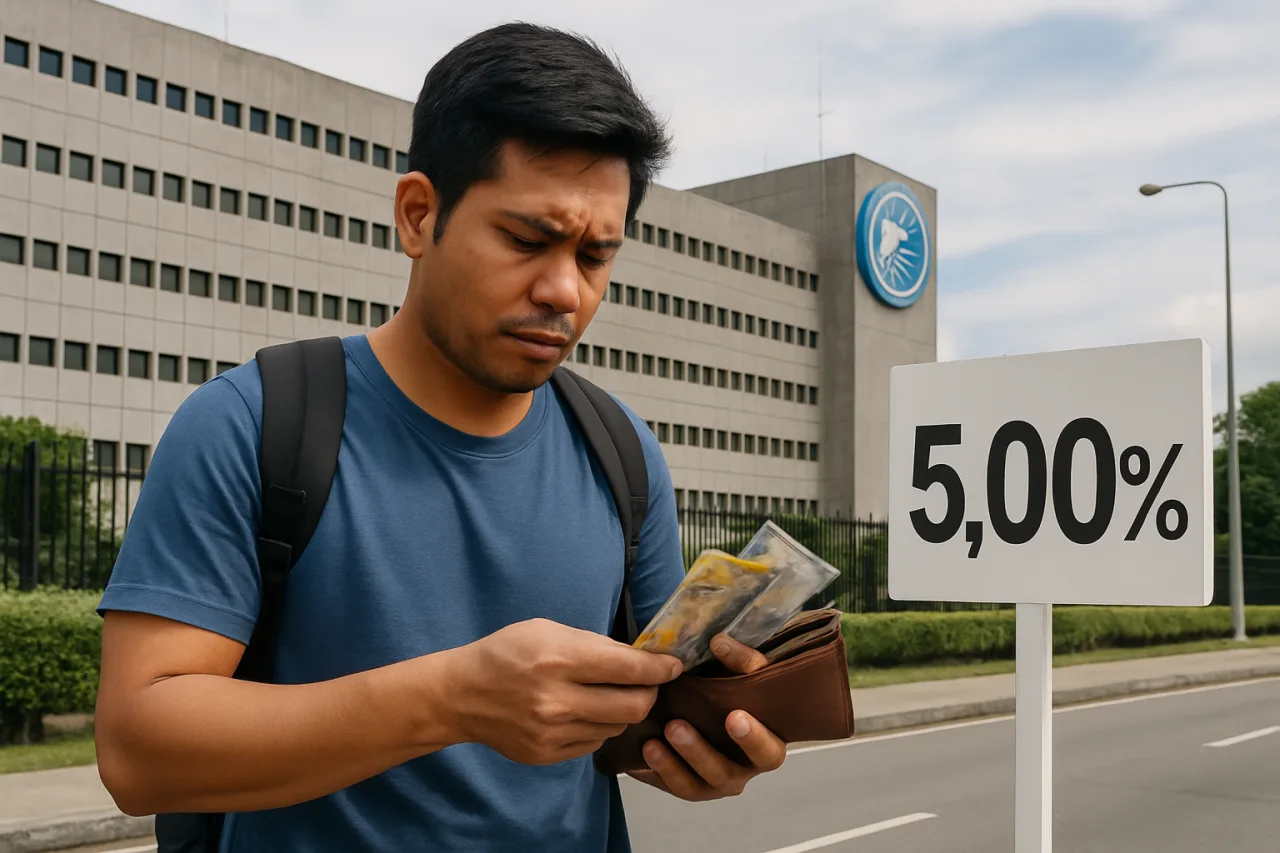
- 📈 The move: On August 27, 2026, the Monetary Board raised the benchmark policy rate by 25 basis points to 5.00 percent — the third straight increase of the BSP rate hike 2026 cycle, following April and June.III
- 🔥 The driver: Oil-price volatility from the Iran war kept imported inflation alive; July inflation printed at 6.2 percent, more than two points above the BSP’s 2-4 percent target band.
- 🏦 Borrowers pay, savers gain: Variable-rate loans reprice higher over the coming months, while time deposits, PERA and high-yield savings accounts finally earn returns worth the paperwork.
- 💸 The peso wrinkle: The peso closed at a record-low ₱61.888 per dollar on August 27 — a windfall for families receiving remittances, one that inflation quietly erodes.
- 📅 What to watch: The BSP rate hike 2026 cycle may not be over — Bank of America expects it to end here, MUFG warns of two more. Next decisions: October 22 and December 17, 2026.
BSP rate hike 2026 is no longer a forecast — it is the reality every Filipino household with a loan, a savings account, or a family waiting on remittances now lives with. On August 27, the Monetary Board lifted the benchmark rate by 25 basis points to 5.00 percent, the third consecutive increase since the tightening cycle began in April, and the clearest signal yet that the central bank is willing to slow the economy down to drag inflation back inside its target band. The popular reaction treats that as bad news, full stop. The more useful reading is different: a 5.0 percent policy rate redraws the map of where money earns and where money bleeds — and for OFW families, who live on both sides of the exchange rate, the map holds more opportunity than the headlines suggest.
This is not an abstract monetary-policy story. The BSP rate hike 2026 lands in three places at once: the monthly amortization on a housing loan, the yield on a time deposit, and the peso value of every dollar sent home from Riyadh, Dubai or Singapore. The sections below walk through each one, using the Bangko Sentral ng Pilipinas’ own monetary policy statements and the freshest research from Bank of America and MUFG — and end with the concrete moves worth making before the next Monetary Board meeting on October 22.
Why the BSP Rate Hike 2026 Happened Now
Three consecutive hikes tell the story of an inflation problem that refuses to die quietly. The Monetary Board raised the Target Reverse Repurchase (RRP) rate from 4.25 percent to 4.50 percent on April 23, to 4.75 percent on June 18, and to 5.00 percent on August 27 — a full percentage point of tightening in just over five months. In its post-meeting statement, the BSP acknowledged the trade-off in one line that deserves to be quoted in full: “Headline inflation has eased, although oil prices remain volatile.” Eased is doing heavy lifting there. July’s print came in at 6.2 percent — an ‘easing’ that still left prices rising faster than almost anything a Filipino paycheck can catch — and it sits more than two percentage points above the top of the BSP’s 2-4 percent target band.
The villain in this story is not Filipino shoppers spending too much. It is oil. The Iran war has kept crude prices swinging hard enough to feed directly into transport fares, power rates and food costs — the three line items where a Filipino family budget bleeds first. Central Banking reported that the BSP expects average headline inflation to breach the tolerance ceiling in both 2026 and 2027, with core inflation showing “broadening price pressures” beneath the surface. When a price shock comes from abroad, a central bank cannot make crude cheaper. What it can do — what this third hike is designed to do — is stop that shock from feeding into wages, expectations, and a second round of price increases that would be far harder to reverse.
Markets had already priced the move in. The PSEi slipped below the 6,200 support level on August 25 as investors sat on their hands ahead of the decision, and Bank of America had called it weeks in advance — its August 5 note projected the BSP would deliver a third 25-basis-point hike on August 27 if July inflation settled where it did, and that this would mark the end of the cycle. The hike itself, in other words, surprised nobody. The currency’s reaction on the same afternoon surprised everybody.
What the BSP Rate Hike 2026 Actually Changes for Your Money
A policy rate is invisible until it lands in a bill or a bank statement. Here is the scoreboard of this tightening cycle so far, and where the next 25 basis points show up in real accounts.
| Meeting date | Move | New RRP rate | What it followed |
|---|---|---|---|
| April 23, 2026 | +25 bps | 4.50% | Inflation outlook deteriorating |
| June 18, 2026 | +25 bps | 4.75% | Oil shock from the Iran war |
| August 27, 2026 | +25 bps | 5.00% | July inflation at 6.2% |
Loans get more expensive — with a lag. Housing loans, personal loans, auto financing and credit card balances in the Philippines mostly price off the BSP benchmark through each bank’s own lending rates, so variable-rate borrowers will see repricing notices land over the next one to two quarters rather than overnight.
The arithmetic is unglamorous but real: on a ₱2 million, 20-year housing loan, the difference between a 6.5 percent and a 7.0 percent rate is roughly ₱600 more per month — about ₱7,000 a year, for the same house, same job, same family. Borrowers on multi-year fixed rates are shielded until their fixing period ends, which is exactly why the practical advice this cycle is consistent: if your loan reprices within the next twelve months, ask your bank about longer fixed-rate terms now, while lenders are still competing for quality borrowers rather than defending margins against defaults.
Savings finally earn something worth noticing. The mirror image of expensive credit is better deposits. Banks pass benchmark increases into time-deposit and savings yields with a lag, and the digital banks that already advertise 4 to 6 percent on savings have fresh room to nudge upward — the exact environment where PERA time deposits, which wrap those yields in tax-free treatment, become proportionally more attractive for money you will not touch for a few years.
For payroll earners parking an emergency fund in 3-to-6-month time deposits, this is the first window in the entire cycle where parking cash pays a yield that visibly outpaces the appearance of the rate cut everyone was hoping for. Money that sat in a 1 percent savings account out of habit is now, politely, being wasted.
Something the headlines rarely say out loud: the BSP rate hike 2026 also sets a ceiling on how much further banks can push lending rates without choking off borrowing altogether. The BSP does not want to crush the economy; it wants to cool prices. Analysts at BofA estimate growth slows to 2.5 percent this year and 3.5 percent in 2027 under this policy path — a deliberate deceleration, not a crash. That distinction matters for anyone deciding between borrowing now or waiting: this is a cycle to respect, not to panic about.
The Peso Problem the BSP Rate Hike 2026 Cannot Fix
Hours after the hike, the peso closed at ₱61.888 to the dollar — a record low close, per Bilyonaryo News Channel’s market report, breaching the previous all-time closing low of ₱61.847 set on July 24. That is the paradox at the center of this story: the BSP rate hike 2026 was supposed to defend the currency, and the currency still fell. Singapore-based OCBC, quoted in the same report, had expected the widely telegraphed hike to “offer some support” to the peso — support, not rescue, because the pressure on the peso comes from everywhere at once.
A hawkish US Federal Reserve keeping dollar yields high, an oil import bill swollen by the Iran conflict, and a trade deficit that neither rate can shrink.
For OFW families, the weak peso cuts both ways, and both directions deserve an honest look. If you earn in dollars and send money home, a record-low peso means every dollar converts to more pesos than at any point in the currency’s history: the ₱61.9 rate delivers roughly 8 percent more pesos per dollar than the ₱57.12 average of the same period last year, per BSP data cited by BusinessWorld. We walked through what the record-low peso means for exchange timing earlier this month; the practical version is that 2026 has been, mechanically, a generous year to remit. But hold the celebration — that 8 percent conversion bonus is a mirage if the pesos it buys lose 6 percent of their purchasing power to inflation in the same year. The family receiving remittances is running on a treadmill: the dollar buys more, and the prices chase faster.
MUFG’s currency model, published in its June research on the BSP, puts a number on what the hiking itself contributes: every 25-basis-point widening of the Philippines-US interest rate differential strengthens the peso by about 1.2 percent. That tells you precisely what a rate hike is and is not. It is a real, measurable support for the currency. It is not faster than oil prices and Fed policy pushing the other way — which is why the peso can close at a record low on the very day the central bank tightened for the third time in five months.
The OFW Ledger: Who Wins and Who Loses in a 5.0 Percent World
Strip away the central-bank language and this BSP rate hike 2026 sorts Filipino households into two groups: those whose money is rented out (savers), and those who rent money (borrowers). The savers are having their best cycle in years. Time deposits, PERA Tier-2 placements, high-yield digital bank accounts and even ordinary savings accounts are repricing upward, and every additional month of a 5 percent policy floor keeps that repricing alive.
The borrowers — particularly anyone on a variable-rate housing loan, a personal loan, or revolving credit card debt — are on the wrong side of the same lever, and the honest counsel is to act early: restructure, fix, or pay down the highest-rate balance before the October decision rather than after it.
The Pag-IBIG MP2 savings program deserves its own paragraph, because it is where OFW money and this rate cycle actually meet. MP2 dividends are declared annually and move with the broader rate environment rather than the BSP rate directly — but a policy rate sitting at 5.00 percent raises the floor under every fixed-income instrument Pag-IBIG invests in, which historically gives the Fund room to keep MP2 yields attractive relative to bank deposits. Readers weighing MP2 against time deposits can start with our step-by-step guide to opening MP2 from abroad; the decision that matters this year is allocation, not timing — a 5 percent rate world rewards money that is already parked, and penalizes money still waiting on the fence.
There is one more entry on the ledger that gets forgotten: the OFW family budget in the Philippines. Higher rates slow price increases eventually, but they do nothing for this quarter’s grocery bill, which was set by last quarter’s oil prices. The families who navigate this cycle best will be the ones who treat the weak peso as a remittance-timing tool (sending during peso dips, converting less often but more deliberately) while defending the peso side of the household with yields that finally exist — instead of leaving savings idle in accounts paying 1 percent while everything from rice to electricity climbs.
What Comes After the Third Hike
The smartest money in Manila is split on whether this BSP rate hike 2026 is the last one, and the split itself is the thing to watch. Bank of America’s economists see the cycle ending here, with inflation settling near 6.7 percent by December and growth slowing to 2.5 percent — the deliberate-brake scenario.
MUFG disagrees and is pricing two more 25-basis-point hikes to 5.25 percent, on the view that the oil shock has longer legs; the same house sees the peso recovering toward P61.50 by the fourth quarter of 2026 and P60.50 by late 2027 once the tightening does its work. The BSP’s own 2026 policy calendar gives both camps their next verdicts: October 22 and December 17.
Three signals will tell you which scenario is winning before the headlines do. First, oil: as long as the US-Iran arrangement holds and crude stays contained, the imported-inflation argument for more hikes weakens with every meeting. Second, the peso: a currency that stabilizes below ₱62 without further hikes is the market’s way of saying the job is done. Third, the August 2026 inflation prints due in the coming weeks — if the 6.2 percent July number bends toward 5 percent by October, the pause scenario hardens. For households, the planning answer does not actually depend on getting this right: loans are already more expensive, deposits are already more rewarding, and both facts were locked in on August 27. The only genuinely wrong move is doing nothing while the gap between the two keeps widening.
Frequently Asked Questions About the BSP Rate Hike 2026
What is the BSP policy rate after the August 2026 hike?
5.00 percent. The Monetary Board raised the Target Reverse Repurchase (RRP) rate by 25 basis points on August 27, 2026, the third consecutive increase after April (4.50 percent) and June (4.75 percent). The overnight deposit and lending facilities moved in step with the RRP rate.
Why did the BSP rate hike 2026 happen three times?
Inflation. July 2026 inflation printed at 6.2 percent, far above the BSP’s 2-4 percent target band, driven largely by oil-price volatility from the Iran war feeding into transport, power and food costs. The BSP tightened three times to stop the imported shock from embedding itself in wages and expectations, and said in its statement that average inflation is still expected to breach the tolerance ceiling in 2026 and 2027.
Will the BSP rate hike 2026 increase Pag-IBIG MP2 dividend rates?
Indirectly, and with a lag. MP2 dividends are declared annually and are not pegged to the BSP rate, but Pag-IBIG’s investments earn more in a high-rate environment, which historically supports attractive MP2 yields. The official 2026 MP2 rate will be confirmed in Pag-IBIG’s annual declaration; treat any figure quoted before that announcement as speculation.
Should I fix my housing loan rate now?
If your loan reprices within the next twelve months, it is worth a conversation with your bank before the October 22 meeting. Because the BSP rate hike 2026 pushed the benchmark to 5.00 percent, variable rates will pass through over one to two quarters, and on a ₱2 million, 20-year loan each half-point of rate costs roughly ₱600 a month. Borrowers already on multi-year fixes can wait — their rate is locked regardless of what the Monetary Board does next.
Is the record-low peso good or bad for OFW families?
Both, simultaneously. Dollar earners sending money home get roughly 8 percent more pesos per dollar than a year ago — a genuine conversion windfall. But Philippine prices rose 6.2 percent in the same period, so much of that windfall evaporates at the grocery counter. The practical approach: time remittances deliberately during peso weakness, and defend the peso side of the family budget with yields (time deposits, PERA, MP2) rather than leaving it idle.
When is the next BSP rate decision?
October 22, 2026, followed by December 17, 2026 — the last two Monetary Board meetings of the year. Bank of America expects no further hikes this year; MUFG expects two more. Watch the October inflation prints and oil prices in the weeks before the meeting for the earliest signal of which view is right.
Financial Disclaimer: This article is for general information only and does not constitute financial, investment, or tax advice. Interest rates, dividend rates and currency levels change; verify current figures with your bank, Pag-IBIG Fund, or the Bangko Sentral ng Pilipinas before making financial decisions. Past rate patterns do not guarantee future outcomes.