Table of Contents
Outsourcing AI readiness has become the defining metric for whether the Philippines keeps its title as the world’s call center capital — or loses it to competitors who moved faster on education and infrastructure.
Key Takeaway
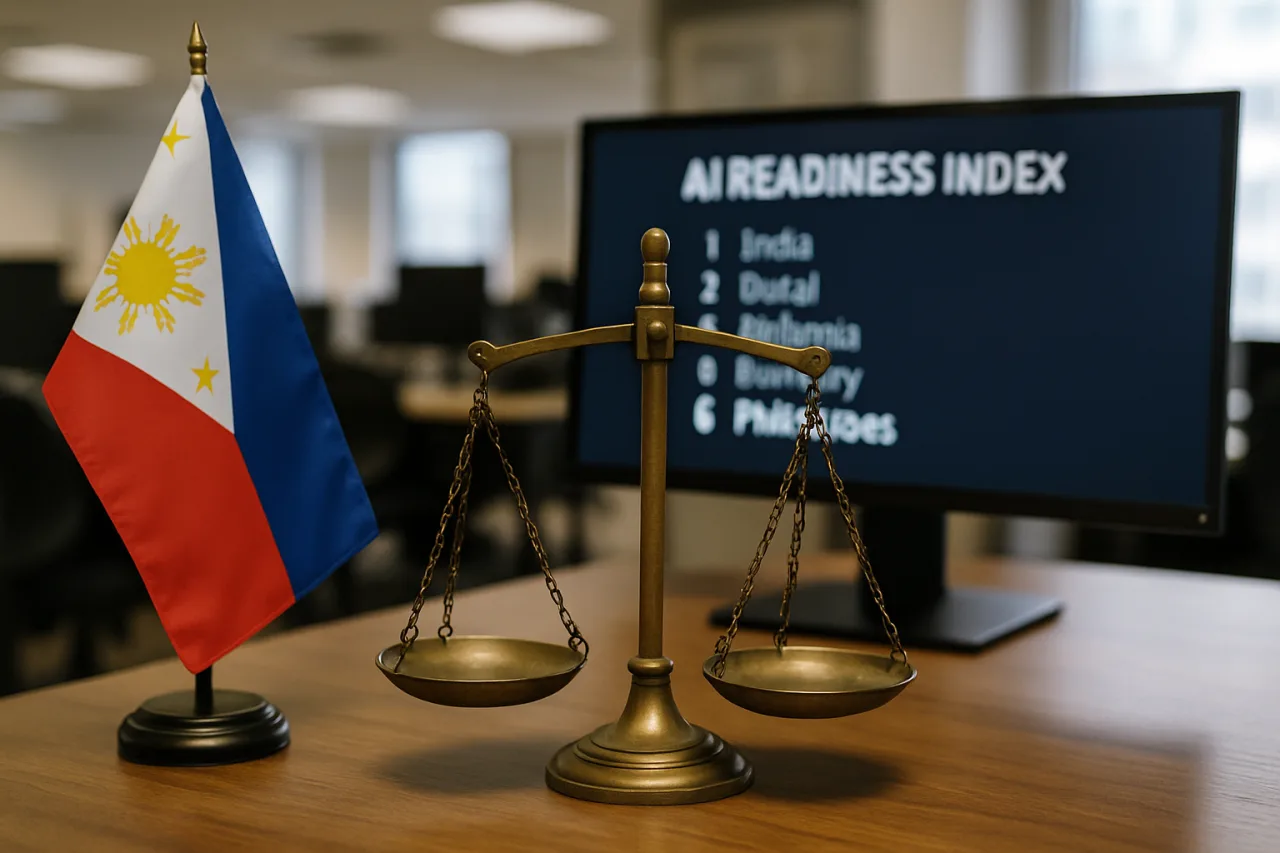
- 📊 The Ranking: The Philippines scored 69.05 out of 100 in the 2026 Global Outsourcing AI Readiness Index by Ataraxis, placing 5th among 25 countries — behind India (84.55), Brazil (76.1), Malaysia (75.65), and Hungary (69.1).
- ⚡ The Strength: Filipino workforce AI literacy scored 76 — tied with Brazil for 2nd globally, behind only India, proving the talent exists.
- ⚠️ The Gap: The AI education pipeline scored just 52 — 15th out of 25 and last among the top 5, trailing Malaysia by 32 points.
- 🌍 The Stakes: The ILO estimates 12.7 million Filipinos work in AI-exposed jobs — the highest share in Southeast Asia — making this ranking a national economic question, not just an industry one.
- 🔑 The Action: The gap between workforce literacy and education pipeline is the single biggest threat to the $40 billion BPO industry — and every Filipino professional’s career trajectory.
The numbers tell one story. The trend beneath them tells another. The Philippines ranks 5th globally in outsourcing AI readiness, but that single number conceals a structural contradiction: the country’s workforce is among the most AI-literate in the world, while the education system producing that workforce is among the weakest in the top tier. This is not a ranking problem. It is a pipeline problem — and the pipeline is what determines whether the Philippines stays competitive in the AI era or becomes the cautionary tale other countries study.
What makes this moment different from every previous outsourcing disruption is that the Philippines is simultaneously winning and losing. Winning because Filipino workers have proven they can use AI tools as well as anyone. Losing because the institutions meant to replenish and expand that talent pool are not keeping pace. The Ataraxis index, released in August 2026, makes this contradiction visible in a way that quarterly industry reports never have.
Why the Outsourcing AI Readiness Ranking Matters Now
The 2026 Global Outsourcing AI Readiness Index is not another consulting vanity ranking. It is the first comprehensive assessment of whether outsourcing destinations can sustain their competitive position as AI reshapes the services they deliver. Ataraxis, a management consulting firm, evaluated 25 major outsourcing destinations across four dimensions: population AI adoption, workforce AI literacy, enterprise AI adoption, and the AI education pipeline. The four sub-index scores were averaged to produce a composite.
The Philippines scored 69.05. That put it behind India (84.55), Brazil (76.1), Malaysia (75.65), and Hungary (69.1) — with Hungary edging the Philippines by just 0.05 points. Within Southeast Asia, the Philippines ranked second behind Malaysia, trailing by 6.6 points, but eight points ahead of Indonesia at 61.05.
Here is what makes the ranking consequential: the Philippines’ outsourcing industry employs roughly 1.9 million people and generates $40 billion in annual revenue, accounting for about 10% of the national economy, according to the IT and Business Process Association of the Philippines (IBPAP). The International Labour Organization estimates that 12.7 million Filipinos — more than one in four workers — are employed in occupations exposed to generative AI, the highest share in Southeast Asia. When a metric this central to the national economy gets a C+ grade, the question is not whether the grade is fair. The question is what happens to the economy if the grade does not improve.
As Ataraxis CEO and founder George Atuahene put it: “The Philippines has already proven it can staff the AI era — its workforce AI literacy rivals countries with far larger tech sectors. The open question is whether the education pipeline catches up quickly enough to keep that talent pool growing at the pace enterprise demand will require.”
What the Outsourcing AI Readiness Numbers Reveal — and What They Miss
The composite score of 69.05 is an average that masks extreme variation. The Philippines is not uniformly 69th-percentile across the board. It is elite in one dimension, middling in another, and alarming in a third.
Workforce AI literacy is the bright spot. The Philippines scored 76, tying Brazil for second place globally behind only India. Ataraxis noted that the Philippines and Brazil were the only countries outside India to score above 70 in this category. Filipino workers, in other words, have already demonstrated that they can learn and apply AI tools on the job. This is the legacy of two decades of outsourcing — a workforce that has adapted to successive waves of technology, from cloud platforms to automation tools to generative AI.
Enterprise AI adoption is respectable at 71, outperforming Hungary’s 67. Philippine BPO companies are not lagging in deploying AI within their operations. IBPAP president Jack Madrid confirmed that more than two-thirds of the association’s members are already running AI pilots. Teleperformance, the world’s largest call center operator and one of the Philippines’ biggest private employers, has said AI will handle routine interactions while human agents move into more complex roles. Concentrix, the largest outsourcing firm in the country, has committed to training employees in the new technology.
But the AI education pipeline score is where the ranking falls apart. The Philippines scored 52 — placing 15th among the 25 destinations and last among the five highest-ranked countries. Malaysia scored 84 in this category. India scored 83. Brazil and Hungary both received 69. The gap between the Philippines and every other top-five country is at least 17 points, raising a question that the composite score cannot answer: can the supply of AI-skilled workers keep pace with demand?
The fourth dimension — population AI adoption at 69 — reveals a different challenge. Hungary’s narrow overall lead over the Philippines was largely driven by its population AI adoption score of 86, compared with the Philippines’ 69. This measures how broadly the general population uses AI tools, not just the professional workforce. A higher adoption rate means a larger pool of AI-aware consumers, students, and potential workers — the feeder system for the outsourcing talent pipeline.
The Pipeline Problem Nobody Is Talking About
Here is the question that matters: how does a country produce a workforce that scores 76 in AI literacy when its education pipeline scores 52? The answer is that the workforce learned AI on the job — through employer training programs, self-directed learning, and the informal knowledge transfer that happens in a 1.9 million-person industry. The education system did not produce this talent. The industry did.
This worked when AI was new and the demand was small. It stops working when AI becomes the default operating model for every outsourcing contract. The BBC documented this transition in a August 2026 investigation into the Philippine outsourcing industry. Lisa, a single mother and 15-year content writing veteran, told the BBC she was asked to train AI on her company’s writing style — and was then made redundant. “I feel like I dug my own grave,” she said. “We were the ones who trained the artificial intelligence that replaced us.”
The BBC report also captured the structural pressure driving adoption. Paul Quintos, from the University of the Philippines-Diliman, noted that Filipino managers are concerned about domestic workforce displacement but face tremendous pressure from foreign clients to adopt AI. “It’s a major cost-cutting measure,” Quintos said. Philippine outsourcing companies compete directly with rivals in India and elsewhere for contracts from multinational corporations. Increasingly, those clients expect suppliers to integrate AI into the services they deliver — not just provide cheaper labor.
This is where the education pipeline gap becomes a strategic vulnerability. If the industry is training its own workers because the education system cannot, then the industry’s growth is bounded by its training capacity — not by market demand. And training capacity is expensive. IBPAP has committed to upskilling 300,000 outsourcing workers, but Leandro Aguirre of the Department of Information and Communications Technology (DICT) was candid about the gap: “To be completely honest, I think we’re slightly behind. We have to catch up. We have to double our efforts to put our people in a position where they will not be displaced but actually thrive in this growing AI race.”
The Second-Order Effect on Every Filipino Professional
The Ataraxis index measures outsourcing AI readiness across destinations specifically, but its implications reach every Filipino professional, not just BPO workers. The education pipeline score of 52 reflects a system that is not producing enough AI-skilled graduates across any sector — not just outsourcing. When the pipeline is weak, the talent shortage spreads from BPO to banking, from healthcare to government, from startups to enterprise IT.
Consider the arithmetic. The Philippines needs 300,000 upskilled BPO workers just for the current transition, according to government commitments. The broader economy needs far more. The ILO’s estimate of 12.7 million Filipinos in AI-exposed occupations means that the education and training system must reach not just the 1.9 million in BPO but millions more across adjacent sectors. A pipeline scoring 52 out of 100 is not built for that volume.
There is also a competitive dimension. Malaysia’s education pipeline score of 84 means that Malaysia is producing AI-skilled graduates faster and better than the Philippines. If multinational companies evaluating outsourcing destinations see a country with strong workforce literacy but a weak education pipeline, they make a long-term calculation: the current workforce is good, but can the country sustain it? Malaysia, with its balanced scores across all four dimensions, looks like a safer bet for a 10-year investment.
This is not theoretical. The BBC investigation found that IBPAP’s Madrid acknowledged a slowdown in investment decisions — “whether certain job functions or processes should be offshored” — driven not just by AI adoption but by uncertainty over how companies will deploy the technology. When global clients hesitate, the pipeline question becomes an economic question.
What Comes Next — and What Professionals Should Do
The Ataraxis index is a snapshot, not a verdict. Scores can improve. But they only improve when the bottleneck is addressed directly. For the Philippines, the bottleneck is clear: the education pipeline. Workforce literacy is already competitive. Enterprise adoption is already respectable. Population adoption is growing. The single dimension pulling the composite score down is the one that requires the longest lead time to fix — curriculum reform, faculty training, university-industry partnerships, and the kind of sustained public investment that does not show results for three to five years.
Aguirre’s diagnosis pointed toward a model shift: “We relied heavily on foreign direct investment. But I think we also need to focus on local talent and local companies.” The ambition, he said, is to build home-grown AI companies capable of creating higher-value jobs — not just serving as labor arbitrage for foreign multinationals. This is the right long-term answer, but it requires the education pipeline to produce the founders, engineers, and product managers who build those companies.
For individual Filipino professionals, the ranking carries a direct message. The workforce literacy score of 76 means the average Filipino professional is already AI-capable. But the education pipeline score of 52 means the next generation of professionals may not be. Those already in the workforce have a window — and the window is the gap between their current skills and the skills the pipeline will eventually fail to produce. Upskilling now, while the industry is still investing in training, is not optional. It is the difference between riding the transition and being buried by it.
The Philippines does not need to beat India. It needs to close the gap with Malaysia — and the gap is 6.6 points. That is achievable if the education pipeline moves from 52 to even 65, which would pull the composite score above Malaysia’s 75.65 without any change to the other three dimensions. The question is whether the institutional will exists to make that jump before the market makes it for us.
Frequently Asked Questions About Outsourcing AI Readiness
What is the Ataraxis Global Outsourcing AI Readiness Index?
The Ataraxis outsourcing AI readiness index is a 2026 ranking of 25 major outsourcing destinations based on four dimensions: population AI adoption, workforce AI literacy, enterprise AI adoption, and AI education pipeline. Each country receives a sub-index score per dimension, and the four scores are averaged to produce a composite out of 100. The Philippines scored 69.05, placing 5th globally in outsourcing AI readiness.
Why did the Philippines rank 5th in outsourcing AI readiness?
The Philippines ranked 5th because its strong workforce AI literacy (76, tied for 2nd globally) and enterprise AI adoption (71) were offset by a weak AI education pipeline (52, 15th out of 25) and moderate population AI adoption (69). The composite average of these four scores was 69.05, placing the country behind India, Brazil, Malaysia, and Hungary.
How does the Philippines compare to Malaysia in AI readiness?
The Philippines trails Malaysia by 6.6 points in the outsourcing AI readiness index. Malaysia scored 75.65 overall. The biggest gap is in the AI education pipeline: Malaysia scored 84 while the Philippines scored 52 — a 32-point difference. Malaysia also led in population AI adoption. The Philippines outperformed Malaysia in workforce AI literacy but not by enough to close the overall gap.
What does the outsourcing AI readiness ranking mean for Filipino BPO workers?
The ranking means that current Filipino BPO workers are highly AI-literate and competitive globally, but the education system is not producing enough new AI-skilled workers to sustain the industry’s growth. The ILO estimates 12.7 million Filipinos work in AI-exposed occupations — the highest share in Southeast Asia. Workers already in the industry should prioritize upskilling while employer training programs are still widely available. The outsourcing AI readiness gap is closeable, but not automatically.
What is the Philippine government doing to improve AI readiness?
The Philippine government, through the DICT, has committed to upskilling 300,000 outsourcing workers. DICT official Leandro Aguirre acknowledged the country is “slightly behind” and needs to “double efforts” to prevent displacement. The government is also pursuing a model shift from foreign direct investment dependency toward building home-grown AI companies and local talent development.
Can the Philippines close the gap with Malaysia in AI readiness?
Yes, but it requires improving the AI education pipeline from 52 to approximately 65, which would raise the composite score above Malaysia’s 75.65 without changes to the other three dimensions. This requires sustained investment in curriculum reform, university-industry partnerships, and faculty training — with results visible in three to five years, not immediately.
Financial Disclaimer: This article is for informational and educational purposes only and does not constitute financial, investment, or career advice. Readers should consult qualified professionals before making decisions related to employment, education, or investment in AI-related fields. The author and publisher are not liable for any actions taken based on the information presented here.