Table of Contents
Key Takeaway
- 📈 The filing is real: Anthropic formally filed its S-1 with the SEC on October 26 — it will list on Nasdaq under the ticker ANT, the first pure-play frontier-AI lab to reach the public markets.
- 💰 The headline numbers: revenue hit $16.8 billion in Q3 2026, up from $11.5 billion in Q2, with the company claiming adjusted-basis profitability — while CNBC’s live coverage of the filing reported first-half losses in the tens of billions.
- ⚠️ The warning label: the filing carries more than 90 pages of risk factors — and one of them names an ongoing clash with the Pentagon that could cause “material revenue losses.”
- 🧮 Why investors are cautious: the market has started punishing AI names for debt-heavy capex — CoreWeave’s debt insurance costs nearly tripled amid scrutiny — so every ANT disclosure gets read twice.
- 🗺️ What this guide does: walks the filing’s key sections — the numbers, the government risk, the competition — so retail investors can form their own view before the ticker trades.
A frontier AI lab just handed the public its first full look inside the machine — filed page by page at the SEC, with more than 90 pages of risk factors attached to a Nasdaq ticker called ANT. Anthropic’s S-1 registration, confirmed on October 26, converts one of the industry’s most-watched private companies into something any investor can analyze: revenue, losses, government entanglements, capital plans and every warning the lawyers could draft. This guide walks the filing the way a careful investor should — numbers first, warnings second, story last.
What Anthropic Put in the S-1: the Confirmed Facts
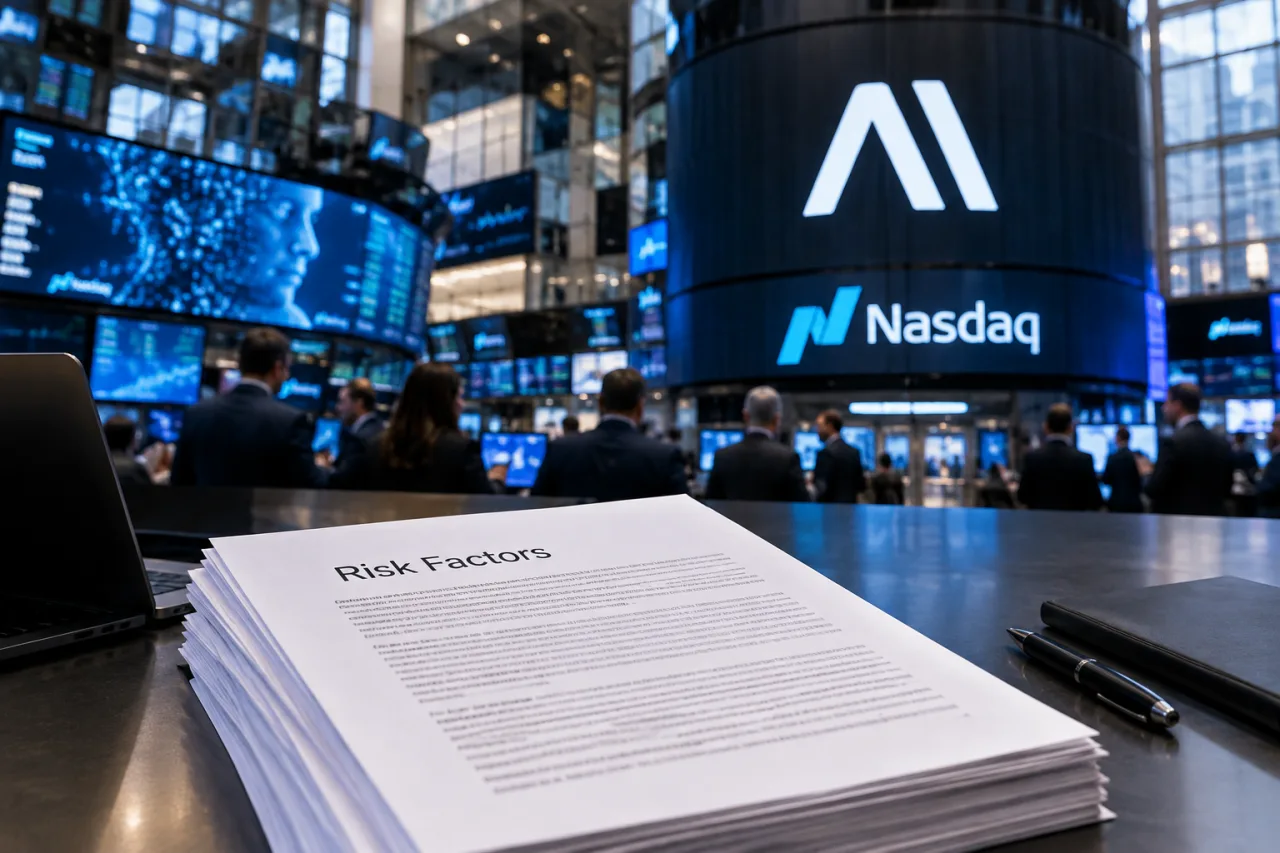
The confirmed skeleton, per CNBC’s live filing coverage and Yahoo Finance’s reporting: Anthropic disclosed quarterly revenue climbing to $16.8 billion in Q3 2026, up from $11.5 billion the previous quarter, with the company telling investors it is profitable on an adjusted basis. The S-1 names Nasdaq under ticker “ANT.” The confidential draft phase began on June 1, 2026 under Rule 135 — the quiet SEC-review window that lets a company polish disclosure before the public version lands. The public filing contains more than 90 pages of risk factors, the section that tells you what management itself is worried about.
Then there is the number that made the week’s headlines: CNBC’s live blog of the filing reported first-half 2026 losses of $80.7 billion — a figure that reflects the true, unadjusted accounting of a company building compute at frontier scale while claiming adjusted profitability. Production investors should treat the gap between adjusted profit and reported loss as the entire story of frontier AI economics in miniature: revenue compounding fast, capital spending faster, and accounting choices doing the arguing.
The Risk Factors: Reading 90 Pages of Anthropic Warnings Like an Investor
The risk-factors section is where filings confess. Anthropic’s 90-plus pages cover the categories frontier-AI investors should expect — and one entry nobody could have predicted two years ago:
- Government and political risk. The filing warns of “material revenue losses” tied to the ongoing friction between Anthropic and the Pentagon and, more broadly, the Trump administration’s posture toward the company. A customer risk from the world’s largest defense budget is not a boilerplate disclosure — it is a named counterparty dispute.
- Capital intensity risk. Frontier model training requires spending billions ahead of revenue, and the filing discloses the dependency on data center supply, chips and power that makes every AI capex plan hostage to physical supply chains.
- Competition risk. Rivals with deeper balance sheets or cheaper models can compress pricing; open-weight families — the same week’s Qwen security story shows how fast the open ecosystem moves — compete for the same enterprise budgets.
- Valuation risk. A listing priced off 2026 AI enthusiasm inherits 2026 volatility; when investors turn selective — as they have with CoreWeave — even strong revenue growth can carry a falling multiple.
- Regulatory and liability risk. AI safety obligations, licensing regimes and litigation exposure all appear where a frontier lab’s products meet the public.
The honest reading of any risk-factors section: management is legally incentivized to list everything that could go wrong. But when a filing names a live dispute with its own government’s Pentagon, that is not boilerplate caution — it is a disclosed, active business risk with a real revenue line attached.
The Investor Math: Revenue, Losses and the ANT Question
Every IPO is a duel between two number sets, and Anthropic’s is unusually clean to state. Set one, growth: quarterly revenue of $16.8 billion, growing roughly 46 percent quarter over quarter — a growth rate that puts the company on a >$65 billion annualized run rate. Set two, economics: reported first-half losses that CNBC sized at $80.7 billion against the company’s adjusted-basis profitability claim. Reconciling those two sets is the entire analytical exercise: how much of the losses were stock compensation, capitalized compute, depreciation schedules and frontier-training one-timers — and what does the recurring loss actually look like once adjusted? The S-1’s MD&A section holds those answers, and ANT’s underwriters will price the gap.
The market context sharpens the stakes. Public AI-adjacent names have “waffled in recent days as investors become more selective over the industry’s enormous spending needs,” as Yahoo Finance put it — CoreWeave, the GPU-cloud borrower, has seen the cost of insuring its debt nearly triple while investors question its revenue prospects against its debt load. ANT arrives into a market that just began discounting AI capex stories. The filing’s own 90 pages of warnings read almost as a market-time document: nobody at Anthropic believes the caution section is decorative.
The Pre-Trade Checklist: 5 Questions Before ANT’s First Print
New listings reward preparation and punish enthusiasm. Before ANT prints its first candle, five questions separate a considered position from a headline chase — and every one of them comes straight from the risk factors section rather than the growth narrative.
- What is recurring? Strip the one-time frontier-training costs from the reported losses and ask what the true running deficit looks like at the Q3 revenue run rate. The adjusted-versus-reported gap is the filing’s central question, and the S-1’s MD&A answers it line by line.
- Who is the concentrated customer? Enterprise and government contracts built an AI lab; the Pentagon-clash disclosure shows how political a revenue line can be. Read the concentration risk with the government dispute side by side.
- What does capital intensity do at scale? Model-training burns cash ahead of revenue; serving it burns compute margin. The capex plan in the filing plus the debt market’s treatment of peers like CoreWeave frame whether ANT raises often and dilutes or grows into its spending.
- How priced is the safety story? Anthropic’s brand rests on being the careful lab. Safety costs appear as compliance and research spending — a real drag against rivals that skip it. Decide whether the market will pay for that differentiation at listing multiples.
- What is my exit discipline? New listings can halve on sentiment. The risk factors warn about valuation volatility in writing; the position-size and stop question belongs to the investor, not the ticker.
Ask those five and the filing transforms from a growth story with scary pages into a priced decision with known unknowns — which is exactly what the 90 pages of risk factors were written to enable.
What ANT Means for Global Investors — Including Filipinos
ANT matters beyond Silicon Valley for one simple reason: a frontier-lab listing gives retail investors in every market direct exposure to the AI buildout that, until now, was only accessible through chipmakers, cloud giants and index funds. Our guide to buying US stocks from the Philippines walks the access routes Philippine investors use, and our comparison of crypto investing versus stocks frames the risk appetite question every new ANT watcher will face: AI listings behave like high-beta technology bets, not savings vehicles.
Three disciplines apply if ANT reaches your watchlist:
- Read the risk factors before the growth story. A filing is written in a legal dialect where the warnings are the load-bearing text — the 90 pages exist because management believes them.
- Watch the adjusted-versus-reported gap at every quarter. AN IPO-era company’s honesty lives in the reconciliation table; the first earnings report will show whether the adjusted-profitability story survives GAAP scrutiny.
- Size it as venture economics on a stock exchange. Frontier labs concentrate outcomes; position sizing — the discipline covered in our ETF-flow and market-stress reporting — matters more than conviction alone.
The IPO’s Second Story: a Pentagon Dispute Is Now a Stock Fact
The most unusual disclosure in the filing deserves its own paragraph for investors and policy watchers alike: a frontier AI company going public while disclosing an active dispute with the US defense establishment — warning of material revenue losses if the clash worsens. Whatever its merits, the disclosure makes government relationships a priced variable for every AI investor on earth. It also answers, in advance, the question of what frontier labs fear more than each other: the customer that funds them and regulates them at the same time. Watch how the dispute evolves between now and ANT’s first earnings call — the risk factors will either soften into history or become the ticker’s defining overhang.
Production timing notes for the watchlist: underwriters price the deal in the coming weeks; the roadshow materials will circulate first. The first post-listing earnings report is the reconciliation moment for the adjusted-profitability narrative. And the Q4 revenue print — whether growth holds above the Q3 pace — decides whether ANT lists at a premium to history or rewrites the AI-valuation debate itself.
Reading a Frontier-Lab Filing: What Makes ANT Different From Every Tech IPO Before It
Experienced IPO readers will find the Anthropic filing familiar in structure and alien in substance. Traditional software listings disclosed customer risk in terms of churn and concentration. ANT’s paperwork discloses risk in terms of training runs, compute supply chains, model safety obligations and the posture of governments toward a technology that can influence elections, armies and markets at once. The risk factors read less like a securities document and more like the minutes of a strategic negotiation between a company, its industry and the state — because that is what a frontier-lab listing actually is.
For long-term investors, three of the 90 pages matter more than the rest: the accounting reconciliation that defines what adjusted profitability means in a business that capitalizes compute; the government-revenue dependency table that turns the Pentagon dispute into numbers; and the capital-markets plan that shows how often the company expects to return to raise money as training costs compound. When those three pages are read together with the revenue schedule, an investor holds roughly everything that matters for a five-year ANT thesis — everything else in the offering is narrative.
FAQ
What is the ANT ticker?
ANT is the Nasdaq symbol under which Anthropic plans to list following its S-1 registration statement filed with the SEC on October 26, 2026.
How fast is Anthropic growing?
Per its filing-period disclosures to investors, quarterly revenue reached $16.8 billion in Q3 2026, up from $11.5 billion in Q2 — roughly 46 percent sequential growth — with adjusted-basis profitability claimed. The unadjusted first-half losses reported by CNBC’s filing coverage were far larger, reflecting frontier training economics.
What are the headline risk factors in the S-1?
The filing devotes more than 90 pages to risk factors, including named government-relations risk — an ongoing Pentagon clash the company says could cause material revenue losses — plus capital intensity, competition, valuation volatility and AI regulatory exposure.
Can regular investors buy ANT at the IPO?
Most retail investors receive their first access after the listing begins trading, rather than at the IPO allocation stage. Investors outside the US, including in the Philippines, typically use the same international brokerage routes covered in our US-stocks guide — while remembering that new listings carry elevated early-trading volatility.
Is ANT a buy because AI is growing?
That is exactly the judgment this guide declines to make for you. The filing gives investors the raw materials — growth, losses, warnings, capital plans — and 90 pages of reasons management itself is cautious. Sizing, timing and risk tolerance are personal decisions; this piece is education, not advice.
Financial Disclaimer
This article is for general information and education only. It is not financial, investment, tax or legal advice, and it is not a recommendation to buy, sell or hold any security, including Anthropic or any related instrument. Figures cited are drawn from public reporting of a pending IPO filing and may change. Markets involve risk, including loss of principal; new listings can be especially volatile. Consult a licensed financial adviser before making investment decisions. WorldNgayon and the author hold no position in the securities discussed and receive no compensation from the issuer.
The Bottom Line
ANT turns the most-watched private company in AI into public paperwork: $16.8 billion of quarterly revenue, tens of billions in reported losses, a Pentagon dispute the company itself calls potentially material, and 90 pages of risk factors that deserve reading before the growth story — checklist first, ticker second. The market has already shown this year it will discipline AI names that spend without answering. The risk factors section is where Anthropic filed the answers itself — the investor’s job now is to read all 90 pages before falling in love with the ticker.
Sources: CNBC’s live filing coverage, Yahoo Finance, Anthropic’s own disclosure, and the S-1 on SEC EDGAR.