Table of Contents
Key Takeaway
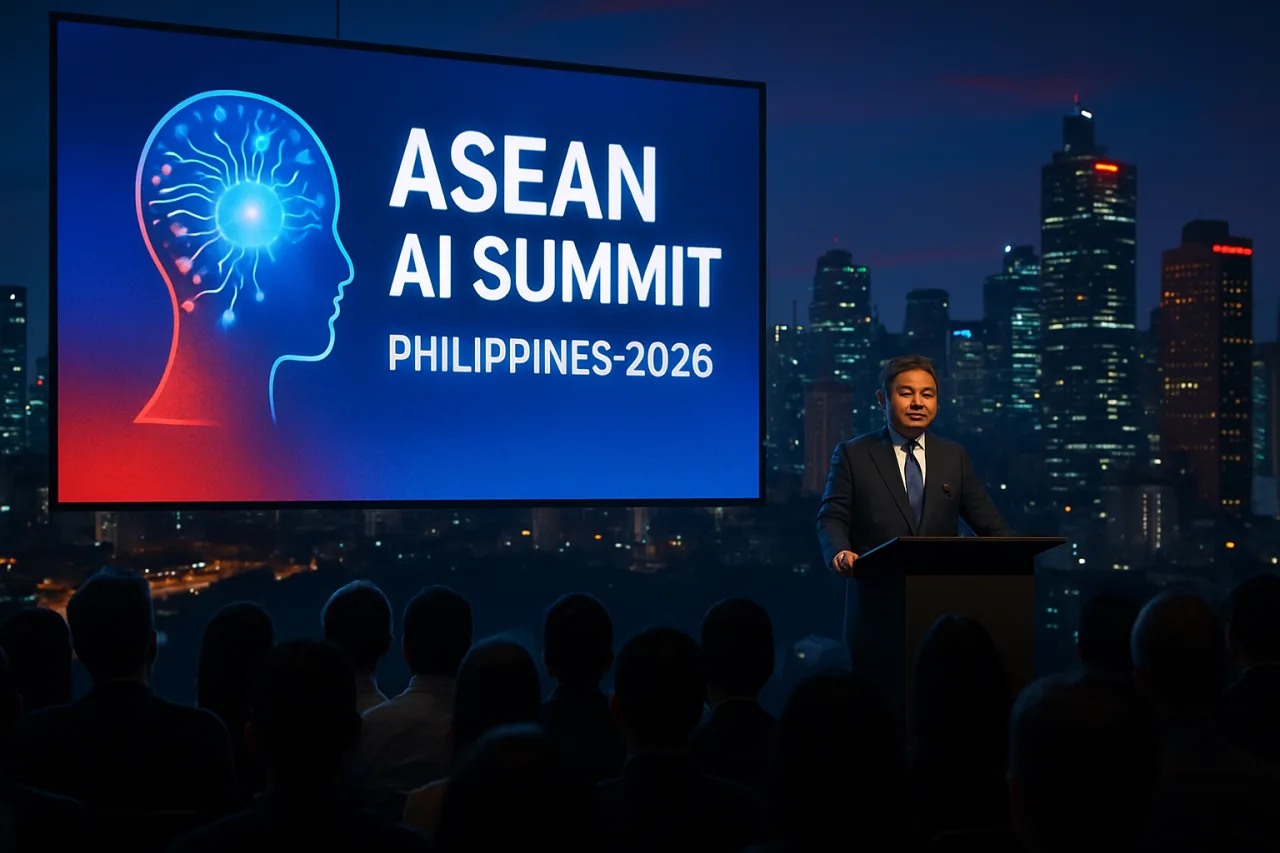
- 🎯 The Philippines is hosting the ASEAN AI Summit in September 2026: As ASEAN chair for 2026, the Philippines will bring together leaders, ministers, and tech companies to accelerate AI adoption across Southeast Asia — the first summit of its kind.
- 📊 AI could add USD 1 trillion to ASEAN’s economy by 2030: But persistent gaps in digital infrastructure, skills, and compute access limit participation. The summit aims to close those gaps through regional cooperation.
- 💼 The Philippines proposed an AI MSME Hub: Endorsed by ASEAN leaders at the 48th Summit, the hub will provide accessible AI tools, capacity-building, and advisory services for micro, small, and medium enterprises across the region.
- 🔧 The Philippine digital economy is already massive: It generated P2.74 trillion in gross value added in 2025 — 9.8% of national GVA — and employed 10.39 million Filipinos, representing 21.2% of total employment.
- ⏱️ The ASEAN Digital Economy Framework Agreement (DEFA) is coming: Expected to be signed at the 49th ASEAN Summit in November 2026, DEFA will accelerate regional digital integration including AI cooperation.
The ASEAN AI Summit coming to the Philippines in September 2026 is not just another diplomatic conference. It is the moment when Southeast Asia decides whether AI will be a tool for the few or an engine for the many — and the Philippines is holding the pen.
As chair of ASEAN for 2026, the Philippines proposed and secured endorsement for the first-ever ASEAN AI Summit, a high-level platform that will gather private sector leaders, government ministers, and technology companies to catalyze the strategic partnership ecosystem for AI adoption across the region. The announcement came at the 48th ASEAN Summit held in Cebu from May 5-8, 2026, where President Ferdinand R. Marcos Jr. placed artificial intelligence at the center of the regional agenda.
For Filipino professionals — especially overseas Filipino workers (OFWs) in technology, engineering, and digital roles — the ASEAN AI Summit carries direct significance. The policies shaped at this summit will determine how AI talent flows across borders, how computing resources are shared among ASEAN nations, and whether the Philippines becomes a regional AI hub or remains a consumer of AI built elsewhere.
What the ASEAN AI Summit Actually Is: The Framework
The ASEAN AI Summit was announced through the chair’s statement of the 48th ASEAN Summit, the formal document that records consensus among all ten member states. This is not a Philippine event masquerading as regional. It is an ASEAN-endorsed initiative, hosted by the Philippines, with the participation of all member states.
| Element | Detail | Why It Matters |
|---|---|---|
| Host | Philippines (ASEAN Chair 2026) | Gives the Philippines agenda-setting power over regional AI policy |
| Date | September 2026 | Two months before DEFA signing in November — this summit feeds into it |
| Purpose | High-level platform for private sector input and AI partnership ecosystem | Bridges government policy with industry implementation |
| Key Proposal | AI MSME Hub | Shared computing resources, AI tools, and training for small businesses |
| Backing | Endorsed by all ASEAN leaders, supported by Asian Development Bank | Funding and political legitimacy secured |
ASEAN leaders described the summit as a “high-level platform to gather private sector inputs and catalyze the strategic partnership ecosystem for AI adoption.” In diplomatic language, this means the summit is designed to move AI from government white papers into actual business practice — connecting technology companies with policymakers to create implementation pathways.
The AI MSME Hub: Philippines’ Flagship Proposal
The centerpiece of the Philippines’ ASEAN AI Summit agenda is the AI MSME Hub — a regional facility designed to give micro, small, and medium enterprises access to AI tools, capacity-building programs, and advisory services that they cannot afford or access on their own.
The chair’s statement from the 48th ASEAN Summit noted the hub’s objective to “provide MSMEs with accessible tools, capacity-building programs, and advisory services to strengthen productivity and competitiveness, while supporting ASEAN in addressing the sovereign compute gap through shared and industrial-scale computing resources.”
The “sovereign compute gap” is the critical phrase. It refers to the reality that most ASEAN nations — including the Philippines — lack the domestic computing infrastructure (data centers, GPU clusters, cloud capacity) to train and run AI models at scale. Without sovereign compute, countries depend on foreign providers for AI infrastructure, creating economic dependency and data sovereignty risks. The AI MSME Hub proposes shared regional computing resources as the solution — a collective ASEAN approach to a problem no single member state can solve alone.
The Department of Information and Communications Technology (DICT) has been advancing this agenda throughout 2026. At Asia Techx Singapore in May 2026, the DICT stressed “persistent gaps in digital infrastructure, skills, and compute access that limit participation despite AI’s potential to add up to USD 1 trillion to the regional economy by 2030.”
Why the Philippines Is Hosting: The Chair’s Advantage
The Philippines assumed the ASEAN chairmanship for 2026, giving it agenda-setting power over the regional bloc’s priorities. President Marcos used this platform at the 48th Summit in Cebu to place AI alongside energy security, food resilience, and trade integration as top regional priorities.
“We also recognize the role of innovation,” Marcos said at the summit’s conclusion. “AI and digital tools can sharpen energy forecasting, food system monitoring and social protection delivery, provided they remain anchored in human judgment, accountability and in global standards.”
This framing is deliberate. The Philippines is not pitching AI as a Silicon Valley import. It is positioning AI as a practical tool for regional resilience — forecasting energy demand, monitoring food supply chains, delivering social protection services. For ASEAN nations grappling with oil price volatility, Middle East tensions, and climate disruption, this framing makes AI relevant to national survival, not just economic competitiveness.
The Philippines’ eligibility to lead this agenda is backed by data. According to the Philippine Statistics Authority (PSA), the Philippine digital economy accounted for 9.8% of gross value added (GVA) in 2025, generating P2.74 trillion — up 5.4% from P2.59 trillion in 2024. The sector employed 10.39 million Filipinos, representing 21.2% of total employment.
| Philippine Digital Economy Metric | 2025 Figure | What It Means for ASEAN AI |
|---|---|---|
| Digital economy GVA | P2.74 trillion (9.8% of total) | Philippines has the domestic digital base to anchor regional AI |
| Digital economy employment | 10.39 million (21.2% of total jobs) | Massive workforce that AI will transform — talent pool and risk |
| Digital-enabling infrastructure GVA | P1.79 trillion (65.3% of digital economy) | Infrastructure foundation exists but needs AI-specific expansion |
| E-commerce GVA share | 32.2% | MSME digital adoption is real — AI MSME Hub has a base to build on |
| ICT services share | 27.1% of infrastructure | Services sector is ready for AI integration |
The USD 1 Trillion Opportunity: Why ASEAN Cannot Wait
The economic stakes of the ASEAN AI Summit are enormous. ASEAN’s digital economy is projected to reach approximately USD 1 trillion by 2030 under current growth trends. But that projection assumes current adoption rates continue. AI could accelerate that growth — or, if access remains unequal, it could widen the gap between ASEAN’s digital leaders (Singapore, Malaysia, Vietnam) and its lagging members.
The DICT has been explicit about this risk. At the AI Impact Summit 2026 in New Delhi (February 18-20, 2026), the Philippines advanced its regional AI priorities, calling for “more inclusive and trusted AI” and stressing that without deliberate action, AI’s benefits will concentrate in countries with existing compute infrastructure while bypassing those without it.
This is why the ASEAN AI Summit matters beyond diplomatic ceremony. The summit is where ASEAN decides whether to build shared AI infrastructure — regional compute resources, cross-border data frameworks, joint skills programs — or let each nation fend for itself. The Philippines, as chair, is pushing for the collective approach. The AI MSME Hub is the first concrete proposal to emerge from that push.
What the ASEAN AI Summit Means for OFWs
For the estimated 2.3 million Filipino professionals working overseas, the ASEAN AI Summit creates both opportunity and urgency.
Opportunity: Regional AI Job Market
If the summit succeeds in creating shared ASEAN AI infrastructure and standards, it will generate demand for AI-literate professionals across the region. Filipino OFWs — already the most AI-adopting workforce globally, with 86% of knowledge workers using AI tools according to Microsoft Philippines data — are well positioned to fill those roles. The AI MSME Hub will need trainers, implementers, and advisors. The Philippines AI talent gap means domestic supply cannot meet demand — returning OFWs with AI skills can.
Urgency: Skills Alignment
The summit will produce regional AI standards — frameworks for AI governance, data privacy, and ethical use that will be adopted across ASEAN. OFWs who understand these standards will have a competitive advantage. Those who do not will find that their current skills, however strong, are not aligned with what ASEAN employers will demand post-summit.
The DEFA Connection
The ASEAN AI Summit in September feeds directly into the ASEAN Digital Economy Framework Agreement (DEFA), expected to be signed at the 49th ASEAN Summit in November 2026. DEFA will govern digital trade, e-commerce, electronic payments, digital identity, cross-border data flows, and cooperation on emerging technologies including AI. For OFWs in fintech, e-commerce, and digital services, DEFA will reshape the regulatory environment they work in. The September summit is where the AI components of that framework will be shaped.
The Competition: Where Other ASEAN Members Stand
The Philippines is hosting the ASEAN AI Summit, but it is not the only ASEAN member pursuing AI leadership. Understanding the competitive landscape is essential for Filipino professionals assessing their position.
| Country | AI Strategy | Advantage | Threat to Philippines |
|---|---|---|---|
| Singapore | National AI Strategy 2.0; SkillsFuture | Highest AI salaries, most mature ecosystem | Poaches Filipino AI talent; sets standards Philippines must follow |
| Malaysia | AI-Only Data Center Policy | Actively building AI infrastructure in Johor | Competes for same foreign investment and talent pool |
| Vietnam | Binding AI Law; Samsung training partnership | First ASEAN nation with legally binding AI regulation | Attracts manufacturers seeking regulated AI environment |
| Indonesia | Sovereign AI; Sahabat AI model | Highest AI adoption growth in ASEAN | Largest domestic market; building own AI models |
| Thailand | $3.1B data center investment | Aggressive infrastructure buildout | Competes for data center investment flowing to ASEAN |
The Philippines’ advantage is its chairmanship — the power to set the agenda. But agenda-setting power is temporary. The ASEAN AI Summit in September is the window. If the Philippines can secure concrete commitments for the AI MSME Hub, shared compute resources, and cross-border skills recognition, it will have used its chair year to create lasting regional infrastructure. If the summit produces only statements and photo opportunities, the chairmanship will have been wasted.
What Filipino Professionals Should Do Before September
The ASEAN AI Summit is two months away. Here is what Filipino professionals — at home and abroad — should do now.
1. Understand the AI MSME Hub Proposal
If you work in technology, education, or business consulting, the AI MSME Hub will create opportunities. It will need trainers who can teach AI literacy to small business owners, implementers who can deploy AI tools in MSME contexts, and advisors who can guide companies through AI adoption. Position yourself now.
2. Monitor DICT Announcements
The DICT is leading Philippine preparations for the summit. Follow their announcements for details on venue, agenda, participant registration, and partnership opportunities. If you are an OFW in an AI-related field, consider whether attending or contributing to the summit is feasible.
3. Develop ASEAN-Relevant AI Skills
The summit will emphasize AI governance, responsible AI, and MSME-focused AI applications. Skills in AI ethics, data privacy compliance, AI tool deployment for small businesses, and cross-border data management will be in high demand. These are not the same skills as machine learning engineering — they are implementation and governance skills, which many OFWs already have and can amplify.
4. Prepare Your Business for AI Integration
If you own or work for an MSME, the AI MSME Hub will eventually offer tools and resources. But early adopters gain the most. Start experimenting with AI tools now — customer service chatbots, inventory forecasting, marketing automation. When the hub launches, your business will be ready to use its resources effectively rather than starting from zero.
5. Watch the DEFA Negotiations
The ASEAN AI Summit in September feeds into DEFA signing in November. DEFA will govern cross-border data flows, digital trade, and AI cooperation for years. Understanding its provisions — especially around data localization, AI certification, and skills recognition — will give Filipino professionals a first-mover advantage in the post-DEFA regional market.
The Deeper Question: Will This Summit Produce Action or Just Statements?
ASEAN has a reputation for producing declarations. The ASEAN AI Summit must avoid that fate. The difference between a successful summit and a forgettable one comes down to three things.
First, funding. The AI MSME Hub needs real money — not pledges, but committed budgets from ASEAN members and partners like the Asian Development Bank. ADB President Masato Kanda has already expressed support for ASEAN AI initiatives. The summit must convert that support into signed agreements.
Second, private sector participation. The summit’s stated purpose is to “gather private sector inputs.” If the room is filled only with government officials, the outputs will be policy papers. If technology companies, AI startups, and MSME representatives are present and contributing, the outputs will be implementation plans.
Third, timeline. The summit is in September. DEFA is signed in November. The window between the two is narrow. If the summit produces concrete AI provisions that can be incorporated into DEFA, it will have shaped regional digital policy for a decade. If it produces only general statements, DEFA will proceed without a meaningful AI framework.
For the Philippines, the stakes are personal. The country has the highest AI adoption rate among knowledge workers globally. It has a P2.74 trillion digital economy. It has a $30 billion AI infrastructure plan. What it does not have is regional leadership cemented through institutional frameworks. The ASEAN AI Summit is the chance to build that leadership — not through rhetoric, but through infrastructure that outlasts the chairmanship year.
2026-09-30 Update: The ASEAN AI Summit Is Live Next Week — Dates, Free Registration, and the MSME AI Tech Stack
The summit this piece prepared you for in July now has its execution details confirmed: October 6-7, 2026, fully online, live from the PICC Complex in Manila, registration free. The curated-by-DICT program convenes under the Philippine ASEAN Chairmanship and formally launches the two instruments the July piece’s “AI MSME Hub” section anticipated — the ASEAN MSME AI Readiness Framework (the region-wide diagnostic and capacity-building tool) and the ASEAN MSME AI Tech Stack (the curated suite of affordable, MSME-ready AI tools assembled with technology partners — the same stack DICT and LANDBANK agreed to plug into MSME lending workflows in their July 2026 MOU). The AI Revolution Summit’s enterprise floor convenes in Manila the day before (October 5, our latest feature); this free online summit is the inclusion-side twin, and the two together price the full Philippine AI-adoption market in one week. The summit objectives on the official registration page target exactly what our July analysis forecast: ASEAN Leaders’ commitment to AI-enabled MSME growth via endorsement of a Leaders’ Declaration feeding the 48th ASEAN Summit, a shared regional vision for MSME AI readiness, public-private ecosystem partnerships for affordable AI solutions, and measurable productivity outcomes for small enterprises.
The Five July Moves, Re-Scored Now That the Date Is Real
Move 1 (understand the Hub proposal) — upgraded: what was a proposal is now the ASEAN MSME AI Tech Stack launch; register free as a General Attendee even if you are not an MSME owner — the curated tool suite is the market research Filipino freelancers and consultants would otherwise pay to compile. Move 2 (monitor DICT announcements) — resolved: no need to monitor further — the registration, tracks, and broadcast details are live on the official page; session recordings and a digital participation certificate ship to all attendees. Move 3 (build governance skills) — sharpened: the Readiness Framework’s diagnostic gives trainers, implementers, and advisors a vocabulary to credential against — our AI-watch coverage will extract the stack’s tool list after launch, because that list is a billable-implementation map. Move 4 (prepare your business) — the concrete step: MSME owners should send the registration link to the family group chat before Tuesday — the two-day program substitutes a month of research into “which AI tools actually fit a Philippine small business.” Move 5 (watch DEFA negotiations) — on schedule: the Leaders’ Declaration this summit endorses feeds the framework agreement cycle the Chairmanship’s November conclaves advance, making next week’s stream the earliest read on the region’s AI-governance direction. The Bottom Line for returning readers: everything the July piece told you to “watch for” now has a date, a registration link, and a zero price — the only excuse left to miss this summit is not knowing it exists, and this update closes that gap. Track the next developments in the Oct-Dec events board register, where the episode ladder now carries this quarter’s full coverage.
Financial Disclaimer: This article is for general information and education, not investment or financial advice. Event dates, registration terms, and program details change; verify with official government sources before acting. WorldNgayon.com is not a financial adviser and may hold affiliate relationships with tools or services mentioned.
FAQ: ASEAN AI Summit Philippines 2026
What is the ASEAN AI Summit 2026?
The ASEAN AI Summit is the first-ever high-level ASEAN platform dedicated to artificial intelligence, hosted by the Philippines in September 2026 as part of its ASEAN chairmanship. It aims to gather private sector inputs and catalyze the strategic partnership ecosystem for AI adoption across Southeast Asia.
Why is the Philippines hosting the ASEAN AI Summit?
The Philippines is the chair of ASEAN for 2026, giving it agenda-setting power over regional priorities. President Marcos placed AI at the center of the ASEAN agenda at the 48th Summit in Cebu, and the Philippines proposed the AI MSME Hub, which was endorsed by all ASEAN leaders.
What is the AI MSME Hub?
The AI MSME Hub is a Philippine-proposed regional facility that will provide micro, small, and medium enterprises with accessible AI tools, capacity-building programs, and advisory services. It also aims to address the sovereign compute gap by sharing industrial-scale computing resources among ASEAN members.
How much could AI contribute to ASEAN’s economy?
According to DICT data presented at Asia Techx Singapore 2026, AI has the potential to add up to USD 1 trillion to the ASEAN regional economy by 2030. However, persistent gaps in digital infrastructure, skills, and compute access currently limit participation.
What is the sovereign compute gap?
The sovereign compute gap refers to the lack of domestic computing infrastructure (data centers, GPU clusters, cloud capacity) in most ASEAN nations. Without sovereign compute, countries depend on foreign providers for AI infrastructure, creating economic dependency and data sovereignty risks.
What is DEFA and how does it relate to the ASEAN AI Summit?
DEFA (ASEAN Digital Economy Framework Agreement) is a landmark agreement expected to be signed at the 49th ASEAN Summit in November 2026. It will govern digital trade, cross-border data flows, and cooperation on emerging technologies including AI. The ASEAN AI Summit in September will shape the AI components of DEFA.
How large is the Philippine digital economy?
According to the Philippine Statistics Authority, the digital economy generated P2.74 trillion in gross value added in 2025 (9.8% of national GVA) and employed 10.39 million Filipinos, representing 21.2% of total employment.
How does the ASEAN AI Summit affect OFWs?
The summit will shape regional AI standards, skills requirements, and cross-border data frameworks that will govern the ASEAN digital economy. OFWs with AI skills will find new opportunities in the regional market, while those without AI literacy may face skills obsolescence as ASEAN employers adopt AI-driven workflows.
What should Filipino professionals do before the September summit?
Develop ASEAN-relevant AI skills (AI governance, responsible AI, MSME-focused AI deployment), monitor DICT announcements for summit details, prepare businesses for AI integration, and track DEFA negotiations that will follow the summit in November.
Will the ASEAN AI Summit produce real action or just statements?
The summit’s success depends on three factors: committed funding for the AI MSME Hub, genuine private sector participation, and concrete AI provisions that can be incorporated into DEFA by November. Without these, the summit risks producing only declarations rather than implementation plans.
This article is based on the chair’s statement of the 48th ASEAN Summit, announcements from the Department of Information and Communications Technology (DICT), Philippine Statistics Authority digital economy data, and publicly available ASEAN documents. Economic projections are estimates based on regional data and may vary.