Key Takeaway
- 🏭 The head-to-head, dated: Vera Rubin is NVIDIA’s agentic-AI platform in full production since May 31, 2026 (GTC Taipei: “ramping into full production… worldwide”), while Blackwell-class racks run the deployed factory floor today — the comparison is a production-status race with public milestones, not a rumor contest.
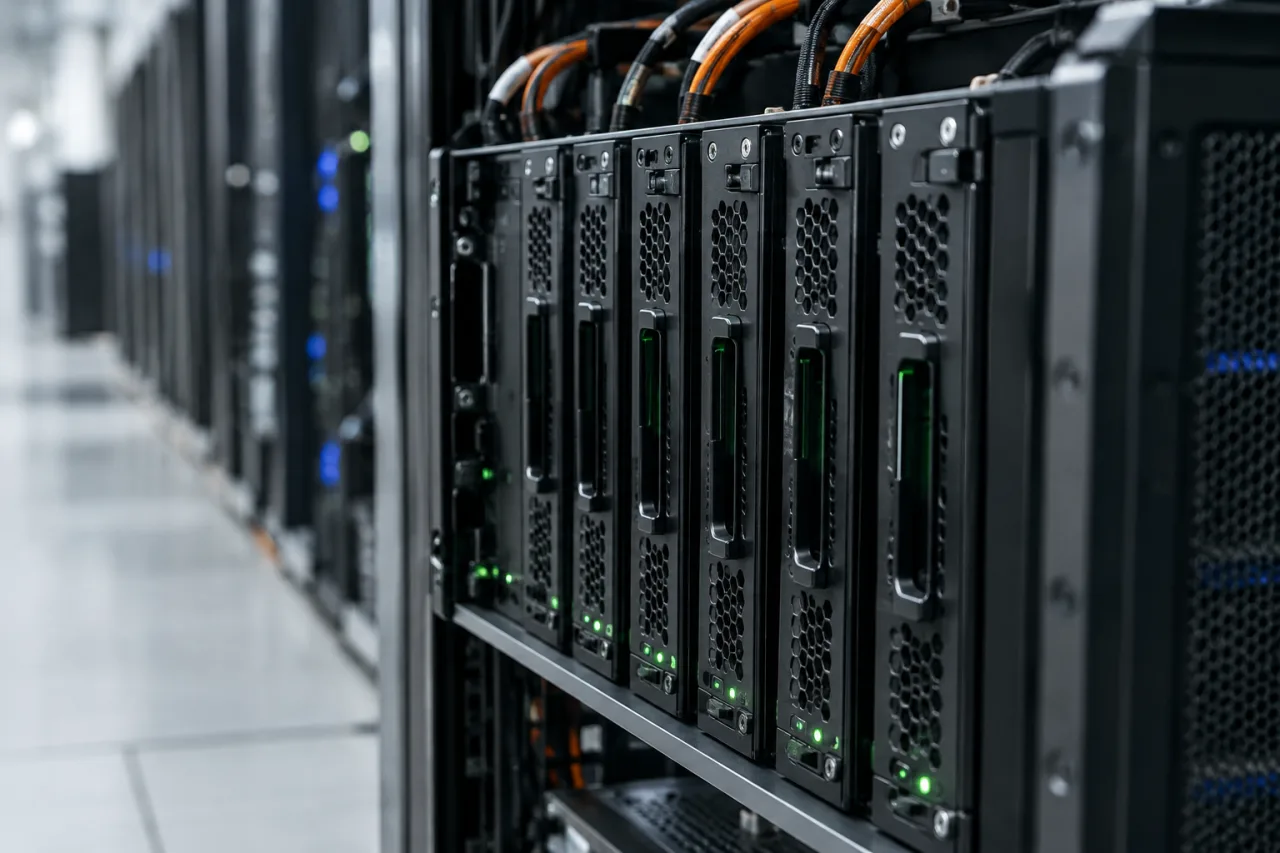
- ⚡ The rack leap in one number: where the GB-class (Blackwell NVL72) racks already strain legacy air cooling at ~120kW loaded per rack, Vera Rubin’s pod ships as five connected rack-scale systems (NVL72 GPU rack + Vera CPU rack + storage + Spectrum Ethernet + the confidential-computing tier) on an 800-volt DC distribution architecture — the power-conversion ladder is the leap.
- 🔓 The open-architecture play: October 12, 2026 (OCP Summit): NVIDIA opened the Vera Rubin architecture to Cisco, Google, Meta, Microsoft and Visionbay — Meta’s hyperscale operations + NVIDIA networking, FBOSS on the Switch Abstraction Interface, and Visionbay’s K-1 800-VDC factory platform “built with future Vera Rubin deployments in mind.”
- 🚀 Where the leap lands first: Microsoft, Dell and CoreWeave stood up Vera Rubin NVL72 engineering racks; the agentic factories in view run 100,000+ GPUs training and serving mixture-of-experts models — the scale where Blackwell’s generation starts counting its remaining quarters.
- 🎯 The buyer’s rule: for deployments inside the next 18 months, Blackwell-class racks are the safe floor; for 2027-2028 builds, the Vera Rubin pod (and its 800-VDC campus requirement) is the spec to plan — the dated milestone record, not marketing, sets the timing.
Table of Contents
The rack leap of 2026 has names and dates, and this guide carries the side-by-side: Vera Rubin vs Blackwell, the two NVIDIA rack generations, compared layer by layer from the company’s own record, dated at every step. The incumbent (Blackwell) runs today’s AI factory floor — the GB-class racks that redefined density to the ~120kW class, training and serving at hyperscale deployments worldwide. The successor (Vera Rubin) is beyond the announcement stage: NVIDIA announced the platform at GTC on March 16, 2026 with its next-generation chips in full production, then declared the platform “ramping into full production to power agentic AI factories worldwide” at GTC Taipei on May 31, 2026. This guide makes Vera Rubin vs Blackwell an evidence-first comparison: the dated milestones, the six-layer spec compare, the 800-VDC power leap, the security layer, the newly opened architecture — and the buyer’s read on timing.
The milestone record: where each platform stands
Blackwell’s record, stated plainly: the GB-class generation is the deployed floor of today’s AI factories — its racks are in production fleets at every hyperscale AI builder, its NVL72-class rack architecture set the density standard the industry now quotes (the rack-density ladder guide carries the ~120kW loaded numbers in detail), its supply chain runs through the decade’s contracted lanes (the custom-ai-chips forge), and its performance characteristics are the reference the market buys against. Blackwell is not “yesterday’s chip” — it is the installed base the next generation inherits, with the largest ecosystem of certified software on the planet.
Vera Rubin’s record, equally dated: March 16, 2026 (GTC): the platform announced at the agentic-AI frontier — seven new chips in full production, five racks covering every phase of AI. May 31, 2026 (GTC Taipei): “ramping into full production” — with the engineering-rack stand-ups named: Microsoft, Dell and CoreWeave each raising Vera Rubin NVL72 systems. October 12, 2026 (OCP Global Summit): the architecture opened (below), converting the platform from a closed product into an industry blueprint. The production-status race, as of this writing: Blackwell deployed at scale; Vera Rubin in production ramp with named first movers — two overlapping production windows, which is exactly how NVIDIA’s two-year cadence has always landed (the optics layer and the memory lane carry the supply-side schedule the cadence rides).
the generations overlap by design — the incumbent keeps the floor while the successor ramps; the dated milestones tell you who is buying into which window.
Vera Rubin vs Blackwell: the six-layer spec compare
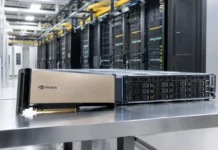
The compare, layer by layer, on the milestone record: 1 — rack topology: Blackwell’s NVL72 = one rack of 72 GPU dies on NVLink; Vera Rubin’s NVL72 = the GPU rack inside a five-rack pod (Vera Rubin NVL72 + Vera CPU rack + storage + Spectrum Ethernet switching + the confidential-computing tier) — the unit of deployment graduated from one rack to one pod. 2 — CPU pair: Blackwell pairs x86-class host CPUs (Grace on the GB-class superchip); Vera Rubin carries its own Arm-architecture CPU generation — the “Vera” in the name — purpose-built for the pod’s data plumbing. 3 — network fabric: both generations ride NVLink inside the rack; Vera Rubin’s pod adds Spectrum-6-class Ethernet switching tiers as first-class pod members (scale-out as architecture, not add-on). 4 — power distribution: Blackwell-era floors run the industry’s previous 415V-class distribution; Vera Rubin’s reference architecture is 800-VDC (below — the layer that changes the campus). 5 — security: Vera Rubin ships full-stack Confidential Computing at rack scale (below). 6 — the workload class: both generations train and serve; Vera Rubin’s design brief is agentic AI — the 100,000+ GPU factories serving mixture-of-experts models, the workload NVIDIA’s own October blog named.
the leap is structural, not incremental — the pod replaces the rack, the 800-VDC floor replaces the conversion ladder, and the security tier moves inside the silicon’s promise.
The 800-VDC leap: the power layer that changes the campus
Why 800 volts of direct current changes everything downstream: the pod’s power density forces it — a rack carrying ~120kW already stresses every conversion stage between the grid and the GPU; a five-rack pod multiplies the load, and every AC/DC conversion wastes energy as heat the cooling plant then pays to remove. The 800-VDC architecture pushes the grid-scale voltage deep into the facility — fewer conversion stages, less loss, less heat per delivered watt — and the ecosystem is building to it: Visionbay’s K-1 AI-factory platform (announced at OCP) “combines NVIDIA’s 800 VDC reference architecture with power and thermal technologies from Vertiv,” a next-generation factory design “built with future Vera Rubin deployments in mind.” The campus consequence, stated plainly in the procurement guide: an 800-VDC floor is not a rack-by-rack retrofit — it is a facility-class power architecture decision, the same class of decision that separates the factory-era campuses from the hosting-era buildings (the interconnection explainer and the storage buffer lane carry the grid-side levers; the SMR capacity calendar carries the long-horizon power answer).
the 800-VDC leap happens at the campus scale — a buyer planning a 2027-2028 build plans the voltage now.
The security layer: confidential computing goes rack-scale
The dated security claim, verbatim from the Taipei release: the Vera Rubin platform is “designed with full-stack NVIDIA Confidential Computing for a trusted execution environment at rack scale” — the pod “encrypting data across high-speed interconnects” with “hardware-level attestation to ensure the system is tamper-proof.” The generational significance: Blackwell’s Confidential Computing covered the GPU tier; Vera Rubin’s design covers the pod — every one of the five racks participates in the trusted execution environment, so tenants of an agentic factory can attest that their models and data moved and ran inside encrypted, attested hardware. The enterprise consequence: regulated workloads (finance, health, public sector) that required dedicated infrastructure get an attestation path to shared factory capacity — the security design that makes multi-tenant agentic factories contractable. The hardware-security surface analysis carries the edge-side mirror of this same layer, and the AI-browser guides carry the platform-trust lesson at the consumer end.
rack-scale attestation is the generational security leap — the feature that turns a factory from a hyperscaler’s private plant into a contractable multi-tenant product.
The open architecture: who builds inside the next generation
The October 12, 2026 opening, named in the record: NVIDIA opened the Vera Rubin architecture “to help scale AI factories worldwide” — the named builders: Cisco, Google, Meta, Microsoft and Visionbay. The marquee pairing: Meta’s experience operating AI infrastructure at hyperscale with NVIDIA’s networking technology; the switch-software layer runs FBOSS — Meta’s open switch platform — “built on the Switch Abstraction Interface, an OCP standard NVIDIA helped develop,” providing “a vendor-independent way of controlling switch hardware.” The ecosystem result: open switch software + open rack blueprints + open reference power architecture — three openness layers converging on one pod, with the partners’ deployments compounding: Visionbay’s K-1 (the 800-VDC factory platform), Meta’s operations pairing, the engineering racks (Microsoft, Dell, CoreWeave) already standing. The AI-factory concept guide carries the definitional layer; the money-trail analyses carry who funds what inside the opened blueprints.
the blueprints are open and the builders are named — the architecture moat at this scale is the supply chain, and everyone inside it is now a co-author.
What it means for buyers, tenants and the market
For infrastructure buyers: the timing rule, honest: inside the next 18 months, Blackwell-class racks remain the deployment floor (installed software, proven supply, certified integrations — the safe spec); 2027-2028 builds should price the Vera Rubin pod and the 800-VDC campus it drives — the buyers who plan voltage and cooling plant now buy the runway, not the retrofit. The chip-forge and TPU-lane analyses carry the parallel silicon track (Google’s TPU supply lock through 2031 — the multi-vendor ladder the factory era runs on).
For tenants and cloud customers: the pod’s confidential-computing promise lands as attested multi-tenant factories — expect capacity markets to begin quoting attestation tiers the way colocation quotes power tiers; the agentic workload class (100k+ GPU factories) is the demand signal the pricing rides.
For the market and investors: the AI factory’s milestone record (March, May, October — each dated, each named) is the cadence the ladder’s supply chains ride: memory allocations (the chipflation record), optics ramp (the co-packaged analysis), power contracts (the SMR calendar). The watchlist discipline: full-production dates, engineering-rack stand-ups, architecture adoptions — production milestones, not demos (the same ladder read the stock-analysis lanes carry).
Verdict: a production race with public milestones
Vera Rubin vs Blackwell, settled: Blackwell owns the deployed floor — the racks, the software base, the certified supply — and its ~120kW-class rack architecture remains this year’s reference; Vera Rubin owns the next window — the five-rack pod in full production since May 31, 2026, the 800-VDC campus architecture, rack-scale confidential computing, and the opened blueprint (Cisco, Google, Meta, Microsoft, Visionbay) that turns the pod into an industry standard in waiting. The comparison is a production race with public milestones, and every milestone is dated. For buyers the rule is the cadence; for tenants the rule is the attestation; for the industry the rule is the open blueprint. The rack leap is not coming — it is on the production calendar, one named stand-up at a time.
Frequently Asked Questions
What is the difference between NVIDIA Vera Rubin and Blackwell?
Six layers carry the compare: rack topology (Blackwell’s NVL72 is one rack; Vera Rubin’s NVL72 is the GPU rack inside a five-rack pod that adds a Vera CPU rack, storage, Spectrum Ethernet switching and a confidential-computing tier); CPU pairing (Vera Rubin carries its own Arm-architecture ‘Vera’ CPU generation); networking (Spectrum-class Ethernet as a first-class pod member); power distribution (Vera Rubin’s reference architecture runs 800-volt DC versus the Blackwell-era 415V class); security (rack-scale Confidential Computing versus the GPU-tier coverage); and the target workload (agentic AI factories of 100,000+ GPUs training and serving mixture-of-experts models).
When did NVIDIA Vera Rubin enter full production?
On the milestone record: NVIDIA announced the Vera Rubin platform at GTC on March 16, 2026 with seven new chips in full production and five racks for every phase of AI; the May 31, 2026 GTC Taipei press release declared the platform ‘ramping into full production to power agentic AI factories worldwide,’ with Microsoft, Dell and CoreWeave each standing up Vera Rubin NVL72 engineering racks; and on October 12, 2026 at the OCP Global Summit NVIDIA opened the architecture to Cisco, Google, Meta, Microsoft and Visionbay.
What is Vera Rubin NVL72?
The GPU rack of the Vera Rubin platform: Vera Rubin GPUs joined by NVLink fabric in a 72-package rack – but as one member of a five-system pod rather than a standalone rack. Microsoft, Dell and CoreWeave each received engineering racks during the production ramp announced at GTC Taipei on May 31, 2026. The rack pairs with the Vera CPU rack, storage tiers, Spectrum Ethernet switching tiers and the confidential-computing tier to form the pod-scale agentic AI factory unit.
Why does Vera Rubin use 800-volt DC power?
Power density drives the architecture: five-rack pods multiply the roughly 120kW-per-rack loads the Blackwell generation already pushes, and every AC/DC conversion stage between the grid and the GPU wastes energy as heat that cooling must remove. The 800-VDC reference architecture distributes higher voltage deeper into the facility with fewer conversion stages and less loss. The ecosystem builds to it: Visionbay’s K-1 AI-factory platform, announced at the October 2026 OCP Summit, combines NVIDIA’s 800 VDC reference architecture with Vertiv power and thermal technologies, built with future Vera Rubin deployments in mind.
What is NVIDIA Confidential Computing on Vera Rubin?
Full-stack confidential computing for a trusted execution environment at rack scale: the five-rack pod encrypts data across its high-speed interconnects and provides hardware-level attestation designed to keep the system tamper-proof, per NVIDIA’s May 31, 2026 GTC Taipei release. The generational difference: Blackwell’s confidential computing covered the GPU tier, while Vera Rubin extends the trusted execution environment across the whole pod – the security layer that makes multi-tenant agentic AI factories contractable for regulated workloads including finance, health and public-sector deployments.
Which is better for my deployment right now, Vera Rubin or Blackwell?
It depends on the build window. For deployments inside the next 18 months, Blackwell-class racks remain the deployment floor with the largest installed base, certified software ecosystem and proven supply lanes. For 2027-2028 builds, plan for Vera Rubin pods and the 800-VDC campus power architecture they drive – facility-class decisions (voltage, cooling plant, interconnection) made now avoid retrofits later. The guide treats the generations as a production race with public milestones rather than a winner-takes-all contest: Blackwell keeps the floor while Vera Rubin ramps.
Financial Disclaimer
This article is editorial analysis of publicly reported information, not investment or financial advice, and no outcome is promised. Product specifications and dates are as published by the named sources; verify before decisions. Markets carry risk.
The generation handoff’s cadence is the record’s own arithmetic: NVIDIA’s platform generations ship roughly on the two-year ladder, and the overlap window is where fleets are built. Blackwell racks carry the installed floor — every hyperscale AI builder’s running deployments, the certified integrations catalog, the tenanted contracts that renew on schedule — a floor that does not leave when a successor ramps; it compounds. Vera Rubin pods arrive into that floor: the pod’s five-system topology needs the floor’s facilities to modernize around it, which is why the 800-VDC reference architecture and the campus partners matter as much as the silicon — the rack leap lands when the building agrees to it. The reading rule across the overlap: date every claim to its named milestone, quote the rack class, and let neither generation’s marketing speak for the other’s deployed state.
The tenant-side view completes the buyer’s guide: what changes mid-overlap is the contract you sign. On the Blackwell floor, capacity contracts quote racks, power tiers in the facility’s native volts, and software-certification SLAs. On the Vera Rubin ramp, the early contracts quote pods — attestation tiers ride the rack-scale confidential-computing promise, the 800-volt floor enters the schedule as a facility milestone, and the Ethernet switching tiers enter SLAs as fabric bandwidth, not rack count. Early movers (Microsoft, Dell, CoreWeave) already sign in pod terms; the wider market follows as engineering racks become production fleets. The timing question for any buyer — racks now, or pods at the next window — resolves on the dated milestone record, and both answers are correct at different windows.
The supply-side layer closes the compare: every generation’s ramp rides a component calendar that the money-trail record already documented — memory allocations ride the HBM wafer assignments (the chipflation record carries the three-times-a-gigabyte arithmetic), optics ride the co-packaged deployment curve (the production milestone at the switch tier), power rides contracted capacity (the interconnection queue and the storage buffers), and cooling rides the liquid-plant buildouts the immersion guide details. Vera Rubin’s ramp therefore reads as a supply-chain event as much as a chip event: pods arrive as fast as the watts, the wafers and the fibers land. The compare’s honest close for data center water usage and every other facility input: the generations change the specification — the campus constraints decide the calendar. Buyers who map both (spec and constraints) price their windows correctly.
- investor.nvidia.com/news/press-release-details/2026/NVIDIA-Vera-Rubin… — engineering racks
- investor.nvidia.com/news/press-release-details/2026/NVIDIA-Vera-Rubin… — seven new chips in full production
- blogs.nvidia.com/blog/ocp-global-summit-vera-rubin-scale-ai-factories — NVIDIA opened the Vera Rubin architecture
External sources linked in this article, in order of first mention. Spotted an error or a broken link? Tell us.
Cite this pagePublished Nov 5, 2026
Agron, E. (2026, November 5). Vera Rubin vs Blackwell: the Dated Rack-Ladder Record. WorldNgayon. https://worldngayon.com/vera-rubin-vs-blackwell/
Agron, Edmon. “Vera Rubin vs Blackwell: the Dated Rack-Ladder Record.” WorldNgayon, 5 Nov. 2026, worldngayon.com/vera-rubin-vs-blackwell/.
Agron, Edmon. “Vera Rubin vs Blackwell: the Dated Rack-Ladder Record.” WorldNgayon, November 5, 2026. https://worldngayon.com/vera-rubin-vs-blackwell/.
Agron, E. (2026) ‘Vera Rubin vs Blackwell: the Dated Rack-Ladder Record’, WorldNgayon, 5 November. Available at: https://worldngayon.com/vera-rubin-vs-blackwell/.
E. Agron, “Vera Rubin vs Blackwell: the Dated Rack-Ladder Record,” WorldNgayon, Nov. 5, 2026. [Online]. Available: https://worldngayon.com/vera-rubin-vs-blackwell/
@online{agron2026verarubin,
  author       = {Agron, Edmon},
  title        = {{Vera Rubin vs Blackwell: the Dated Rack-Ladder Record}},
  year         = {2026},
  date         = {2026-11-05},
  organization = {WorldNgayon},
  url          = {https://worldngayon.com/vera-rubin-vs-blackwell/},
  urldate      = {}
}TY - ELEC AU - Agron, Edmon TI - Vera Rubin vs Blackwell: the Dated Rack-Ladder Record T2 - WorldNgayon PY - 2026 DA - 2026/11/05/ UR - https://worldngayon.com/vera-rubin-vs-blackwell/ Y2 - ER -
Cite the version you read; the page may be updated. Zotero and Mendeley can also import this page directly.