Table of Contents
Key Takeaway
- 🎮 The deal: Roblox PhilSys age verification is agreed: the national ID system will be integrated into Roblox’s identity checks for Filipino users, the CICC confirmed Friday, August 28, after government officials met Roblox executives in Singapore on Thursday.
- 📅 The timeline: A Roblox technical team arrives the first week of September to study implementation; DICT Secretary Henry Aguda says the integration could be live by October 2026.
- 🛡️ The goal: Aguda’s words — with adults verified too, “potentially predators, potentially groomers malalaman na natin” — the point is unmasking grown-ups who hide behind false identities to target children.
- 🏫 The bonus: Roblox is also planning a STEM education program with DepEd and iACADEMY per the DICT-CICC joint statement, turning a safety crisis into a classroom opportunity.
- 👀 The trade-off: Roblox PhilSys age verification raises data-privacy questions the DPA governs — details of the integration remain unfinalized, and that’s where the next fight will happen.
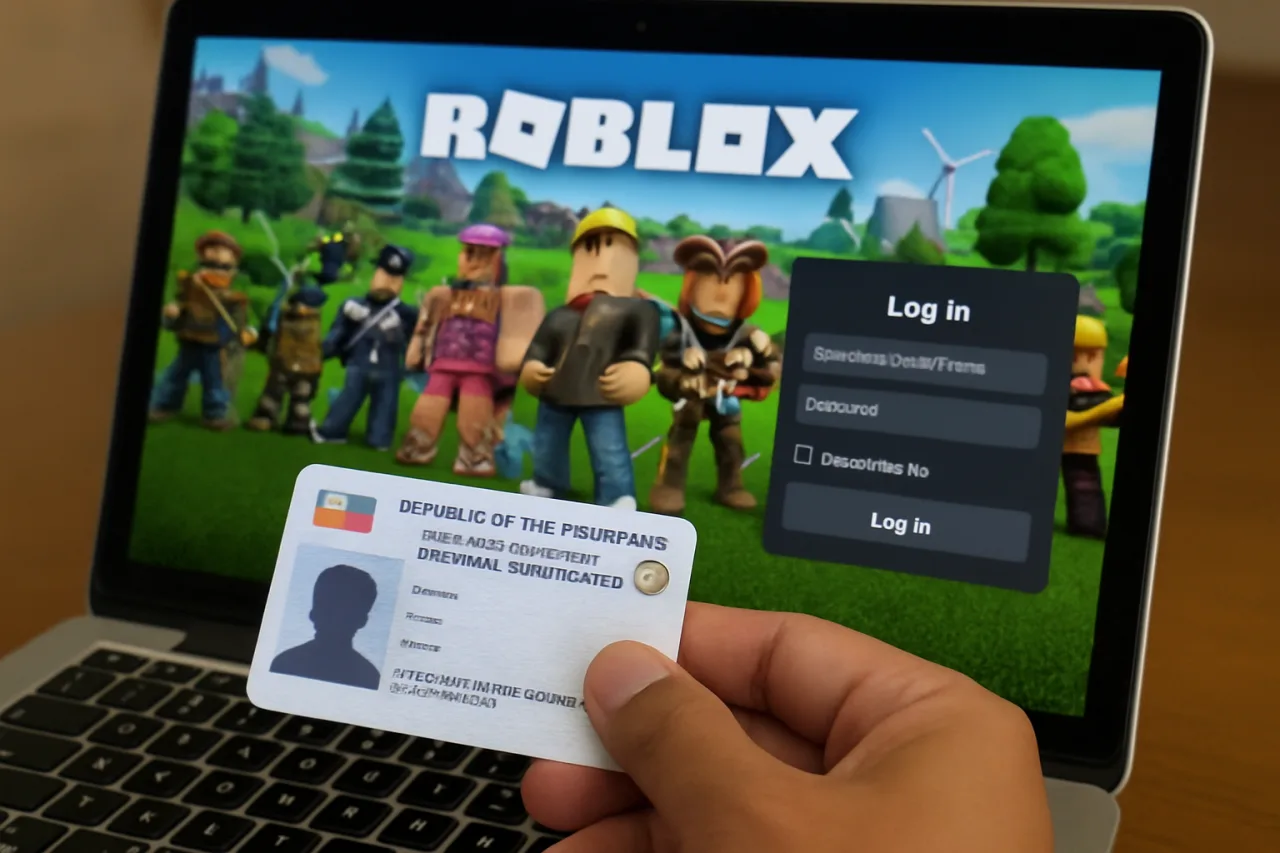
Roblox PhilSys age verification is happening: the gaming platform has agreed to integrate the Philippine Identification System into its age and identity checks for users in the country, the Cybercrime Investigation and Coordinating Center announced Friday, August 28 — the first time a global gaming platform will tie user verification to the Philippine national ID, and a direct response to months of government pressure over predators and groomers targeting Filipino children on the platform. The commitment came out of face-to-face meetings in Singapore on Thursday between Roblox executives and a Philippine delegation led by DICT Secretary Henry Aguda and CICC Executive Director Renato “Aboy” Paraiso, and it comes with a clock: a Roblox team lands in Manila in the first week of September, and Aguda says the integration could be in place by October. For the parents of the millions of Filipino children who play Roblox — and for the OFW parents watching from abroad — this is the most consequential child-safety move a gaming platform has made in the Philippines, and it sets a template other platforms will be pressed to follow.
What Roblox Agreed To — Line by Line
The agreement is a package, not a single concession, and each element answers a specific government demand. The core commitment of the Roblox PhilSys age verification deal: national ID integration into Roblox’s existing age and identity verification system, agreed “this year” per Aguda’s Friday dzRH interview — “Sabi nila [Roblox] pagdating sa identity at age verification, ready na sila mag-integrate sa PhilSys.” The second element is physical presence: a Roblox office in the Philippines by October, giving regulators and law enforcement a local counterpart instead of email threads to California. Third, tighter age-based communication restrictions to limit interactions between children and users outside their age groups. Fourth, per the CICC, accounts that skip age checks will have chat disabled and restricted game access — making verification effectively unavoidable for the platform’s social features. Fifth, faster cooperation with law enforcement on takedowns and evidence requests, part of the same Singapore package Meta agreed to alongside Roblox.
The facial age recognition layer deserves its own note. Aguda has said Roblox will be the first platform to roll out facial kids recognition as part of the Roblox PhilSys age verification stack — Roblox’s existing system already estimates age from selfies with a claimed mean absolute error of about 1.4 years for users under 18, and PhilSys integration adds a government-anchored second factor. Facial estimation technology is already battle-tested in the Philippines’ fight against deepfakes; putting it in front of every Filipino Roblox login makes it part of a child’s daily digital life.
How Roblox PhilSys Age Verification Will Actually Work
The critical fact: details are not finalized. What the government has confirmed is the destination — PhilSys integration into the age-check flow — and the mechanism Roblox already runs. Today, chat access on Roblox requires an age check via government-issued ID or facial age estimation; accounts without checks keep chat disabled and see restricted game access. The Philippine integration means those checks will validate against the national ID registry, which changes two things at once.
First, verification stops being self-attested. A selfie that “looks 25” or a borrowed ID photo is one thing; a check against PhilSys records is another. That is the mechanics of Roblox PhilSys age verification. Second — and this is Aguda’s stated rationale — the value runs both directions: verifying adults, not just children. “Hindi lang kasi ‘yung minor ang kailangang mag-authenticate para magkaroon ng value. ‘Yung adult ba na potentially predators, potentially groomers malalaman na natin,” Aguda said. In plain terms: the database knows if the 40-year-old claims to be 13, and that is the entire anti-grooming thesis. Roblox’s technical team lands the first week of September to study implementation with Philippine authorities; expect the hard questions — data retention, what PhilSys data Roblox stores versus what it merely validates, and whether verification happens through PhilSys’s own tokenized check rather than raw ID data — to be settled in those September sessions.
Why the Government Moved: Five Months of Escalation
This agreement did not appear from nowhere — it is the endgame of a five-month escalation that started with a threat. On March 18, Aguda put Roblox on notice over reports of sexual predation, grooming and exploitation of Filipino minors, explicitly floating restrictions or suspension. In April, after the first DICT-CICC-Roblox engagement, the government stood down: DICT and CICC announced no ban would be pursued after the company committed to concrete safety steps. PNP chief Gen. Nartatez had by then publicly accused the platform of facilitating crimes against minors; the CICC’s Paraiso had urged parents to monitor children’s gaming; the platform had been linked in Philippine discourse to predator networks and even drug distribution to minors. Congress, in parallel, has been moving its own online-safety legislation — HB 9461 targets AI-generated child abuse material — putting legislative pressure behind the regulatory one.
The August 27 Singapore meetings — which included the NBI, NTC, Congress and the Office of the Executive Secretary alongside DICT and CICC — converted five months of pressure into signed commitments, with Roblox first — Philstar reported the CICC confirmation on Friday — and Meta following with what Aguda summarized as “we hear you, we acknowledge the gaps and we will do better,” plus an MoU to be signed in Manila. Paraiso’s statement struck the conciliatory note: “We are pleased with the direction of our discussions with Roblox and the willingness they have shown to work with the Philippine government. This is an important beginning, and we want to build on it to create a safer gaming environment for our children.” Translation for parents: the ban threat worked, and cooperation replaced confrontation — for now.
The Privacy Trade-Off Nobody Should Ignore
Here is the part of Roblox PhilSys age verification that deserves a clear eye: the Philippines is about to link a national biometric ID system to a platform whose user base is overwhelmingly children. The Data Privacy Act governs the entire arrangement — PhilSys data is personal data, biometric data is sensitive personal information, and the National Privacy Commission has jurisdiction over both the government side (PSA/DICT) and the platform side. The legitimate purpose is unimpeachable: protecting children from predators. The risks are the quiet kind: how much PhilSys data flows to a US gaming company, where it is stored, how long it is retained, what happens in a breach, and whether “identity verification” quietly becomes “identity surveillance.”
Privacy advocates will also ask the question the government hasn’t answered publicly: does a child’s Roblox account now become traceable to a real identity in a government database — and who can access that link? The DPA’s data-subject rights (access, correction, and the special protections for minors’ data) will be tested in a way no Philippine regulator has faced. The CICC’s own record — it has tracked thousands of deepfake and scam reports this year alone — suggests the enforcement capability exists; whether the safeguard architecture is published in full, before October, is the test of whether this deal deserves the trust the government is asking parents to extend. The details are unfinalized. That is not a footnote — it is the whole ballgame.
What It Means for OFW Parents Raising Kids on Roblox
For overseas Filipino workers, this story lands differently than for Manila-based parents. The OFW household runs on remote parenting: the children are in Batangas or Cebu, the parent is in Riyadh or Dubai, and the daily relationship with the grandkids’ gaming habits happens through a phone screen. Roblox is often the digital tambayan where OFW kids spend hours daily — and where a parent 8,000 kilometers away cannot see who is talking to their child. The Roblox PhilSys age verification system, if it works as promised, gives that parent something they have never had: platform-level assurance that the adult chatting with their 10-year-old had to verify a real identity, and that accounts refusing verification face restricted chat and limited games.
Practical guidance for OFW and local parents while the integration rolls out: first, age-check your child’s account now — the existing system accepts government IDs and facial estimation, and unchecked accounts are already getting restricted access. Second, use Roblox’s parental controls — the Singapore package explicitly includes parental controls as a committed feature, and they work independently of PhilSys. Third, treat October as the milestone, not the finish line: the office opens, integration launches, and the real measure is whether grooming reports drop. The government has put its credibility on this working. Parents should hold it to that.
Timeline and What to Watch Next
The calendar is unusually specific for a tech-governance story. First week of September 2026: Roblox technical team arrives in Manila to study implementation. October 2026: target for both Roblox PhilSys age verification going live and the Philippine office opening, per Aguda. Also in motion: the Meta MoU signing in Manila, and engagement with legislators as Congress weighs online-safety bills. The watchdog question for October: does the published integration design include independent privacy safeguards — tokenized verification, data minimization, published retention rules — or just a raw ID handoff? That document, when it surfaces, will tell parents everything they need to know about whether the Philippines just built the world’s most ambitious child-safety system or its most expansive child-data pipeline. We will track the legislative side of child online safety here, and this story will be updated as the September technical talks land.
Frequently Asked Questions About Roblox PhilSys Age Verification
Is Roblox requiring national ID in the Philippines?
Yes — Roblox PhilSys age verification was confirmed on August 28, 2026: the platform agreed to integrate the national ID system into its age and identity checks for users in the country, per the CICC’s August 28 announcement. Details of how the integration works have not been finalized; a Roblox technical team is expected in the Philippines the first week of September 2026, and DICT Secretary Henry Aguda said the integration could be in place by October.
Why is the Philippine government tying Roblox to the national ID?
Child safety. The government moved after months of reports that Roblox was being used for sexual predation, grooming and exploitation of Filipino minors. Aguda’s stated logic: verifying adults — not just minors — is what gives the system value, because adults posing as children to groom victims can no longer hide behind false identities once accounts are tied to verified identities.
When will Roblox open its Philippine office?
Roblox plans to establish a Philippine office by October 2026, according to both Aguda and the CICC. The office enables faster coordination between the platform, government regulators and law enforcement on takedowns and child-safety investigations — part of the package agreed at the August 27 Singapore meetings.
What is the Roblox DepEd STEM education program?
Per the DICT-CICC-Roblox joint statement, Roblox is planning a STEM education program with the Department of Education and iACADEMY, turning the platform’s educational capability (Roblox has run STEM learning initiatives globally since 2015) into a Philippine classroom offering. Details on scale and rollout have not yet been published — this article will be updated as they land.
Does facial age estimation mean Roblox scans children’s faces?
Roblox’s current system offers facial age estimation — analyzing a selfie to estimate age — with a claimed mean absolute error of about 1.4 years for under-18 users, as an alternative to government-ID checks. Aguda has said Roblox will be the first platform to roll out facial recognition for age verification in the Philippines. The privacy implications of scaling facial analysis to children’s accounts fall under the Data Privacy Act, and the NPC’s posture on the rollout remains to be seen.
What should parents do while waiting for the integration?
Three things now: complete the existing age check on your child’s account (government ID or facial estimation), enable Roblox’s parental controls including chat restrictions and content filtering, and keep the conversation going — no verification system replaces a parent asking who their child is talking to. Unverified accounts already face disabled chat and restricted game access, so an age-checked account is currently the safer configuration.