Table of Contents
Key Takeaway
- 🛡️ The Bill: House Bill 9461, the Child Online Safety and Protection Act of 2026, passed the House on third reading with 284 votes on May 27, 2026. It expands the Anti-OSAEC Act (RA 11930) to cover AI-generated abuse materials, deepfakes, grooming, sexual extortion, and livestreamed exploitation.
- 🤖 AI Threat: The bill is the first Philippine legislation to explicitly criminalize AI-generated child sexual abuse materials. The Internet Watch Foundation recorded a 26,385 percent increase in AI-generated CSAM videos from 2024 to 2025.
- 🔒 Platform Obligations: Digital platforms must establish Philippine operations, implement age verification, deploy content moderation, and remove reported content within 24 hours. Non-compliance carries revenue-based penalties.
- ⚖️ Penalties: Those convicted of producing, distributing, livestreaming, or facilitating child sexual abuse materials face life imprisonment and fines of at least P2 million.
- ⚡ What You Should Do: Parents, educators, and tech professionals should understand how this child online safety Philippines law affects platform obligations, parental controls, and reporting mechanisms.
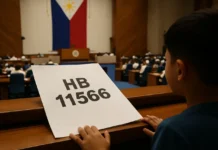
The child online safety Philippines landscape changed on May 27, 2026, when the House of Representatives passed House Bill 9461, the Child Online Safety and Protection Act of 2026, with 284 votes. The child online safety Philippines bill strengthens and expands Republic Act 11930, the Anti-Online Sexual Abuse or Exploitation of Children and Anti-Child Sexual Abuse or Exploitation Materials Act, by broadening enforcement mechanisms and updating legal protections to address emerging threats that the 2022 law did not anticipate. The most significant update: for the first time in Philippine law, AI-generated child sexual abuse materials, synthetic content, and digitally manipulated deepfakes involving children are explicitly criminalized.
The Senate moved on parallel legislation on February 10, 2026, with the sponsorship of Senate Bill 1819, which strengthens protections against online sexual abuse and exploitation of children. Lawmakers raised alarm that artificial intelligence, deepfakes, and instant digital payments have created new avenues for syndicates to prey on minors. On August 10, 2026, both measures were elevated to LEDAC priority status, fast-tracking their legislative path. Speaker Dy identified the child online safety Philippines bills as among the government’s top priority legislation, alongside the Sierra Madre Conservation and Development Authority Act, signaling that both measures are expected to move through Congress before the end of 2026.
What the Child Online Safety Philippines Bill Criminalizes
HB 9461 expands the definition of child sexual abuse or exploitation materials to include artificial intelligence-generated, synthetic, and digitally manipulated content, including deepfakes involving children. This closes a critical gap in the existing Anti-OSAEC Act, which was enacted in 2022 before the explosion of generative AI tools made it possible to create realistic abuse imagery without involving an actual child.
The bill also criminalizes a broader range of offenses that the existing law did not explicitly cover: online grooming, sexual extortion, luring, image-based sexual abuse, and livestreamed exploitation. The Senate’s February 2026 hearing heard testimony about how syndicates use instant digital payments to monetize livestreamed abuse, creating a real-time economy of exploitation that outpaces traditional law enforcement responses.
Those convicted of producing, distributing, livestreaming, or facilitating child sexual abuse materials face life imprisonment and fines of at least P2 million. The bill also imposes stricter obligations on digital platforms and financial intermediaries, requiring them to detect, report, and remove exploitative content and block associated payment flows.
The AI-Generated Abuse Threat Driving the Child Online Safety Philippines Bill
The scale of AI-generated child sexual abuse material has grown at a rate that outstrips any previous form of online exploitation. The Internet Watch Foundation, in its 2026 AI CSAM Report, identified 3,443 AI-generated child sexual abuse videos in 2025, representing a 26,385 percent increase compared to 2024, when only 13 such videos were recorded. Of those videos, 65 percent were classified as Category A, the most extreme classification.
UNICEF, in a February 2026 statement, warned that AI-generated sexualised images of children are circulating at an accelerating rate. When a child’s image or identity is used, that child is directly victimized, UNICEF stated. Even without an identifiable victim, AI-generated child sexual abuse material normalizes the sexual exploitation of children, fuels demand for abusive content, and presents significant challenges for law enforcement in identifying and protecting children who need help.
The child online safety Philippines bill addresses this by making the creation, possession, and distribution of AI-generated abuse materials a criminal offense regardless of whether a real child was involved. This is a critical legal innovation: under previous law, prosecutors had to prove that a real child was depicted, which is technically impossible when the image is entirely synthetic. HB 9461 removes that evidentiary barrier.
| Threat Category | What HB 9461 Does | Previous Law Coverage |
|---|---|---|
| AI-generated CSAM | Explicitly criminalized | Not covered (RA 11930 predated generative AI) |
| Deepfakes involving children | Criminalized as CSAEM | Not explicitly covered |
| Online grooming | Newly criminalized | Partially covered under existing law |
| Sexual extortion | Newly criminalized | Not explicitly covered |
| Livestreamed exploitation | Expanded with payment tracking | Covered but enforcement limited |
| Image-based sexual abuse | Newly criminalized | Not explicitly covered |
Platform Obligations Under the Child Online Safety Philippines Framework
HB 9461 imposes significant obligations on digital platforms operating in the Philippines. According to the Digital Policy Alert, which tracks the bill’s provisions, platforms would be required to establish local operations, implement age verification systems, deploy content moderation mechanisms, and comply with design requirements that prioritize child safety. The bill also mandates content removal within 24 hours of a verified complaint.
The Senate’s April 14, 2026 committee hearing, presided over by Deputy Majority Leader Risa Hontiveros, investigated Roblox and other online platforms being used to exploit and abuse children. The inquiry sought mandatory age verification protocols and child safety standards across online platforms to prevent online sexual abuse and exploitation of children, grooming, violent radicalization, and other emerging digital threats. Representatives from the DICT, the PNP, and Roblox itself participated in the hearing.
For Philippine tech companies and international platforms operating in the country, the child online safety Philippines framework creates a compliance landscape similar to the UK’s Online Safety Act and the US Kids Online Safety Act. The difference is enforcement: the Philippines has historically struggled to enforce cybercrime laws due to limited technical capacity and jurisdictional challenges. HB 9461 attempts to address this by requiring platforms to maintain local operations, making them subject to Philippine courts. The bill also requires financial intermediaries, including banks, e-wallet providers, and remittance services, to detect and block payments associated with online child exploitation. This provision directly addresses the monetization pipeline that syndicates use to profit from livestreamed abuse, closing a gap that law enforcement has identified as the most difficult to disrupt.
How the Child Online Safety Philippines Bill Affects Parents and Professionals
For parents, the bill’s age verification and platform design requirements are the most directly relevant provisions. If enacted, platforms would be required to implement age-appropriate design measures, default privacy settings for minors, and parental control tools. The Senate’s investigation into Roblox highlighted how gaming platforms can be used for grooming and exploitation, a threat that current platform safeguards do not adequately address.
For tech professionals and content moderators, the bill creates new compliance obligations. Companies that operate digital platforms, social media services, or online gaming services in the Philippines would need to build content moderation systems capable of detecting AI-generated abuse materials, implementing age verification, and responding to takedown requests within 24 hours. For broader context on how AI is being used to detect and prevent cyber threats, see our proven guide to deepfake detection tools available in the Philippines. The intersection of AI regulation and child protection is also addressed in our coverage of the broader Philippine AI regulation landscape, where multiple bills are moving through Congress simultaneously.
For OFW families, the child online safety Philippines bill addresses a specific vulnerability. Many OFW children are raised by extended family members while parents work abroad, creating gaps in supervision that online predators exploit. The bill’s platform obligations and parental control requirements are designed to provide a safety net that does not depend on a parent being physically present. Our guide to digital account security provides additional context on protecting family members from online threats.
The Philippines has been identified as one of the most prominent global hubs for livestreamed child sexual abuse, according to Humanium’s research. The country’s combination of widespread English proficiency, high internet penetration, deep poverty in rural areas, and a large population of children left in the care of relatives while parents work abroad creates conditions that international exploitation networks actively target. The Internet Watch Foundation’s 2026 AI CSAM Report provides the global data context for the bill’s AI provisions, documenting that AI-generated abuse imagery now appears on both dark web and mainstream commercial platforms on the clear web.
The Philippine Statistics Authority reported that the Philippines ranked 15th globally in responding to child sexual violence in 2025, a ranking that Senator Win Gatchalian cited when calling for stronger enforcement of existing anti-OSAEC laws. The gap between the country’s legal framework and its enforcement capacity is precisely what HB 9461 and SB 1819 are designed to close, by giving law enforcement new tools to target AI-generated content, platform-based grooming, and payment-facilitated livestreamed abuse that current law does not adequately address. The child online safety Philippines legislation represents a recognition that the threat has evolved faster than the law, and that closing that gap is no longer optional but urgent, given the 26,385 percent surge in AI-generated abuse materials documented by international watchdogs.
Frequently Asked Questions About the Child Online Safety Philippines Bill
What is House Bill 9461?
House Bill 9461, the Child Online Safety and Protection Act of 2026, passed the House on third reading with 284 votes on May 27, 2026. It expands the Anti-OSAEC Act (RA 11930) to cover AI-generated abuse materials, deepfakes, grooming, sexual extortion, and livestreamed exploitation of children.
Does the bill criminalize AI-generated child abuse materials?
Yes. HB 9461 is the first Philippine legislation to explicitly criminalize AI-generated, synthetic, and digitally manipulated child sexual abuse materials, including deepfakes. This closes a gap in the existing law, which predated the generative AI explosion.
What are the penalties under the child online safety Philippines bill?
Those convicted of producing, distributing, livestreaming, or facilitating child sexual abuse materials face life imprisonment and fines of at least P2 million. Digital platforms that fail to comply with content removal and safety requirements face revenue-based penalties.
What obligations does the bill place on digital platforms?
Platforms must establish Philippine operations, implement age verification, deploy content moderation systems, comply with child-safe design requirements, and remove reported content within 24 hours. The bill also imposes obligations on financial intermediaries to block payments associated with exploitation.
What is the status of the Senate counterpart bill?
Senate Bill 1819 was sponsored on February 10, 2026. The Senate Committee on Women, Children, Family Relations and Gender Equality held a hearing on April 14, 2026, investigating Roblox and other platforms. Both the House and Senate bills were elevated to LEDAC priority status on August 10, 2026.
How does the bill address AI-generated abuse without a real victim?
HB 9461 criminalizes the creation, possession, and distribution of AI-generated child sexual abuse materials regardless of whether a real child was depicted. This removes the evidentiary barrier that existed under previous law, where prosecutors had to prove a real child was involved.
How does this affect OFW families?
Many OFW children are raised by extended family while parents work abroad, creating supervision gaps that predators exploit. The bill’s platform obligations and parental control requirements provide a safety net that does not depend on a parent being physically present in the Philippines. This is particularly important for families where the primary caregiver is a grandparent or relative who may not have the digital literacy to monitor online activity effectively. The child online safety Philippines framework shifts that burden from individual caregivers to the platforms themselves, requiring them to build safety into their products by default rather than relying on parents to configure protections after the fact.
Disclaimer: This article is for informational purposes only and does not constitute legal advice. Readers should consult qualified legal professionals for guidance on how proposed legislation may affect their specific circumstances. If you suspect a child is being exploited online, report it immediately to the Philippine National Police Women and Children Protection Center or the Department of Justice Office of Cybercrime.