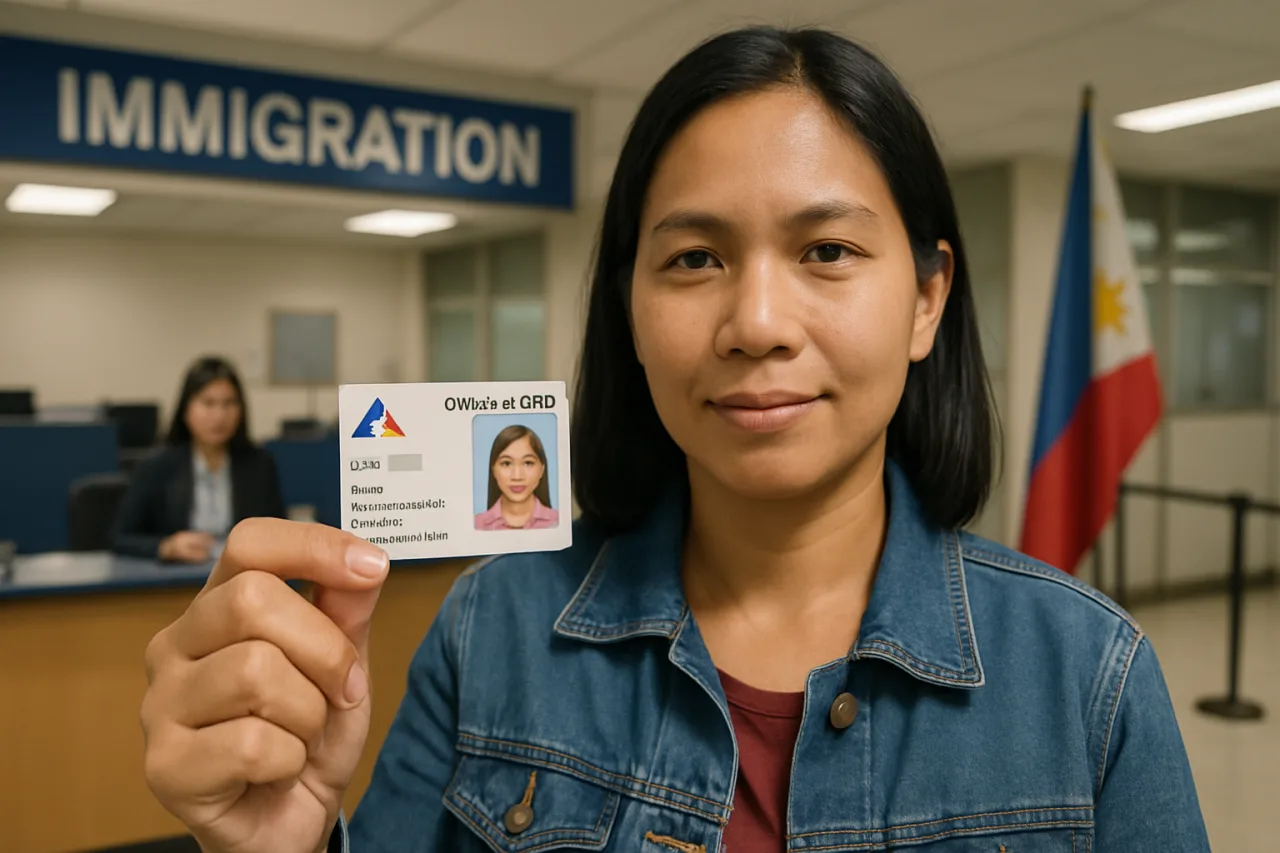
OFW ID news matters this week because OWWA’s electronic card has quietly become the one government ID every returning Filipino worker must understand: the paper iDOLE was discontinued, the old online application was removed in January 2025, and the card OFWs actually carry today is the OWWA e-Card — a government-recognized ID that proves active OWWA membership, works at every Migrant Workers Office, embassy and consulate abroad, and unlocks membership discounts and programs. This guide explains what the OFW ID is now, the free digital path inside the OWWA Mobile App, the in-person claiming process and its locations and hours, every requirement on the checklist, and the honest corners where OWWA has not published a rule — plus the distinction Filipino workers most often get wrong at the airport: your OFW ID is not your exit clearance, and your exit clearance is the OFW Pass.
Key Takeaway
- 🆔 The card: the OFW ID today is the OWWA e-Card — proof of active OWWA membership, recognized as a government-issued ID at any MWO, embassy or consulate, and the key to OWWA’s programs and partner discounts.
- 📵 The process change: the old online application was removed in January 2025 — apply and claim in person, and the card is issued on the spot (OWWA’s own announcement).
- 📍 The locations: NAIA OFW Lounges (Terminals 1 and 3), the DMW Central Office on EDSA-Ortigas, and the OWWA-NCR office on Senator Gil Puyat Avenue — with expansion to more offices announced.
- 📱 The digital path: your membership renders a digital e-Card in the free OWWA Mobile App and eGovPH — the digital card and the physical card carry the same official weight.
- 🚫 The common mistake: the OFW ID is not an exit clearance — airport departure needs the OFW Pass (the successor of the OEC), a separate, free, digital clearance.
What the OFW ID is now — and what replaced iDOLE
The OFW ID started its life as the iDOLE — the plastic identification card of the Department of Labor and Employment era, issued to overseas Filipino workers as a government-issued ID. The iDOLE was discontinued: it is no longer issued, and older guides on the internet still describe a card that government stopped producing years ago. Its functional successor is the OWWA e-Card, launched under the Overseas Workers Welfare Administration as an electronic credential tied directly to a worker’s OWWA membership record. On its official page, OWWA describes the e-Card as proof of active membership, recognized as a government-issued ID that can be presented at any Migrant Workers Office, embassy or consulate when assistance is needed, and the gateway card for membership benefits — welfare programs, reintegration initiatives, training and livelihood opportunities, and the partner-company discounts and rewards it advertises per country.
The naming confusion is not cosmetic; it decides whether an airport counter accepts your papers. Three names circulate in community groups — iDOLE, OFW ID, OWWA e-Card, and the OFW Pass — and they are not interchangeable. The iDOLE is dead. The OFW ID survives as the e-Card under OWWA’s system. The OFW Pass is something else entirely: the Department of Migrant Workers’ digital overseas-employment clearance, the successor document to the old OEC. The worker who treats the ID as the exit document gets sent to the wrong counter; the worker who knows which is which clears immigration with a QR code in seconds.
The two paths: digital e-Card and physical card
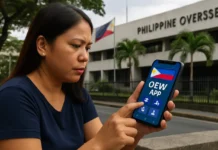
OWWA’s e-Card reaches the worker through two synchronized forms, and understanding both removes most of the process anxiety. The digital form is the e-Card rendered inside the OWWA Mobile App and mirrored in the eGovPH app — once a worker’s OWWA membership is active and records are in the system, the digital card is the one workers carry in their phone and show at counters abroad, and OWWA treats the digital card as usable like the physical one. The physical form is the plastic card, claimed in person at OWWA application points: the January 2025 process change removed the old web application flow and made the in-person application instant — you complete a form, take a photo, sign electronically, and receive the card on the spot. The change was OWWA’s own announcement, posted with candor: the online application is gone, and claiming happens as soon as you apply at the counter.
The two-path structure also explains the card’s real value model: the digital e-Card is proof-of-membership infrastructure that follows the membership itself; the physical card is the convenience and recognition layer a worker claims when physically in the country. Workers renewing membership from abroad through the app keep their digital card current without a flight; workers transiting Manila claim the plastic at the airport lounges before departure or after arrival.
Where to get the OFW ID: locations and hours
The application points published with the January 2025 change are three, each with stated hours. At NAIA Terminals 1 and 3, the OFW Lounges take applications on weekdays 6 AM to 10 PM and weekends 8 AM to 5 PM — the airport lounges are the natural claim point for workers transiting Manila between deployments. At the DMW Central Office — the Blas F. Ople Building at EDSA corner Ortigas Avenue in Mandaluyong — applications run Monday to Friday, 8 AM to 5 PM. At the OWWA-NCR Regional Office at 139 Senator Gil Puyat Avenue in Pasay City, the same weekday 8-to-5 window applies. OWWA has announced it is working to expand availability to more regional offices and overseas locations; until new locations are formally announced, plan around these three.
Abroad, the counter is different: Migrant Workers Offices, Philippine embassies and consulates accept the card for assistance services — and renewals of the membership that powers the card happen through the OWWA Mobile App, at any MWO abroad, or at an OWWA office in Manila. Workers abroad should not expect to claim a fresh plastic card at an MWO the way they would in Manila; the abroad layer of the system is assistance and membership, with the card-claiming concentrated in the Philippines’ three published points.
Requirements: the exact checklist
Bring the following to any application point, and the process completes in one visit. First: a valid passport — the identity anchor of the whole system, and the document whose bio-page a fresh DMW registration verifies. Second: active OWWA membership with at least 90 days validity remaining measured from the application day — this is the requirement that surprises workers with lapsed memberships, because the e-Card cannot issue without it; renew first, then claim. Third: proof of membership — the official receipt or the membership record the system generates. Fourth: for Balik-Manggagawa workers (those returning to the same employer and jobsite), the OEC or an OEC-exemption number. Fifth: a DMW e-registration account at portal.dmw.gov.ph or in the DMW Mobile App — new accounts complete the identity check with a clear selfie and the passport bio-page photo. The card application itself then needs only the counter form, the photo, and the electronic signature.
The 90-day validity rule is the practical hinge of the checklist. A worker whose membership expires in six weeks and who applies for the card on the way out of the country fails the requirement even though the membership displays as active — the card records two years of service from the membership payment, and OWWA ties the card to a membership that must survive the application by three months. Renew in the app a week before the flight — the app process exists precisely for that gap — and the card claim completes without a second trip.
Step-by-step: applying in the OWWA Mobile App
- Repair the membership first. Open the OWWA Mobile App — free on Google Play and the App Store — log in, and check the membership status line. Expired memberships renew inside the app, at an MWO abroad, or at an OWWA office in Manila; USD 25 covers the two-year cycle.
- Complete the DMW e-registration. At portal.dmw.gov.ph or in the DMW Mobile App, create or log into the account; new registrations upload the clear selfie and passport bio-page for the identity check. Workers with old POEA or DMW online-service accounts log in with the same email instead of creating a new one.
- Verify the membership renders active in the OWWA Mobile App — the status line is what the e-Card system reads.
- Apply for the e-Card in the OWWA Mobile App or through OWWA’s site where the service is published, and watch the digital e-Card appear in the app — mirrored in the eGovPH app for airport and counter use.
- Claim the physical card in person at one of the three published locations when you are in the Philippines — form, photo, electronic signature, card on the spot. First card: free.
- Carry both layers: the digital card in the phone for counters abroad, the plastic for the queues and lounges where plastic still speaks fastest.
Renewal, representatives, and the unverified corners
Renewals follow the membership, always: the app, an MWO abroad, or an OWWA office in Manila — and a renewed membership keeps the card’s digital rendering live. Representatives complicate the picture, and honesty requires the split. What works conventionally: a family member paying or renewing the worker’s OWWA membership — common practice, done with the worker’s details. What is not published by OWWA: a written rule allowing a representative to claim the physical e-Card for the worker. Third-party guides describe authorization letters or special powers of attorney plus photocopy requirements for claiming through a proxy — but OWWA’s own page does not publish a representative rule for the card itself, and the practice varies by office. The verified instruction: call the specific OWWA Regional Welfare Office before sending anyone to claim on a worker’s behalf, and bring the worker’s passport copy, the authorization or SPA, photocopies of the worker’s valid ID, and the representative’s own ID.
Two more corners carry the same honesty flag: OWWA does not publish an official release-window promise for circumstances where a card must be re-issued rather than issued on the spot — the January 2025 announcement describes instant claiming for standard applications; anything non-standard (lost card, name correction, replaced photo) follows the office’s own processing rhythm. And OWWA does not publish the e-Card’s discount catalog centrally — the official page advertises partner discounts per country, but the live catalog changes with partners; workers hunting a specific perk should check the program details OWWA publishes at claim time or in the app.
Cost and validity: what is free, what covers two years
The money table is short and favorable. The e-Card itself: the first card is free — the worker pays no card fee. What carries the cost is the underlying OWWA membership: USD 25 per two-year cycle, payable in the OWWA Mobile App, at an MWO abroad, or at OWWA offices in Manila. Card validity follows membership validity: the card lives as long as the membership it proves, which runs two years from the payment date (or to contract expiration, whichever the record carries). The membership number itself is permanent — renewals reactivate the same number and the same card system rather than issuing a new identity. The practical planning consequence is simple: a worker who renews USD 25 every two years keeps both the membership benefits and the OFW ID alive on the same single payment, and the airport-facing documents — the passport and the OFW Pass — stay separate matters.
Not your exit clearance: OFW ID vs OFW Pass
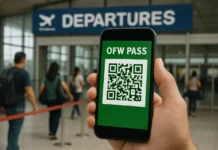
The distinction closes the guide because it is the error with the highest airport cost. The OFW ID proves identity and membership. The OFW Pass is the Department of Migrant Workers’ digital overseas-employment clearance — the renamed successor of the OEC, issued free to Balik-Manggagawa workers, generated through the eGovPH app and covered fully in our OFW Pass explainer, presented as a QR code to immigration and airline staff at departure. The two interact: the ID’s membership underpins the Pass’s privileges (the exit clearance carries the OFW’s statutory exemptions on travel tax and terminal fees), but presenting the ID card at immigration instead of the Pass QR code sends the worker to manual processing. Workers prepping for a flight back after a home leave verify three digits of paperwork: passport validity, the OFW Pass generated in eGovPH, and the OFW ID’s membership status line — identity, clearance, membership, one each, never conflated.
For the workers’ wider lifecycle — the enrollment pieces that feed this card — our guides cover the OWWA membership itself, the SSS retirement line, the Pag-IBIG savings account, and the OFW salary floors by country, each a lever on the same career this ID certifies.
FAQ
What is the OFW ID called now?
The functioning OFW ID is the OWWA e-Card — an electronic credential proving active OWWA membership, recognized as a government-issued ID at any Migrant Workers Office, embassy or consulate. The older iDOLE card is discontinued and no longer issued.
Can I still apply for an OFW ID online?
No — the old online application removed in January 2025. Apply and claim the physical card in person at the NAIA OFW Lounges (Terminals 1 and 3), the DMW Central Office, or the OWWA-NCR office; the card issues on the spot. The digital e-Card renders in the OWWA Mobile App and eGovPH as your membership stays active.
What are the requirements for the OWWA e-Card?
A valid passport; active OWWA membership with at least 90 days validity from application; proof of membership (official receipt or record); for Balik-Manggagawa, a valid OEC or exemption number; and a DMW e-registration account with the identity check completed (selfie + passport bio-page). The application form, photo and electronic signature complete at the counter.
How much does the OFW ID cost?
The first e-Card is free. The card’s validity runs on the underlying OWWA membership — USD 25 per two-year cycle, payable in the OWWA Mobile App, at an MWO abroad, or at OWWA offices.
Can my family claim my OFW ID for me?
Renewing your membership through a family member is common practice; claiming the physical card through a representative is not published as a standard rule by OWWA. Call the specific Regional Welfare Office first; if allowed, prepare the authorization or SPA, the worker’s passport copy and valid ID photocopy, and the representative’s own ID.
Is the OFW ID the same as the OFW Pass?
No. The OFW ID (OWWA e-Card) proves identity and membership. The OFW Pass is the DMW’s digital overseas-employment exit clearance — the OEC’s successor — generated free in the eGovPH app and shown as a QR code to immigration when you depart for your deployment.
How long is the OWWA e-Card valid?
It follows your OWWA membership: two years from the membership payment date (or contract expiration, whichever the record carries). Renew the USD 25 membership and the same permanent membership number — and with it the card — reactivates.