Table of Contents
Key Takeaway

- 📊 The rollout is nation-scale: 90,737,910 Filipinos were registered and verified in the National ID system as of December 31, 2025, per the Philippine Statistics Authority’s own FAQ.
- ⚖️ Same validity in every format: PSA’s FAQ, updated February 2026, says the card, the paper ePhilID and the digital national ID are all valid proof of identity and age with the same functionality.
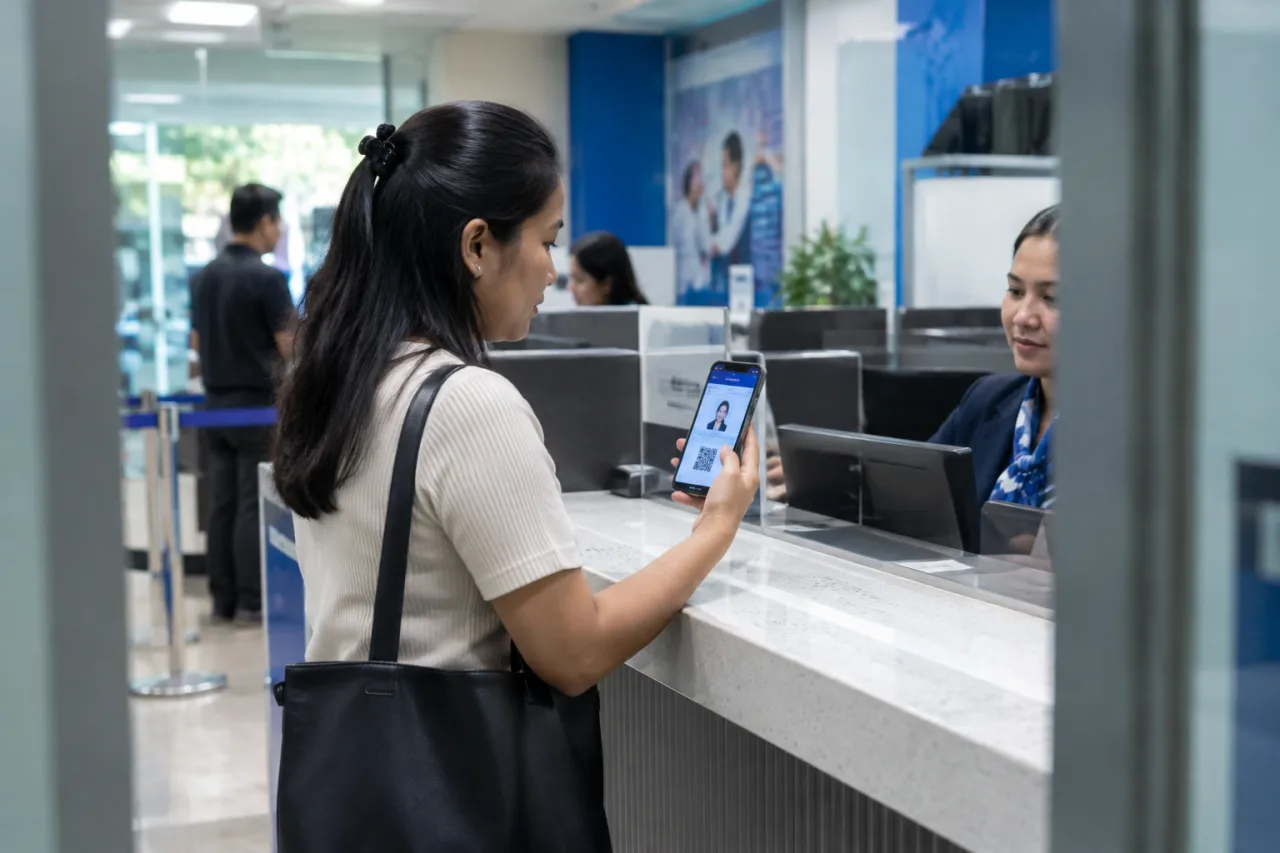
- 🏦 Banks must accept it: BSP Memorandum 2025-012 requires every supervised financial institution to accept all National ID formats in financial transactions and list it among their valid IDs.
- 🔍 Two verification layers exist: anyone can scan the QR code for authenticity via National ID Check, while institutions run Tier I (basic) or Tier II (eKYC) checks through National ID eVerify.
- 🚫 Refusal has a price tag: rejecting the National ID without just cause can draw fines up to ₱500,000 under RA 11055, the Philippine Identification System Act.
The question arrives at every bank counter and barangay office in the country now: can I open this account, claim this benefit, sign this form using the national ID that lives in my phone instead of the plastic one that has not arrived? The answer, verified straight from the Philippine Statistics Authority and the Bangko Sentral, is a firm yes in almost every case, and the pockets where it fails have names and reasons. This guide maps what the digital national ID legally replaces, where the QR code outranks a queue, and what the app screenshot will never do. Run the digital national ID check once yourself, in the app, before any counter argument starts.
What the Digital National ID Actually Is
The digital version is a collaboration between the Philippine Statistics Authority and the Department of Information and Communications Technology: the same National ID that the Philippine Identification System Act (RA 11055, signed August 6, 2018) created, delivered as a secure digital credential through the official eGovPH app. Every registered person can access the digital national ID credential there. It carries the same twelve-digit, permanent, randomly assigned National ID number that the registry issues, and it sits alongside two sibling formats: the physical card and the paper-based ePhilID.
The scale matters for how you think about it. The PSA’s FAQ, last updated February 13, 2026, counts 90.7 million registered and verified Filipinos, with nearly 55 million physical cards delivered as of September 2025. The digital credential is the practical format for the tens of millions still waiting on plastic, which is precisely why its legal standing kept getting tested and then settled.
The One-Line Answer on Validity
From the FAQ’s own phrasing: all formats of the National ID, whether card, paper or digital, are valid proof of identity and age, with the same functionality and validity. No expiration applies for Filipino citizens; the ID renews only when your demographic or biometric information itself changes. The digital version does not outrank the card and it does not trail it: a clerk picking favorite formats against the digital national ID is acting against the published rule, not following one.
Where It Is Accepted Today
The hard rule arrived in May 2025, when the PSA and the Bangko Sentral jointly reiterated acceptance through the PSA’s official announcement: BSP Memorandum 2025-012, addressed to all BSP-supervised financial institutions, requires acceptance of every National ID format as valid and sufficient proof of identity in financial transactions, with the National ID prioritized in each institution’s list of acceptable IDs across all branches.
Adoption is already measurable in the same announcement. Between September 2024 and April 2025, Asia United Bank’s HelloMoney app onboarded 169,847 Filipinos through National ID authentication services, and the PSA notes that 56 percent of GCash users have used the National ID as their identity proof when opening accounts. The government side follows the same law: RA 11055 makes the ID valid in transactions with public and private establishments, and it adds a stick to the carrot, since unjustified refusal draws fines up to ₱500,000.
Practical reading: banks, wallets, government agencies, telco KYC and benefit offices all sit inside the acceptance perimeter. If a specific branch insists otherwise, the FAQ’s answer plus the BSP memorandum is the escalation path, and the branch, not you, is the one out of line.
What It Does Not Replace
Three boundaries keep the digital national ID honest in what it claims.
It is not a travel document. Border crossings still run on passports and, domestically, on the ticket-and-ID rules carriers set. The National ID proves identity, not citizenship for immigration purposes abroad.
It does not license anything. Driving runs on LTO licenses, professional practice on PRC credentials. The National ID is the identity layer under those systems, not a substitute for the license itself.
Other countries do not know it. Abroad, a Philippine passport or resident ID remains the instrument local systems recognize. OFWs should keep host-country documents current and treat the national ID as the home-side credential, our OFW app guide sorts which government apps belong in which lane.
How Verification Works: Check and eVerify
Two distinct mechanisms protect the format, both documented by the PSA.
National ID Check is the public one: scanning the QR code on any format through everify.gov.ph/check validates that the ID is authentic and its data matches the registry. This is the tier the FAQ labels Tier 0, and it is what a merchant or front-liner can do in seconds without any account.
National ID eVerify is the institutional one: everify.gov.ph lets relying parties validate identity in real time against the registry, Tier I for basic demographic matching, Tier II for electronic know-your-customer with facial recognition or fingerprint matching. It is Tier II that GCash and AUB’s HelloMoney wired into, and it is why a wallet can finish your verification from a single ID presentation instead of a selfie-and-documents pile.
How to Get It, and How to Fix It
If you are registered: the digital national ID waits inside the eGovPH app, signed with your registered identity. Registration itself runs through PSA registration centers at regional offices, malls and local government units, open to Filipinos aged one and up, children one to four record demographics and a photo, full biometrics come at five, and biometrics are recaptured at fifteen.
If your details changed or were mistyped: demographic and biometric updating services run through the registration centers, and because the ID has no expiration, the update, not renewal, is the correct frame for marriage-name changes, corrections and other data fixes.
If the physical card is late: a paper-format ePhilID can be claimed at any registration center with your transaction slip, and the card still arrives once printed, the FAQ confirms both facts explicitly. Track the card using your Transaction Reference Number through the PHLPost tracking portal. Between registration, the digital national ID in the app, and the paper copy, you are holding the same credential in three hands, and any one of them answers the identity question at the counter.
The Document Sets That Get You Registered
Registration runs on two tiers of paperwork. The primary set: an original PSA birth certificate plus any government-issued ID carrying your full name, front-facing photograph and signature or thumb mark, or in their place, a Philippine passport from the DFA, or a UMID from SSS or GSIS. The secondary set catches everyone else: PRC licenses, Seaman’s Books, OWWA IDs, senior citizen cards, NBI or police clearances, postal IDs, TIN IDs and PhilHealth IDs, with foreign national IDs and residence cards accepted for non-citizen residents. Still short? Employee IDs, school IDs and barangay clearances with photo, signature, address and birthdate complete the folder.
The design choice matters for the diaspora: an OFW renewing credentials at home, a student with a school ID, and a farmer with a barangay certificate all reach the same registry through different doors. No single gatekeeper document stands between a Filipino and the digital national ID, which is exactly why the registry climbed to ninety million while some card printers were still catching up.
Kids and Biometrics: the Family Layers
Families register as units with staged biometrics. Children aged one to four capture demographics and a front-facing photo only, with their National ID number linked to a parent or legal guardian. At five, the full set, fingerprints, iris scan, photograph, is captured as the law requires, and at fifteen the biometrics are recaptured to match the grown face. The sequencing is deliberate: children get a permanent number early without biometric data that changes too fast to matter, and the system updates the biometric layer as the child’s identity stabilizes. For households planning a registration trip, one center visit can cover the whole family at once, though expect each member to present documents individually.
The Scam Lane: the Only Way In Is Official
Every success number above has a failure twin circulating in messenger threads: fake national ID registration portals, fake eGovPH clones, and agents claiming they can speed up your card for a fee. The recorded case already exists, a Dubai-based OFW lost ₱1 million to a counterfeit eGovPH app, and our fake eGovPH app breakdown dissects exactly how the copycat was packaged. The rule the PSA repeats: registration is free, the app is official-store-distributed, and nothing in the National ID system charges through money transfer or gift cards. Verify everything in the official eGovPH app itself before entering personal data anywhere else, because the scam lane’s entire economy depends on that step being skipped. Pair the habit with account-level hygiene from our identity fraud report, and the same system that certifies you cannot be turned into the thing that drains you.
FAQ
Is the digital national ID a valid government ID?
Yes. The PSA’s FAQ states all three formats, card, paper ePhilID and digital, are valid proof of identity and age with the same functionality, and BSP Memorandum 2025-012 obliges financial institutions to accept every format.
Where can I access my digital national ID?
Through the official eGovPH app, for every registered person. If you have not registered yet, registration centers at PSA offices, malls and LGUs handle it with the standard primary or secondary document sets.
Can I use the digital national ID to open a bank account?
Yes: the BSP memo requires supervised financial institutions to accept all National ID formats as valid and sufficient proof of identity, and wallet-level integrations already onboarded hundreds of thousands of Filipinos through it.
Does the digital national ID expire?
No for Filipino citizens: the FAQ says the National ID has no expiration and is renewed only when demographic or biometric information is updated.
How do I correct my name or birthdate on the National ID?
Demographic updates run through PSA registration centers; the ID itself does not expire, so corrections are an update service rather than a renewal. Bring supporting documents and ask for the updating service at the center.
Can I use the digital national ID abroad?
Abroad it works as identity where a foreign counter accepts it, but immigration, banks and carriers in other countries run on their own recognized documents: a Philippine passport and your host-country resident ID remain the operative papers. The digital ID is the home-side credential.
What if my physical card never arrives?
Track it with your Transaction Reference Number through the PHLPost portal, claim the paper-format ePhilID at any registration center in the meantime, and keep using the digital version in the app. All three formats carry identical validity, so the missing card does not suspend your identity.
Is the National ID registration mandatory?
The PhilSys Act makes the system itself mandatory for the government to establish, but registration is strongly recommended rather than forced, the PSA frames enrollment as the way to reap the system’s benefits including easier proof of identity in daily transactions.
The Bottom Line
The digital national ID crossed from experiment to infrastructure faster than any document program the country has run: 90.7 million in the registry, bank acceptance mandated by the central bank, and a ₱500,000 penalty standing behind the law’s promise of acceptance. Keep the app official, read refusals as errors rather than verdicts, and treat the QR check as the counter-question the next clerk has probably never run yet. The credential is valid, the habit of accepting it is what keeps catching up.
- Official philsys.gov.ph/psa-bsp-all-formats-of-national-id-accepted-in-financi… — the PSA’s official announcement
- Official everify.gov.ph/check
- Official everify.gov.ph
External sources linked in this article, in order of first mention. Spotted an error or a broken link? Tell us.
Cite this pagePublished Nov 25, 2026
Agron, E. (2026, November 25). The Digital National ID: What the App Is Actually Valid For. WorldNgayon. https://worldngayon.com/digital-national-id/
Agron, Edmon. “The Digital National ID: What the App Is Actually Valid For.” WorldNgayon, 25 Nov. 2026, worldngayon.com/digital-national-id/.
Agron, Edmon. “The Digital National ID: What the App Is Actually Valid For.” WorldNgayon, November 25, 2026. https://worldngayon.com/digital-national-id/.
Agron, E. (2026) ‘The Digital National ID: What the App Is Actually Valid For’, WorldNgayon, 25 November. Available at: https://worldngayon.com/digital-national-id/.
E. Agron, “The Digital National ID: What the App Is Actually Valid For,” WorldNgayon, Nov. 25, 2026. [Online]. Available: https://worldngayon.com/digital-national-id/
@online{agron2026digitalnational,
  author       = {Agron, Edmon},
  title        = {{The Digital National ID: What the App Is Actually Valid For}},
  year         = {2026},
  date         = {2026-11-25},
  organization = {WorldNgayon},
  url          = {https://worldngayon.com/digital-national-id/},
  urldate      = {}
}TY - ELEC AU - Agron, Edmon TI - The Digital National ID: What the App Is Actually Valid For T2 - WorldNgayon PY - 2026 DA - 2026/11/25/ UR - https://worldngayon.com/digital-national-id/ Y2 - ER -
Cite the version you read; the page may be updated. Zotero and Mendeley can also import this page directly.