Table of Contents
Key Takeaway

- 📜 Dual citizenship is one law away: RA 9225, the Citizenship Retention and Re-acquisition Act of 2003, lets natural-born Filipinos who naturalized abroad reclaim their nationality by taking the Oath of Allegiance, and it never asks you to renounce the other citizenship.
- 📊 The demand is proven: the Commission on Filipinos Overseas records that more than 150,000 people have applied through the Bureau of Immigration since the law took effect, the majority Filipino-Americans.
- 💵 Plan for two fee lines: consular posts set local fees, the Los Angeles consulate lists US$60 for the principal petitioner and $35 for qualifying minor children, while the Bureau of Immigration’s Philippine-side schedule runs ₱2,500 plus a ₱500 express lane fee.
- 🧾 Five documents carry the petition: your PSA birth certificate, the foreign naturalization certificate, a valid foreign passport, your old Philippine passport if it survives, and a name-variance affidavit if documents disagree.
- 🔁 The rights come back with conditions: full civil, economic and political rights as a Filipino, including property ownership, while foreign-earned income stays outside Philippine taxation under the 1997 tax reform, and voting requires overseas registration.
Every Filipino who naturalized in another country hits the same wall at some point: a property purchase, a parent’s estate, a child’s school form, or simply the wish to vote again. The door back is RA 9225, in force since 2003: dual citizenship runs through any Philippine embassy or consulate worldwide, on the same document set everywhere. The Commission on Filipinos Overseas puts applications through the Bureau of Immigration past 150,000, the dual citizenship route is one of the most-travelled corridors in Philippine consular work.
What RA 9225 Actually Restores
Republic Act No. 9225, the Citizenship Retention and Re-acquisition Act of 2003, amended the old Naturalization Law so that natural-born Filipinos who lost citizenship by naturalizing abroad may re-acquire Philippine citizenship by taking the Oath of Allegiance before a duly authorized Philippine official. The Bureau of Immigration, which implements the law, keeps the statute text and its implementing notes online, and the dual citizenship status they describe has held without amendment to its core mechanism. Two features of the law surprise most first-time readers: the oath asks you to swear allegiance to one country without requiring renunciation of the other, and the re-acquisition is retroactively meaningful, the Bureau of Immigration and the consular posts treat you, from the oath onward, as Filipino again.
The law’s scope is narrower than its reputation. It covers natural-born Filipinos: people who were citizens from birth with no act needed to perfect citizenship. Filipinos who became citizens through naturalization in the Philippines, not at birth, sit outside RA 9225, because naturalized citizens who naturalize abroad have never held natural-born status to restore; their route back runs through ordinary naturalization rules. Children are handled proportionately: unmarried minor children listed in the parent’s petition re-acquire through derivative status for a reduced fee, while children born before the parent’s foreign naturalization are themselves natural-born and qualify for their own retention application.
Who Qualifies, and Who Does Not
The dual citizenship checklists define the qualifying class precisely: born on or after January 17, 1973 to a Filipino father or mother at the time of birth; or born before that date to a Filipino father, or to a Filipino mother where citizenship was elected upon reaching majority, per the constitution’s citizenship provisions referenced in every post’s checklist.
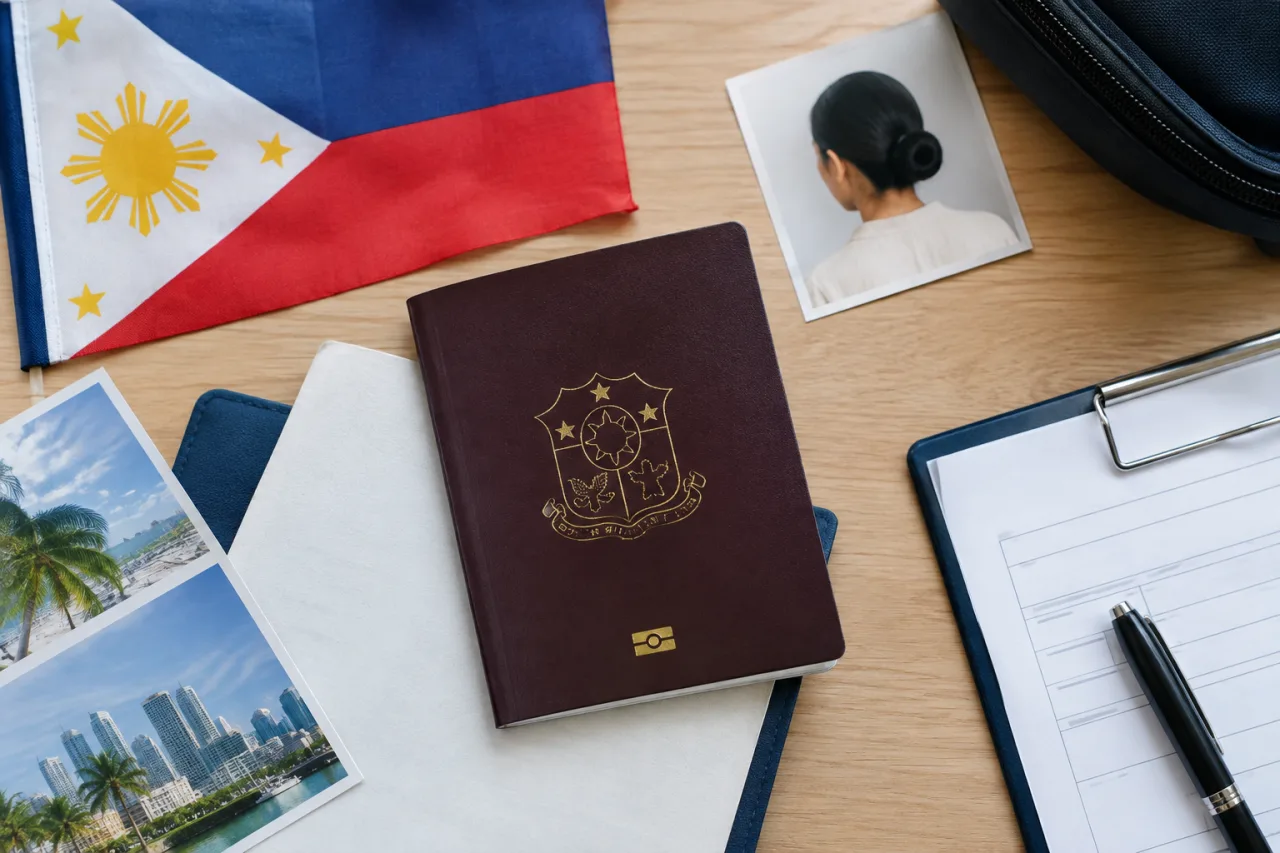
Bring the documents that prove the chain: the PSA birth certificate (or a Report of Birth from a post, for those born abroad), the foreign country’s naturalization certificate, a valid foreign passport, the most recent Philippine passport if it still exists, and where your name spells differently across documents, an Affidavit of One and the Same Person. Married applicants add the marriage contract. If your foreign naturalization certificate sits in another language, some posts require a translation authenticated by the host country’s ministry, per the Bureau of Immigration’s published requirements.
The Step-by-Step Route From Any Consulate
The procedure is uniform in shape across posts; only booking systems and local fees differ.
Step 1, Order the PSA documents. Everything in the petition hangs on the PSA birth certificate, and posts process petitions only with the original PSA copy on hand. Order online through the PSA Serbilis system before anything else; this is typically the longest single wait.
Step 2, Assemble the packet. Petition form (RA 9225 Form No. 1, downloadable from the Bureau of Immigration), original plus photocopy of the birth certificate, naturalization certificate, valid foreign passport, old Philippine passport if available, marriage contract if applicable, name-variance affidavit if needed. The Washington DC embassy’s November 2026 revised dual citizenship guide and each post’s checklist publish the current list; confirm against your own post before traveling to an appointment.
Step 3, Book the appointment. Consulates run online booking queues; the Los Angeles post, as a worked example, books through its scheduling portal, and posts ask for office-appropriate attire because the oath is administered in person.
Step 4, Pay and file. The LA schedule, published on the consulate’s dual citizenship page: US$60 principal petitioner, US$35 per derivative minor child born after the parent’s naturalization, US$35 for legalizing sworn statements, US$25 per certified true copy, US$10 express. Posts charge in local currency under host-country rules, so expect the local-currency equivalent elsewhere.
Step 5, Take the Oath of Allegiance. The consular officer administers the oath; because the officer is authorized to administer oaths, the document does not need separate notarization at posts, per the Bureau’s procedure notes. Petitions may be approved the same day, and some posts hold scheduled oath-taking ceremonies.
Step 6, Collect the Identification Certificate and register. The Identification Certificate (IC) under RA 9225 is the document that proves the restored status; consular approvals transmit to the Bureau of Immigration, which implements the law and keeps the register. Anyone already in the Philippines follows the domestic variant, petitions filed with the Immigration Commissioner for cancellation of an Alien Certificate of Registration and issuance of the IC.
Step 7, Apply for the Philippine passport. With the IC in hand, the passport application runs through the same post’s passport section or a DFA passport office at home, and the new passport is what makes the restored status usable at borders, banks and registries. Our lost Philippine passport guide covers the awkward sub-case where the old passport survives nowhere.
Already in the Philippines? The Domestic Variant
A former natural-born citizen already in the country follows the Bureau of Immigration’s domestic track. If you registered with the Bureau within 60 days of arrival, you file a petition under oath with the Immigration Commissioner for cancellation of your Alien Certificate of Registration and issuance of the Identification Certificate. If the 60-day window passed without registration, the petition asks for the Identification Certificate issuance itself. Same law, same packet, different building: the forms download from the Bureau’s site, and the express lane fee covers certification speed.
The vocabulary trips readers here, so one clarification carries its own paragraph: retention versus re-acquisition. People who kept Philippine documents alive after naturalizing abroad (some passport systems allowed it before 2003) apply for retention, a cleaner administrative claim. People whose citizenship ended clean and cold apply for re-acquisition. The dual citizenship outcome is identical: the oath restores it either way, and applicants typically learn their own category from the post’s checklist in minutes.
Children deserve their own sentence. Anyone born abroad to a Filipino mother or father before the parent naturalized abroad is natural-born by bloodline, jus sanguinis, and applies for recognition or retention rather than the parent’s petition. Born after the naturalization, they sit in the derivative lane of the dual citizenship petition for the reduced fee, as long as they are unmarried minors.
Fees, and How Long It Takes
Two fee systems sit on this route. The consular side varies by post, US$60 principal in Los Angeles is the worked example, with the $35 derivative child line, while the Bureau of Immigration’s Philippine-side schedule lists an application fee of ₱2,500 plus a ₱500 express lane fee for certification. Total time is driven mostly by the PSA document order and the post’s appointment queue, with same-day approval common once the oath is administered; add passport processing time after the IC arrives. Build the calendar around the slowest link: the PSA delivery and the next available petition slot.
What You Get Back, and What Changes
The rights return in full: dual citizens hold the full civil, economic and political rights of Filipinos under the constitution and existing laws, residence without visas, property ownership within constitutional limits that once barred former naturalized Filipinos, practice of regulated professions subject to their licensing laws, and the vote, exercised by registering under the overseas voting system rather than arriving by assumption.
The tax picture is quieter than most expect. Under the Tax Reform Act of 1997, income earned overseas by non-resident Filipinos has been outside Philippine taxation since 1998, re-acquired citizens who live abroad keep that treatment for foreign-earned income. Residing in the Philippines changes the analysis toward resident rules, which is why the smart move is matching your tax residency claim to where you actually live, with professional advice where amounts are large. Retirees weighing the move often pair the dual citizenship status with a retirement visa conversation, our SRRV guide maps that separate track. Travel also carries conditions: the balikbayan program and its baggage privileges extend to former Filipinos, our balikbayan box rules guide covers the duty-free side of homecomings, and the travel tax rules with their OFW certificates and exemptions apply differently for citizens than for tourists, worth reading before the first homecoming, and the travel tax rules with their OFW certificates and exemptions apply differently for citizens than for tourists, worth reading before the first homecoming.
What does not change: your other citizenship, your obligations to your country of residence, and, for those with ambitions in Philippine politics, the constitutional limits on dual citizens seeking certain elective offices. None of these are hidden caveats; all of them are spelled in the statute and the CFO’s published primer.
FAQ
Does dual citizenship under RA 9225 require renouncing my other citizenship?
No. The Oath of Allegiance under RA 9225 re-acquires Philippine citizenship without requiring renunciation of the other nationality, the Philippine government does not ask you to surrender the foreign passport. Some other countries have their own rules on holding two nationalities; that is their side of the ledger to check.
How much does it cost to reclaim Philippine citizenship abroad?
Fees vary by post. The Los Angeles consulate lists US$60 for the principal petitioner and US$35 for qualifying derivative minor children; the Bureau of Immigration’s domestic schedule runs ₱2,500 plus a ₱500 express lane fee. Expect the local-currency equivalent at your own post.
Who qualifies for dual citizenship under RA 9225?
Natural-born Filipinos who lost citizenship through foreign naturalization: born on or after January 17, 1973 to at least one Filipino citizen parent, or born before that date to a Filipino father (or with citizenship elected through the Filipino mother). Filipinos who acquired citizenship by naturalization in the Philippines are outside the law’s scope.
How long does the dual citizenship process take?
The petition itself is often approved the same day the oath is taken, at posts with complete documents and available slots. The calendar drivers are the PSA document order and appointment availability; add separate passport processing afterward.
Can my children get Philippine citizenship with me?
Unmarried minor children included in the petition qualify derivatively at a reduced fee. Children born before the parent’s foreign naturalization are natural-born Filipinos and apply for retention on their own merit; adult children and foreign spouses follow their own separate procedures outside RA 9225.
Can dual citizens vote in Philippine elections?
Yes, once registered. RA 9225 restores the right of suffrage subject to the constitution’s voting requirements, dual citizens abroad register under the overseas voting system, and residents register domestically like any citizen. The right returns with the oath; the registration is what activates it.
Can I own property in the Philippines after reclaiming citizenship?
Yes: dual citizens reacquire the full civil and economic rights of Filipinos, including land ownership within the constitutional limits that apply to Filipino citizens generally, one of the most tangible reasons the dual citizenship route draws property-minded applicants back.
Will I owe Philippine taxes on my foreign income after reclaiming citizenship?
Non-resident citizens’ foreign-earned income has been outside Philippine income taxation since 1998 under the Tax Reform Act of 1997. Residency is the pivot: if you move back and become a resident, Philippine tax rules apply to your situation differently, plan around where you live, with professional advice for significant amounts.
The Bottom Line
The route back to Philippine nationality is one of the most settled procedures in the consular system: one law, one oath, a five-document packet, and fees that range from modest to routine. More than 150,000 people have walked the dual citizenship route through the Bureau of Immigration already, per the Commission on Filipinos Overseas’ official primer. Prepare the PSA documents first, follow your post’s current checklist, the November 2026 Washington guide is the freshest published example, and budget the calendar around the document wait. The nationality was never lost in spirit; RA 9225 just made the paperwork honest about it.
- Official officialgazette.gov.ph/2003/08/29/republic-act-no-9225 — Republic Act No. 9225
- Official immigration.gov.ph/wp-content/uploads/2023/11/3_RA_9225.pdf — statute text and its implementing notes online
- philippineembassy-dc.org/wp-content/uploads/2026/11/Dual_Citizenship_…
- losangelespcg.org/consular-services-2/dual-citizensh1p-ra-9225 — consulate’s dual citizenship page
- Official cms-cdn.e.gov.ph/CFO/pdf/24.%20DUAL-CIT-PRIMER-FINAL.pdf — Commission on Filipinos Overseas’ official primer
External sources linked in this article, in order of first mention. Spotted an error or a broken link? Tell us.
Cite this pagePublished Nov 25, 2026
Agron, E. (2026, November 25). Reclaim Philippine Citizenship From Abroad: the Step-by-Step Route. WorldNgayon. https://worldngayon.com/dual-citizenship-abroad/
Agron, Edmon. “Reclaim Philippine Citizenship From Abroad: the Step-by-Step Route.” WorldNgayon, 25 Nov. 2026, worldngayon.com/dual-citizenship-abroad/.
Agron, Edmon. “Reclaim Philippine Citizenship From Abroad: the Step-by-Step Route.” WorldNgayon, November 25, 2026. https://worldngayon.com/dual-citizenship-abroad/.
Agron, E. (2026) ‘Reclaim Philippine Citizenship From Abroad: the Step-by-Step Route’, WorldNgayon, 25 November. Available at: https://worldngayon.com/dual-citizenship-abroad/.
E. Agron, “Reclaim Philippine Citizenship From Abroad: the Step-by-Step Route,” WorldNgayon, Nov. 25, 2026. [Online]. Available: https://worldngayon.com/dual-citizenship-abroad/
@online{agron2026dualcitizenship,
  author       = {Agron, Edmon},
  title        = {{Reclaim Philippine Citizenship From Abroad: the Step-by-Step Route}},
  year         = {2026},
  date         = {2026-11-25},
  organization = {WorldNgayon},
  url          = {https://worldngayon.com/dual-citizenship-abroad/},
  urldate      = {}
}TY - ELEC AU - Agron, Edmon TI - Reclaim Philippine Citizenship From Abroad: the Step-by-Step Route T2 - WorldNgayon PY - 2026 DA - 2026/11/25/ UR - https://worldngayon.com/dual-citizenship-abroad/ Y2 - ER -
Cite the version you read; the page may be updated. Zotero and Mendeley can also import this page directly.