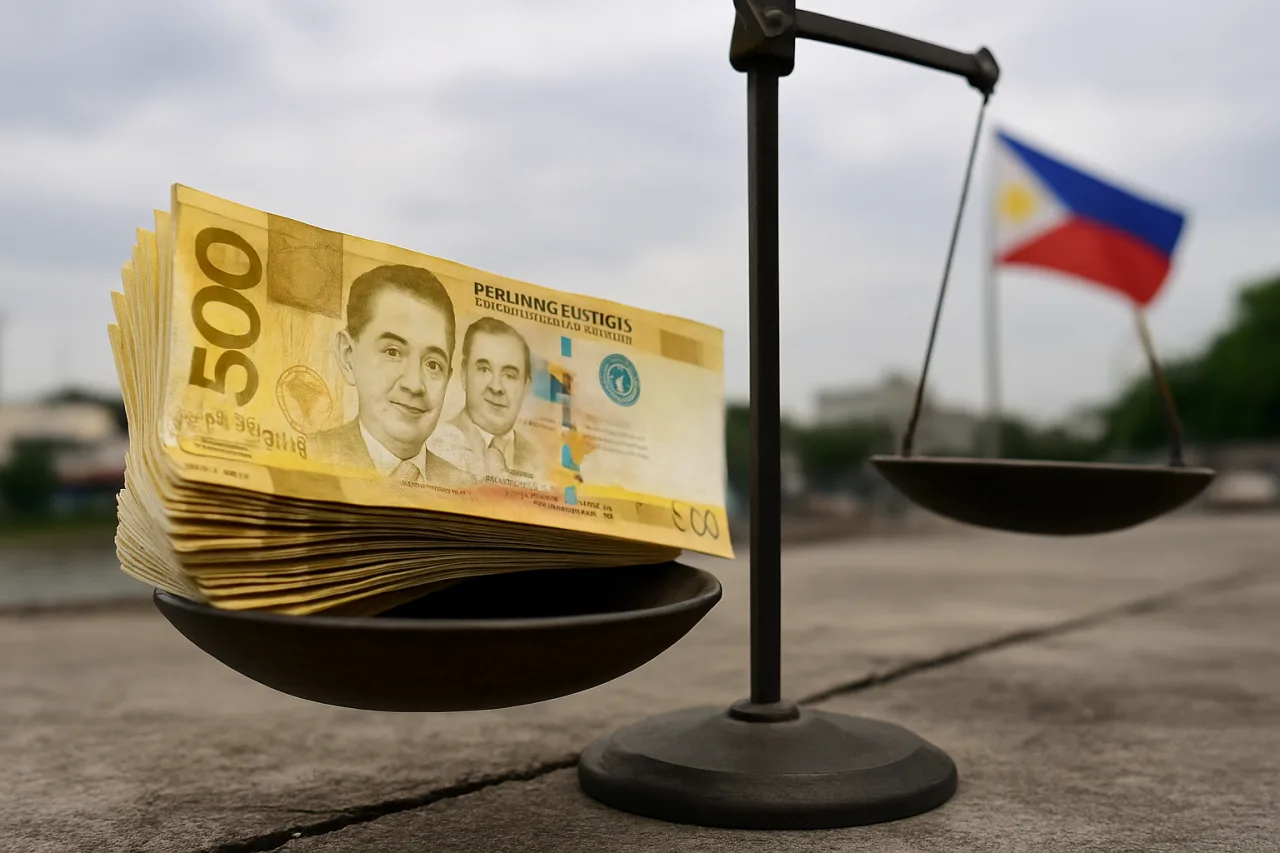
Weak peso math is quietly working against OFW families in 2026, and the trap has a name: inflation. On paper, 2026 has been a good year for overseas earnings — the peso trading near ₱57-₱59 to the dollar means every $300 transferred home converts to more pesos than it did a year ago. But BusinessWorld’s analysis of the flows found elevated inflation capping exactly that boost: remittance growth has disappointed almost continuously this year, slowing to 1.9% against a December peak of 4.2%, while Philippine inflation has been running above 6% and one major research house expects it to blow past 7% in September. The peso buys more dollars, but peso prices are rising faster than the benefit arrives — and that is the story this article unpacks: what the weak peso really delivers to a family budget, where the money is actually slowing, and what OFW households should change this quarter.
Key Takeaway
- 📈 The paper gain: a weak peso lifts the peso value of every dollar sent — ₱57-₱59/USD in 2026 means a $300 transfer delivers roughly ₱17,100-₱17,700, hundreds of pesos more than at last year’s stronger rates.
- 🔥 The offset: inflation above 6% — with September forecast at 7.1% on food and fuel — erases the gain: the same family basket costs more each month than the extra conversion pesos cover.
- 🛳️ The corridor pressure: Middle East instability slowed the biggest corridors — Saudi growth fell to 1.3%, the UAE to 1%, Qatar to 2.1% — and these corridors carry the largest share of overseas earnings.
- 🏡 The household shift: remittance-receiving families are reallocating toward basic goods and pulling back on education spending — the inflation tax in action.
- 🎯 The move: stop converting on autopilot — a fee-plus-timing strategy recovers more real value than the exchange rate delivers, and it works this week.
Weak peso mechanics: what a falling peso actually buys
The weak peso is a two-sided experience, and for a global Filipino household it matters on only one of them. On the earning side, a worker paid in dollars or dirhams benefits mechanically: when the peso weakens from, say, ₱57 to ₱59 against the dollar, each $300 remittance converts to ₱17,700 instead of ₱17,100 — ₱600 more without working an extra hour. For OFW families, the weak peso functions like an automatic extra stipend, and at this year’s dollar strength the paper math is real. The Philippine Statistics Authority’s survey of overseas Filipinos documents the scale: over two million OFWs deployed in recent waves, sending personal remittances measured in the hundreds of billions of pesos per half-year — currency conversion moves that total by a full percentage point for every peso the rate slides.
But conversion is only the first exchange. The second happens in the palengke and the tuition office, and that second exchange is the one the weak peso cannot win: a peso’s purchasing power has been falling faster than the rate has been sliding. When the peso weakens because imported goods cost more — fuel, fertilizer, wheat, rice shipped in from abroad — the same weakness that raises the conversion value of remittances raises the local price of everything the family buys with them. Economists call the net effect a pass-through, and this year the pass-through has been eating the stipend whole.
The inflation offset: why the boost never arrives
The arithmetic of the offset is simple and brutal at Philippine consumer prices. Headline inflation has been running above 6% this year, and Nomura Global Markets Research’s September forecast put it at 7.1% — driven by food prices, particularly rice and vegetables weather-disrupted, and by retail fuel adjustments. Take the weak peso’s ₱600 windfall on a $300 transfer and set it against 6-7% inflation on a family’s monthly basket: for most remittance-receiving households, the basket costs ₱1,000-₱2,000 more per month than it did a year ago — multiples of the currency windfall. The family is receiving more pesos and buying less food with them, which is why analysts tracking the flows conclude the peso’s weakness has been capped as a benefit: elevated inflation is neutralizing conversion gains almost one-to-one.
There is a distributional layer to the offset too, and BusinessWorld’s reporting names it: remittance-receiving households are reallocating a higher share of funds toward nondiscretionary basic goods while pulling back on education spending. That pullback is the quiet damage in the data — education deferrals compound for a generation, and the households least able to absorb inflation are the ones tightening first. Government’s own forecasts adjust to the same arithmetic: private consumption — the economy’s main engine — is expected to stay restrained, with GDP growth tracking below consensus at 2.8% for 2026 and 4.0% for 2027. The weak peso did not fail the OFW family; the family’s costs simply ran faster.
Where the remittance flows are slowing: the Middle East effect
The second half of the 2026 story is not the exchange rate at all — it is geography. Cash remittances rose just 1.9% year on year in the latest month, to $3.24 billion — a seven-month high in nominal terms but a fraction of December’s 4.2% growth peak — and the slowdown concentrates in the corridors that matter most. BSP data show remittance growth from Saudi Arabia slowing to 1.3% from 2.8% in a single month, the UAE easing to 1% from 2.5%, and Qatar to 2.1% from 2.8%. The Gulf carries the largest concentration of overseas Filipino workers; when the Gulf’s growth rate halves, the national number cannot hide it. Analysts attribute the slack substantially to geopolitical turmoil in the Middle East — an out-of-hands factor, as the Bank of Tokyo analysts put it, misfortune that hits historically vital cash transfers from the region.
The weak peso cannot compensate for a corridor problem, and this distinction matters for planning. A weaker rate adds percentage points to conversion; it does nothing about a worker whose deployment was cut short, whose overtime vanished, or whose project wound down — the real mechanisms by which Middle East disruption slows remittance growth. For families drawing their budgets from Gulf corridors, 2026’s lesson is to read deployment news and contract cycles as closely as the exchange rate, because this year the corridor, not the currency, moved the total. Our remittance fee guide covers the channels; this article’s job is the total volume — and the volume is a jobs story.
What it means for family budgets: the real math
For a typical household receiving $300 a month, the 2026 ledger looks like this: conversion gained roughly ₱600 versus last year’s rate; fees and conversion margins consumed ₱800-₱1,200 more than the best available channel would have cost — the gap this site’s remittance fee coverage measures every week; and inflation raised the same consumption basket by ₱1,000-₱2,000. The weak peso’s bonus is real but third in line: fees and prices both move bigger numbers. The 2026 budgeting conclusion follows directly — households that optimized the channel this year recovered more peso value than the exchange rate delivered, and the families that did both — cut fees and spent deliberately — stayed whole.
There is also a psychological frame worth naming for the OFW: do not measure remittances by the ticker. The rate at ₱59 vs ₱57 is the family’s smallest lever; the fee structure is the second; the basket is the first. A household that celebrates the weak peso while paying a 6% fee and facing 7% inflation is running a losing race in two of three lanes and winning the one that matters least. The correct dashboard has all three numbers on it — and the weakest-looking one, the little fee, is the one families actually control this quarter.
Three changes for OFW households this quarter
- Change the channel before trusting the rate: move transfers to the fee-transparent channel matched to your corridor — today’s best options land near 2-3% all-in versus the 6.3% average, worth more than the currency windfall itself. Our remittance-fee guide computes it for a typical month; the Wise fee breakdown covers the leading transparent channel.
- Time the transfers, do not automate them: the peso’s daily movement in 2026 is worth 1-3% swing to swing. Sending on the day the peso is strongest — not on payday by habit — converts discipline into ₱300-₱600 extra per transfer, compounding monthly.
- Index the family budget to the basket, not the ticker: set the household’s monthly allowance from the family’s actual costed basket plus 3% — then the remittance covers reality, not last year’s prices. The alternative is quiet borrowing at home while the OFW believes the budget covers itself.
The sending strategy: timing, fees and the peso calendar
Strategy has one more layer for 2026: the peso calendar. Rates move on macro events — Fed decisions, BSP policy meetings, oil moves in the Middle East — and the days after major events tend to carry the widest intraday swings. The practical playbook: batch transfers to twice a month rather than weekly, execute on days when the rate sits above the month’s average, keep the fee structure flat regardless of amount, and hold the savings in the family’s actual currency for planned expenses rather than speculating on further weakness. A household that follows the peso calendar at 2-3% fees effectively banks the inflation offset; a household that sends weekly at 6% donates the difference to the plumbing. Our bill payment guide and the fee math cover the execution; the calendar turns them into a system.
The weak peso still matters — but in 2026 it matters as the smallest of the three family levers, and treating it as the whole story is how budgets quietly break. The currency moved in the family’s favor; the fee schedule and the price basket moved harder. Households that run all three levers at once are the ones that end the year whole.
What the PSA survey says about the people behind the pesos
The macro numbers in this weak peso story are household stories. The Philippine Statistics Authority’s latest Survey on Overseas Filipinos counts roughly two million OFWs in recent deployment waves — and it documents why the remittance flows matter more than almost any other single money stream: personal remittances measured in the hundreds of billions of pesos each half-year, with the largest single share going to education, then to household maintenance, then to savings and investment. The currency windfall, the fee schedule, and the inflation rate are all invisible inside those categories until you watch a quarter of them together — which is exactly what this year’s data let us do. The families that emerge best are neither the ones celebrating the exchange rate nor the ones panicking over it: they are the ones converting a volatile year into a system — lower fees, better timing, and a budget that tracks prices.
The weak peso story will keep moving with oil, with the Fed, and with Manila’s policy cycle. But 2026’s teaching already fits in a sentence: the family’s real exchange rate is the fee it pays, the inflation it faces, and the timing it chooses — the ticker is just the smallest, loudest number in the set.
FAQ
Is a weak peso good for OFW families?
It is a real but small gain. A peso moving from ₱57 to ₱59 adds about ₱600 per $300 transferred — but Philippine inflation above 6% raises a typical household’s monthly costs by more than that, which is why analysts describe elevated inflation as capping the weak peso’s boost. Fees and prices matter more than the rate.
Why are remittances growing slower in 2026?
Cash remittance growth slowed to 1.9% year on year in the latest month — against a 4.2% December peak — with the slowdown concentrated in the Middle East corridors: Saudi Arabia’s growth eased to 1.3%, the UAE to 1%, and Qatar to 2.1%. Analysts attribute the slack substantially to geopolitical turmoil in the region.
How much more do I get per $300 with the peso at ₱59 versus ₱57?
₱17,700 versus ₱17,100 — ₱600 more per transfer from the weaker peso. Against inflation that has raised typical family baskets by ₱1,000-₱2,000 a month, the conversion gain covers only part of the year’s cost increase; fee cuts and budget indexing close the rest.
What should OFW families change about remittances this quarter?
Three moves: switch to the fee-transparent channel matched to your corridor (near 2-3% all-in against the 6.3% average), time transfers to stronger peso days instead of automating by payday, and set the household allowance from the family’s actual costed basket plus inflation — so the remittance covers current prices, not last year’s.
Will the peso stay weak in 2026-2027?
No one can promise a rate path — and family finances should not depend on one. The sound structure assumes the rate could move either way: fees stay cuttable, timing stays discretionary, and the budget indexes to prices. That structure protects the family whether the peso stays weak or recovers.
Financial Disclaimer
This article is for informational purposes only and does not constitute financial, investment, or tax advice. Exchange rates, inflation figures, and fee levels reflect public reporting as of publication date and change frequently. Verify current rates with your provider and consult a licensed financial adviser for decisions affecting your household. WorldNgayon publishes money intelligence, not personalized recommendations.