Table of Contents
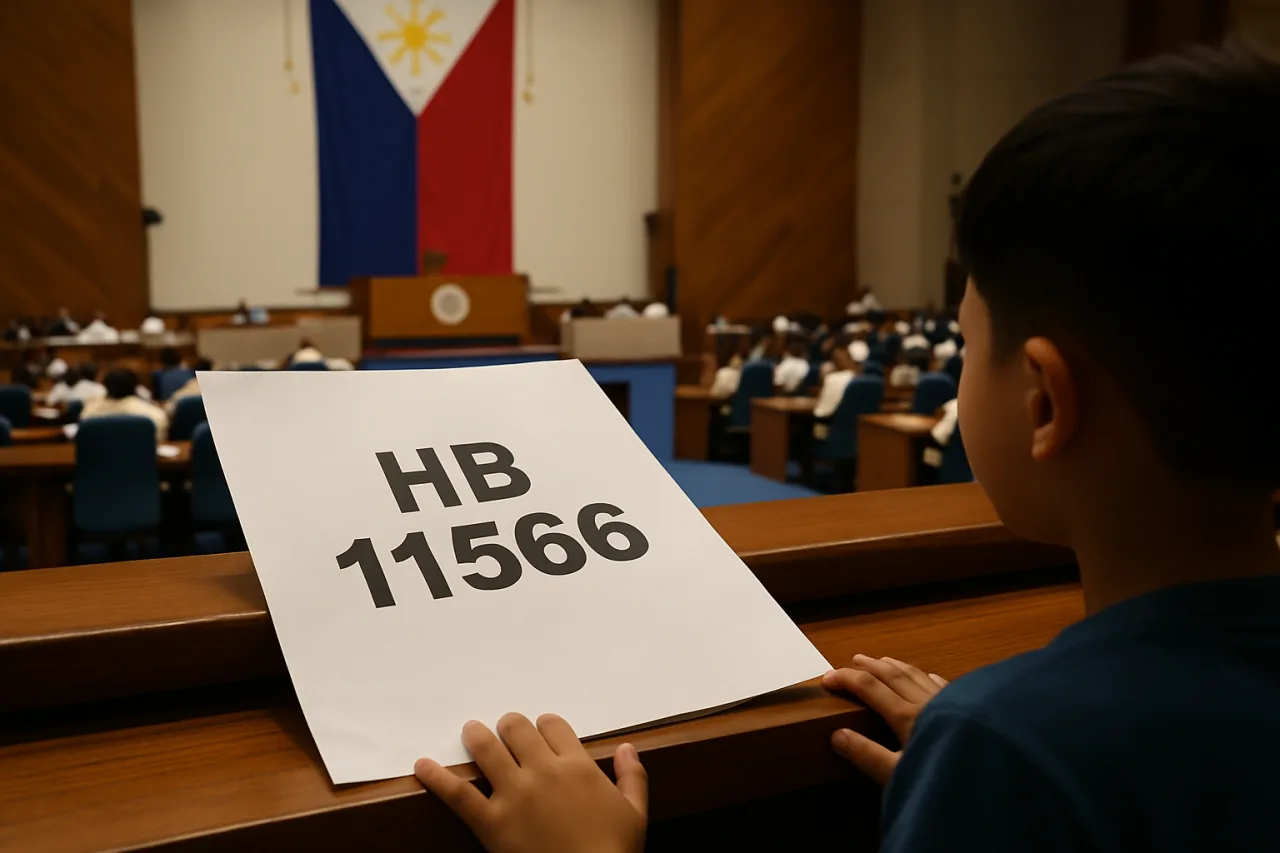
HB 11566 — the Philippines’ children’s social media and online gaming safety bill — was approved by the House of Representatives on third and final reading, but nothing is law yet, and the version that reaches the President depends on one fight that has not happened. The bill that would bar young children from social media and strip older teens of livestreaming, algorithmic short-video feeds and gambling-like game mechanics cleared the House while the Senate already passed a different law on the same subject. The bicameral conference committee must now reconcile two philosophies of protecting children online — and the exact age limits, platform duties and penalties that Filipino families and platform operators will live under are decided there, not in the headlines. This guide breaks down what each chamber actually passed, what it would demand from social media and online gaming platforms, what remains before anything becomes enforceable, and what parents — including OFW parents raising children remotely — should arrange while Congress finishes the job.
Key Takeaway
- ✅ The vote is real, the law is not: The House approved HB 11566 on third and final reading on October 12, 2026 (287-3-0). It still needs a bicameral conference committee, ratification by both chambers, transmittal and a presidential signature before any restriction can be enforced.
- 📊 Two different bills are competing: The House version of HB 11566 bans young children from social media and puts teens under 18 behind parental consent plus heavy feature restrictions. The Senate’s SB 2424 bans everyone under 18 from “high-risk” platforms outright, with carve-outs for gaming, email, messaging and education.
- ⚖️ Online gaming is the battleground: The House measure covers the social and interactive features of online games; the Senate deliberately exempted online gaming services that are not primarily used for social networking. The bicam will decide which model wins.
- 💸 The fines differ too: The House bill’s reported penalties run up to ₱5 million for initial noncompliance and ₱20 million for repeated violations. The Senate version adds ₱5-20 million per violation plus ₱100,000 daily for continued noncompliance — and even penalties for parents who knowingly help children circumvent age checks.
- 🌏 Enforcement is the hard part: Australia’s under-16 ban, in force since December 2025, still left roughly eight in ten under-16s using social media three months on, per the eSafety Commissioner — proof that verification design, not the vote, decides whether these laws work.
HB 11566: The Third-Reading Vote, in Detail
On Monday, October 12, 2026, the House of Representatives approved on third and final reading the bill carrying the number HB 11566, on a 287-3-0 roll call — reported by ABS-CBN News the same day and confirmed through the chamber’s own members’ legislative records. On the official House record, the measure’s full title runs: “An Act Establishing Safety Standards and Regulatory Measures,” with its declared subject being protective rules for kids on these platforms. Philippine outlets have carried it under two popular short titles — Inquirer.net and ABS-CBN used one long English name for it, while GMA News and UNTV continued to describe it as the Children’s Digital Safety, Protection, and Well-Being Act. Same bill number, same declared subject.
The speed deserves attention. The House Committee on Welfare of Children approved the consolidated substitute bill on September 7, 2026, folding in more than 40 separate measures — including House Bill No. 9965, the Children’s Social Media Safety Act filed by House Speaker Faustino “Bojie” Dy III and Majority Leader Ferdinand Alexander Marcos in June, and the version carried in committee by Rep. Roman Romulo of Pasig City. The full chamber approved it on second reading on October 6 by voice vote, and six days later HB 11566’s third-reading roll call landed at 287-3-0. That is a fast track by any Philippine legislative standard, and it reflects the political pressure behind the measure.
That pressure has names and dates. The bill advanced after a spate of school violence — including the June 22 Tacloban City school shooting at San Jose National High School, where authorities reported that two suspects aged 14 and 15 opened fire, killing three students and injuring twenty more, with police saying the suspects had been bullied and influenced by a supposedly violent game. In September, the National Privacy Commission issued show cause orders against Meta, Roblox, Reddit and Discord over Data Privacy Act registration gaps, and the CICC-brokered Discord shutdown and negotiation became a template for how the government is currently extracting child-safety commitments from platforms. The NPC’s public advisories on children’s data processing sit underneath this bill like a foundation already poured. HB 11566 is the legislative layer the enforcement agencies have been asking for.
Romulo, who sponsored the bill on the floor, framed the two-tier logic the House settled on. “Younger children require a clear minimum age boundary, while adolescents require a framework that recognizes their growing capacity for independence without disregarding the risks to which they remain exposed,” he told the chamber, as quoted by Inquirer.net. On the same floor debate, per BusinessWorld, he said: “Parents cannot be expected to continuously monitor every interaction, every recommendation, every advertisement, and every feature presented to their children by digital platforms.” That second quote is the philosophical center of the House version: the platform, not the family, carries the engineering burden.
What HB 11566 Would Actually Require From Platforms
Stripping out the rhetoric, HB 11566 as passed by the House imposes a two-tier access regime with a set of platform engineering duties attached. The obligations reported across Inquirer.net’s second-reading report, BusinessWorld’s committee coverage, and the syndicated House-pass report are consistent on the following points:
| Duty | What the House version requires |
|---|---|
| Minimum age | Children below 13 (with some outlets reporting the cutoff as 13-and-below — see the flag below) may not create, register, maintain or use social media accounts. No parental consent overrides this tier. |
| Teen tier, 13-17 | Access with parental consent and restrictions: no harmful or prohibited content, no targeted advertising, no behavioral profiling, no livestreaming, no algorithmic short-form video feeds, no online purchases, no gambling-like mechanisms, no interaction with unknown adults, and limits on certain AI features embedded in the platforms. |
| Age assurance | Platforms must build age identification systems meeting standards set by the new regulator, verify users twice a year, and remain responsible for the effectiveness of their own systems. |
| Risk assessment | Child Safety Risk Assessments are mandatory; platforms must address harmful content and high-risk features involving direct interactions, livestreams, short video, advertising, profiling and gambling-like mechanics. |
| Data discipline | Minimization of the collection and retention of children’s personal information, with safety protections on by default rather than parent-enabled. |
| Enforcement bodies | A new Office for Children’s Social Media and Digital Safety under the DICT as chief regulator; the National Telecommunications Commission handling administrative cases and penalties. |
| Carrier duties | Internet service providers must cooperate with lawful orders relating to data preservation and blocking or restriction, consistent with applicable laws and judicial safeguards. |
| Fines | Up to ₱5 million for noncompliance with child-safety provisions, up to ₱20 million for repeated noncompliance, per Inquirer’s report of the bill. |
One number deserves a flag rather than a footnote. Inquirer’s October 6 report stated that “children aged 13 and below” are banned — while BusinessWorld and the House-pass syndication report the ban for children “below 13.” Those are not the same cutoff: they place a 13-year-old on opposite sides of the line. The second-reading amendments complicate the picture, and the Asiadaily legislative tracker documented the same discrepancy. Until the reconciled bicameral text is published, treat 13 as the disputed boundary — the direction of the final number matters for every 13-year-old Filipino with an existing account.
Online gaming is written into the House version with unusual precision for a social media bill. The September 7 committee report, per BusinessWorld, bars children below 13 from accounts on “covered social media and digital services, including social and interactive features of online games,” and requires safeguards against harmful content and interactions, limits on communications between children and unknown adults, and default restrictions on public visibility, precise geolocation, targeted advertising and behavioral profiling. Platforms would also be barred from letting children access livestreaming, endless scrolling and short-form video feeds, with additional safeguards on autoplay and intrusive notifications. Crucially, the committee text states the measure will not exempt platforms from their responsibilities based on parental consent, parental supervision, or the use of safety tools — the platform cannot outsource its liability to a family checkbox. That mirrors the safety-by-design duty Filipinos already met in practice: the age-verification machinery on Filipino gaming platforms is no longer hypothetical, as our Roblox PhilSys age verification report showed when groomers’ tactics collided with national-ID checks.
HB 11566 vs the Senate’s SMART KIDS Act: Two Ages, Two Philosophies
On Thursday, October 8, 2026, the Senate approved Senate Bill No. 2424 on third and final reading, 16-1 with Senator Risa Hontiveros casting the lone negative vote. The bill is the SMART KIDS Act — short for a longer official name — sponsored by Senator Robin Padilla and retitled from its original Child Online Safety and Protection Act working title during floor amendments, as GMA News documented. Unlike HB 11566, it bars everyone below 18 from creating or maintaining accounts on digital services classified as high-risk, requires platforms to suspend, restrict, disable or remove accounts found to be operated by minors, and obliges covered platforms to implement age-assurance measures and, for foreign providers, to designate a representative in the Philippines.
The two chambers did not just pick different ages. They picked different governing philosophies, and the table below is the collision the bicameral conference committee inherits:
| Design element | House: HB 11566 (287-3-0, Oct 12) | Senate: SB 2424 (16-1, Oct 8) |
|---|---|---|
| Age architecture | Two tiers: hard ban under 13; 13-17 conditional access with consent | Single blanket bar for all under 18 |
| Scope | HB 11566 covers social media plus social and interactive features of online games | “High-risk” digital services with social functions; gaming services not primarily for social networking are exempted |
| Carve-outs | Not specified in reported summaries | Email, private messaging, educational platforms, news services, professional collaboration tools |
| Parental role | Consent required for teens; no parent penalty | No consent path; parents who knowingly help circumvent face up to ₱50,000, community service and mandatory digital parenting programs |
| Penalties | Up to ₱5M, ₱20M on repetition | ₱5M-₱20M per violation plus ₱100,000 daily until compliance |
| Regulators | DICT office plus NTC administrative enforcement | DICT-led, with a public reporting platform for suspected violations |
The Senate carve-outs are the quiet bombshell for the games industry, and it cuts opposite to the House. GMA News reported the Senate press release directly: “These provisions do not cover electronic mail services, private messaging services, online gaming services that are not primarily used for social networking, educational platforms, news services, and professional collaboration services.” That carve-out also separates SB 2424 from HB 11566: the chamber that passed a harsher blanket ban deliberately walked online gaming out of scope, while the chamber with the softer age regime wrote gaming’s social features squarely into it. Platform lawyers on both sides of that line — game studios monetizing Filipino teens, social networks whose games run inside chat ecosystems — now have everything to argue for in bicam.
Hontiveros’s dissent explains the Senate’s internal fault line. “Eighteen is the legal threshold for adulthood. But it is certainly not a developmental threshold,” she said on the floor, per Rappler’s analysis, arguing that a 13-year-old and a 17-year-old are not developmentally equivalent and citing the UN Convention on the Rights of the Child’s evolving-capacities principle. The House version, deliberately or not, answers her: it is the age-calibrated framework she asked for. Whether enough senators agree to protect it in bicam determines whether Filipino teens keep lawful access to the platforms where they already study, sell and create.
HB 11566 Road Map: What Happens Next Before It Becomes Law
Here is the part most coverage is skipping: HB 11566 becoming enforceable requires a specific sequence that has not started. Both chambers have now passed their respective measures on final reading — but they passed different bills with different numbers, ages, scopes and penalty structures. For HB 11566, the next steps are: (1) each chamber formally communicates its approved bill to the other; (2) the bicameral conference committee drafts one reconciled text; (3) both chambers ratify the bicameral report; (4) the enrolled bill transmits to Malacañang; (5) the President signs it into law or lets it lapse into law, or vetoes it; (6) implementing rules and regulations follow; (7) the law takes effect, by the standard constitutional default of 15 days after official publication unless the final text provides otherwise.
Any of those steps can rewrite the outcome. The bicam can adopt the House’s two-tier ages, the Senate’s blanket bar, or a hybrid — for example, a two-tier social media regime with the Senate’s high-risk platform category grafted on. The Office for Children’s Social Media and Digital Safety does not exist yet, its standards for age-assurance systems are unwritten, and the NTC’s enforcement mechanics depend on appropriations the House Committee on Appropriations was still assembling in this October’s funding action. The Manila Times’ September analysis noted that the law as filed takes effect “whether or not” the new office has issued its rules — meaning the version of consent parents sign now could be enforced against platforms before the regulator defines what platforms must build. The prudent reading for October 12, 2026: no platform owes any duty under this bill today, and no parent can claim any statutory right against a platform under it yet.
Why HB 11566’s Enforcement Will Depend on What Australia Already Proved
The Philippines is joining a crowded global club — Australia’s under-16 restriction in force since December 2025, Malaysia, the United Kingdom and the United Arab Emirates with age-based regimes, the European Commission proposing its own under-13 ban, and France’s top court blocking a proposed under-15 ban on rights grounds. The Australian record is the most instructive because it is the one with real enforcement data, and the numbers are sobering for anyone assuming a vote equals protection.
Australia’s eSafety Commissioner, in its early-insights evaluation of the under-16 restrictions, found social media usage among children under 16 declined only from 85.9 percent before the rules to 81.5 percent three months after they took effect — roughly eight in ten children still using the platforms despite a nationwide ban. A CNA Talking Point investigation documented teenagers passing facial age-estimation checks because the systems misread adolescents as older, adults locked out after misclassification, and minors rotating accounts, devices and adult proxies. An NBER working paper cited in the Manila Times’ analysis of the Philippine bills found 22 percent of teens using banned platforms had help from a parent, older sibling or other adult to open a new account after their original was shut. The Philippine Senate’s answer to that behavior is a ₱50,000 fine and community service for knowingly helping a child circumvent; the House bill’s answer is to build the duty into platform engineering instead. Both answers face the same truth: age assurance is young, inconsistent, and error-prone in both directions.
The lesson the bicam should not miss is the one Rappler’s feature argued explicitly: a blanket ban does not remove the harmful architecture. Algorithms that amplify distressing content, infinite scrolling, autoplay and engagement-optimized notifications do not disappear when a minor is barred from logging in — they just wait for the 18th birthday. Ian Russell, the British campaigner whose 14-year-old daughter Molly died in 2017 after exposure to harmful online content, made the same point in a BBC interview cited by Rappler: restrictions that do not also regulate design features are a stopgap. HB 11566’s feature-level restrictions — no algorithmic short-video feeds, no endless scroll, no gambling-like mechanics — are the closest any Philippine proposal has come to regulating the architecture rather than the user. That is exactly the part the bicam must not trade away for simplicity.
What Filipino and OFW Parents Should Do While HB 11566 Clears the Bicam
For Filipino families, the legislative clock and family reality do not sync. Millions of Filipino children are raised day-to-day by grandparents and relatives while parents work in Riyadh, Dubai, Hong Kong or aboard ships — and the consent architecture of HB 11566 lands directly on that arrangement. Reporting on the committee-stage text, including the Manila Times’ September analysis, identifies real wrinkles: only biological and adoptive parents qualify as “parents” under the bill’s reported definitions, so a grandmother raising her grandchild would need Department of Social Welfare and Development certification before her consent counts; and an OFW parent giving consent from abroad will exercise it through whatever remote-verification mechanisms the new DICT office eventually defines. Under the reported text, parents and parent substitutes hold the lead role in teaching children to use social media and games responsibly and in age-appropriate ways — but the bill pairs that duty with a shield: using a prohibited feature exposes the child\u2019s guardian to no fine just for that fact — committee chair Florabel Yatco told the plenary, per AFP’s fact-check of viral posts, “Families will get help, not punishment.”
The caregiver-capability data from earlier in this debate is the number families should act on. The Interpol, UNICEF and Ecpat “Disrupting Harm in the Philippines” study, covering 950 Filipino children aged 12-17 and one caregiver each, found that 26 percent of caregivers had never used the internet — rising to 49 percent among those aged 50 and above — and only 23 percent of caregivers aged 50 and older knew how to report harmful content on social media, versus 71 percent of caregivers under 30. In other words: the law will require consent from people the bill assumes are equipped, when a large minority are not. Until the law lands, the practical moves for households are concrete: set the platform-level controls that already exist today, starting with the Discord child-safety settings that survived the CICC negotiations and the account guardrails for teens’ AI use; verify which adult in the household can legally give consent under the reported definitions; agree the household’s own two-tier rules before government imposes one; and watch the bicameral report for the three numbers that will matter — the age cutoff, the AI-feature restrictions, and the fines. The broader baseline of Philippine child online safety law is already real, as our HB 9461 report on AI-generated abuse detailed — the new bill layers on top of it rather than replacing it.
For the broader Filipino audience — parents, teachers, platform engineers, content creators who employ or feature minors, and the country’s digital-economy operators — the honest framing is this: the Philippines is now legislating in the same direction as Australia, the UK, Malaysia and the EU, with a House bill more nuanced than most and a Senate bill more sweeping than all of them. One more step, the bicameral report, decides which Philippines families actually get.
Frequently Asked Questions
Is HB 11566 a law now?
No. The House approved HB 11566 on third and final reading on October 12, 2026 — 287 in favor, 3 against. The Senate passed its own bill, SB 2424, on October 8. The two versions must be reconciled by a bicameral conference committee, ratified by both chambers, transmitted and signed by the President before any provision becomes enforceable. No platform obligations, fines or age restrictions exist in law as of this date.
What age does HB 11566 ban from social media?
Reported texts differ on the exact cutoff: Inquirer.net described a ban for children “aged 13 and below,” while BusinessWorld and the House-pass report described it for children “below 13.” Under both readings, anyone 14 and up may access social media; those under 18 face restrictions and consent requirements. The reconciled bicameral text should settle the 13-year-old question definitively.
What are the penalties for platforms that do not comply?
Under HB 11566 as reported, fines reach up to ₱5 million for noncompliance with the child-safety provisions and up to ₱20 million for repeated violations. The Senate version imposes ₱5-20 million per violation plus ₱100,000 daily for continued noncompliance, and separately penalizes parents or guardians who knowingly help circumvent age-assurance mechanisms with fines up to ₱50,000, community service and mandatory digital parenting programs.
How is the House version different from the Senate SMART KIDS Act?
HB 11566 uses two age tiers — a hard ban for the youngest children and consent-based restricted access for teens — and explicitly covers the social and interactive features of online games. The Senate version applies a blanket under-18 bar to high-risk platforms, carves out gaming services not primarily used for social networking, email, messaging, education, news and professional tools, and adds a public reporting platform and a Philippine representative requirement for foreign providers.
When would the law take effect if passed?
For HB 11566 to take effect, the bicameral report must be ratified by both chambers and the President must sign it, the law takes effect on the standard default of 15 days following official publication, unless the final text states a different date. Implementation — age-assurance standards, the DICT office, NTC procedures — would require additional implementing rules which can lag the effectivity date.
What should parents do right now?
Three things: first, apply the child-safety controls that already exist on the platforms your children use today, because they operate under current laws like the Anti-OSAEC Act and the Data Privacy Act, not under HB 11566; second, clarify which adult in the household can legally provide consent under the reported definitions — biological and adoptive parents only, with caregiver certification a requirement for grandparents; third, follow the bicameral outcome, since the age cutoff, AI-feature restrictions and penalty levels can all change before enactment. House-sponsor context remains that platforms, not families, carry the primary engineering burden — representative Jude Acidre put it directly, per BusinessWorld: “Parents will always have an important role in guiding their children online, but families should not be expected to carry this responsibility by themselves.”