Table of Contents
Key Takeaway
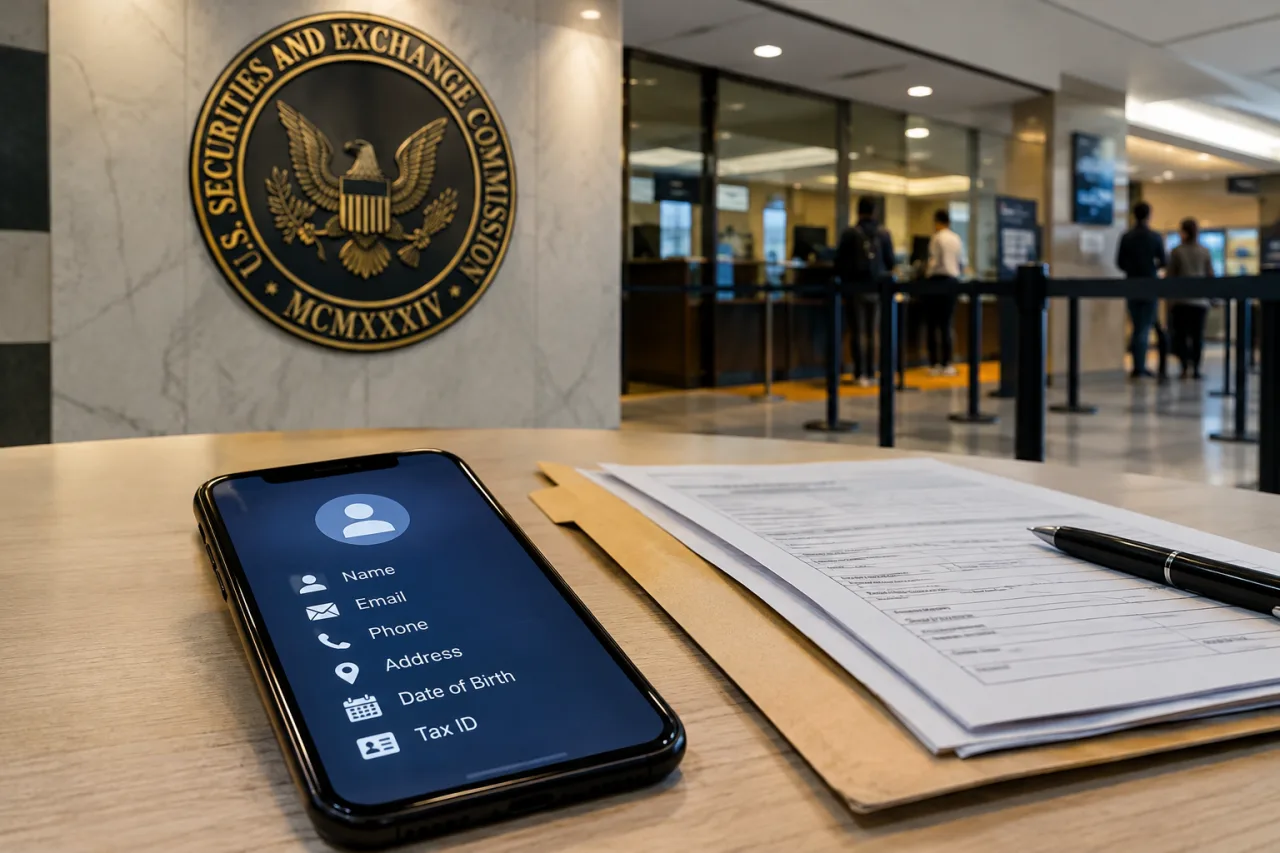
- 🗂️ What leaked: The Securities and Exchange Commission confirmed a SEC data breach involving users of its digital platforms — potentially exposing full names, usernames, email addresses, mobile numbers, dates of birth, genders, addresses and tax identification numbers (TINs).
- 🔍 The unusual twist: The agency’s advisory attributes the potential leak to user-side devices — “malware infection or unauthorized access by a third-party threat actor of your laptop, desktop, mobile phone” — while stating its internal databases remain intact. The investigation is ongoing and the National Privacy Commission has been notified.
- ⚠️ Who is at risk: The exposed combination is a complete fraud kit: phishing lists, SIM-swap smishing targets, and the identity fields used in Philippine loan applications — which makes TIN holders the sharpest-risk group in this SEC data breach.
- 🧭 Do this now: Treat every message claiming to come from the SEC as unverified, rotate passwords reused from the platform, run a malware sweep on the devices you used, and know the official reporting routes before the follow-up scams arrive.
The Philippines’ corporate regulator just told its own users that their identities may be circulating. On November 6, the Securities and Exchange Commission became aware of online reports of an alleged leak connected to its platforms; days later it confirmed a SEC data breach in a letter to affected account holders, describing a specific set of personal fields that may have been exposed. For the investors, business owners and finance workers who registered on SEC digital platforms, the notice is the starting gun for a defensive sprint — and the fields listed tell you exactly which scams to expect next.
Status note (verified November 11): the SEC says it is verifying the origin, scope and validity of affected records, has reported the incident to the National Privacy Commission, and maintains that internal database systems — including company records — remain intact. The advisory points to user devices as one possible origin. Treat the scope as unconfirmed until the SEC’s verification concludes.
What the SEC Data Breach Exposed, Field by Field
The SEC data breach advisory is unusually specific, and each field has a known abuse route. Read the table below as an attacker’s shopping list:
| Exposed field | How fraudsters use it |
|---|---|
| Full name + username | Personalized phishing (“your SEC registration is flagged”) and credential-stuffing attempts against other portals |
| Email address | Phishing campaigns with real-sounding regulator branding; breach-scraping lists get resold |
| Mobile number | Smishing and voice phishing; OTP-interception pressure right after a “breach” headline |
| Date of birth + gender | Answers for account-recovery quizzes and loan-application KYC |
| Residential address | Courier and delivery-fee scam pretexting; physical-mail fraud |
| Tax identification number (TIN) | The sharpest field: loan applications, tax-impersonation scams and document forgery in the Philippines often require a TIN |
Notice what makes this different from a leaked password list. Passwords get rotated; names, birthdays and TINs cannot be changed. That is why authorities treat identity-field leaks as long-lived risk: the data stays useful to criminals for years, and each new dataset that includes it sharpens every future scam targeting you.
The Unusual Twist: the SEC Points at User Devices
Most breach notifications say “our servers were compromised.” This one says something rarer: the SEC’s advisory states the accounts’ data “may have been leaked potentially through malware infection or unauthorized access by a third-party threat actor of your laptop, desktop, mobile phone or any other device you used to access our digital platforms,” while the commission’s internal databases — including company records — remain intact.
The implications cut in two directions. For the agency, the framing suggests the investigation is centered on how user-device data related to its platforms moved outside its perimeter — with verification of origin and scope still underway. For users, the framing is a warning that their own device security was potentially part of the attack chain: an infostealer on a laptop that logged into SEC platforms, an unauthorized app on a phone where SEC credentials were saved. Either way, the defensive checklist starts on the device you used, not on the regulator’s servers.
Do not read the nuance as exoneration. The commission itself is still verifying the origin and scope of the affected records, has heightened monitoring on its systems, and has formally notified the National Privacy Commission. Under the Data Privacy Act regime, the investigation’s final shape — how many accounts, which origin, what retention failures existed — will come from the verification, not from the first advisory.
Why the TIN Is the Sharpest Field in the SEC Data Breach
Every field in the leak has a resale value, but the TIN is the one that converts into applications. In the Philippines, a tax identification number is a required field across account openings, loan applications and various financial enrollments — which means a database pairing TINs with names, birthdates and addresses approximates the identity kit a fraudulent loan application needs. The same pairing also feeds tax-impersonation scams, where callers claiming BIR affiliation pressure victims into “fixing” fabricated violations.
Investors registered on SEC-linked platforms should therefore assume two follow-up waves are likely. The first is immediate phishing that uses the breach headline itself — messages claiming you need to “re-verify compliance” or “secure your records” through a linked page. The second is slower and quieter: loan or account applications made with your identity fields, surfacing weeks later as unexpected approvals or collection notices. Both waves share one defense: verify every claim through channels you open yourself, never through links embedded in messages you received.
What to Do Now: the Seven-Move Sweep
1. Verify through your own channels before believing anything. Any email, SMS or call citing this breach or your SEC account goes through the official route you open yourself — the commission’s own website or published contacts. Our guide to telling a real Philippine government website from a fake exists for exactly this moment.
2. Rotate credentials, starting with reused passwords. Change the password on the affected platform first, then everywhere that password was reused. A password manager turns this from a weekend project into an hour; the same vault that generated the old pattern can make each credential unique.
3. Turn on the strongest second factor available. Prefer authenticator-app codes over SMS OTPs where the platform offers them — SMS remains the channel theft crews increasingly target around breach events.
4. Sweep the devices you used to log in. Full malware scan on laptop and phone, remove browser-saved credentials from shared devices, update the operating system, and consider a credential reset on any service that auto-filled from those devices.
5. Harden the wallet and bank connection. The exposed mobile numbers are SIM-swap and smishing targets. Know the wallet-lock steps before you need them — the moves that stop a GCash SIM-swap takeover work against the same playbook everywhere.
6. Document and report if something lands. Suspicious contacts and any unauthorized applications in your name go to the reporting routes our data-breach reporting guide lays out for the Philippines — platform, NPC, bank and law-enforcement tracks differ, and the first hours matter most.
7. Monitor the slow wave. Watch for mail, messages or approvals referencing loans or enrollments you did not make. A breach-checker pass on your inbox confirms which of your addresses already circulate — the routine our breach-checker guide turns into a five-minute sweep. Treat unexpected approval notices as phishing until verified, and keep your report trail — NPC timelines run on evidence.
How This Fits the Year’s Pattern
This SEC data breach lands in a bruising season for Philippine government digital services. The same week it was confirmed, the country absorbed the PhilHealth data-breach disclosures, an investigation into leaked taxpayer records at the BIR, and cybersecurity scrutiny of repeatedly compromised government websites — with a security-advocacy group reporting alleged breaches at PhilJobNet, the Office of the Vice President, the Presidential Commission on Good Government and the DICT in the same news cycle, claims the National Privacy Commission said it was still verifying. The shared pattern across all of them: platforms that collect deep identity kits — names, addresses, ID numbers — are exactly the targets identity fraud pays best.
For users of SEC platforms, the practical read is that this is the newest member of a family of incidents, not a strange outlier: our coverage of the PhilHealth breach explains what patient-record exposure means for victims, and the BIR taxpayers’ leak analysis covers the tax-angle risk in detail. The SEC variant’s distinguishing feature is the TIN-plus-investor-profile combination — which is why the seven-move sweep above leans harder than usual on loan-monitoring and phishing verification.
What the Verification Could Still Find
Three open questions will shape how serious this SEC data breach ultimately was. First, scope: the SEC has begun notifying “affected account holders,” which tells users nothing yet about how many accounts fell inside the exposure window — the final count is what turns a confirmed leak into a quantified one. Second, origin: the advisory’s user-device framing is itself a hypothesis the investigation can revise; regulators’ verification processes have in the past moved between initial framings and final attribution once infrastructure logs are reconciled. Third, resale: leaked identity datasets rarely stay private. Whatever left the perimeter is likely to be aggregated with other Philippine leaks circulating since the year’s earlier breaches, which is why the fields that cannot be rotated — names, birthdates, addresses, TINs — carry years-long risk rather than a news-cycle risk.
The Data Privacy Act regime gives the process a spine: the commission reported the incident to the National Privacy Commission, which can audit the notification, the containment timeline and the adequacy of the user notices. Users who want the incident’s official arc should watch two things — the NPC’s determination once verification concludes, and the SEC’s own follow-up advisories, which by regulation carry the duty to keep data subjects informed as the investigation’s facts change.
Frequently Asked Questions
Q: What happened in the SEC data breach?
A: The Securities and Exchange Commission confirmed that personal information of users of its digital platforms was exposed in a data leak it became aware of on November 6. Notices went to affected account holders on November 9, the incident was reported to the National Privacy Commission, and the agency is verifying the origin, scope and validity of affected records while stating internal databases remain intact.
Q: What specific information was exposed in the SEC data breach?
A: The advisory lists full name, username, email address, mobile number, date of birth, gender, address and tax identification number — the identity fields used for phishing, smishing, account recovery and loan applications.
Q: Does the SEC data breach mean the regulator’s databases were hacked?
A: The commission says its internal database systems, including company records, remain intact, and points to possible origins on user devices — malware infection or unauthorized access by a third-party threat actor on laptops, desktops or phones used to access its digital platforms. Verification is ongoing, so the final scope is still unconfirmed.
Q: I registered on an SEC platform. What should I do first?
A: In order: verify all breach-related messages through channels you open yourself, rotate passwords starting with any reused ones, enable app-based two-factor authentication, run malware scans on the devices you used, and watch for unauthorized loan or enrollment applications in your name.
Q: Why is the TIN exposure treated as the sharpest risk?
A: Because a TIN cannot be rotated like a password and is a required field in Philippine loan applications and financial enrollments. Paired with name, birthdate and address — all also exposed — it approximates the identity kit a fraudulent application needs, and it powers tax-impersonation scams.
Q: How do I report misuse of my exposed information?
A: Start with the affected platform’s incident channel, then the National Privacy Commission under the Data Privacy Act, plus your bank or wallet if any financial account shows unauthorized activity. Our step-by-step reporting guide lists the Philippine routes and what evidence to preserve.
The Bottom Line
The SEC data breach matters for two reasons stacked on each other. The identity fields exposed are the complete kit for loan-application fraud and precision phishing, and they cannot be rotated away. The advisory’s device-origin framing, meanwhile, hands every registered user a concrete takeaway: the defense of a government platform account now starts on the laptop and phone that logged into it. The commission’s verification will settle the scope; your seven-move sweep settles your exposure today. Between the two, the follow-up scams the leak makes possible meet the only defense that has ever worked against them — a user who verifies first and rotates faster than the fraud kit can be used.
Sources: Securities and Exchange Commission advisory and statements (November 6-9); Philippine Star, “SEC confirms data breach on its digital platforms” (November 10); Philippine Daily Inquirer, “SEC probes possible breach of own platforms” (November 10); Fintech News Philippines and FFNews coverage of the exposure list and NPC notification.
- philstar.com/headlines/2026/11/10/2569098/sec-confirms-data-breach-it… — SEC data breach
- business.inquirer.net/620151/sec-probes-possible-breach-of-own-platfo… — verifying the origin, scope and validity of affected records
- Official npc.gov.ph — National Privacy Commission
External sources linked in this article, in order of first mention. Spotted an error or a broken link? Tell us.
Cite this pagePublished Nov 11, 2026
Agron, E. (2026, November 11). The SEC Data Breach Explained: What Was Exposed and Who Is at Risk. WorldNgayon. https://worldngayon.com/sec-data-breach-philippines/
Agron, Edmon. “The SEC Data Breach Explained: What Was Exposed and Who Is at Risk.” WorldNgayon, 11 Nov. 2026, worldngayon.com/sec-data-breach-philippines/.
Agron, Edmon. “The SEC Data Breach Explained: What Was Exposed and Who Is at Risk.” WorldNgayon, November 11, 2026. https://worldngayon.com/sec-data-breach-philippines/.
Agron, E. (2026) ‘The SEC Data Breach Explained: What Was Exposed and Who Is at Risk’, WorldNgayon, 11 November. Available at: https://worldngayon.com/sec-data-breach-philippines/.
E. Agron, “The SEC Data Breach Explained: What Was Exposed and Who Is at Risk,” WorldNgayon, Nov. 11, 2026. [Online]. Available: https://worldngayon.com/sec-data-breach-philippines/
@online{agron2026secdata,
  author       = {Agron, Edmon},
  title        = {{The SEC Data Breach Explained: What Was Exposed and Who Is at Risk}},
  year         = {2026},
  date         = {2026-11-11},
  organization = {WorldNgayon},
  url          = {https://worldngayon.com/sec-data-breach-philippines/},
  urldate      = {}
}TY - ELEC AU - Agron, Edmon TI - The SEC Data Breach Explained: What Was Exposed and Who Is at Risk T2 - WorldNgayon PY - 2026 DA - 2026/11/11/ UR - https://worldngayon.com/sec-data-breach-philippines/ Y2 - ER -
Cite the version you read; the page may be updated. Zotero and Mendeley can also import this page directly.