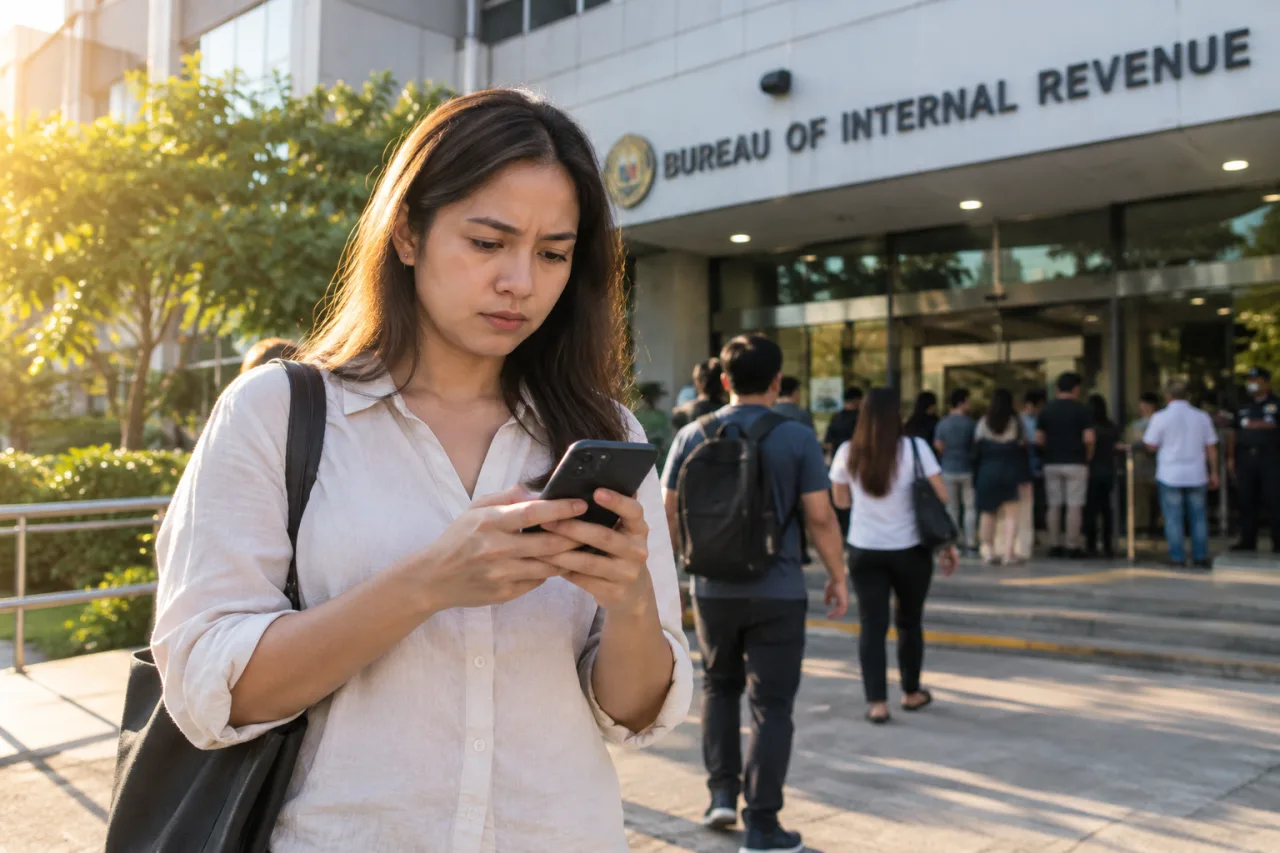
BIR data leak investigation: the taxpayer protection checklist
Table of Contents
Key Takeaway
- BIR data leak probe: An alleged BIR data leak surfaced on hacker forums on November 5 and 6, 2026, with reports claiming more than 10 million taxpayer records. The investigation is live. Nothing is confirmed yet.
- Evidence so far: A cyber intelligence group named Deep Web Konek reported the dump, and the Bureau of Internal Revenue (BIR) issued an official advisory saying the claims are being treated with “utmost urgency and priority.”
- Not yet a confirmed breach: The National Privacy Commission (NPC) said alleged leaks alone do not establish a personal data breach, and no breach notifications had reached the NPC as of November 6.
- Your tax records: The smartest taxpayer response in the first week is practical hygiene: reset BIR e-service passwords, watch for refund and verification scams, and know exactly where to report suspected misuse.
- Where to report: The CICC hotline 1326, the BIR trunkline (02) 8981-7000, and the NPC complaint channel are the three routes that matter, and all three are explained below.
More than 10 million taxpayer records may have surfaced on hacker forums under a threat actor’s name, and the BIR data leak investigation is now running across four government agencies at once.
The reports began circulating on November 5, 2026, when links to a large data dump claiming BIR records appeared on hacker forums. Cyber intelligence group Deep Web Konek followed the trail and reported that the files, allegedly connected to a threat actor called Happy Go Lucky PH, contain records of more than 10 million taxpayers, including taxpayer records, corporate registration information, and business records.
The BIR responded fast. An official BIR advisory dated November 6, 2026 said the Bureau is aware of reports circulating online regarding an alleged leak involving data claimed to be associated with the agency, and that the claims are being treated with “utmost urgency and priority.” The advisory also carries the line every taxpayer was waiting for: the BIR remains dedicated to ensuring the privacy, confidentiality, and security of all taxpayer records.
What the BIR Data Leak Investigation Has Confirmed So Far
Short answer: the investigation, not a breach. The BIR confirmed the probe and its partners but has not confirmed that a breach of its systems happened, and has disclosed neither the extent nor the type of information involved.
The response is heavyweight. According to the advisory as reported by GMA News, the BIR is coordinating with the Department of Information and Communications Technology (DICT), the National Computer Emergency Response Team (NCERT), the Cybercrime Investigation and Coordinating Center (CICC), and the Philippine National Police Anti-Cybercrime Group. Those four bodies cover system forensics, incident response, cybercrime enforcement, and criminal investigation respectively.
The BIR has also asked the public for patience. Its advisory says further updates will be issued as soon as verified details become available. Taxpayers can reach the Bureau directly through its official website or its trunkline (02) 8981-7000 while the verification runs.
Why the BIR Data Leak Is Still an Alleged Case
An alleged leak and a confirmed personal data breach are two different legal events in the Philippines, and the difference matters for what you should expect next.
The National Privacy Commission addressed the distinction directly on November 6, in a statement covering reports of alleged data leaks involving several government agencies. NPC Spokesperson and Deputy Privacy Commissioner Atty. Jose Belarmino II said the Commission had not received personal data breach notifications from the concerned agencies as of that date. His office stressed that reports of alleged leaks do not, by themselves, establish that a personal data breach occurred or that the Data Privacy Act of 2012 was violated.
The law also sets a clock. Under NPC Circular No. 16-03, personal information controllers must notify the Commission and affected data subjects within 72 hours of knowing, or having reasonable belief, that a personal data breach requiring mandatory notification has occurred. If verification confirms the incident and it meets those requirements, mandatory notifications follow. Until then, absence of a notification is not silence by accident: it means the regulator has not yet received facts that trigger the legal duty.
That is why the most honest headline on this story is the one this article opens with. A dump is circulating. The state is verifying. Nothing is confirmed. Your job as a taxpayer is not to wait for that verdict, because the protective steps run in parallel.
What Taxpayers Should Do Now: the 8-Step Checklist
Every step below is safe to do whether or not the BIR data leak is ever confirmed. None of them cost money. The first three take minutes.
1. Reset your BIR e-service passwords. If you use ORUS (the BIR’s registration portal), eTIN, EFPS, or eBIRForms, change those passwords today. Use a passphrase you have not reused anywhere else. A leaked database turns reused passwords into a skeleton key, which is the most common way data dumps become account takeovers months later.
2. Put your accounts on scam radar. Expect a wave of calls, texts, and emails referencing the leak. A person claiming to be a BIR officer who asks you to “validate” records, pay a processing fee, or read out a one-time PIN is impersonating the Bureau every time. The real BIR does not request OTPs, passwords, or payments through text or phone calls.
3. Treat refund messages as suspects first. Tax refund and tax adjustment pitches are the classic follow-up scam after any tax agency exposure. If a message says you are owed money, do not click its link. Open the official site yourself and check through your own channel.
4. Watch your bank and e-wallet accounts. Scam economics after a breach run on identity details. Enable every notification your bank and e-wallet apps offer, and report any stranger-than-usual transaction the same day. Speed is the deciding factor in recovery success.
5. Check whether anyone used your TIN. A TIN in the wrong hands can surface as employment, business, or registration activity you did not do. Warning signs include BIR notices or tax forms in your name that you never filed, a request for withholding data about a job you never held, or a business registration tied to your TIN. Freelancers registering through the freelancer BIR registration process should also confirm that their own ORUS profile details are theirs and current.
6. Verify information through official channels only. The BIR’s website and trunkline (02) 8981-7000 are the confirmed channels. When a dramatic post about the leak circulates in a group chat, resist forwarding it with your own unverified additions. Wrong details spread fast during investigations, and officials update on their own timelines.
7. Report suspected misuse, not just suspicion. If your identity details have already been used, file where the record lives. The CICC hotline 1326 receives cybercrime reports of every kind, and our global scam reporting guide maps the exact sequence from screenshot to agency for each case type. The BIR and NPC both have standing complaint channels for tax-related and privacy-related concerns.
8. File a privacy complaint if your data surfaces. The National Privacy Commission accepts complaints from data subjects who believe their personal data was processed unlawfully. If you later find your records misused, the complaint route is how accountability gets enforced under the Data Privacy Act, and it is the mechanism that turns this investigation from a news event into case files.
The Signals That Came Before This Month
The forum dump did not arrive out of nowhere. Three public signals preceded it.
First, the BIR website was defaced on the evening of September 8, 2026, by a group that tagged itself 3Musketeerz and left a message referencing flood-control issues. Manila Standard reported the site was restored quickly and that taxpayer data was intact. The BIR has not established any connection between that incident and the current claims.
Second, on October 26, the BIR suspended the mandatory online display of its Registration Seal Badge amid data privacy and technical concerns, a move reported by Unbox PH as researchers debated how much personal information the badge QR code could expose when scanned.
Third, this incident joins a row. Our coverage of the 155.6 million-account Philippine data leak, the DICT breach investigation, and the DMW network intrusion and OFW data-protection moves tracks the same pattern: attackers go where identity data concentrates, and government databases hold identity data of the highest freshness.
None of those signals proves the BIR data leak happened, but each one shows why investigators treat the claim as a priority rather than noise, and why the next weeks matter more than the first headlines did.
The pattern is also why the proposed national response keeps moving. The House-passed Cybersecurity Bill creating a dedicated national cybersecurity agency is a direct answer to incidents landing faster than the current patchwork can respond.
How to Report Suspected Misuse of Your Tax Records
Three routes, matched to the problem.
Cybercrime reports: CICC hotline 1326 handles reports of online fraud, impersonation, and account misuse. Prepare your evidence first: screenshots, phone numbers, account names, dates, and an exact description of what happened.
Tax-specific concerns: The BIR trunkline (02) 8981-7000 and its official website are the Bureau’s confirmed contact points during the investigation. A question such as “has anything been filed under my TIN” is best asked in person at a Revenue District Office with valid ID, because phone staff cannot confirm identity documents remotely.
Privacy complaints: The NPC takes complaints when personal data is processed in violation of the law. This is the channel for misuse you can document, not for vague worry, and the NPC website explains the requirements.
Keep one habit through all three: records. Every agency asks for the same things, and a single folder with your screenshots and dates serves all of them.
Scammers also exploit identity data differently by platform. After a government leak, money-app tricks rise, and our breakdown of GCash spoofing and thread hijacking scams covers the lock-down checklist for the country’s most-used e-wallet.
Identity exposure also touches areas beyond tax. Our guide on what to do when medical records surface in a breach and the wider anatomy of the Philippines’ AI-accelerated phishing economy cover the adjacent risks, because one leaked database rarely stays in one fraud category.
Key Takeaway for the Waiting Weeks
The BIR data leak investigation will produce a verified account in its own time. The steps in this article do not wait for that account. Password resets, scam radar, TIN checks, and clean reporting channels protect you today, and they stay useful regardless of what the forensics find.
If this intelligence helps you, you can add WorldNgayon as a preferred source on Google – free, one click, and it helps other Filipinos find the answers faster.
FAQ
Has the BIR confirmed a data leak?
No. The official advisory dated November 6, 2026 says claims about an alleged leak are being treated with urgency and priority and are under investigation. The BIR has not confirmed that its systems were breached or that taxpayer data was exposed, and it has not described what data the claims involve.
How many taxpayer records were exposed in the alleged BIR data leak?
The circulating claim, reported by the cyber intelligence group Deep Web Konek, is that records of more than 10 million taxpayers surfaced on hacker forums, allegedly tied to a threat actor using the name Happy Go Lucky PH. That figure is a claim from the forum dump’s poster and remains unverified by the BIR, the DICT, or the NPC.
Who is investigating the BIR data leak?
The BIR is coordinating with the Department of Information and Communications Technology, the National Computer Emergency Response Team, the Cybercrime Investigation and Coordinating Center, and the Philippine National Police Anti-Cybercrime Group. The National Privacy Commission monitors compliance with the Data Privacy Act and will require breach notifications if a breach is confirmed.
What should I change first while the BIR data leak investigation runs?
Start with your BIR e-service passwords: ORUS, eTIN, EFPS, and eBIRForms. Use a long, unique passphrase for each. Then turn on transaction alerts in your bank and e-wallet apps, and set up your group chat scam radar before the impersonation wave starts.
How do I know if someone misused my TIN?
Look for BIR documents you never filed: a Form 2305 or Form 1901 in your name, withholding reports from an employer you do not have, or a business registration tied to your TIN. A sudden BIR notice about transactions you never made is the clearest sign. Bring valid ID to your Revenue District Office if anything looks wrong.
Can I get compensation if the BIR data leak is confirmed?
Philippine law does not create an automatic payout for leak exposure. What exists is accountability: the Data Privacy Act gives the NPC power to investigate, require corrective action, and penalize violations, and data subjects can file complaints documenting misuse. Practical losses from fraud run through your bank’s dispute process and law enforcement reports.
Is it safe to keep using BIR online services?
Yes, with hygiene. The services themselves were not flagged as compromised. Use strong unique passwords, log out after each session, access the system only through its official address, and never install apps or click links from anyone claiming to fix the leak for you.
- Official bir-cdn.bir.gov.ph/BIR/pdf/Advisory%20110626.pdf — official BIR advisory dated November 6, 2026
- gmanetwork.com/news/topstories/nation/1008620/bir-data-leak-under-gov… — the advisory as reported by GMA News
- Official bir.gov.ph — official website
- Official privacy.gov.ph/statement-of-the-national-privacy-commission-on-report…
- Official privacy.gov.ph — National Privacy Commission
- manilastandard.net/business/314789811/taxpayer-data-intact-after-hack… — Manila Standard reported
- unbox.ph/news/bir-allegedly-hacked-2026 — a move reported by Unbox PH
- google.com/preferences/source?q=worldngayon.com — add WorldNgayon as a preferred source on Google
External sources linked in this article, in order of first mention. Spotted an error or a broken link? Tell us.
Cite this pagePublished Nov 10, 2026
Agron, E. (2026, November 10). BIR Data Leak Investigation: What Taxpayers Should Do Now. WorldNgayon. https://worldngayon.com/bir-data-leak-taxpayers/
Agron, Edmon. “BIR Data Leak Investigation: What Taxpayers Should Do Now.” WorldNgayon, 10 Nov. 2026, worldngayon.com/bir-data-leak-taxpayers/.
Agron, Edmon. “BIR Data Leak Investigation: What Taxpayers Should Do Now.” WorldNgayon, November 10, 2026. https://worldngayon.com/bir-data-leak-taxpayers/.
Agron, E. (2026) ‘BIR Data Leak Investigation: What Taxpayers Should Do Now’, WorldNgayon, 10 November. Available at: https://worldngayon.com/bir-data-leak-taxpayers/.
E. Agron, “BIR Data Leak Investigation: What Taxpayers Should Do Now,” WorldNgayon, Nov. 10, 2026. [Online]. Available: https://worldngayon.com/bir-data-leak-taxpayers/
@online{agron2026birdata,
  author       = {Agron, Edmon},
  title        = {{BIR Data Leak Investigation: What Taxpayers Should Do Now}},
  year         = {2026},
  date         = {2026-11-10},
  organization = {WorldNgayon},
  url          = {https://worldngayon.com/bir-data-leak-taxpayers/},
  urldate      = {}
}TY - ELEC AU - Agron, Edmon TI - BIR Data Leak Investigation: What Taxpayers Should Do Now T2 - WorldNgayon PY - 2026 DA - 2026/11/10/ UR - https://worldngayon.com/bir-data-leak-taxpayers/ Y2 - ER -
Cite the version you read; the page may be updated. Zotero and Mendeley can also import this page directly.