Table of Contents
Key Takeaway
- 📊 The headline number: 62% of Filipino consumers say scam fears make them avoid contact or transactions online — and 76% say they “absolutely worry” about being scammed, according to the GSMA ASEAN Consumer Scam Report 2026.
- 📉 What it means: Digital trust is now a growth constraint. When a majority avoid online transactions out of fear, every digital seller, platform and bank in the economy pays for it — a warning GSMA’s Asia-Pacific head delivered before 5G expansion.
- 🛡️ The industry answer: Globe, Smart and DITO are backing the GSMA’s three-layer anti-scam push — network protection, identity verification through Open Gateway tools, and early-stage mechanisms to flag suspicious activity before money moves.
- 🧭 What to do with it: Sellers should treat trust signals as sales infrastructure; consumers should know which reporting and verification tools already exist — several are live in the Philippines today.
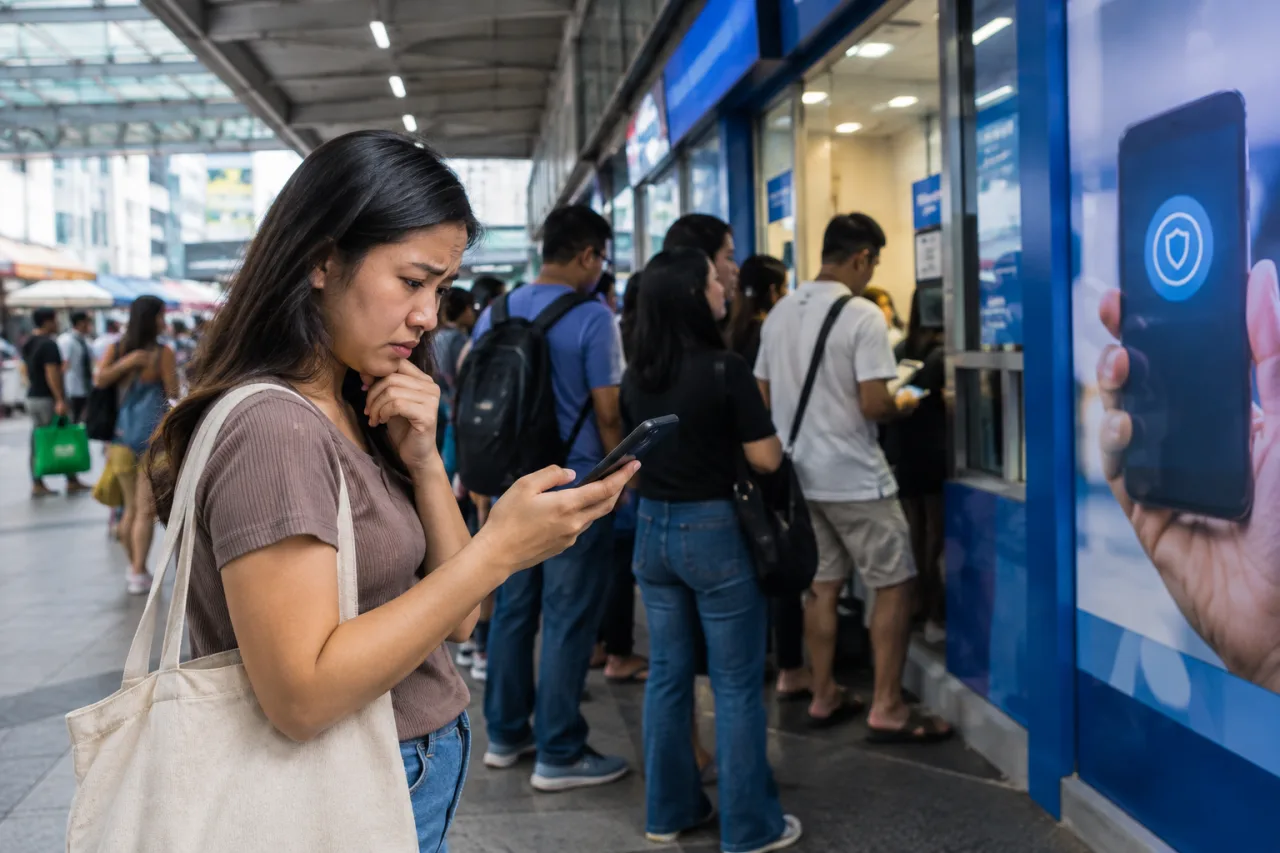
Most Filipinos no longer hesitate to buy online because they lack money or connectivity. They hesitate because they are afraid. The GSMA ASEAN Consumer Scam Report 2026, released in November, found that 76% of surveyed Filipinos “absolutely worry” about being scammed — and that 62% avoid online transactions or contact altogether because of that fear. GSMA, the global association of mobile operators, framed the finding as a direct threat to the region’s digital economy: the caution that protects a user personally, at scale, becomes slower adoption for everyone.
Context note: the Philippines’ digital economy reached a $42 billion gross merchandise value trajectory this year, a record number built on people trusting apps with purchases, payments and identity. A majority saying they avoid online transactions because of scams is a growth problem as much as a consumer-protection problem — and it is the first report to size the avoidance in those terms.
What the GSMA Report Actually Found
The survey numbers are blunt. Seventy-six percent of Filipino consumers said they absolutely worry about being scammed. Sixty-two percent said scam concerns had already changed their behavior — they avoid calls, messages, or completing transactions. The GSMA’s own framing matters here: these are not statistics of losses, but of withdrawal, the step before fraud happens that no bank can reimburse because no transaction occurred.
Julian Gorman, head of Asia Pacific at GSMA, was explicit about where this leads. Digital trust, he said, is emerging as a major barrier to wider adoption of online services, with consumers increasingly cautious about answering calls, responding to messages and transacting online. His forward warning: “As we head for 5G, and even beyond, where we’re transforming economies, transforming industry, that cautiousness will translate into slower adoption, or maybe even withdrawal.”
He also offered a genuinely Filipino observation: consumers here are relatively open about discussing their financial losses from digital fraud, including on social media. The industry head counts that openness as a positive force — public discussion raises awareness and pressures institutions to improve online security.
Why 62% of Filipinos Avoid Online Transactions
Behavioral avoidance of this scale does not appear from nowhere, and the numbers Philippine readers already know explain it. Earlier this year, 84% of Filipinos surveyed said they had encountered a scam attempt in the past year. Separate research found 72% of Filipinos were targeted by digital fraud, with online shopping flagged as the start point. The country’s own incident data counted 16,619 phishing attacks hitting local inboxes in six months, and SIM-swap account takeovers of e-wallet users made headlines through the season.
Each of those is a transaction the victim did not get to think about calmly afterward — and every one of them was witnessed socially. Philippine scam losses circulate in group chats, TikTok explainers and neighborhood Facebook pages faster than any bank advisory. The result is rational: people who have seen a neighbor lose ₱50,000 to a delivery-fees text rationally distrust the next checkout screen. That is precisely how 62% of Filipinos avoid online transactions before they ever open their wallet.
The Trust Numbers the Philippines Was Already Running On
The GSMA survey lands on top of a dataset the country has been building all year — and the contrast between the two kinds of numbers is the story. The familiar figures measure exposure: 84% of Filipinos said they encountered a scam attempt in a single year, 72% were targeted by digital fraud, 16,619 phishing attacks hit local inboxes in six months, and the “customs fee” remittance text and marketplace buyer scams kept evolving faster than warnings do. Those are statistics of what reached people.
The GSMA number measures the consequence: 62% of Filipinos avoid online transactions because the exposure worked on them. Fraud statistics count attempts people survived; avoidance counts attempts prevented by fear — purchases that never formed, messages never answered, sellers never discovered. Losses get refunded half the time. Withdrawal cannot be refunded, because the money never moved and the sale never happened. That is why this particular number deserves its own headline: it is the first clean measurement of scam pressure turning into economic drag.
What Scam Fear Costs Online Sellers
For operators — marketplaces, sellers, platform merchants — the survey converts into arithmetic. When a customer avoids contact, they do not ask questions; they simply leave. When they fear checkout, carts die before payment. The Philippines’ $42 billion digital economy record was built by consumers transacting; the GSMA report warns that a majority now actively pull back from those exact moments.
Three cost lines deserve a seller’s attention. First, lost first-time buyers: consumers who avoid online transactions because of scams are disproportionately reachable only through trust signals — platform badges, cash-on-delivery, refund guarantees — not discount codes. Second, support asymmetry: cautious buyers demand verification at the exact moment sellers least want friction, which punishes sellers whose payment pages look improvised. Third, compounding doubt: one publicized scam attributed to “Shopee sellers” or “GCash links” taxes every other seller on the platform for weeks afterward. The trust deficit is a shared operating cost, and the 62% figure is its price tag.
Cheaper moves exist for smaller sellers while the industry layer builds. Show the signals the cautious buyer is scanning for: a written return and refund policy in plain language, a real support channel with response-time promises, receipts flowing through verified payment providers rather than improvised transfer pages, and platform escrow on marketplaces so money only moves on delivery. Hybrid payment options — cash on delivery for first orders, digital payment afterward — deliberately match the behavior pattern the survey measured: buyers who avoid online transactions do not lack appetite, they lack proof of safety at the moment of payment.
Treat the 62% as the size of the unconvinced market rather than a permanent condition. It is the share of buyers who will convert the moment a seller demonstrates verifiable safety — and as identity-verification rails land through Open Gateway, the gap between sellers who can prove safety and sellers who merely claim it becomes the market-share contest.
The Industry Push: Three Layers of Protection
The GSMA and Philippine operators are attacking the problem across three layers. Layer one is network protection: the GSMA United Against Scams Playbook gives operators practical measures for scam prevention, detection and response at the telecoms level — where spoofed numbers and smishing originate.
Layer two is transaction protection. Globe, Smart and DITO are backing work on GSMA Open Gateway tools — operator-exposed capabilities designed to help businesses verify identities and authenticate users during online transactions. For sellers, that points toward a future where checkout can confirm the customer’s phone identity through the network itself, rather than an SMS code phishers already automate against.
Layer three is the least mature and arguably the most valuable: the GSMA initiative remains at an early stage, with the objective of developing mechanisms that could identify suspicious activities before fraudulent transactions occur — fraud interruption, not fraud reporting — infrastructure designed so that fewer Filipinos feel they must avoid online transactions to stay safe. None of these layers ships overnight. But the direction of travel matters: the operators who own the pipes are formally accountable for the trust problem, not just the consumers who fall in it.
What Sellers and Shoppers Can Do With This Data
For sellers: treat trust as conversion infrastructure. Publish real contact channels and return policies; use platform protections and verified-merchant badges rather than improvised payment pages; adopt network-verification tools as they come online through Open Gateway; and respond to scam association on your brand immediately, because the survey shows the public already routes fear faster than facts.
For shoppers: the avoidance instinct that the survey measured is rational, and there are tools that let you transact without abandoning the digital economy. Know how to verify a seller before paying — our online shopping scam-spotter guide covers the red flags per channel — and use verification services like Scamcheck.ph that check links and phone numbers before money moves. Report attempts so the numbers stay visible: the reason this dataset exists at all is that Filipinos kept talking.
For both: the 62% will only shrink if the industry’s identity layer lands and the public sees convictions, refunds and takedowns. That is months of infrastructure work, not a press-release fix — which is why the avoidance number deserves attention now, not after 5G adoption stalls.
The Buyer’s Checklist in a 62%-Avoidance Market
Consumers who still transact online — the 38% moving ahead — already follow a pattern worth writing down. They verify seller age and reviews before paying, not after; they use platform checkout rather than improvised payment links sent through chat; they keep financial apps in official stores only; they test a new seller with a small order before a large one; and they check links and mobile numbers with a scanner like Scamcheck.ph before money moves. None of those steps requires giving up the digital economy — they require paying with the same skepticism the scammers already banked on us losing.
The deeper point behind this checklist: every step is also a trust signal a seller can display up front. Returns policy, platform escrow, a verified badge, a support channel that answers — the checklist the careful buyer runs is the exact list the seller should be publishing. In a market where 62% of Filipinos avoid online transactions by default, trust documentation converts the largest untapped pool of buyers in the economy.
Frequently Asked Questions
Q: What did the GSMA ASEAN Consumer Scam Report 2026 find about the Philippines?
A: 76% of surveyed Filipino consumers said they “absolutely worry” about being scammed, and 62% said scam concerns make them avoid contact or transactions. GSMA framed digital trust as a major barrier to adoption of online services.
Q: Why do 62% of Filipinos avoid online transactions?
A: Scam exposure. Independent surveys found 84% of Filipinos encountered a scam attempt in a year and 72% were targeted by digital fraud, with Philippines’ incident data logging 16,619 phishing attacks in six months. Repeated exposure turns into rational withdrawal.
Q: What are Globe, Smart and DITO doing about scams?
A: The operators are backing the GSMA’s three-layer push: network-level protection under the United Against Scams Playbook, identity verification and authentication through GSMA Open Gateway tools for businesses, and early-stage mechanisms to flag suspicious activity before fraudulent transactions happen.
Q: Is the 62% avoidance figure bad for the digital economy?
A: Yes, in direct terms. The Philippine digital economy tracks toward tens of billions of dollars in gross merchandise value, and every avoided checkout or unanswered seller message is gross value that never forms. GSMA’s Asia-Pacific head warned that the caution could mean slower adoption or withdrawal as economies scale 5G.
Q: What should online sellers do in a low-trust market?
A: Make verification effortless and visible: verified badges, clear refund and contact policies, and payment pages that look institutional. As network identity verification becomes available, adopt it early — trust signals convert the 62% who otherwise leave.
Q: How can a consumer check whether a transaction is safe?
A: Verify the seller profile against known red flags, use link- and number-checking tools such as Scamcheck.ph, avoid paying through improvised channels, and report attempts to the platform and to the scam-reporting routes published for your bank or wallet.
The Bottom Line
The GSMA report changes the conversation about scams in one structural way: it prices them in adoption, not just in stolen funds. Sixty-two percent of Filipinos avoiding online transactions is a demand-side brake on the digital economy that no seller can out-discount. The operators’ three-layer response is the first infrastructure answer with the reach to matter, and it puts a clock on the market: sellers that build verifiable trust now are buying the customers the fear keeps away, and consumers who learn the verification tools available today keep the benefits of the digital economy without the exposure. Watch the Open Gateway deployments and the next avoidance survey — those two numbers moving in opposite directions, meaning deployments landing while fewer people avoid online transactions, will define whether the country’s digital momentum holds.
Sources: GSMA ASEAN Consumer Scam Report 2026 and operator statements as reported by Newsbytes.PH, SecurityBrief Asia and IndexBox; Philippine survey and incident context from WorldNgayon’s coverage of the 2026 State of Scams, digital fraud targeting, and phishing incidents.
- newsbytes.ph/2026/11/06/gsma-scam-fears-threaten-ph-digital-economy-a… — The GSMA ASEAN Consumer Scam Report 2026
- indexbox.io/blog/gsma-philippines-ranks-third-in-asean-digital-index-… — Seventy-six percent
- securitybrief.asia/story/philippine-operators-unveil-anti-scam-push-w…
External sources linked in this article, in order of first mention. Spotted an error or a broken link? Tell us.
Cite this pagePublished Nov 11, 2026
Agron, E. (2026, November 11). 62% of Filipinos Avoid Online Transactions as Scam Fear Reshapes the Digital Economy. WorldNgayon. https://worldngayon.com/avoid-online-transactions/
Agron, Edmon. “62% of Filipinos Avoid Online Transactions as Scam Fear Reshapes the Digital Economy.” WorldNgayon, 11 Nov. 2026, worldngayon.com/avoid-online-transactions/.
Agron, Edmon. “62% of Filipinos Avoid Online Transactions as Scam Fear Reshapes the Digital Economy.” WorldNgayon, November 11, 2026. https://worldngayon.com/avoid-online-transactions/.
Agron, E. (2026) ‘62% of Filipinos Avoid Online Transactions as Scam Fear Reshapes the Digital Economy’, WorldNgayon, 11 November. Available at: https://worldngayon.com/avoid-online-transactions/.
E. Agron, “62% of Filipinos Avoid Online Transactions as Scam Fear Reshapes the Digital Economy,” WorldNgayon, Nov. 11, 2026. [Online]. Available: https://worldngayon.com/avoid-online-transactions/
@online{agron2026avoidonline,
  author       = {Agron, Edmon},
  title        = {{62\% of Filipinos Avoid Online Transactions as Scam Fear Reshapes the Digital Economy}},
  year         = {2026},
  date         = {2026-11-11},
  organization = {WorldNgayon},
  url          = {https://worldngayon.com/avoid-online-transactions/},
  urldate      = {}
}TY - ELEC AU - Agron, Edmon TI - 62% of Filipinos Avoid Online Transactions as Scam Fear Reshapes the Digital Economy T2 - WorldNgayon PY - 2026 DA - 2026/11/11/ UR - https://worldngayon.com/avoid-online-transactions/ Y2 - ER -
Cite the version you read; the page may be updated. Zotero and Mendeley can also import this page directly.