Table of Contents
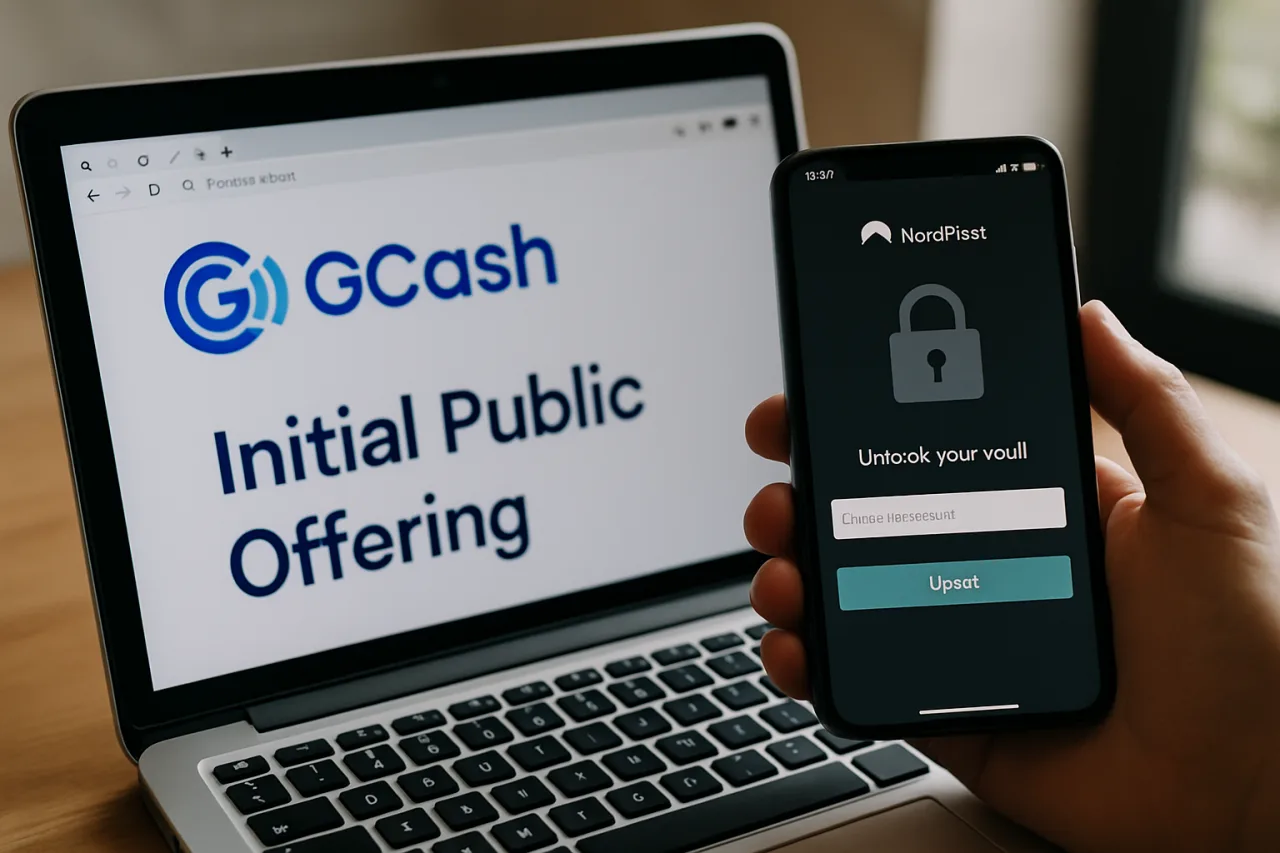
THE BOARD — Thursday, October 1, 2026 → Cyber Watch #004 (How-To Thursday): The GCash IPO window opens Monday — and with it, the year’s largest phishing surface: fake allocation pages, bogus “IPO agents,” quishing QR codes, and “exclusive access” offers aimed at exactly the families this site serves. Today’s how-to builds the NordPass vault-and-scout routine that neutralizes most of it in 20 minutes.
Key Takeaway
- 🎣 IPO window = scam season: GCash itself flagged fake “early access” offers; security commentators warn of bogus agents, fake subscription sites, and QR-code lures during the Oct 6–12 window. Nothing about that changed with the ₱6.60 print — if anything it sharpened.
- 🔐 The vault is the kill-switch: every real subscription flow passes through credentials you control — a password manager vault (with breach scanning) makes credential-phishing pages useless against your logins.
- 🧭 Five IPO-window phishing tells below — each maps to one defensible habit, from sender checking to the “the app IS the channel” rule.
- 📶 The VPN half of the kit: subscription-days from cafés, airports, and shared Wi-Fi are real risk surfaces; a reputable VPN with phishing-site blocking (NordVPN’s next-generation antivirus on Complete) covers the traffic plane while NordPass covers the credential plane.
- ⏱️ 20 minutes, two apps, tonight: import passwords to NordPass, enable breach scan, set the VPN rule for order-days. Done before GStocks asks for anything.
Why the IPO Window Concentrates Scam Risk
Mega-IPO weeks are structurally perfect for phishing: millions of first-time investors open accounts, official channels are busy, urgency is culturally encouraged (subscribe before the window!), and money conversations dominate every family group chat. GCash issued its own public advisory back in February against fake “early access” prompts — the pattern it warned about then (scammers mimicking official flows, requesting personal information) is exactly what returns louder during a live offer window. Security-press coverage of the IPO era adds the 2026 twist: “quishing” (malicious QR codes that deep-link to credential-harvesting pages) now rides the same distribution channels that once carried plain phishing links.
The ₱6.60 print this morning sharpens the target. Every Filipino who learned “you can enter at the same price as BlackRock” today now has a reason to click faster tomorrow — and scam pages know that psychology as well as brokers do. The defense is not avoidance of the window; it’s engineering your access so that phishing pages can’t hurt you even when they reach you.
NordPass Vault Logic: Why a Password Manager Neuters the Lure
The five-step NordPass drill (verified against NordPass’ official product pages and press review data — Premium at $23.88/year single, $2.79–3.69/month-family promotions on two-year terms, XChaCha20 encryption):
- Import tonight (5 min): pull every broker, bank, GCash-adjacent, and email credential into the vault — NordPass imports from browsers and CSV in one pass. Autofill then only fires on the genuine domains.
- Run Password Health (2 min): flag reused and weak credentials — the exact accounts attackers retry during high-attention weeks.
- Enable the Data Breach Scanner (3 min): the Premium tier watches whether your emails surface in new dumps — during breach-heavy September (government series this site covered in the 20-minute vault build), that’s your early-warning layer.
- Turn on Email Masking for new sign-ups (2 min): anything subscribing to “IPO update” lists gets a masked alias — when that alias leaks, you know exactly which list leaked.
- Harden the vault itself (3 min): biometric unlock + 2FA on the manager. The vault is now the single door; guard it like one.
Result: a phishing page can imitate GStocks perfectly, but it cannot consume your credentials — the vault autofills only where the domain matches the real entry. That single property breaks the economics of the scam.
The Five IPO-Window Phishing Tells (and Each One’s Counter)
- 1 — “Exclusive allocation” contact: nobody sells GCash allocations in Messenger; allocation runs through GStocks/PSE EASy or your broker. Counter: treat any private “allocation” offer as a scam by definition; report and block.
- 2 — Fake “early access” prompts: GCash’s February advisory exists precisely because these recur. Counter: the app is the channel — open GCash yourself, never from a link. If a feature exists, it’s inside your installed app, not behind a URL.
- 3 — QR codes in comments/print: quishing rides convenience. Counter: scan nothing during IPO weeks that you didn’t initiate from a verified source; type PSE EASy addresses manually.
- 4 — Deadline panic: the real window is six days (Oct 6–12) with the ₱6.60 print already public — panic deadlines (“reserve tonight or lose your slot!”) are the scam’s fingerprint, especially any demanding an odd payment route. Counter: every real subscription settles through the official flow, priced transparently.
- 5 — Lookalike sites: the ₱6.60 detail is public knowledge, so a fake page that “knows” the price means nothing. Counter: bookmark the official GCash/PSE/broker pages once; the bookmark, not the link, is your doorway. NordVPN’s Threat Protection flags known malicious domains at the DNS layer — the belt to the vault’s suspenders.
The VPN Half — Order-Day Discipline
Where the credential plane ends, the traffic plane begins. Subscription-day realities for Filipinos: queue updates from a mall, allocation checks at the airport, GStocks pings on hotel Wi-Fi. Shared networks are where session hijacks and fake captive portals live. The NordVPN layer (verified pricing — two-year Basic at $3.49/mo, Complete at $4.49–4.99/mo where the next-generation antivirus and NordPass Premium bundle in):
- The rule: any financial session on non-home Wi-Fi runs over the VPN, full stop. It’s not about hiding location (this kit has no interest in geo-tricks) — it’s about encrypting the tunnel between you and official channels.
- The bundle logic: Complete-tier NordVPN includes NordPass Premium — one subscription covering both planes of this kit. For households that will run IPO-day routines from many locations, that’s the honest value read.
- Threat Protection: enabled by default on the app, it scores known phishing/malicious domains before the browser loads them — a real second net under the vault.
Security-press review data (Security.org’s August check (NordVPN on Security.org: 9,300+ servers, 10 devices, next-generation antivirus on upper tiers) supports the practical claim without overselling: this is belt-and-suspenders, and the belt is the vault.
The 20-Minute Timeline, Compressed
- 0–5 min: NordPass import + Password Health run.
- 5–8 min: Breach Scanner on; email masking for new sign-ups.
- 8–12 min: NordPass biometric + 2FA hardened; sync phone + desktop.
- 12–18 min: NordVPN installed on the devices that carry money sessions; Threat Protection on; the order-day rule written down (any non-home Wi-Fi = tunnel on).
- 18–20 min: bookmark the three real doors (GCash app, PSE EASy, your broker) and delete link-clicking from your IPO vocabulary.
Household version: run the same drill with the family account that shares the GCash phone — the OFW-parent angle from this week’s ladder piece applies in security clothes: budgets are separate; so are threat models, but the 20 minutes are identical.
The Watcher’s Note — What Comes After the Window
Two things to monitor after Oct 12: (1) post-window “refund confirmation” phishing — scaled-down subscribers expect money back, so refund-shaped lures get a second life (counter: refunds arrive through the same channel that took your money, never through a link); (2) the debut-week wave around Oct 20, where “GCASH trading now” pages will fake the ticker debut. The kit above covers both shapes unchanged. And keep the NPC’s own guidance in view — the commission’s DBNMS-era advisories (this site’s breach-coverage ledger tracks the September wave) show the regulator’s own pattern-awareness rising. Scams follow liquidity; your defenses follow the calendar.
The OFW-specific layer deserves its own paragraph, because the threat model diverges from the home-side one: subscription-day routines from Saudi Arabia carry (1) government-filtered networks where DNS tampering is a real variable, (2) dormitory and camp Wi-Fi that dozens share, and (3) time-zone pressure — the Manila morning window is your evening, when fatigue makes the click that judgment stops. The kit adapts: NordVPN on before any session touching GCash or the broker (the Riyadh-to-Manila tunnel is the point, not an afterthought), NordPass sync verified before leaving work, and the rule that no subscription action happens after 11 PM local — a rule with the same shape as the ladder’s wallet discipline, because it removes decision-making from the hour when decision-making is worst. Filipino engineers abroad run some of the discipline’s strictest cases; the 20-minute kit respects that reality rather than pretending every reader sits on a home router.
And one honest limitation: no vault protects a person who manually types their password into a fake page. The autofill property is powerful precisely because it’s passive — the vault does the typing, so the human hand is out of the loop. When GStocks asks for a password you do NOT normally enter (because the vault does it), that surprise is itself the alarm: a real flow never asks the vaultless question. Train the family on that sentence — it is the whole course in one line, and it costs the reader nothing but the discipline to pause when their hands reach for the keyboard.
Frequently Asked Questions
Are there real GCash IPO “early access” offers?
No. GCash publicly advised (February 2026) that no early-access program exists and warned about fake prompts harvesting personal information. Allocation runs only through GStocks inside the app, PSE EASy, or your broker — during the official Oct 6–12 window.
What is the NordPass vault and why does it stop phishing?
A password manager (Premium $23.88/yr, XChaCha20 encryption) that autofills credentials only on the real domains you saved. A perfectly faked login page can’t consume credentials from a vault that doesn’t autofill there — which breaks the scam’s economics. Its breach scanner adds early-warning when saved emails surface in new dumps.
Do I need a VPN to subscribe to the GCash IPO?
At home, not strictly. On any shared Wi-Fi (mall, airport, café, hotel), yes — that’s where session hijacks and fake captive portals live. NordVPN’s two-year Basic ($3.49/mo) covers the tunnel; the Complete tier bundles next-generation antivirus plus NordPass Premium, covering both planes in one subscription.
What is “quishing”?
Phishing delivered through malicious QR codes that deep-link to credential-harvesting pages. During high-attention events like the IPO window, printed/comment QR codes become bait. Counter: scan only what you initiated from verified sources; type official addresses manually.
What happens if I already entered details on a fake page?
Act fast: change that credential everywhere it was reused (the vault’s Password Health shows reuse instantly), enable 2FA on the affected account, check GCash’s in-app support channel, and file with the CICC/NPDC channels this site’s breach-series documents. Speed matters more than embarrassment — report it.
Financial Disclaimer: This article is security and general-information education, not investment or legal advice, and not a solicitation to buy or sell securities or subscription services. Plan prices reflect vendor/press data at publication and change; verify against official vendor pages and PSE disclosures before purchase. WorldNgayon may earn a commission from provider links at no additional cost to readers. Read our full site disclaimer page.
An NordPass-vaulted household benefits from two structural habits worth writing down. First, the “credential inventory” ritual: every October and April, the family opens Password Health together for one screen, one hour — the reuse report doubles as a de-facto asset inventory (each entry is a door someone could try), and the conversation takes ten minutes. Second, the notification audit on every account in the vault: real services send real alerts; scam pages thrive in the silence of accounts whose owners never check alert channels. Turning on official app notifications for GCash and your broker converts a phishing attempt’s success condition (silence) into an instant tell (your app says nothing happened). The vault protects what’s inside it; the alert discipline protects the timing between account and phone. Both together take twenty minutes to set and zero to run — the highest-leverage security habit any family sets up, and it happens to coincide with the exact week when every Filipino household is talking about one app.
>