Table of Contents
🔐 THE BOARD — Tuesday, September 29, 2026 → the affiliate slot: the credential-vaulting decision for your government logins · context on the wire: three government-system incidents in ~20 days (19 defacements Sep 21-ish · DMW breach · EMB/CRS claim Sep 27) · the artifact: a government-login vault build keyed to the exact accounts Filipinos hold with the state · the tool: NordPass (free tier vault + MFA + passkey-ready, paid tier adds breach monitoring via SSO/2FA-free family share)
Related: F5 Breach: Nation-State Hackers Stole the Blueprint of the Internet’s Load…
Related: Blockchain Government Spending: Marcos EO 126 institutionalizes DBM CO
Key Takeaway
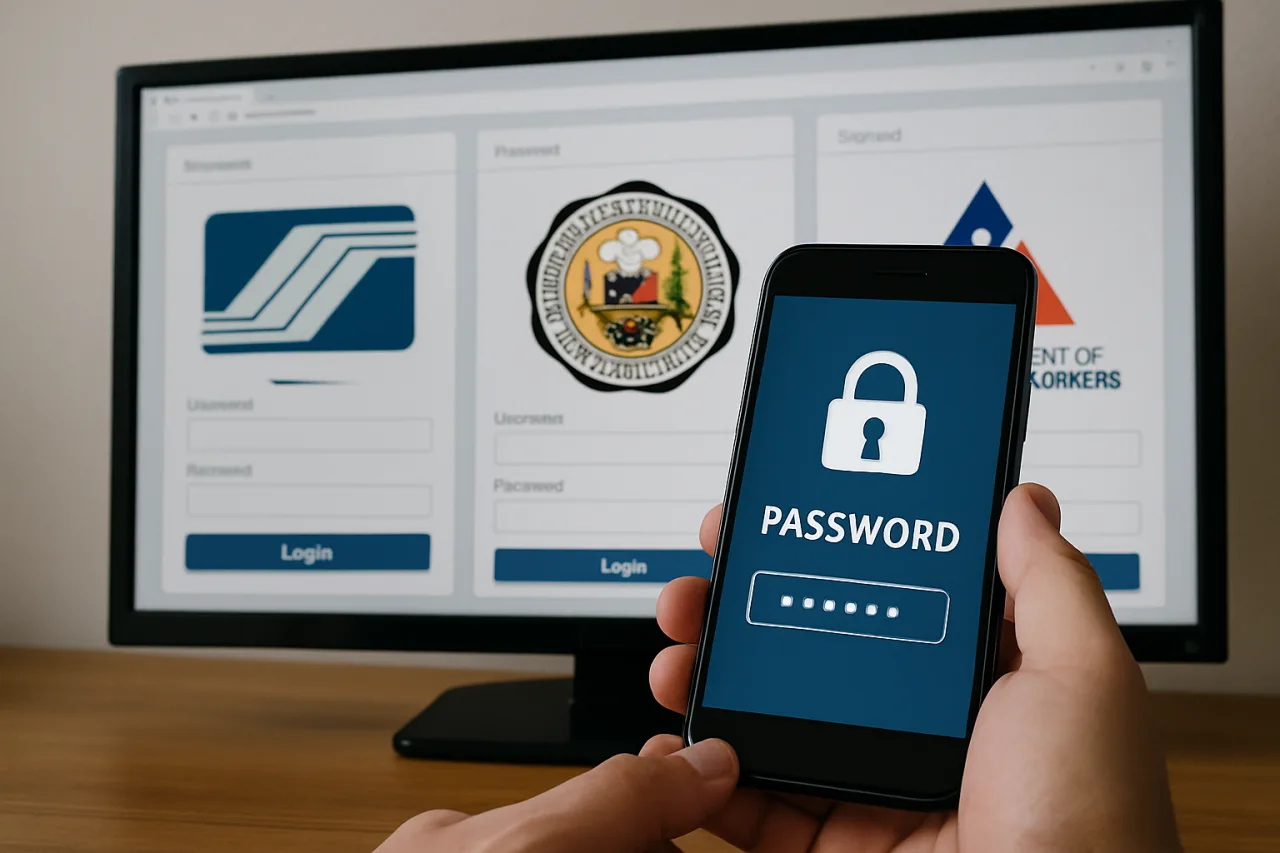
- 🏛️ The pile nobody catalogs: eGov PH, SSS, PhilHealth, Pag-IBIG, BIR, TIN ID, DMW’s e-registration, OWWA membership, LGU portals, passport slots — the average OFW household holds 10+ government logins, and September proved each is a separate door someone probes.
- 🔑 One reused password across that pile is the actual cascade: the DMW breach’s lesson wasn’t the DMW password — it was that credentials from breached government systems come pre-loaded into credential-stuffing attacks aimed at SSS, banks, and email. The vault breaks the reuse chain at the source.
- 🆓 The free tier covers the build: unlimited password storage, zero-knowledge architecture, MFA on the vault itself — the government-login vault costs exactly ₱0 to start. The premium tier exists when the household stack grows: breach-monitoring dark-web scans that flag your logins in dumps.
- 📴 The OFW constraint is built around, not ignored: you sign in from Riyadh while the family vault lives in Laguna — NordPass’s shared-item model means you vault your own logins privately, share only the household items (Pag-IBIG, Meralco, the family’s eGov) with chosen members, and keep banking credentials solo.
- ✅ Payoff: a 20-minute build — 10-step checklist — that moves every government login into a unique-password vault with MFA on the vault itself, before the next dump names a Philippine agency.
Three separate government-system incidents have hit the wire in roughly twenty days — and the fix they point at is the password manager build for your government logins — the 19-site defacement wave, the DMW network breach that put OFW personal data in play, and the DeathNote EMB claim Cyber Watch #002 priced this morning. Each incident was a different failure mode, and none of them was “your password was bad” — but every one of them puts credential-class data into circulation, and the cascade risk that actually reaches your household travels through one habit: password reuse across the government-login pile. This is the affiliate slot’s decision product: building the government logins vault — a password manager build that — a 10-step, 20-minute build using NordPass’s free tier that moves every PH government credential you hold into a zero-knowledge password manager vault with MFA on the vault itself, unique generated passwords per portal, and the OFW household-share pattern for the family’s shared accounts. The EMB claim is the trigger this week; the DMW breach is the precedent; the 19 defacements Cyber Watch #001 covered are the standing condition. Any one of the three justifies the build — ten government logins sitting on reused passwords justify it permanently.
Why Government Logins Are a Separate Vault Class — the Password Manager Math
Bank logins get the security attention; government logins get the “it’s just the SSS site” shrug — and that inversion is precisely the exposure. The government pile’s unique risk profile: identity-anchoring credentials (SSS, PhilHealth, Pag-IBIG logins verify against your UMID/master data — a takeover there cascades into benefit applications and loan proofs), long dormancy (you log into Pag-IBIG twice a year; a session hijack can live unnoticed between logins), email-shared resets (most PH government portals reset through the same email — the vault’s unique-password discipline plus that email’s own MFA is what breaks the reset-chain), and breach-cascade supply (every government dump in circulation feeds credential-stuffing against every other of your government logins). The DMW breach is the live case: OFW data in circulation means OFW-recognizable credential-stuffing waves against the exact portals OFWs log into — Gulf-timezone login patterns, e-registration accounts, OWWA memberships. The defacement wave set the standing condition (attackers enumerate and probe PH government web assets continuously); the EMB claim set this week’s trigger. The vault response is blunt: unique passwords behind the password manager kill stuffing on all your government logins at once; MFA on the vault kills the master-password theft; zero-knowledge architecture means even the vault provider’s own exposure doesn’t leak your entries. That last property is the reason the piece recommends a dedicated password manager over the browser’s built-in save-password feature: browser vaults sync through accounts that themselves get phished; zero-knowledge vaults don’t have your keys to hand over.
WorldNgayon Analysis: The reuse cascade is the actual product of every government breach — and it runs on one user habit that costs ₱0 to break.
Bottom Line: Government logins are a separate vault class: identity-anchoring, dormant, reset-shared, and now breach-cascaded three times in twenty days.
The 10-Step Build — 20 Minutes, Free Tier, Done Tonight
Step 1 — inventory the pile (3 min): list every government portal login in the household: SSS, PhilHealth, Pag-IBIG, BIR/TIN, DMW e-registration, OWWA, PSA, passport-booking, LGU/permit portals, eGov PH app credentials, and the email that receives every reset. Step 2 — install and set the master key (2 min): NordPass‘s free tier on the devices you actually use; the master password is the one password you’ll memorize this year — 4 random words plus a number, written once on paper stored offline, never screenshotted. Step 3 — turn on MFA for the vault itself (1 min): authenticator-app based; this is the step that makes a stolen master password worthless without the second factor. Step 4 — migrate the anchor email first (4 min): generate the unique password through the vault, change the email’s login, confirm recovery codes offline — the anchor email is the master reset key for the whole government pile. Step 5 — migrate the identity-anchoring government logins (5 min): your SSS, PhilHealth, Pag-IBIG — generated unique passwords each, vault-saved with portal URLs attached. Step 6 — migrate the dormant portals (2 min): the twice-a-year government logins — unique passwords now, so dormancy stops being exposure. Step 7 — set the household share pattern (1 min): shared items only for genuinely shared logins (Meralco, the family’s LGU portal); everything bank-class stays solo. Step 8 — kill the browser save-password copies (2 min): delete the same credentials from browser autofill so there is one source of truth. Step 9 — enable breach monitoring on the paid tier only if the household stack is 15+ logins (0 min today): the free tier’s build is complete without it; premium adds dark-web monitoring that flags your logins in circulating dumps — the DMW-class scenario’s early warning. Step 10 — calendar the quarterly audit (1 min): a 10-minute quarterly pass checking vault MFA is on, the anchor email’s recovery codes are current, and no new portal drifted back into reuse. Twenty minutes, ₱0 at the free tier, and all your government logins sit unique-password’d behind an MFA’d vault by tonight.
Bottom Line: Ten steps, ordered so each adds protection to the last — the anchor email and identity anchors migrate first because that’s the cascade’s actual entry sequence.
The OFW Password Manager Pattern — Vault Solo, Share the Household, Bank Solo
The pattern that fits the OFW household’s actual shape: your solo vault carries your work, banking, remittance, and personal government logins — the credentials nobody else touches. The shared household vault carries the family utilities and shared portals (Meralco, Maynilad, the condo’s property-management portal, the shared Netflix-and-Meralco-style accounts) — items shared with chosen members, each with their own master password. The split matters for the OFW constraint specifically: you manage your vault from Riyadh across whatever device you’re issued, but the shared vault’s members (spouse in Laguna, siblings elsewhere) each authenticate independently — no shared master passwords, no WhatsApp’d credentials, no notepad on the refrigerator holding the Meralco login. The remittance-app class rides the same pattern: those logins are bank-class solo entries, and the security stack the remittance-apps WiFi stack built (VPN on public Wi-Fi, MFA on the apps) completes this one (unique credentials behind vault MFA) — the two pieces are the same defense at different layers, wire-level and credential-level, across the household’s government logins. And the passkey lane is already in the build’s future: current zero-knowledge managers are passkey-ready, and the SMS-2FA sunset (Microsoft killing it by February, per the September advisory) is pushing every PH portal toward passkey-class second factors — the vault is the natural passkey home, which makes tonight’s migration the step that keeps receiving system upgrades for free. The pattern’s worked shape, run through a concrete household: An OFW in Riyadh holds 22 logins total — 6 bank/remittance-class (solo vault), 9 government portals (solo vault, migrated tonight), 7 household utilities and subscriptions (shared vault). Migration night touches only the government nine and the anchor email: ten entries, twenty minutes, and the Meralco login stops living wherever it lived before (usually one sibling’s phone notepad). When the sibling’s phone is replaced in December, the shared vault follows the person, not the device — one authenticator re-scan instead of seven passwords hunted down and rotated. That re-scan-per-device property is the quiet dividend the vault splits pay for years: households that vault correctly run device replacements as an authenticate-once event, while households that WhatsApp passwords run replace-a-phone as a week-long rotation exercise. The pattern scales the same way at every size — an OFW with 10 logins and a family of four with 60 run the identical build, because the architecture (solo bank / shared utilities / vault MFA everywhere) is size-invariant.
WorldNgayon Analysis: The OFW vault split is not a compromise — solo for bank-class, shared for utilities-class is how professional password managers were designed to be used.
Bottom Line: Solo bank, shared household, passkey-ready future — the OFW pattern uses the tool’s actual architecture instead of fighting it with shared master passwords.
Frequently Asked Questions
Is a password manager’s free tier enough for government logins?
Yes for the vault build itself: NordPass’s free tier offers unlimited password storage, the zero-knowledge architecture, and MFA on the vault — every step of the 10-step build runs free. The government logins class rarely exceeds a dozen entries (SSS, PhilHealth, Pag-IBIG, BIR, DMW, OWWA, PSA, the LGU portals, and the anchor email), so storage limits never bind at this tier, and the migration sequence — anchor email first, identity anchors second, dormant portals third — works identically free or paid. What the paid tier actually buys is monitoring and breadth: breach-monitoring scans against circulating dumps, deeper secure item sharing for larger households, and priority support — the tripwire class of features that matter once the vault defends 15+ logins rather than the essential dozen. The premium tier earns its slot when the household stack grows past ~15 logins and the dark-web breach monitoring (early warning when your logins appear in circulating dumps) becomes worth its subscription — the DMW-class scenario’s tripwire.
Why not just let the browser save my passwords?
Browser vaults sync through your device or browser account — a phished browser account is every saved password at once, and the sync account is exactly what phishing targets. Zero-knowledge password managers keep the encryption key with you: entries decrypt only inside your device with master-password-plus-MFA, and the provider can’t read or leak what it never holds.
What if I forget my master password?
Zero-knowledge means there is no recovery — which is why the build stores the master key physically: three random words plus a number, written on paper, kept in one offline spot (the same discipline as recovery codes). The system’s security IS the no-recovery property; the paper copy is the recovery. Losing both the password and the paper means rebuilding the vault and re-migrating — annoying, not dangerous, because the portals all still exist behind their own resets.
How does this connect to the breaches in the news this month?
Directly: the DMW breach put OFW-linked data in circulation, the EMB claim alleges government-registry rows leaked, and the 19-site defacement wave proved the probing is continuous — every one of those generates credential-stuffing pressure against all the government logins you hold. Unique passwords per portal is the defense stuffing cannot beat, and the vault is how those unique passwords get memorable-without-being-reused.
Should the family share one master password for shared accounts?
Never — shared master passwords are how one phished phone becomes every household account at once. The shared-items model gives each member their own master password and shares only the chosen entries through the app; revoking a member (a lost phone, a departing household member) takes one toggle instead of rotating every shared login.
Financial Disclaimer: This article is for general information and education, not investment or financial advice. Security products vary in pricing and features; verify current terms with the provider before purchase. WorldNgayon.com is not a financial adviser and may hold affiliate relationships with products mentioned.