Table of Contents
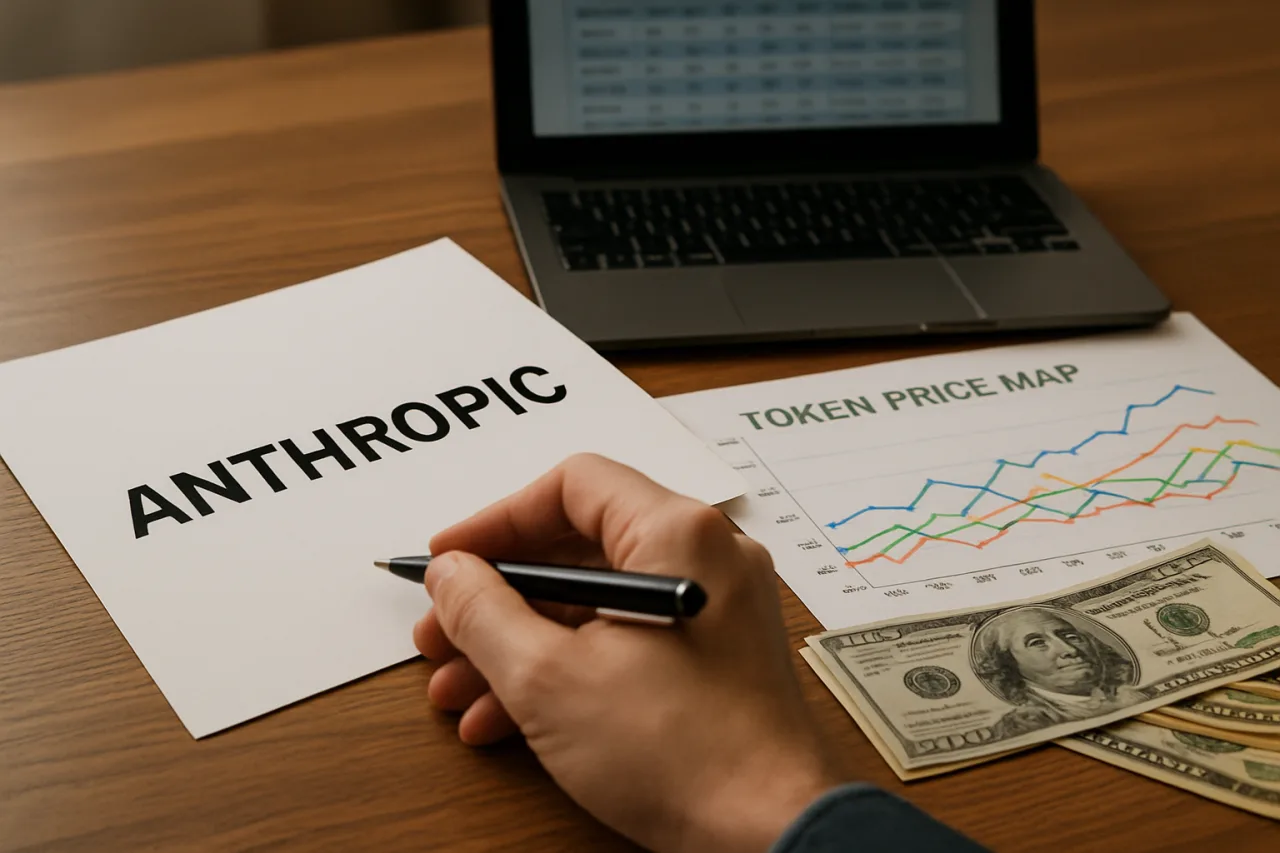
Token Price Index (Oct 1 refresh): Opus 5.5 $4/$20 · GPT-6 Sol $2/$10 · Flash-class $0.10–0.16 · Grok 4.7 $2/$6 · MiMo Flash $0.14/$0.28 — flagship tiers unchanged; the agenda moved, the bills barely did. AI Watch #004 — Anthropic set this month’s agenda; today’s map prices what that means for your stack. Thursday, October 1, 2026.
Key Takeaway
- 🏆 The agenda-setter changed: Anthropic’s Fable 5 tops the independent intelligence index (60 vs GPT-5.5’s 55), four Claude models bracket one OpenAI entry in the top five — while an October IPO window gives the agenda financial teeth.
- 💸 Token bills didn’t move — GPT-6.1 Sol held $2/$10, DevDay’s $500 speed tier held, and the workhorse tier remains the volume killer your stack should batch on.
- 🤖 Dots agents stayed Pro-gated — the agent-security primitives (approval gates, scope disclosures, rollback) are now the adoption bottleneck, not model quality.
- 🇵🇭 PH build lesson: routing (the Model-Choice drill) still outscores loyalty — flagship for decisions, workhorse for volume, flash for noise. The 3-tier rule paid its 4th consecutive week.
- 📣 Quotable Quote: “Security is becoming a primitive for user experience in 2026 — winning agent products make safe autonomy feel normal.” — from this week’s biggest AI-show build panel.
AI Watch: The Week Anthropic Took the Pen — What Actually Changed
September ended with the model race’s scoreboard moving on two fronts at once. On capability, Anthropic’s Fable 5 sits at rank 1 on the independent Intelligence Index at 60 — ahead of Anthropic’s own Opus 4.8 (56) and OpenAI’s GPT-5.5 (55), with four Anthropic models bracketing a single OpenAI entry in the top five. On capital, the October IPO window (per the Bloomberg-flagged timeline in Reuters’ safety reporting (Anthropic official capacity announcement) our WIW #005 window map covered this morning) converts that capability lead into balance-sheet momentum — $65 billion raised in May, tracker ARR near $70 billion, revenue run-rate that went $9B → $47B → tracker-$70B inside a year. AI Watch Daily reads that pairing as the defining fact of October: the lab that tops the benchmark this month may also print the largest tech IPO ever attempted inside it.
OpenAI’s counter-week was defensive and productive at once: DevDay shipped 20+ products (yesterday’s AI Watch #003 carries the full recap — Dots agents Pro-gated, GPT-6.1 Sol priced $2/$10, the $500 speed tier), while Washington posture stayed careful. The Bloomberg-reported safety-collaboration track (OpenAI working with Anthropic and Google on AI-safety frameworks, per Reuters’ September report) matters more than it reads: coordination on safety among rivals is the pre-regulatory layer that will define who gets to ship what at frontier scale — and it is precisely the layer enterprise buyers now ask about in procurement.
Token Price Index v3.1 — the October Refresh
| Tier | Model class | $/1M in | $/1M out | Routing verdict |
|---|---|---|---|---|
| Flagship | Opus 5.5 (Anthropic) | $4.00 | $20.00 | Decisions, code review, negotiation-grade drafting |
| Workhorse | GPT-6.1 Sol | $2.00 | $10.00 | Batch generation, summarization, internal tools |
| Mid | Grok 4.7 | $2.00 | $6.00 | Realtime/social data work, search-adjacent |
| Budget | MiMo Flash / Flash-class | $0.10–0.14 | $0.28–0.50 | Classification, extraction, high-volume noise work |
| Speed tier | Sol-500 tier | $500 flat | fast lane | Latency-critical products only |
The October story in one line: capability moved; price didn’t. That gap is your margin. Every task mis-routed to a flagship is a donation; every batch correctly parked at workhorse tiers compounds. The 3-tier rule from the Model-Choice drill (route by task class, not by brand loyalty) paid its fourth consecutive winning week — no price change among majors means routing discipline, not re-shopping, is the current edge.
Dots-Class Agents and the Security Primitive
DevDay’s agent gating (Dots on Pro tiers) turned out to be the week’s most telling product decision. The build community’s consensus panel this week distilled it cleanly: agent products win when safe autonomy feels normal — explicit scopes, approval gates, reviewable action plans, provenance logs, rollback. Security is becoming a primitive of user experience, as the Quotable Quote above captures. For Philippine AI Watch builders and agencies (running client work through agent stacks), the practical translation: pilot agent products on the Pro tier with two scoped tasks (research digest, inbox triage), and measure the review-burden rate — how many human approvals per 100 autonomous actions. That number, not model quality, decides whether your client work can scale on agents this quarter.
The PH Playbook — Three Moves This Week
- Re-run the routing table against your actual workloads: classify last week’s tasks into decision/volume/noise and re-price them on the index above. Most stacks discover 60–70% of billable tokens belong to workhorse tiers — a bill cut hiding in plain sight.
- Pilot one scoped agent product on a Pro-tier sandbox, with the review-burden metric as the goal line. The Dots gating makes Pro the entry ticket; treat a month of Pro as tuition with a measurable return.
- Pre-position for the Anthropic print: whether or not the IPO lands this month, enterprise Claude pricing and capacity follow it. Teams with standing Opus workloads should lock annualized commitments before a trillion-dollar debut reprices the negotiation — the same cornerstones-first logic the GCash book just taught at retail scale.
The Quotable Quote — Broadcast Copy
“Security is becoming a primitive for user experience in 2026. Winning agent products are going to make safe autonomy feel really normal — explicit scopes, reviewable action plans, rollback.”
— Build-show security panel, this week
The Rest of the Tape — Three Bullets
- Compute is the binding constraint again: power, not chips, is the 2026 bottleneck everywhere — the gigawatt announcements (Anthropic-Google TPU expansion) are the tape’s real headlines.
- Custom-silicon courtship: Anthropic–Samsung talks are the watch-item — an actual design agreement would mark the first flagship lab committing to non-merchant silicon at scale.
- GEO note for builders: with model discovery consolidating, being cited in AI answers is the new page-one — the GEO playbook this site runs (schema, direct answers, named sources) is the same game at site scale.
The capability-vs-price gap has a third layer worth naming: context windows. Fable 5’s jump wasn’t only scoring — the enterprise tier now carries multi-million-token contexts, which changes what “volume tasks” even are. A due-diligence bundle that cost a weekend of chunking scripts in 2025 now ships as one retrieval call against one document mountain. For the peso-lane agencies (due-diligence, compliance review, contract intake — the professional services the Model-Choice drill priced), the correct response is not upgrading every task to flagship; it’s re-scoping WHICH tasks now count as decisions. The index table above routes cost; the context-window jump reroutes scope. A stack that does both audits this week bills differently by November.
Capacity arithmetic supports the pricing thesis. The Anthropic Google-TPU expansion (up to one million TPUs, over a gigawatt coming online in 2026, tens of billions committed — per Anthropic’s own announcement) is the supply side of the Token Price Index: when supply scales this fast, workhorse-class pricing holds or drips down, and flagships justify themselves only on the tasks where latency-and-error floors bind. Filipino teams locking annualized enterprise terms before a trillion-dollar debut are effectively shorting the negotiation table’s supply curve — the same cornerstones-first logic, applied to API contracts instead of IPO allocations. Watch the enterprise-agreement pages of the two labs the way Friday’s flow tape watches the funds.
And a broadcast note for the community: the Quotable Quote above is written to travel. Share it to your team channels with one added line — “which of our running agent scopes can a client read?” If the answer is “none,” your agent stack is a liability dressed as automation. The labs have made safe autonomy a product primitive; client-facing shops make it a contract language. The two moves — model routing this week, agent scoping this quarter — are how the Philippines’ AI-services layer stays both cheap and safe. The mountain watched four weeks of routing wins; the fifth week’s lesson is that safety scoping is the new routing.
One structural point separates this week’s Watch from the daily tape pieces: the AI Watch Daily reads infrastructure months, not days. October’s stack-relevant calendar has three load-bearing dates — the Anthropic window (whenever it prints), the token-price response that follows any listing, and the Q4 enterprise-agreement season where Philippine vendors renew annualized commitments. Readers who treat AI Watch as a products newsletter get headlines; readers who treat it as infrastructure scheduling get negotiation leverage. The four-episode arc so far (the agents pause, the Astra cancellation, DevDay, and today’s agenda shift) tells the same story from four angles: the frontier is being repriced by capital structures, not just demos. That is why the hub order for new readers starts at #003 (the price map) and lands here — the capability story only matters in pesos after the bills are mapped.
Frequently Asked Questions
What is the Token Price Index in AI Watch?
The daily pricing strip for frontier API tiers — flagship (Opus 5.5 $4/$20), workhorse (GPT-6.1 Sol $2/$10), mid (Grok 4.7 $2/$6), budget (Flash-class $0.10–0.28), plus the flat-speed lane. It’s refreshed each edition so routing decisions use live prices, not month-old ones.
Why does Anthropic topping the index matter to Filipino builders?
Capability leadership drives enterprise demand, and this week it coincides with an October IPO window — meaning pricing, capacity, and enterprise terms for Claude-class models all move with that listing. Stacks with standing flagship workloads should consider timing commitments before a debut reprices negotiations.
Are Dots agents worth the Pro tier?
Pilot with measurement: two scoped tasks, one month, tracking the review-burden rate (human approvals per 100 autonomous actions). If that number trends down while task quality holds, agents are scaling for your stack; if it stays high, save the tier fee.
What is the 3-tier model routing rule?
Classify every task as decision, volume, or noise — flagship for decisions, workhorse for volume, flash-class for noise. Route by task class, never by brand loyalty. It has cut effective token bills in the Model-Choice drill for four straight weeks with no price changes among majors.
What changed in AI this week in one sentence?
Anthropic took both the benchmark lead and the financial agenda (Fable 5 at index 60, October IPO window live), while OpenAI shipped its agent platform around safety primitives — and none of it moved your token prices yet.
Financial Disclaimer: This article is for general information and technology-market education, not investment advice. Model pricing and index positions reflect public data at publication and change without notice. Anthropic IPO references cite press reports; no offering details are confirmed by the company. Read our full site disclaimer page.
A housekeeping note ties the episode together: this site’s AI Watch hub now carries all four October editions in one ladder (the agents pause, the Astra cancellation, DevDay’s price map, and today’s agenda shift), and the start-here pointer points at yesterday’s #003 for price-first readers. Bookmark the AI Watch hub and the index refreshes arrive with every edition — the infrastructure-calendar habit the whole build community is converging on.
>