Table of Contents
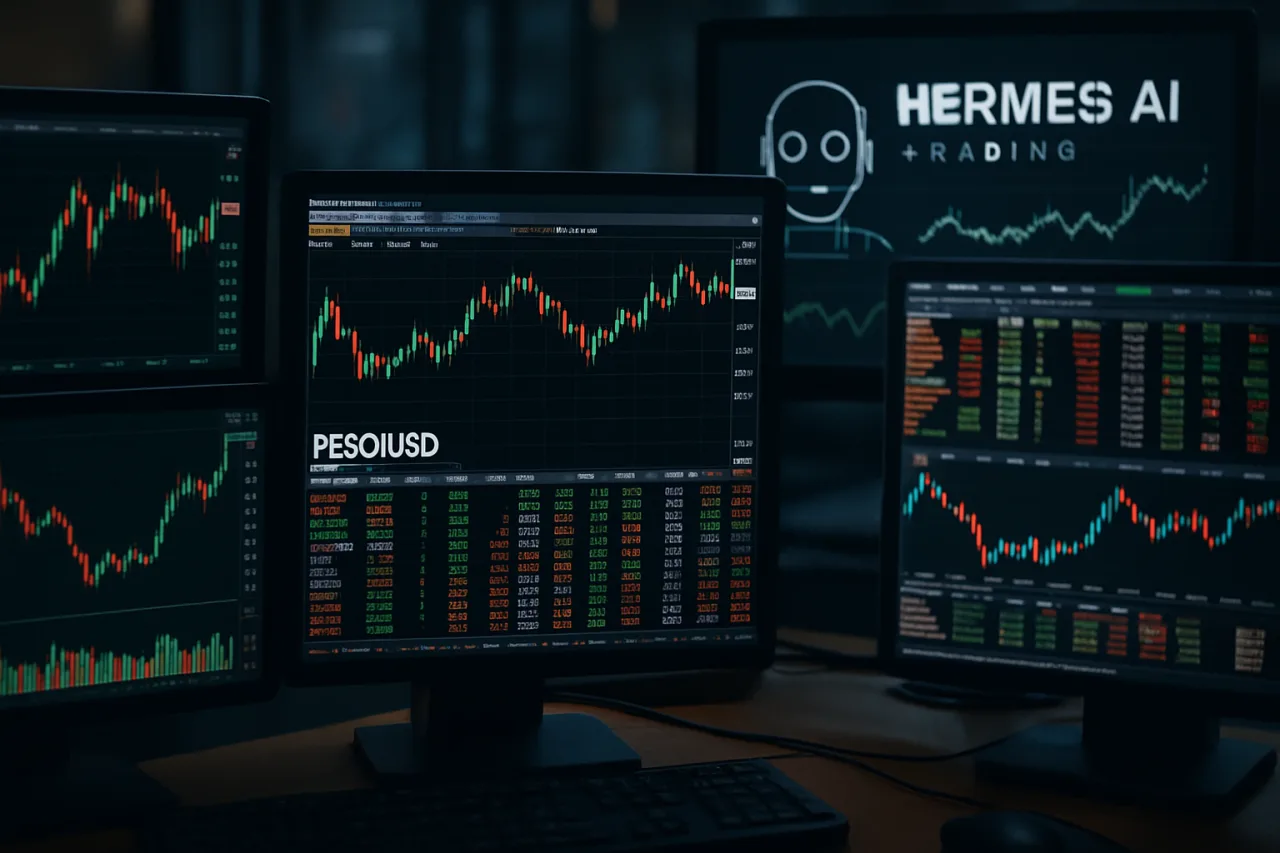
Hermes AI trading and markets use cases represent 5 documented deployments where the agent monitors financial markets, executes trading strategies, and self-adjusts based on performance. While this is the smallest category in the Hermes AI ecosystem, the Hermes AI trading and markets deployments demonstrate the most advanced autonomous decision-making — including a self-learning weather trading bot that turned $100 into $216 in 48 hours by scanning markets every 60 minutes, comparing forecast sources, and writing its own strategy notes. This article — Part 5 of our Hermes AI use cases series — examines how traders and investors are deploying Hermes AI for market monitoring, price alerts, and automated strategy execution.
Key Takeaway
- 📈 5 trading deployments: Hermes AI trading and markets use cases include weather trading bots, price monitoring alerts, competitive market scanning, and self-adjusting strategy execution — all running autonomously on cron schedules.
- 💰 $100 to $216 in 48 hours: A self-learning weather trading bot used Hermes AI to scan weather markets every 60 minutes, compare 3 forecast sources per location, buy undervalued temperature buckets, and flip for profit — reviewing what worked and writing its own strategy notes.
- 🔄 Self-adjusting strategy: The weather bot reviews what worked after each cycle, writes strategy notes to its skill file, and adjusts its approach for the next run — a genuine self-improving trading system.
- 📊 Price monitoring on schedule: Hermes AI trading and markets deployments use cron jobs to scan market prices, compare across sources, and deliver alerts through messaging — enabling 24/7 market surveillance at $0.24/hour.
- 🇵🇭 Filipino relevance: Filipino investors can use Hermes AI trading and markets patterns for PSE stock monitoring, crypto price alerts, and automated market research — delivered through WhatsApp or Telegram for $5/month.
What Are Hermes AI Trading and Markets Use Cases?
Hermes AI trading and markets use cases are deployments where the agent monitors financial markets, executes trading decisions, or delivers market intelligence on a schedule. The 5 documented stories on the official Hermes Agent platform represent the most autonomous Hermes AI deployments — the agent not only researches and reports but makes decisions, executes actions, and learns from outcomes.
What makes Hermes AI trading and markets deployments different from traditional algorithmic trading bots is the self-improving skill system. Traditional trading bots follow fixed rules — if X happens, do Y. Hermes AI trading and markets deployments review what worked after each cycle, write strategy notes to their skill files, and adjust their approach for the next run. This creates a genuine self-improving trading system that becomes more refined with each iteration. For a broader context of how Hermes AI is being used across all categories, see our Hermes AI use cases overview (Part 1).
5 Real Hermes AI Trading and Markets Deployments
1. Self-Learning Weather Trading Bot ($100 to $216 in 48 Hours)
The most documented Hermes AI trading and markets use case is a self-learning weather trading bot. The user reported turning $100 into $216 in less than 48 hours. The bot’s architecture works as follows: Hermes AI scans weather markets every 60 minutes, compares 3 forecast sources per location, identifies undervalued temperature buckets, buys them, and flips for profit. After each cycle, the bot reviews what worked, writes its own strategy notes to a skill file, and adjusts its approach for the next run. This Hermes AI trading and markets deployment demonstrates genuine autonomous decision-making — the agent evaluates market conditions, makes buy decisions, executes trades, and learns from outcomes without human intervention. While weather trading is a niche market, the underlying pattern — scheduled scanning, multi-source comparison, autonomous execution, and self-adjusting strategy — applies to any market.
2. Price Monitoring with Deal Alerts
As documented by MindStudio, a single Hermes AI agent flagged a mispriced supercar on Autotrader — demonstrating the price monitoring and deal alert pattern within Hermes AI trading and markets. The agent scans listings on a schedule, compares prices against market averages, and flags significant deviations through messaging alerts. This pattern applies directly to any market with price inefficiencies: real estate listings, e-commerce products, stock prices, cryptocurrency rates, or commodity prices. For Filipino investors, the same pattern could monitor PSE stock prices, alert on significant movements, and flag undervalued opportunities.
3. Market Data Integration in Locale Packs
The Turkish locale skill pack documented in our Hermes AI content creation article (Part 4) includes real-time market data in Turkish Lira (TRY). This represents a Hermes AI trading and markets pattern where the agent integrates market data feeds into a localized content delivery system. The agent fetches market data, formats it into daily PNG briefing cards, and delivers through Telegram cron automation — creating a complete market intelligence pipeline for a specific locale. The same pattern can be replicated for the Philippine market with PSE data, USD/PHP exchange rates, and local commodity prices.
4. Competitive Market Scanning
While not strictly financial trading, competitive market scanning is a Hermes AI trading and markets pattern where the agent monitors competitor pricing, product launches, and market positioning on a schedule. The agent scans competitor websites, tracks changes, and delivers intelligence briefings — providing the market awareness that trading decisions depend on. This pattern was documented in the Hermes AI business operations article (Part 3) with Dmitry Shapiro’s competitor monitoring agent Sherlock, but the underlying market scanning pattern is the same one used in trading deployments.
5. Automated Market Research Briefings
Combining research, analysis, and delivery, Hermes AI trading and markets deployments can generate automated market research briefings. The agent scans news sources, market data feeds, and social media sentiment on a schedule, synthesizes the information, and delivers a formatted market briefing through messaging. For active traders, this provides a daily pre-market briefing that aggregates information from dozens of sources into a concise summary — a task that would take a human analyst hours each morning.
The Hermes AI Trading and Markets Architecture
Data Acquisition Layer
Hermes AI trading and markets deployments begin with data acquisition — the agent fetches market data through web scraping, API calls, or RSS feeds. For weather markets, the bot scans weather forecast sources. For price monitoring, it scrapes listing sites. For stock markets, it calls financial APIs. The agent’s 80+ built-in tools include web search, URL extraction, and API integration capabilities that make data acquisition straightforward.
Analysis and Decision Layer
Once data is acquired, the agent analyzes it using its AI model. In the weather trading bot, the agent compares 3 forecast sources per location and evaluates whether temperature buckets are undervalued. In price monitoring, it compares listing prices against market averages. This analysis and decision layer is where Hermes AI trading and markets deployments differ from simple alert systems — the agent doesn’t just report data, it makes judgments about what the data means and what action to take.
Execution and Learning Layer
After making a decision, the agent executes — buying undervalued assets, sending alerts, or generating reports. Crucially, the execution layer feeds back into the learning layer: the agent reviews what worked, writes strategy notes to its skill file, and adjusts for the next cycle. This self-improving loop is what makes Hermes AI trading and markets deployments genuinely adaptive rather than rule-bound.
How Filipino Investors Can Use Hermes AI Trading and Markets
PSE Stock Monitoring and Alerts
Filipino investors can deploy Hermes AI trading and markets patterns to monitor PSE-listed stocks. The agent scans PSE data on a schedule (e.g., every 30 minutes during trading hours), compares prices against moving averages, and alerts on significant movements through WhatsApp or Telegram. This provides real-time market awareness without constantly watching the PSE ticker. The pattern connects to the broader Philippine market analysis ecosystem.
Cryptocurrency Price Monitoring
Filipino crypto investors can use Hermes AI trading and markets deployments to monitor cryptocurrency prices across exchanges (Coins.ph, Binance, Coinbase), compare rates, and alert on arbitrage opportunities or significant price movements. The agent’s scheduled scanning and multi-source comparison pattern is ideal for the 24/7 crypto market where prices change continuously.
FX Rate Monitoring for OFWs
For OFWs who need to monitor USD/PHP, SAR/PHP, or other currency exchange rates, Hermes AI trading and markets deployments can track rates across multiple remittance providers and banks, alert on favorable exchange windows, and recommend optimal remittance timing. This is a practical, high-impact use case for the 1.9 million OFWs sending money home monthly. The TESDA Digital Skills Passport can provide the AI literacy needed to configure these systems.
Automated Investment Research
Filipino investors can receive a daily pre-market briefing synthesized from PSE data, Philippine business news, global market trends, and social media sentiment — delivered to their WhatsApp at 8:00 AM before the PSE opens. The agent does the research; the investor makes the decisions. This Hermes AI trading and markets pattern replaces manual morning research with an automated, comprehensive briefing.
Risk Considerations for Hermes AI Trading and Markets Deployments
While Hermes AI trading and markets use cases demonstrate impressive capabilities, important risk considerations apply:
- Financial risk: Any trading deployment carries financial risk. The weather trading bot that turned $100 into $216 could also have lost money. Hermes AI trading and markets deployments should be treated as research and monitoring tools, not as guaranteed profit systems.
- Model reliability: The agent’s decision-making depends on the underlying AI model. Different models (Claude, GPT, local models) have different reasoning capabilities and may make different decisions from the same data.
- API costs: Frequent market scanning (e.g., every 60 minutes) generates API costs that can erode profits. The token profiling use case from our developer workflows article (Part 2) is directly relevant — 73% of API overhead should be optimized before high-frequency scanning.
- Market data accuracy: The agent depends on the accuracy of its data sources. Inaccurate weather forecasts, delayed stock prices, or stale listing data can lead to poor decisions.
Frequently Asked Questions About Hermes AI Trading and Markets
What are Hermes AI trading and markets use cases?
Hermes AI trading and markets use cases are 5 documented deployments where the agent monitors financial markets, executes trading strategies, and self-adjusts based on performance. Examples include a self-learning weather trading bot, price monitoring with deal alerts, and automated market research briefings.
Did the weather trading bot actually make money?
Yes. The user reported turning $100 into $216 in less than 48 hours using a self-learning weather trading bot that scans weather markets every 60 minutes, compares 3 forecast sources, buys undervalued temperature buckets, and flips for profit. However, this represents one documented case and trading results are not guaranteed.
Can Hermes AI trade stocks automatically?
Hermes AI can monitor stock prices, analyze market conditions, and generate trading alerts. Whether it can execute actual trades depends on the broker API integration configured. The documented trading use cases focus on market scanning, price monitoring, and strategy generation rather than direct order execution.
How much does it cost to run Hermes AI for trading?
Hermes AI is free and open-source. Infrastructure costs include a $5/month VPS and API tokens for the AI model. The MindStudio use case demonstrated a Hermes agent running on a $0.24/hour CPU instance. For frequent market scanning, API costs can add up — the token profiling finding (73% overhead) is relevant for optimization.
Can Filipino investors use Hermes AI for PSE monitoring?
Yes. Filipino investors can deploy Hermes AI to monitor PSE stock prices on a schedule, compare against technical indicators, alert on significant movements through WhatsApp or Telegram, and generate daily pre-market research briefings — all for $5/month VPS plus API costs.
Is Hermes AI trading safe?
Hermes AI trading and markets deployments should be treated as research and monitoring tools, not as guaranteed profit systems. Financial risk, model reliability, API costs, and data accuracy are all important considerations. Start with monitoring and alerting before considering any execution-based deployment.
How does the self-improving feature work in trading?
After each trading cycle, Hermes AI reviews what worked, writes strategy notes to its skill file, and adjusts its approach for the next run. This creates a self-improving loop where the agent refines its strategy based on outcomes — a genuine adaptive trading system rather than a fixed-rule bot.
Disclaimer: This article is for informational purposes only and does not constitute financial, investment, or trading advice. Hermes AI is an open-source project under active development. Trading and markets capabilities described reflect the state of the project as of July 2026. Past performance does not guarantee future results. For official documentation, visit hermes-agent.nousresearch.com. Always consult a licensed financial advisor before making investment decisions.