
Table of Contents
Key Takeaway
- 🇺🇸 The US tourist visa for Filipinos keeps an MRV application fee of $185, per the State Department’s own June 2026 fee rule, which also says that amount was last updated in May 2023.
- ⏱️ New for 2026: a $750 expedited interview-appointment option runs July 1 to December 31, 2026, at limited posts and in limited quantities, on top of the standard fee, while the no-fee expedite request remains.
- 📝 The DS-160 is the whole paper file: confirmation page in hand drives the appointment, and field-level mistakes there surface at the interview window.
- 🎯 The interview asks one question in many forms: strong ties home. Employment, income, family and property answer it better than any memorized script.
- 📞 A 214(b) refusal is common and recoverable: it means eligibility was not demonstrated that day, and the reapplication path with changed circumstances is the standard route.
For decades the hardest part of any US tourist visa journey from Manila was not the paperwork; it was the wait for an interview slot. That changed in 2026, when the State Department’s fee rule introduced a US tourist visa pathway with a priced expedite: a temporary $750 appointment fee, running July 1 through December 31, 2026 at limited posts, for applicants who want their interview sooner. The same rule restated the baseline: the standard MRV fee stays $185 for B1/B2 applicants. This US tourist visa guide walks the application end to end, from the DS-160 to the interview table, with the OFW-specific layer most guides skip.
What the B1/B2 Visa Is, in One Paragraph
The B1/B2 is a nonimmigrant visitor visa that covers business meetings, conferences and property matters (B1) alongside tourism, family visits and medical treatment (B2). It is not a work visa, and working on it is not a gray area. Most visitor visas carry multiple-year validity with per-entry stay durations set at the port of entry, so the visa and the authorized stay are two different clocks the traveler must both respect.
The Fees, Verified in the Fee Rule Itself
The State Department’s fee rule published June 9, 2026 states both numbers plainly: the machine-readable visa (MRV) fee “was last updated in May 2023 and is currently set at $185 for B1/B2 applicants,” and the new expedited-appointment service adds a $750 fee for a faster interview slot. The rule’s own boundaries matter as much as the numbers: the expedite runs July 1 through December 31, 2026, is offered only at limited posts as published on the State Department’s site and in limited quantities, and applicants who buy it still pay the standard MRV fee on top.
Two existing channels stay open: the standard appointment queue at the posted price, and the no-fee expedite request for urgent humanitarian or business need, which the rule references as the option that existed above. The practical reading for families pricing a US tourist visa: budget $185 for the application, and treat the $750 expedite as an emergency tool with a published end date, not a normal step.
The DS-160: the Whole Paper File in One Form
The DS-160 electronic application on the State Department’s CEAC system is where the file actually happens. Every fact below it, the fee receipt, the appointment, the interview folder, keys off this form:
- Start early and save the ID. The form generates an application ID; save it, because session breaks are common and the resume needs it.
- Answer exactly against your documents. Passport details, employment history, previous visa refusals, US relatives and travel companions: the consular officer can see every prior filing, and mismatches cost credibility at the window.
- Name the travel purpose in one sentence. The purpose field feeds the interview question; a coherent one-line answer beats a paragraph of options.
- Upload the photo, print the confirmation. The DS-160 confirmation page with its barcode is required at the interview; no confirmation, no interview.
- Check every field once more. The most common window-level mistakes, wrong name spelling against the passport, wrong employer dates, missing prior-refusal entries, are all DS-160 errors discovered late.
- Keep the supporting facts consistent with the socials. Public profiles that contradict the stated employment or travel pattern undermine credibility the officer cannot unsee; the file and the public record should tell the same story.
- Bring the old passports. Prior travel lives in older passports, and presenting them at the interview lets the officer verify the history the DS-160 claims instead of taking it on faith.
Appointment, Payment and the Interview Wait
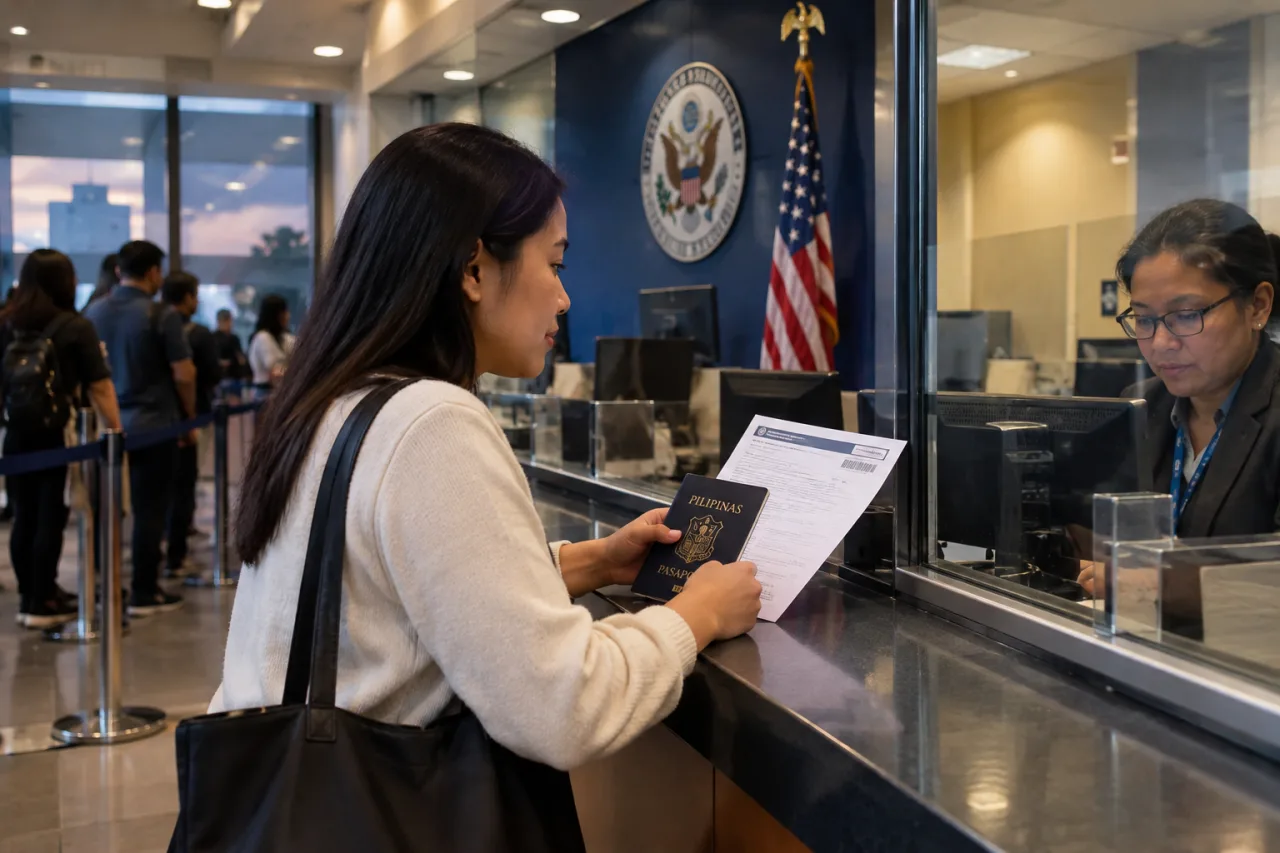
The US Embassy in Manila runs its nonimmigrant visa process through its official visa pages: pay the MRV fee through the designated channels, schedule the interview through the appointment system, and attend with the passport, confirmation page and fee receipt. The 2026 expedited service, where offered and where slots last, shortcuts the wait for the $750 appointment fee; the standard queue timing varies by season and post, which is why the official appointment availability matters more than any third-party estimate.
OFW-specific timing reality: applicants applying from residence abroad schedule at the post serving that country, while applicants in the Philippines schedule at Manila. Applying from the country where you actually live is the norm for a US tourist visa; flying home to file adds a trip but not credibility.
Fee-payment mechanics differ per post as well: the MRV fee is paid through each embassy’s designated channels and the receipt references the scheduling profile, which means the person who pays and the person who interviews must match the profile. Families booking for relatives should set up the profile in the applicant’s own details from the first screen, because a profile rebuilt after payment creates exactly the kind of mismatch the window is trained to catch.
The Interview: One Question, Many Forms
The interview lasts minutes, and the officer’s actual question is the one the B1/B2 category is built on, which is why the US tourist visa interview rewards simplicity over theater: do your ties to home outweigh your reasons to overstay? Strong-ties evidence speaks in documents and habits:
- Employment anchored at home: an employment certificate with approved-leave language, payslips and tenure that reads continuous, and for OFWs the overseas contract that says you come back to it.
- Family and property ties: dependents at home, property or business interests, and community roots the officer can see without being told.
- Travel history that behaves: prior visas used within their terms, entries and exits that match plans, and no overstays anywhere, not only the US, because allied countries’ records surface in the review.
- Finances that match the plan: funds consistent with the trip length, from income streams the file can explain.
The script advice circulating in US tourist visa forums, memorized answers, purchased itineraries, fake invitations, is worse than weak: inconsistency with the DS-160 is the fastest credibility loss in the room. The family-visit case has a parallel structure to the family-route planning in our OFW family visa routes guide, where the sponsor side carries part of the evidence.
214(b): the Most Common Refusal, Decoded
Most B1/B2 refusals cite Section 214(b) of the Immigration and Nationality Act: the applicant did not demonstrate eligibility, typically because the working read is the officer was not satisfied that ties outweigh immigration risk. It is a today-decision, not a lifetime verdict, and the response is factual: reapply when circumstances change, bring better evidence of the tie that was doubted, and keep the DS-160 strictly truthful. A refusal does not bill again for a new appointment if made within a year under the fee-validity rules, and the officer’s refusal letter states the section and the reapplication path.
The realistic expectations layer for a US tourist visa: salaries and travel history across the OFW corridors, covered country by country in our OFW salary guide, shape how applicants present ties; the Gulf-to-Manila routing realities sit in our UAE arrival guide; and applicants weighing Japan or Korea lanes instead will find their work-visa structure in the Japan SSW visa guide.
Administrative Processing: When the Answer Is Not Yet
Some interviews end with neither approval nor refusal: the case goes to administrative processing under section 221(g), typically because a document or verification is pending. The officer states what is needed, and the post contacts the applicant when the case clears, whether that takes two weeks or, in slower classes, longer. During this window the practical moves are narrow: supply exactly what was requested through the channel the post names, do not refile a duplicate application, and keep the passport situation as the post instructed. The timeline is case-specific, which is why the State Department’s own pages decline to promise processing windows for this step.
After Approval: the Two Clocks You Must Respect
Approval lands two clocks on the same passport, and confusing them is the classic traveler error. The first clock is the visa’s validity, the window printed on the foil during which you may present yourself at a port of entry. The second clock is the authorized stay, granted at entry, written on the admission record by the inspecting officer, and entirely separate from the visa’s printed end date. Overstaying the second clock, even on a valid first clock, damages every future US application and extends consequences in other visa-lane screenings, which is the part no forum post ever emphasizes enough.
The OFW Interview Corridor: Gulf Post Versus Manila
The residence rule creates two practical corridors for Filipinos, and each has its own rhythm. The Gulf corridor files at the post serving Saudi Arabia or the UAE, where appointment supply, seasonal demand and document channels follow that embassy’s own pages, and where leave windows from employers set the travel dates that the DS-160 must match exactly. The Manila corridor serves applicants resident in the Philippines, with the embassy’s own scheduling rhythm and delivery channels. Choosing the corridor is not a preference; applications belong at the post of actual residence, and mismatched residency surfaces at the window.
Family-document routing also differs by corridor. An OFW parent sponsoring or hosting a relative applies the same B1/B2 rules to the relative, while the parent’s own travel rides their employment documents abroad, and the family’s visa strategy has the same shape our family visa routes guide describes for the other destination countries.
Frequently Asked Questions
How much is the US tourist visa fee for Filipinos in 2026?
The MRV application fee is $185 for B1/B2 applicants, per the State Department’s fee rule of June 2026, which notes that the amount was last updated in May 2023. The separate $750 expedited interview fee, available July through December 2026 at limited posts, is optional and sits on top of the standard fee.
What is the $750 expedited appointment fee for the US tourist visa?
A temporary State Department service from July 1 to December 31, 2026 that lets B1/B2 applicants purchase a faster interview appointment, offered only at limited posts and in limited quantities. Applicants still pay the normal $185 MRV fee, and the no-fee expedite request for urgent cases continues to exist alongside it.
How long does US tourist visa processing take after the interview?
Approved applications typically go to administrative processing or printing, and passports with visas return through the document-delivery channel the embassy names. Timing varies by post and case; the interview itself is where the decision lands for most applicant classes.
Do I need return tickets and hotel bookings for a US tourist visa application?
Not mandatory at filing, and refundable bookings show a plan without betting the trip on one. Officers deciding a US tourist visa case weight ties and consistency over itinerary papers; a purchased nonrefundable itinerary against an unprinted visa is a risk, not a point.
Why was my US tourist visa refused under 214(b)?
The section covers failure to demonstrate nonimmigrant intent, usually ties, in that interview. It is reapply-able: strengthen the doubted element, update the DS-160 truthfully, and follow the reapplication instructions on the refusal notice.
Can an OFW apply for a US tourist visa from Saudi Arabia or the UAE?
Yes. Applications are filed at the post serving your country of residence, with local fee payment and scheduling; residence-based filing does not require returning to Manila, though some applicants prefer the home post for family-support documents.
One last verification habit: re-check the fee and the expedite program on the official pages in the week you actually file, because the fee rule carried its own effective dates and the State Department remains the only authority on changes.
If this intelligence helps you, you can add WorldNgayon as a preferred source on Google — free, one click, and it helps other Filipinos find the answers faster.
Financial Disclaimer
This article is immigration-process information published for general guidance. Fees, rules and program terms cited follow the official sources linked within this article’s research window and change without notice; the expedited-appointment program is temporary and ends on its stated date unless extended. Nothing here is legal advice, and no visa outcome is promised. WorldNgayon accepts no liability for decisions made based on this article. Readers should verify current requirements on the official State Department and embassy pages and consult qualified professionals for their specific situation.
- Official travel.state.gov/content/travel/en/us-visas/tourism-visit/visitor.html — nonimmigrant visitor visa
- Official federalregister.gov/documents/2026/06/09/2026-11513/schedule-of-fees-… — fee rule published June 9, 2026
- Official ceac.state.gov/genniv — DS-160 electronic application
- Official ph.usembassy.gov/visas — nonimmigrant visa process through its official visa pages
- google.com/preferences/source?q=worldngayon.com — add WorldNgayon as a preferred source on Google
External sources linked in this article, in order of first mention. Spotted an error or a broken link? Tell us.
Cite this pagePublished Nov 17, 2026
Agron, E. (2026, November 17). US Tourist Visa for Filipinos: DS-160, Fees and the Interview. WorldNgayon. https://worldngayon.com/us-tourist-visa-philippines/
Agron, Edmon. “US Tourist Visa for Filipinos: DS-160, Fees and the Interview.” WorldNgayon, 17 Nov. 2026, worldngayon.com/us-tourist-visa-philippines/.
Agron, Edmon. “US Tourist Visa for Filipinos: DS-160, Fees and the Interview.” WorldNgayon, November 17, 2026. https://worldngayon.com/us-tourist-visa-philippines/.
Agron, E. (2026) ‘US Tourist Visa for Filipinos: DS-160, Fees and the Interview’, WorldNgayon, 17 November. Available at: https://worldngayon.com/us-tourist-visa-philippines/.
E. Agron, “US Tourist Visa for Filipinos: DS-160, Fees and the Interview,” WorldNgayon, Nov. 17, 2026. [Online]. Available: https://worldngayon.com/us-tourist-visa-philippines/
@online{agron2026ustourist,
  author       = {Agron, Edmon},
  title        = {{US Tourist Visa for Filipinos: DS-160, Fees and the Interview}},
  year         = {2026},
  date         = {2026-11-17},
  organization = {WorldNgayon},
  url          = {https://worldngayon.com/us-tourist-visa-philippines/},
  urldate      = {}
}TY - ELEC AU - Agron, Edmon TI - US Tourist Visa for Filipinos: DS-160, Fees and the Interview T2 - WorldNgayon PY - 2026 DA - 2026/11/17/ UR - https://worldngayon.com/us-tourist-visa-philippines/ Y2 - ER -
Cite the version you read; the page may be updated. Zotero and Mendeley can also import this page directly.