Binance Withdrawals After the Hack: Why Suspension Means Safety — and What Not to Do
Key Takeaway
🛡️ The suspension after the Binance hack is containment, not collapse: freezing withdrawals is the standard first move of any exchange under attack — it stops the siphon, protects surviving balances, and wins the time that freezes, seizures, and recovery lanes depend on.
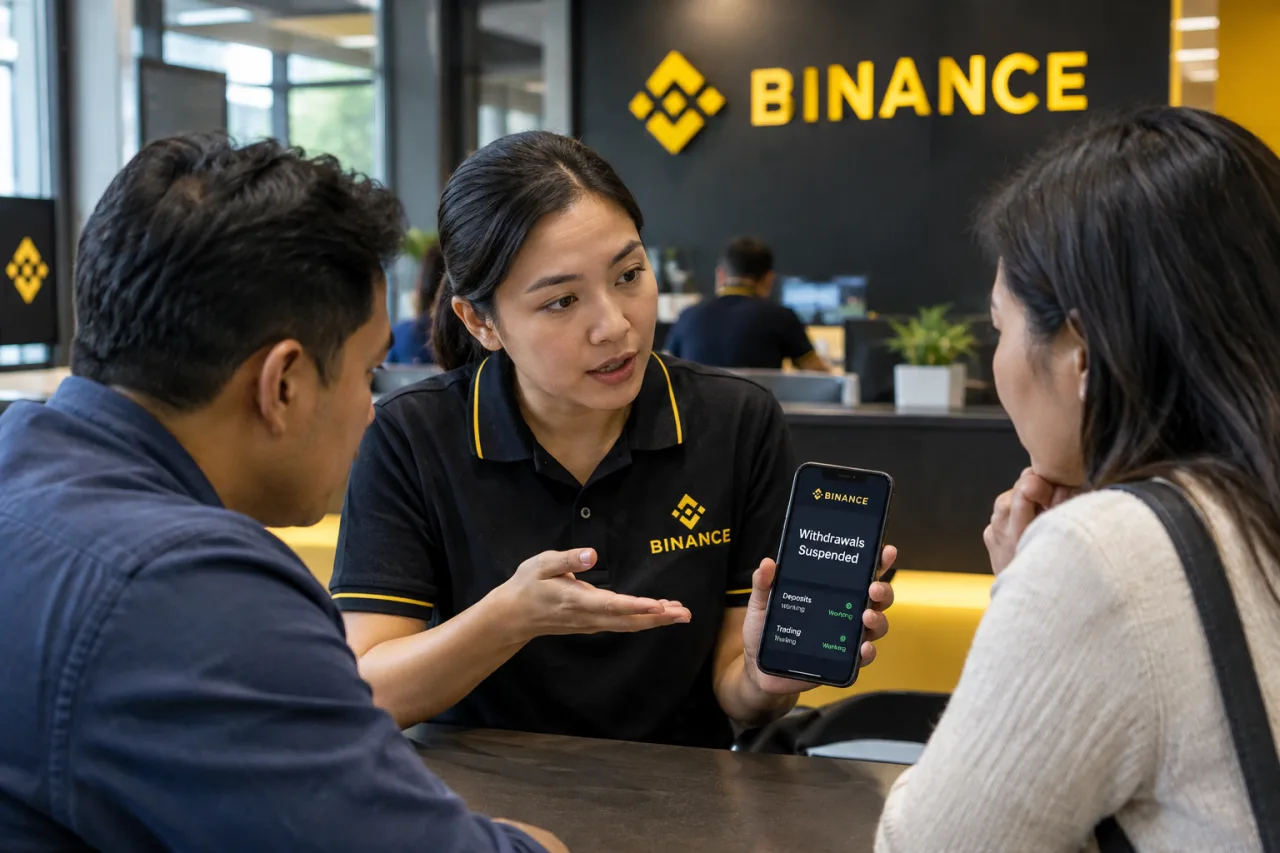
⏳ Deposits and the platform stay operational by design: in the documented response, deposits kept working while withdrawals paused — the account still functions for checking balances and trading; the queue is the door that stays shut until the signing infrastructure is proven clean.
💵 Coverage was announced at scale: the SAFU fund and company reserves were committed to covering the losses, with an updated proof-of-reserves promised after remediation — suspension plus a funded guarantee is the designed response, not improvisation.
🚫 The freeze spawns predators — refuse them all: “expedite services,” DM handlers who can “unlock” withdrawals, fee-for-priority offers, and withdrawal-bypass P2P tricks are the fraud layer that grows on every suspension — none can move your place in any queue and every one is a second theft.
📋 The user checklist during a suspension: verify through the app only, screenshot balances and timestamps, keep 2FA tight without changing the security settings mid-freeze, ignore urgency, and wait for official announcements — the bored discipline that costs nothing and loses nothing.
Table of Contents
Binance withdrawals after the hack are the practical question behind every headline: the exchange froze the exit doors minutes into detecting unauthorized transactions — and that freeze is not the story of a dying platform, it is the story of a containment measure doing its job, per the mechanics our Binance postmortem explains in full. This guide explains both halves in the order they matter: why suspensions happen mechanically (the signing infrastructure was compromised, so the withdrawal path gets disabled until proven clean), what stays working and what doesn’t, what the coverage commitment actually means for account holders, and the full do-and-never-do list for the days a queue holds your balance — including the scam layer that grows on every suspension, because predators move faster than platforms post updates.
Why Binance Withdrawals Freeze After a Security Event
The logic is mechanical, not reputational. A modern exchange keeps most customer assets in cold storage and moves funds through hot-wallet signing systems; the moment those signing systems are suspect — in the Binance case, a compromised engineer laptop reaching a service container that submitted unauthorized withdrawals — every binance withdrawals request becomes unverifiable until the signing path is rebuilt or proven clean. Suspending withdrawals is therefore not the platform hiding; it is the platform refusing to operate a door the attacker walked through. The suspension buys the hours that freezes and law enforcement need — the same window that let partners immobilize roughly $3 billion and return funds in the NEAR case of assets while the exchange rebuilt its signing infrastructure. The documented pattern across the industry’s prior incidents is consistent: exchanges that suspended fast preserved recoverable funds; the hypothetical alternative — continuing withdrawals during a live compromise — would have accelerated the drain. The binance withdrawals freeze also explains why OTHER exchanges run suspension drills: the capability to stop the exit doors instantly — even when it frustrates every customer for days — is the capability that separates a recoverable incident from a terminal one, and the platforms that publish their incident-response plans are showing you the muscle before you ever need it flexed.
What Keeps Working While Binance Withdrawals Pause (and What Doesn’t)
The operational split in the documented response: deposits remained unaffected and continued operating normally, spot and other in-platform functions kept running, account access stayed live, and withdrawals paused until the announcement of staged restoration. For the user this means the practical day experience is closer to a bank holiday than a blackout: balances visible, trades executable, deposits arriving — with the exit queue as the single paused function. The emotional discipline that saves money here is boring on purpose: the suspension is announced through the platform’s own channels, updated with timestamps, and lifted in stages — and none of that changes anything a user could improve by panicking. Your balance on the platform is a claim that the suspension exists to protect; the historical record of covered incidents is the reason the panic-sell-the-position-at-any-price instinct performs so badly exactly when everyone has it.
The Coverage Commitment: What SAFU-Style Guarantees Mean for Binance Withdrawals
Binance committed to covering all losses from the SAFU fund and company reserves — the protection fund created in 2018 precisely for this class of event, used now at unprecedented scale. The commitment’s anatomy matters for account holders: coverage applies to the incident’s losses (the unauthorized withdrawals), the plan includes an updated proof-of-reserves publication after remediation completes — the auditable reserve picture being the receipt that the platform’s solvency claims rest on — per the three-check standard our reserves guide teaches. The nuance worth holding: a funded guarantee plus a credible reserve disclosure is the strong version of exchange risk management; it is not the same as custody, and the post-incident playbook (diversification, the cold-storage ladder for long-term holdings) still applies once the dust settles. Coverage converts a catastrophic failure into a survivable one; it does not convert an exchange into a vault.
The Scam Layer That Grows on Every Suspension
Every freeze has a second economy, and the Binance suspension grew one overnight. The documented patterns, straight from the recovery-scam literature: “expedite” handlers claiming influence over the withdrawal queue for a fee, DM helpers offering to “unlock” suspended accounts and asking for 2FA codes or remote access, fake support accounts phishing credentials during the confusion peak, and bypass schemes that route desperate users into the same structure our recovery guide and the FBI document across every crypto incident — plus the genuinely dangerous advice circulating in the incident’s wake (fraudulent proof-of-funds tricks, P2P workarounds presented as safe exits) that converts a frozen account into a money-laundering charge risk. The counter-pattern is uniform: no third party can move your position in any queue; all official communication flows through the app and the verified announcement pages; and any “help” that arrives by DM during a suspension is the second theft in progress. The scam-routing guide carries the report lanes when one of these lands in your messages. The binance withdrawals predators also work the OTHER direction — messaging not the victims but their worried relatives, reading the same news, offering to ‘help the family reach support’ — which is why the family briefing during any suspension runs one line: the exchange communicates in-app, everyone else is a stranger with an agenda.
The Do-and-Never-Do List for the Days the Queue Holds
The bored checklist outperforms every clever one. DO: verify every update inside the app or the official announcement page; screenshot your balances and any error messages with timestamps; keep your security settings stable (mid-freeze 2FA changes create confusion the support desk then has to untangle); keep deposits and platform activity as normal if you use them; and prepare your post-incident plans calmly — the diversification and custody decisions belong to next week, not tonight, per our hardening guides. NEVER: pay anyone for queue priority, share codes or screens with “support,” broadcast your balance or situation on social media (the victim boards are recovery-scammer fishing grounds), wire money to addresses “processing refunds,” or attempt the bypass tricks circulating in comment sections — each of those converts a protected claim into a second loss. The historical behavior of covered suspensions is the final anchor: queues lift in stages, announcements carry timestamps, and the platforms that managed incidents well said so publicly at every step — which is exactly what the post-Binance response did. The binance withdrawals timeline also gets read correctly only with the incident’s scale attached: the largest theft in crypto history triggered the suspension, the coverage commitment, and the remediation work simultaneously — a queue that lifts against that background lifts on its own evidence, not on pressure.
Reading the Queue: What the Restoration Stages Mean
Suspensions rarely lift all at once, and the staged pattern has a readable structure. The first announcements typically restore internal platform functions (trading, conversions between assets) because those never touch the signing path that was compromised. The next stage restores limited withdrawals — often with tightened per-transaction checks, verified-device requirements, or reduced limits — while deep-cold movements resume last because they depend on manual signing ceremonies. Each stage arrives as a dated announcement, and the reading habit is the same three questions per stage: what function returned, under what conditions, and what the platform asks users to do differently (re-verify devices, expect delays, use new address books). The user who reads the stages correctly paces their own actions — moving funds after the withdrawal function stabilizes rather than racing the first hour of restored capacity, when every eager account competes for the same reopening bandwidth and the support desk is still digesting its backlog.
Frequently Asked Questions
Why Did Binance Suspend Withdrawals After the Hack?
The signing infrastructure was compromised — unauthorized withdrawals had already been submitted through it — so the withdrawal path was disabled until rebuilt and verified clean. Suspension is the containment move that stops the siphon, protects surviving balances, and preserved the window that let partners freeze roughly $3 billion of assets; deposits and platform functions kept operating per the official response.
Are My Funds Safe While Withdrawals Are Suspended?
The documented response says yes in the specific sense that matters: the losses from the incident are covered by the SAFU fund and company reserves, deposits kept working, and the suspension itself exists to protect balances from further unauthorized movement. The proof-of-reserves update promised after remediation is the verifiable receipt behind the solvency claim — the three-check verification procedure turns the promise into evidence on any account.
How Long Do Binance Withdrawals Stay Suspended?
No fixed service level exists in any exchange’s public documentation — the honest read of prior incidents is that suspensions lift in stages over days as the compromised systems are rebuilt or proven clean, with the platform announcing each step. The user-facing version of patience: the queue lifts when it lifts, and nothing you can do — least of all paying anyone — changes the timeline by a minute.
What Should I Never Do While My Exchange Is Frozen?
Never pay anyone claiming to expedite the queue, never share 2FA codes or remote access with “support,” never broadcast your situation or balance publicly, never wire money to addresses “processing refunds,” and never run the bypass tricks circulating in comments — every one of those converts a covered claim into a second loss, and the recovery-scam pattern books say the fraud wave peaks in the first 48 hours of any suspension.
Should I Move All My Funds Off Exchanges After Binance Withdrawals Resume?
The post-incident standard is balance, not abandonment: trading float on a vetted platform with verified reserves, long-term savings behind cold-storage keys, and counterparty diversification so no single signing-system breach touches everything — the custody ladder our guides document step by step. The Binance aftermath — freezes, coverage, restored operations — is meanwhile the evidence for why the vetted platforms remain usable counterparties at all.
Can I Trade While Withdrawals Are Suspended?
In the documented response, yes — deposits and in-platform trading continued operating normally while withdrawals paused. The distinction that helps: the suspension freezes the exit doors, not the platform’s internal economy. Balances stay tradeable, deposits keep arriving, and the withdrawal function returns in stages — which is why the panic interpretation (everything is broken) misdescribes a containment measure that is working as designed.
Financial Disclaimer
This article provides general educational information and does not constitute financial or investment advice. Incident status, coverage terms, and platform operations change over time; verify against official exchange announcements before acting. The author and publisher disclaim any liability for actions taken based on this information.
External sources linked in this article, in order of first mention. Spotted an error or a broken link? Tell us.
Cite this pagePublished Nov 1, 2026
APA 7
Agron, E. (2026, November 1). Binance Withdrawals After the Hack: Why Suspension Means Safety — and What Not to Do. WorldNgayon. https://worldngayon.com/binance-withdrawals/
MLA 9
Agron, Edmon. “Binance Withdrawals After the Hack: Why Suspension Means Safety — and What Not to Do.” WorldNgayon, 1 Nov. 2026, worldngayon.com/binance-withdrawals/.
Chicago
Agron, Edmon. “Binance Withdrawals After the Hack: Why Suspension Means Safety — and What Not to Do.” WorldNgayon, November 1, 2026. https://worldngayon.com/binance-withdrawals/.
Harvard
Agron, E. (2026) ‘Binance Withdrawals After the Hack: Why Suspension Means Safety — and What Not to Do’, WorldNgayon, 1 November. Available at: https://worldngayon.com/binance-withdrawals/.
IEEE
E. Agron, “Binance Withdrawals After the Hack: Why Suspension Means Safety — and What Not to Do,” WorldNgayon, Nov. 1, 2026. [Online]. Available: https://worldngayon.com/binance-withdrawals/
BibTeX
@online{agron2026binancewithdrawals,
  author       = {Agron, Edmon},
  title        = {{Binance Withdrawals After the Hack: Why Suspension Means Safety — and What Not to Do}},
  year         = {2026},
  date         = {2026-11-01},
  organization = {WorldNgayon},
  url          = {https://worldngayon.com/binance-withdrawals/},
  urldate      = {}
}
RIS
TY  - ELEC
AU  - Agron, Edmon
TI  - Binance Withdrawals After the Hack: Why Suspension Means Safety — and What Not to Do
T2  - WorldNgayon
PY  - 2026
DA  - 2026/11/01/
UR  - https://worldngayon.com/binance-withdrawals/
Y2  -
ER  -
Cite the version you read; the page may be updated. Zotero and Mendeley can also import this page directly.