
Table of Contents
Key Takeaway
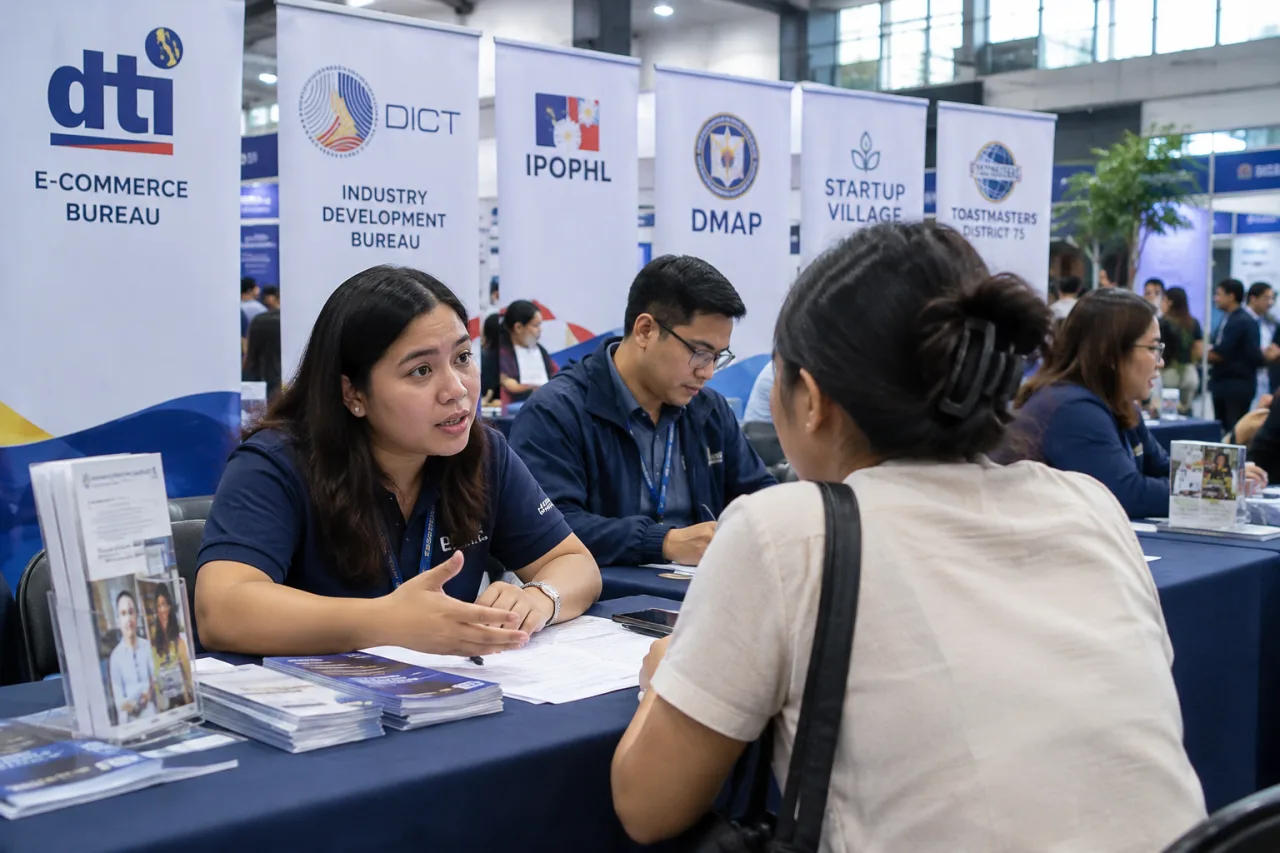
- 🏛️ The free desk: The ECOMEX Growth Clinic on November 20-21 at SMX Aura sits Philippine government agencies across the table from online sellers, with DTI’s E-Commerce Bureau, DICT’s Industry Development Bureau, IPOPHL, DMAP, StartUp Village, and Toastmasters District 75 listed as Community Allies.
- 📄 The filings that matter most: Trademark protection at IPOPHL starts at 1,212 pesos for small entities, and the DTI E-Commerce Philippine Trustmark costs micro enterprises nothing, so the cheapest trust assets online sellers can claim are government-issued.
- 📊 Why the help exists: The sector’s stakes are now structural: Philippine MSMEs are 99.63 percent of establishments, and the Internet Transactions Act made bureau registrations real merchant paperwork with published fees.
- 🎯 The clinic play: Bring business-name and trademark paperwork plus one concrete blocking question, because the allies at this clinic answer filings, financing, and verification in person, and they are the same offices sellers otherwise queue weeks for.
The ECOMEX floor will sell 160-plus business solutions this week, and one desk inside it costs nothing to visit: the Growth Clinic, where the agencies that regulate, fund, and protect Philippine online sellers sit scheduled across a table from online sellers with a real question. Read that arrangement carefully, because the ECOMEX Growth Clinic brings government agencies and business-support organizations together to help online sellers understand registration, intellectual property, and other business requirements. DTI’s E-Commerce Bureau, DICT’s Industry Development Bureau, the Intellectual Property Office of the Philippines, the Digital Marketing Association of the Philippines, StartUp Village, and Toastmasters International District 75 appear on the clinic’s Community Allies list, and the two-day expo and conference runs November 20-21 at SMX Convention Center Aura in Taguig, powered by PHILSME.
Why the agencies take that seat on a commerce floor follows from the scale of the sector they serve: an economy of 99.63 percent-MSME establishments now transacts under an Internet Transactions Act with its own bureau, trustmark system, and published fee schedules, and the expo schedules agency staff at clinic tables where online sellers can work through those layers in person with the offices that administer them.
The Registrations Worth Bringing to the Clinic
Three filings cover most sellers’ compliance floor, and all three have published prices that surprise sellers upward of their assumptions. The first is the business name itself, DTI’s registration for sole proprietors, the entry document every other filing cites. The second is the trademark, and the economics matter: the Intellectual Property Office files trademarks online only through its eTMFile system, a rule the office set itself, and the basic application for small entities with assets of 100 million pesos or less starts at 1,212 pesos, against 2,617 for big entities. A brand name a seller promotes on camera for years deserves that filing, and the trademark FAQ the office publishes carries the fee schedule and the process the clinic allies will walk with you.
The third is the one unique to digital commerce: the E-Commerce Philippine Trustmark, which the DTI E-Commerce Bureau launched under the Internet Transactions Act’s implementing framework, with its trustmark fee order setting application and renewal at zero pesos for micro enterprises, 500 pesos for small enterprises, and 1,000 pesos for all others. The trustmark is the state’s answer to a question every marketplace buyer now asks, whether the seller behind the listing is real, and it marks the first time a government instrument priced its own digital-trust tier for the smallest merchants. The fee schedule’s tiers follow the statutory enterprise definitions, the same asset-size bands the development plan publishes, so a seller knows their tier before the ally confirms it, and the clinic’s job becomes routing rather than translating. Bring the paperwork for all three to the clinic and the allies can tell you, in one seating, which applies today and which waits until your volume justifies it.
Who Sits at the Clinic, and What Each Answers
The allies divide the seller’s problem set cleanly. DTI’s E-Commerce Bureau answers the digital-commerce regulatory layer: trustmark registration, marketplace rules, and the consumer-protection obligations the Internet Transactions Act assigned to the bureau. DICT’s Industry Development Bureau answers the capability side: digital upskilling programs, ICT readiness, and the adoption initiatives the department runs for MSMEs. The Intellectual Property Office answers the brand-protection layer, from trademark filing mechanics to the enforcement path when a brand gets copied, which in a market where counterfeit pressure is a regulator-brokered concern every year is not a hypothetical layer. The private allies complete the loop: DMAP, the industry’s own marketing association, reads a seller’s acquisition questions against sector benchmarks; StartUp Village does the same for structure and incubation; and Toastmasters District 75 sits at the strangest-looking chair with one of the most practical jobs — the pitch. Sellers who freeze on camera freeze on streams, and the district trains the muscle every live seller on the adjoining arena floor uses for pay.
Read together, the clinic models something the Philippine MSME system has been building toward in policy text for years: one desk where a seller’s filings, capabilities, brand protection, marketing, structure, and confidence get addressed in one visit, by the offices that actually administer each layer. The design also keeps the handoffs short: the brand-protection chair sits beside the marketing chair because a copied logo and a flat campaign are usually the same week’s problems, and the structure chair sits near both because incorporation decisions change who can sign the advertising contract. The expo simply gives the model a room with a queue and a stopwatch, and it markets the room to online sellers the same way it markets the 160-plus solutions: as inventory for the decisions they already carry.
The Private Allies: Marketing, Structure, and the Pitch
Three private allies occupy the clinic’s remaining chairs, and each covers a failure mode no government agency administers. The Digital Marketing Association of the Philippines, the industry’s own association, reads an online seller’s acquisition questions against its members’ collective benchmarks: what a small brand’s customer-acquisition costs should look like before it blames its audience, and which marketing promises circulating on the floor deserve skepticism. StartUp Village, the incubation community, covers structure and follow-through: which registrations pair with which operating models, where incorporation waits until revenue justifies it, and how a home business graduates into a company without double-paying the transition. Toastmasters International District 75 covers the least paperwork-shaped skill on the floor, the pitch, and its presence is the clinic’s quiet thesis: the confidence a seller needs in front of a government ally, a supplier, or a rolling camera audience is a practiced muscle, and it trains like one.
The three chairs also make the clinic’s economics complete. Government allies convert filings into formal trust; private allies convert capability into revenue. A seller needs both columns before the 160-plus solutions on the sales floor can compound, which is why the clinic’s position inside a commerce expo, not a separate government hall, is the right placement rather than a compromise.
Why This Desk Matters at National Scale
The macro numbers put the sector’s scale in context. DTI’s own statistics page reports 1,241,476 registered establishments in the 2024 data, with 99.63 percent counted as micro, small, or medium enterprises, 90.66 percent of them micro at the base. Wholesale and retail trade dominates the sector’s composition at more than 600,000 establishments, the exact population that digital commerce either formalizes or leaves behind. Employment stakes run just as deep, with the MSME development plan reporting the sector carrying about 65 percent of the labor the plan tracks, and MSMEs contributing about 40 percent of gross domestic product by the United Nations Development Programme figure the development plan cites, three ratios that set the scale the trustmark fee schedule was built around.
Against that scale, the digital adoption gap is the country’s real compliance story: the department’s own tracking baseline put internet-enabled e-commerce adoption among firms at 22 percent, a figure old enough to date the journey but honest about its starting point, because the digitalization agenda that the Internet Transactions Act and its trustmark layer now serve was written to close exactly that gap. With fifteen-minute tables scheduled across two days, the clinic puts that policy in front of the exact group the trustmark fee schedule priced at zero, the online sellers at the smallest tier.
What to Ask, and What the Clinic Cannot Do
The clinic rewards preparation the same way any government desk does. Online sellers bring their business registration, their brand word or logo in a file, and a written one-line description of what the business sells and where it sells it, because the allies answer concrete filings, not hypotheticals, and the concrete file turns a vague chat into a routed application. The best questions have a form attached: can this trustmark application be filed today, does this brand name collide with a registered mark, which program covers a seller with five employees in Cavite. The allies’ answers carry office signatures, which turns a conversation into a checklist with an official return address.
The clinic also has clear limits worth knowing before online sellers form the queue. It does not approve registrations on the spot, because satellite filings and eTMFile submissions follow their own processing timelines, and trademark examination runs on the office’s clock, not the expo’s. It does not hand out financing; the allies connect online sellers to programs and lenders rather than issuing grants at the table. And it cannot negotiate your platform fees; that work stays with the commercial half of the floor, where 160-plus vendors pitch solutions that the clinic’s paperwork then makes legally safe to adopt. Plan the day so the clinic visit lands before the vendor meetings: filings first, contracts second, and the order saves renegotiations later. Sellers planning an outside review instead of the clinic have our consultation path, but the clinic week belongs to the agencies.
Register free at ticket.ecomex.ph; the full program and floor details: ecommerceexpo.ph.
Frequently Asked Questions About the ECOMEX Growth Clinic
What is the Growth Clinic at ECOMEX 2026?
It is the expo’s guidance zone, where scheduled allies from the public and private sectors meet sellers directly: DTI’s E-Commerce Bureau, DICT’s Industry Development Bureau, the Intellectual Property Office of the Philippines, the Digital Marketing Association of the Philippines, StartUp Village, and Toastmasters International District 75. The clinic runs both days, November 20-21, inside the expo at SMX Aura, Taguig.
How much does a trademark cost for a small Philippine business?
The basic trademark application at IPOPHL starts at 1,212 pesos for small entities with assets of 100 million pesos or less, and 2,617 pesos for bigger entities, filed online through the office’s eTMFile system, with the fee schedule published on the office’s own trademark pages. Additional charges can apply as the application progresses.
What is the E-Commerce Philippine Trustmark and what does it cost?
The trustmark is the DTI E-Commerce Bureau’s registration and verification system for digital sellers under the Internet Transactions Act framework. Its supplemental fee order prices the application and renewal at zero for micro enterprises, 500 pesos for small enterprises, and 1,000 pesos for all other enterprises, which makes it the cheapest formal trust signal a Philippine online seller can display.
Do I need an appointment for the Growth Clinic?
The clinic operates as a walk-up zone inside the expo with allies scheduled across both days, and the practical advice is the same as any government-desk strategy: arrive early with paperwork ready, bring a written one-line business description plus registration and brand files, and pick your one blocking question first, because the allies answer concrete filings fastest.
Can the clinic approve my registration on the spot?
No. The allies explain processes, check what applies to your situation, and route your filings into the proper systems, but DTI, IPOPHL, and trustmark registrations follow their own published processing timelines after submission. The clinic’s value is that you leave knowing exactly which filing is next, not holding an approval slip.
Is the clinic useful for a new seller with no registration yet?
Yes, arguably most useful: the allies sequence the paperwork a new seller lacks, from business-name registration through trademark and trustmark steps, and route you into training and incubation programs that fit a pre-revenue stage, the same institutional layer we covered from the financing side in our MSME lending and telecom-data piece. New sellers also get the most from Toastmasters’ chair at the clinic, since the pitching muscle pays before the filings do, and from StartUp Village’s, because structure decided in month one is cheaper than structure repaired in year three, which is the arithmetic every clinic ally works from when sequencing a first filing.
- Official ipophil.gov.ph/help-and-support/trademark
- dtiwebfiles.s3-ap-southeast-1.amazonaws.com/ECB/DAO.REVISED%20TRUSTMA… — trustmark fee order
- Official dti.gov.ph/resources/msme-statistics
- ticket.ecomex.ph
- ecommerceexpo.ph
External sources linked in this article, in order of first mention. Spotted an error or a broken link? Tell us.
Cite this pagePublished Nov 19, 2026
Agron, E. (2026, November 19). Where Government Coaches Online Sellers: Inside the ECOMEX Growth Clinic. WorldNgayon. https://worldngayon.com/ecomex-growth-clinic-online-sellers/
Agron, Edmon. “Where Government Coaches Online Sellers: Inside the ECOMEX Growth Clinic.” WorldNgayon, 19 Nov. 2026, worldngayon.com/ecomex-growth-clinic-online-sellers/.
Agron, Edmon. “Where Government Coaches Online Sellers: Inside the ECOMEX Growth Clinic.” WorldNgayon, November 19, 2026. https://worldngayon.com/ecomex-growth-clinic-online-sellers/.
Agron, E. (2026) ‘Where Government Coaches Online Sellers: Inside the ECOMEX Growth Clinic’, WorldNgayon, 19 November. Available at: https://worldngayon.com/ecomex-growth-clinic-online-sellers/.
E. Agron, “Where Government Coaches Online Sellers: Inside the ECOMEX Growth Clinic,” WorldNgayon, Nov. 19, 2026. [Online]. Available: https://worldngayon.com/ecomex-growth-clinic-online-sellers/
@online{agron2026ecomexgrowth,
  author       = {Agron, Edmon},
  title        = {{Where Government Coaches Online Sellers: Inside the ECOMEX Growth Clinic}},
  year         = {2026},
  date         = {2026-11-19},
  organization = {WorldNgayon},
  url          = {https://worldngayon.com/ecomex-growth-clinic-online-sellers/},
  urldate      = {}
}TY - ELEC AU - Agron, Edmon TI - Where Government Coaches Online Sellers: Inside the ECOMEX Growth Clinic T2 - WorldNgayon PY - 2026 DA - 2026/11/19/ UR - https://worldngayon.com/ecomex-growth-clinic-online-sellers/ Y2 - ER -
Cite the version you read; the page may be updated. Zotero and Mendeley can also import this page directly.