

Table of Contents
Key Takeaway
- 🛒 The channel reality: Live selling is no longer a tactic in Philippine e-commerce — research firm Cube Asia puts TikTok Shop’s 2025 value at 6 billion US dollars, up 53 percent in one year, and its beauty sales alone are 28 percent of that GMV.
- 📊 The seller behaviors behind it: In logistics platform Ninja Van’s multi-market seller survey, 47 percent of Philippine sellers streamed daily against a 31 percent regional average, and 52 percent said live selling was more profitable than marketplace listings.
- 📍 On the organizers’ program: ECOMEX 2026, running November 20-21 at SMX Aura, includes an entire Live Selling Arena built around the mechanics — sessions, audience flow, and product logic sellers can copy at home the same week.
- 🎯 The takeaway for sellers: Watch a professional live session end to end, log the product sequence and objection handling, then replicate a twice-weekly home version before chasing any platform tool.
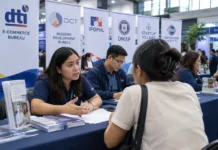
Walk the ECOMEX 2026 floor at SMX Convention Center Aura this week and one zone carries the loudest sound in the hall, the one this expo guide walks aisle by aisle: the Live Selling Arena the organizers have announced, where a host narrates a product, answers questions from a live feed, and closes sales in front of an on-site audience. The arena is not a novelty act bolted onto a trade fair; it is the exhibit hall version of where the country’s e-commerce money actually moved last year, and the platform data tells the same story from the outside, with growth concentrated exactly where the demonstration happens.
The numbers first, because they explain why an expo spent floor space on a camera. Research firm Cube Asia’s Tradewinds dataset tracks the combined marketplace value of Shopee, Lazada, and TikTok Shop in the Philippines at 22 billion US dollars for 2025, up 15 percent in a single year, and inside that figure TikTok Shop grew 53 percent to 6 billion US dollars, lifting its share of the top platforms from 14 percent in 2023 to 29 percent in 2025, and 35 percent of platform volume in the fourth quarter. The growth engine, by Cube’s own analysis, is live selling: beauty, the category that converts best on demonstration, leads TikTok Shop’s mix at 28 percent of its value, and sellers stream because the format converts at rates static listings in the same market cannot match. Fashion follows at 26 percent, which means the two most crowded Philippine categories now transact primarily on camera rather than on catalog grids.
The Seller Side: a Country That Streams Like a Habit
The demand side is only half the story, and the seller-side data explains the arena better than any marketing slide. In Ninja Van’s seller survey spanning more than 1,000 e-commerce sellers, 47 percent of Philippine sellers reported going live every day, far above the 31 percent regional average, and Philippine sellers streamed roughly 14 hours a week, more than double the regional six. Fifty-two percent said live selling was more profitable than listing on marketplaces alone. Decision Lab’s consumer survey put 80 percent of Philippine respondents watching live streams weekly, with 51 percent of shopping-stream viewers reporting they had bought through one.
Stack those figures and a portrait forms: the Philippines is among the highest live-selling adoption markets in Southeast Asia, the sellers treat streaming as a daily habit rather than a campaign, and the buyers are used to purchasing mid-broadcast. That is the operating environment the Live Selling Arena is scheduled to showcase. The organizers built the stage so attendees can watch professional pacing, product sequencing, and objection handling at close range, and the practical value to a working seller is in exactly those three layers, not in the lights.
What the Arena Sessions Show Sellers
Break one professional session into its mechanical layers, because each maps to a skill a seller can take home. First is pacing: notice how the host introduces a product, demonstrates a use, answers a specific viewer’s question, and closes within a fixed window about ninety seconds to three minutes per item, then note the total items per stream; Philippine beauty categories hold the top share precisely because short, demonstrable beats repeat cleanly. Second is sequencing: watch which items open the session, which carry the middle, and which anchor the finale, because the order is engineered for the platform’s retention curve rather than by price. Third is objection handling: the host’s answers to size, shipping, and payment questions are pre-scripted trust objects, the live-selling version of the frequently-asked section on a product page, and the strongest sellers answer with on-camera proof rather than reassurance.
The session’s commercial rails matter as much as the show itself. Every broadcast sits on a payment flow, a logistics promise, and a content calendar, which is why the Arena’s neighbors on the floor, the payment processors, fulfillment companies, and content studios, exist inside the same expo. A seller who leaves the Arena knowing only the show half has half a plan; the other half lives three booths away.
The Home Version: What to Replicate Before Buying Anything
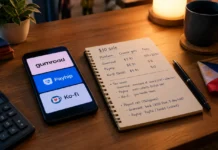
The arena’s lessons convert to a home setup at modest cost, and the right order starts with cadence rather than gear. Set a twice-weekly slot, because the daily-street habit the data shows is built on consistency a new seller cannot jump straight into without burning out, then build the minimum studio: a phone, a ring light, a clean background, and a product list sequenced by the demonstrated-open, mid-carry, anchored-close pattern, with a notebook for the post-session log. The first five sessions exist to establish the routine and the recording habit, not to break sales records, and the log of what viewers asked each session becomes the objection script the fourth layer of the technique needs.
Platform choice comes after the routine, not before it, and the deciding inputs are the category mechanics rather than the hype: TikTok Shop’s Philippine value and growth make it the default live-first channel in beauty and fashion, the two categories its Philippine mix leads with 28 and 26 percent shares, while marketplace-native catalogs with search-driven demand still carry weight on the older platforms, Shopee’s 25 percent growth against Lazada’s 34 percent contraction in the same tracker shows the split is not hypothetical. The seller who reads the numbers first picks a lane with evidence, then builds the studio around it, and the expo floor conveniently prices both lanes across its 160-plus business solutions. The decision discipline is the one every platform comparison needs: separate the format cost from the channel cost, model both at your real order values, and change platforms only when the arithmetic changes sides, not when a campaign moment makes one look bigger than its average.
The Regional Read: Outside Metro Manila
The metropolitan frame misses where the next cohort lives, and the platform’s own regional numbers supply it. TikTok Shop reported Philippine orders in Visayas and Mindanao up 140 percent in the year through July 2026, with the seller count up 50 percent and the creator count up 160 percent, and sales through live streaming in those regions climbing 130 percent. The channel reached Cebu with its seller-training roadshow alongside DTI, one of more than 15 cities and regions the program has covered while training tens of thousands of MSMEs, and the city now counts among its most active MSME communities. For a seller outside the capital’s logistics radius, this is the strategic entry: the live layer compresses distance, a creator in Cagayan de Oro, Cebu, or Davao demonstrates a product to a national audience without renting a branch, and the platform’s reach does the distribution that a physical expansion budget once did. The Arena on the ECOMEX floor, meanwhile, is reachable by the same population that already orders from it, and the expo’s free admission keeps that door open.
The Risks Layer the Hype Leaves Out
Live selling’s growth story carries costs the arena’s applause can drown out, and the sellers who last price them in. The format trades margin for conversion: platform seller fees, host commissions, and campaign discounting stack on a live order in ways static listings do not, and the 52 percent profitability figure in the seller survey sits beside 48 percent who did not report that edge. Refund and chargeback economics also shift, because live buyers decide fast and sometimes regret faster, and the counterfeiting pressure the sector spent 2026 regulating sits hardest against hot categories promoted on camera. A seller entering live commerce should therefore model per-session profitability at their actual price points, not the averages in anyone’s pitchbook, ours included, and treat the format as an acquisition channel with its own cost structure rather than a free upgrade to the catalog.
The compliance layer matures in the same direction. Registrations and disclosures that the government’s e-commerce framework formalized over the past two years apply to live commerce sellers in practical terms, and the agencies seated in the expo’s Growth Clinic answer precisely those questions face to face. The sellers who formalize early carry cheaper trust into every subsequent campaign, and the cost of late paperwork is the one expense the format never discounts. Trust assets compound through the same profile discipline every platform rewards, verifiable identity, consistent records, real proof on camera, and a live stream is simply the most public room in that house: every claim lands on dozens of screens at once, so the seller who would not print a false catalog line should not say one to a rolling audience. The reward for the discipline is the channel’s best trait, a returning audience that trusts the face before it checks the price, which is the one moat a marketplace listing has never offered a small Philippine brand.
What Comes Next for Live Commerce
Two currents define the next stretch. First, the format professionalizes downward: the tools that enterprise enablers run for global brands, scripted pacing, analytics-led sequencing, and fulfillment promises tied to the broadcast, reach small-seller price tiers each quarter, which widens the gap between sellers who treat streaming as a craft and sellers who treat it as a gimmick. Second, the measurement layer hardens: platforms keep extending commerce analytics from views and orders toward repeat-buyer and category-retention signals, and the sellers who log their own session numbers against those metrics will choose inventory the way the Arena’s professionals do, from data rather than instinct. Both currents reward the seller who starts with the habit, prices the risks fully, and lets the numbers decide the platform.
Sessions run on both expo days, so a seller can repeat the arena pass after the booth work is done. Register free at ticket.ecomex.ph; the full program and floor details: ecommerceexpo.ph.
Frequently Asked Questions About Live Selling in the Philippines
Why is live selling so big in the Philippines?
The adoption data puts Philippine sellers and buyers ahead of the regional curve: in one multi-market survey 47 percent of Philippine sellers streamed daily against a 31 percent regional average, consumers report 80 percent weekly live-stream viewing, and the platforms converted that habit into the fastest value growth in the market, with TikTok Shop up 53 percent to 6 billion US dollars in 2025 on the strength of demonstrated, on-camera selling.
Which products sell best through live selling?
Categories where a demonstration settles the buying question: beauty leads TikTok Shop’s Philippine mix at 28 percent of its GMV, fashion follows at 26 percent, and both convert on camera in ways static listings cannot match. Products that need size, fit, or usage proof benefit most; products bought on spec sheets gain less from the format.
How often should a beginner go live?
Twice a week is the sustainable entry cadence, built into fixed slots so the audience learns your schedule. The daily-stream habit the country’s top sellers run is an end state, not a starting requirement, and the first sessions exist to build the routine, the objection script, and the recording habit rather than to set sales records.
Is live selling more profitable than marketplace listings?
For roughly half of surveyed sellers it was, 52 percent in one multi-market seller survey, but the margin picture per seller depends on fees, commissions, discounting, and refund rates at their own price points. The clear approach is to model per-session profitability at your actual numbers before scaling spend, and to treat live selling as an acquisition layer with its own cost stack.
What equipment do I need to start live selling?
Minimum viable studio: a phone with a stable mount, a ring light, a clean background, and a sequenced product list. The professionals’ edge at an arena scale comes from pacing, sequencing, and objection handling, which cost practice rather than equipment, and the upgrade path only pays once the weekly cadence is stable.
How does the ECOMEX Live Selling Arena help a seller?
The Arena stages professional sessions up close, so a seller can watch product pacing, sequencing logic, and objection handling in real time, then replicate the mechanics at home. Its neighbors on the floor carry the commercial rails, payments, logistics, content production, so the seller leaves with both halves of the plan in a single visit.
- cube.asia/e-commerce-in-philippines — Research firm Cube Asia’s Tradewinds dataset
- markepinas.com/business/mine-culture-philippines-live-commerce
- ticket.ecomex.ph
- ecommerceexpo.ph
External sources linked in this article, in order of first mention. Spotted an error or a broken link? Tell us.
Cite this pagePublished Nov 19, 2026
Agron, E. (2026, November 19). Live Selling in the Philippines: Growth, Opportunities, and What Sellers Should Know. WorldNgayon. https://worldngayon.com/live-selling-philippines/
Agron, Edmon. “Live Selling in the Philippines: Growth, Opportunities, and What Sellers Should Know.” WorldNgayon, 19 Nov. 2026, worldngayon.com/live-selling-philippines/.
Agron, Edmon. “Live Selling in the Philippines: Growth, Opportunities, and What Sellers Should Know.” WorldNgayon, November 19, 2026. https://worldngayon.com/live-selling-philippines/.
Agron, E. (2026) ‘Live Selling in the Philippines: Growth, Opportunities, and What Sellers Should Know’, WorldNgayon, 19 November. Available at: https://worldngayon.com/live-selling-philippines/.
E. Agron, “Live Selling in the Philippines: Growth, Opportunities, and What Sellers Should Know,” WorldNgayon, Nov. 19, 2026. [Online]. Available: https://worldngayon.com/live-selling-philippines/
@online{agron2026liveselling,
  author       = {Agron, Edmon},
  title        = {{Live Selling in the Philippines: Growth, Opportunities, and What Sellers Should Know}},
  year         = {2026},
  date         = {2026-11-19},
  organization = {WorldNgayon},
  url          = {https://worldngayon.com/live-selling-philippines/},
  urldate      = {}
}TY - ELEC AU - Agron, Edmon TI - Live Selling in the Philippines: Growth, Opportunities, and What Sellers Should Know T2 - WorldNgayon PY - 2026 DA - 2026/11/19/ UR - https://worldngayon.com/live-selling-philippines/ Y2 - ER -
Cite the version you read; the page may be updated. Zotero and Mendeley can also import this page directly.