Table of Contents
Key Takeaway
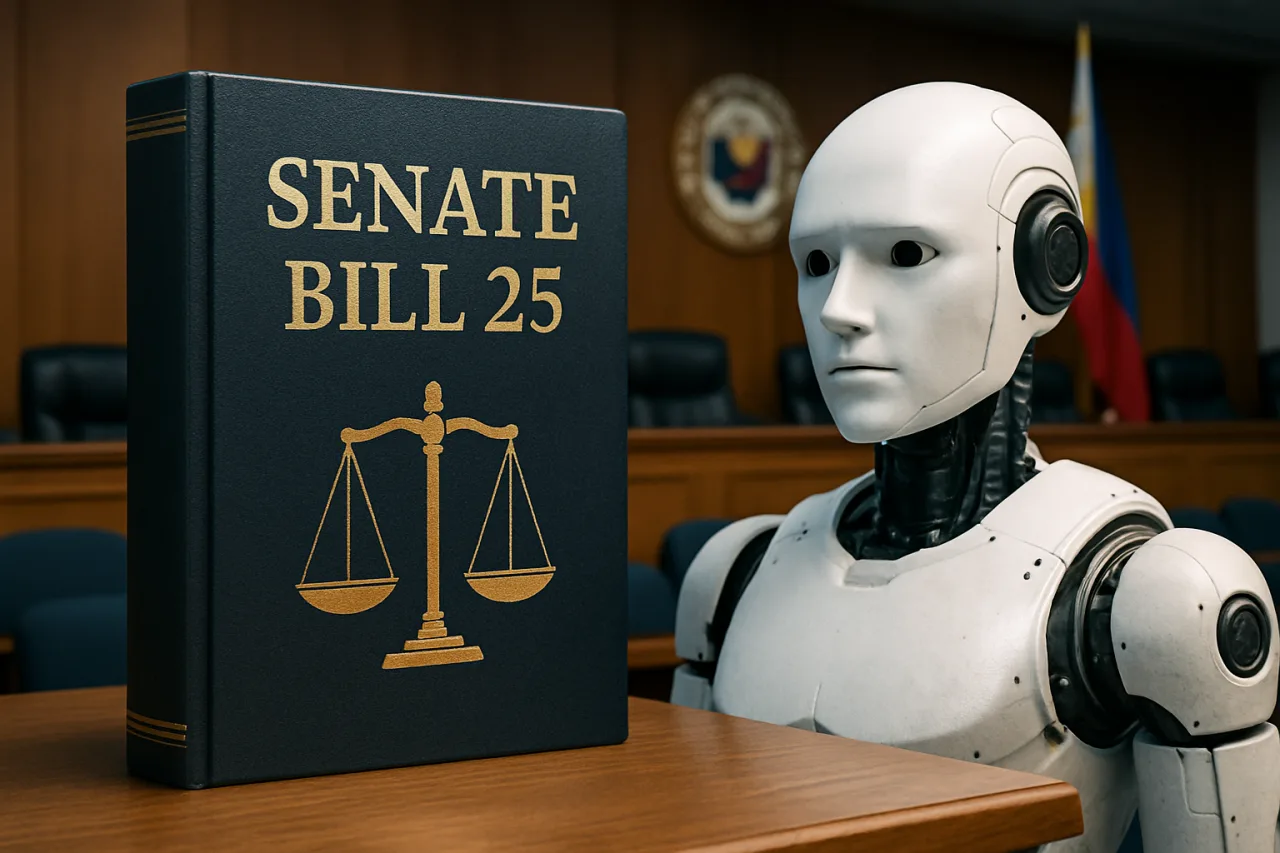
- 📜 The Bill: Senate Bill 25, filed by Senator Pia Cayetano on July 2, 2025, creates a National AI Commission (NAIC) with an AI Ethics Review Board to register, audit, and penalize AI systems in the Philippines — the Senate’s most comprehensive AI regulation proposal.
- 💰 The Fines: Passing AI-generated work as human-made without disclosure would cost ₱10,000-50,000 for a first offense, escalating to ₱1-2 million for repeated violations — plus possible imprisonment and permanent closure for egregious cases.
- 🏷️ Mandatory Labeling: All media companies, broadcasters, and social media platforms would be required to label AI-generated images, audio, or text — making the Philippines one of the few countries that would criminalize undisclosed AI content.
- 🏛️ The Commission: The NAIC would have the power to register AI systems, audit high-risk deployments, promulgate technical standards, require ethics training, and suspend or revoke licenses for non-compliance.
- ⚖️ The Debate: The bill’s penalties — including jail time and permanent business closure — have drawn both praise for enforcement intent and criticism for potentially stifling Philippine startups and innovation.
Senate Bill 25, filed by Senator Pia Cayetano on July 2, 2025, is the Senate’s answer to the question that House Bill 7396 attempts to address from the House side: how should the Philippines regulate artificial intelligence? The bill, formally titled the Artificial Intelligence Regulation Act, takes a different institutional approach from HB 7396. Instead of creating a development authority under the Office of the President, Senate Bill 25 creates a National AI Commission (NAIC) with an AI Ethics Review Board — an independent regulatory body with the power to register AI systems, audit high-risk deployments, impose fines, suspend licenses, and even recommend criminal prosecution.
Senator Cayetano described the bill as seeking “to strike a careful balance between encouraging technological innovation and ensuring that AI systems remain safe, ethical, and accountable,” as reported by ABS-CBN News. The bill’s most talked-about provision is the penalty for passing AI-generated work as human-made — escalating fines from ₱10,000 for a first offense up to ₱2 million for repeated violations, with possible imprisonment for egregious cases. For Filipino professionals who use AI tools in their work — writers, designers, developers, marketers — this provision would change how they produce and label content. For the broader context of Philippine AI regulation, see our feature on how Congress and UP Law are racing to govern AI. For the labor protection bill, see our what we know about House Bill 9448. For the rights-focused approach, see what we know about House Bill 10362 (Diokno AI Governance Act). For the education sector’s response, see our what we know about the UP Law AI ban.
What Senate Bill 25 Proposes — In Plain Language
The bill has five main components that every Filipino professional should understand:
1. The National AI Commission (NAIC). The bill creates a new regulatory body — the NAIC — that would oversee all AI systems in the Philippines. The NAIC would have an AI Ethics Review Board that evaluates whether AI systems meet ethical standards before they can be deployed. Think of the NAIC as the LTFRB for AI — just as the Land Transportation Franchising and Regulatory Board regulates who can operate public transport, the NAIC would regulate who can operate AI systems.
2. Mandatory AI system registration. Under Senate Bill 25, AI systems would need to be registered with the NAIC before they can be legally deployed. Unregistered AI systems would be prohibited. This creates a national database of AI tools in use — similar to how HB 7396’s AIDA would register AI systems, but with the NAIC as the regulator instead of AIDA. For comparison, see our plain-language what we know about House Bill 7396 and AIDA.
3. Mandatory disclosure of AI-generated content. This is the bill’s most controversial provision. If you create content using AI — an article, an image, a video, a voice recording — you would be legally required to disclose that AI was involved. Passing AI-generated work as human-made without disclosure would be a violation. Media companies, broadcasters, and social media platforms would all need to label AI-generated images, audio, or text.
4. High-risk AI classification. The bill proposes classifying AI systems by risk level, with high-risk AI facing stricter requirements — audits, safety assessments, and ongoing monitoring. While the bill’s text does not enumerate specific high-risk categories in detail (the EU AI Act lists critical infrastructure, education, law enforcement, and others), the NAIC would have authority to define which AI systems qualify as high-risk.
5. AI innovation hubs. The bill is not purely restrictive. It also authorizes the creation of AI research hubs to “promote innovation in government sectors” — suggesting that the NAIC would also support AI development, not just police it. This dual mandate of regulation and promotion mirrors the approach of countries like Singapore and the UK.
The Penalty Structure — What It Would Cost You
Senate Bill 25’s penalty structure is what sets it apart from House Bill 7396. While HB 7396 leaves specific penalty amounts to AIDA’s implementing regulations, Senate Bill 25 specifies penalties directly in the bill text:
| Offense | Penalty |
|---|---|
| First offense — passing AI content as human-made without disclosure | ₱10,000 to ₱50,000 fine |
| Second offense | ₱100,000 to ₱500,000 fine |
| Repeated violations | ₱1,000,000 to ₱2,000,000 fine |
| Egregious cases | Imprisonment and permanent cessation of operations |
| Operating unregistered AI system | Fines and license suspension |
| Failure to comply with NAIC audit | License revocation and mandatory ethics training |
The escalation from ₱10,000 to ₱2 million is designed to give violators multiple chances to correct their behavior before facing the most severe penalties. However, the inclusion of imprisonment and permanent business closure for egregious cases has drawn criticism from technology advocates who argue that such penalties could discourage AI entrepreneurship in the Philippines. The Medium analysis by Brian Jess Ragaza notes that “the bill’s spectrum of penalties — including jail and permanent closure — might discourage startups and research labs.”
How Senate Bill 25 Differs From House Bill 7396
Both bills aim to regulate AI in the Philippines, but they take different institutional approaches. Understanding the difference matters because if both bills pass, Congress would need to reconcile them into a single law:
| Feature | Senate Bill 25 (Cayetano) | House Bill 7396 (Barbers) |
|---|---|---|
| Regulatory body | National AI Commission (NAIC) with Ethics Review Board | AI Development Authority (AIDA) under Office of the President |
| Focus | Enforcement and penalties | Development and strategy |
| Penalties | Specified in bill (₱10K to ₱2M, imprisonment) | Left to implementing regulations (₱100K to ₱10M) |
| Content disclosure | Mandatory — criminalized non-disclosure | Implied through transparency requirements |
| Innovation support | AI research hubs | National AI Strategy, R&D coordination |
| Implementation timeline | Not specified in detail | Phased over 36 months |
The key difference is philosophy. Senate Bill 25 is enforcement-first — it specifies penalties, criminalizes non-disclosure, and creates an independent commission with sanctioning power. House Bill 7396 is development-first — it creates an agency under the President focused on strategy, standards, and phased implementation. If Congress reconciles both bills, the final law would likely combine AIDA’s institutional structure with the NAIC’s enforcement provisions.
What the Disclosure Rule Really Means for Filipino Professionals
The mandatory disclosure provision in Senate Bill 25 would affect every Filipino professional who creates content. Here is what it would mean in practice:
For writers and journalists: If you use AI to generate any part of an article, you would need to disclose it. Using AI for grammar checks or editing would likely require disclosure under the bill’s broad scope. The line between AI-assisted and AI-generated work is not clearly defined — this is a gap that the NAIC would need to address through regulations.
For designers and artists: If you use AI to create images, illustrations, or designs, you would need to label them as AI-generated. Selling AI-created art as human-made would be a violation, with fines starting at ₱10,000.
For software developers: If your application uses AI to generate content — chatbot responses, automated reports, AI-written emails — the output would need to be labeled. This affects BPO companies, fintech apps, and any platform that uses AI-generated text or media.
For social media users: The bill’s disclosure requirement extends to social media platforms. Posting AI-generated images or videos without labeling them could theoretically trigger penalties, though enforcement against individual users would be practically difficult. The NAIC would likely focus on media companies and platforms first.
The disclosure rule aligns with global trends. The EU AI Act requires labeling of AI-generated content. China’s “Deep Synthesis” rules require labeling of deepfakes. The Philippines would be among the first countries to criminalize undisclosed AI content with specific monetary penalties. For practical guidance on how AI transparency affects Filipino consumers, see our report on how 90% of Filipinos cannot tell AI voice from human.
The Strengths and Weaknesses of Senate Bill 25
Strengths: The bill creates a dedicated regulatory body with real enforcement power. The penalty structure is clear and escalating — giving violators chances to correct before facing severe consequences. The mandatory disclosure provision directly addresses the deepfake and misinformation threat. The AI innovation hubs show that the bill is not purely punitive — it also supports AI development. The bill aligns the Philippines with international AI governance trends, particularly the EU AI Act’s emphasis on transparency and accountability.
Weaknesses: The bill’s definitions of “AI system” and “AI-generated content” are not precise enough — overbroad definitions could inadvertently capture benign uses. The high-risk AI classification is not detailed in the bill text, creating uncertainty for businesses about compliance obligations. The penalties — including imprisonment and permanent business closure — may be disproportionate for minor violations and could stifle startup innovation. The NAIC’s independence is not guaranteed — if commissioners are political appointees without technical expertise, enforcement could become erratic. The bill does not include specific provisions for algorithmic impact assessments or data quality requirements, which are standard in the EU AI Act.
What Filipino Professionals Should Do Now
Senate Bill 25 has not been passed into law, but the direction is clear: AI content disclosure is coming, in some form, at some speed. Filipino professionals should prepare now:
1. Start labeling AI-assisted content voluntarily. If you use AI to create any part of your work, disclose it now — before the law requires it. This builds trust with your audience and prepares you for compliance.
2. Document your AI usage. Keep records of which AI tools you use, for what purpose, and to what extent. If the NAIC requires registration or reporting, you will already have the documentation.
3. Separate AI-generated from human-created work. Develop workflows that clearly distinguish which parts of your output are human-created and which are AI-assisted. This makes disclosure easier and protects you if the law passes.
4. Monitor the bill’s progress. Track Senate Bill 25 through the Senate website. If it advances to floor debate, the provisions may change — and the final law (if reconciled with HB 7396) could look different from the current bill text.
Frequently Asked Questions About Senate Bill 25
What is Senate Bill 25 in simple terms?
Senate Bill 25, filed by Senator Pia Cayetano, is a proposed law that would create a National AI Commission to regulate AI systems in the Philippines. It requires AI system registration, mandates disclosure of AI-generated content, and imposes fines from ₱10,000 to ₱2 million for passing AI work as human-made.
Who filed Senate Bill 25?
Senator Pia Cayetano filed Senate Bill 25 on July 2, 2025. She described the bill as seeking to balance technological innovation with AI safety, ethics, and accountability.
What are the penalties under Senate Bill 25?
Penalties escalate from ₱10,000-50,000 for a first offense of non-disclosure, to ₱100,000-500,000 for a second offense, to ₱1-2 million for repeated violations. Egregious cases can result in imprisonment and permanent closure of operations.
Would Senate Bill 25 affect social media users?
The bill’s disclosure requirement extends to social media platforms, which would need to label AI-generated content. Enforcement against individual users would be practically difficult — the NAIC would likely focus on media companies and platforms first. However, posting AI-generated content without labeling could technically be a violation.
How is Senate Bill 25 different from House Bill 7396?
Senate Bill 25 creates a National AI Commission focused on enforcement, with specific penalties written into the bill. House Bill 7396 creates AIDA under the Office of the President, focused on development and strategy, with penalties left to implementing regulations. If both pass, Congress would reconcile them into one law.
Has Senate Bill 25 been passed into law?
No. As of August 2026, Senate Bill 25 is still pending in the Senate. It has not been voted on or enacted. The timeline for passage depends on Senate committee deliberations and floor schedule.
Would Senate Bill 25 stifle AI innovation in the Philippines?
This is the main debate. Supporters argue that regulation builds public trust in AI, which ultimately promotes adoption. Critics argue that the penalties — including imprisonment and business closure — could discourage startups from developing AI products in the Philippines. The bill includes AI innovation hubs as a counterbalance, but the net effect on innovation depends on how the NAIC implements the law.