Table of Contents
Key Takeaway
- ⚡ 22% Increase: The NGCP transmission charge on your August electricity bill jumped 22.22% to ₱1.7560 per kWh, up from ₱1.4367 per kWh in June — driven by a 30.85% spike in ancillary service rates.
- 💸 Direct Impact: For a household consuming 300 kWh monthly, the transmission charge increase alone adds approximately ₱96 to the August bill. For businesses consuming 2,000 kWh, the added cost reaches ₱638.
- 🔴 Grid Instability: The Visayas grid was placed on red alert for six hours on August 18, with 26 power plants on forced outage and 836.9 MW unavailable — the same instability driving ancillary service costs higher.
- 📊 Ancillary Services Explained: AS charges are pass-through costs paid to generators who supply backup power during supply-demand imbalances. NGCP does not earn from these charges — they go directly to generation companies.
- 🔄 What You Can Do: Understanding each charge on your Meralco bill helps identify where savings are possible. Time-of-use pricing, energy efficiency, and solar adoption can offset transmission charge increases.
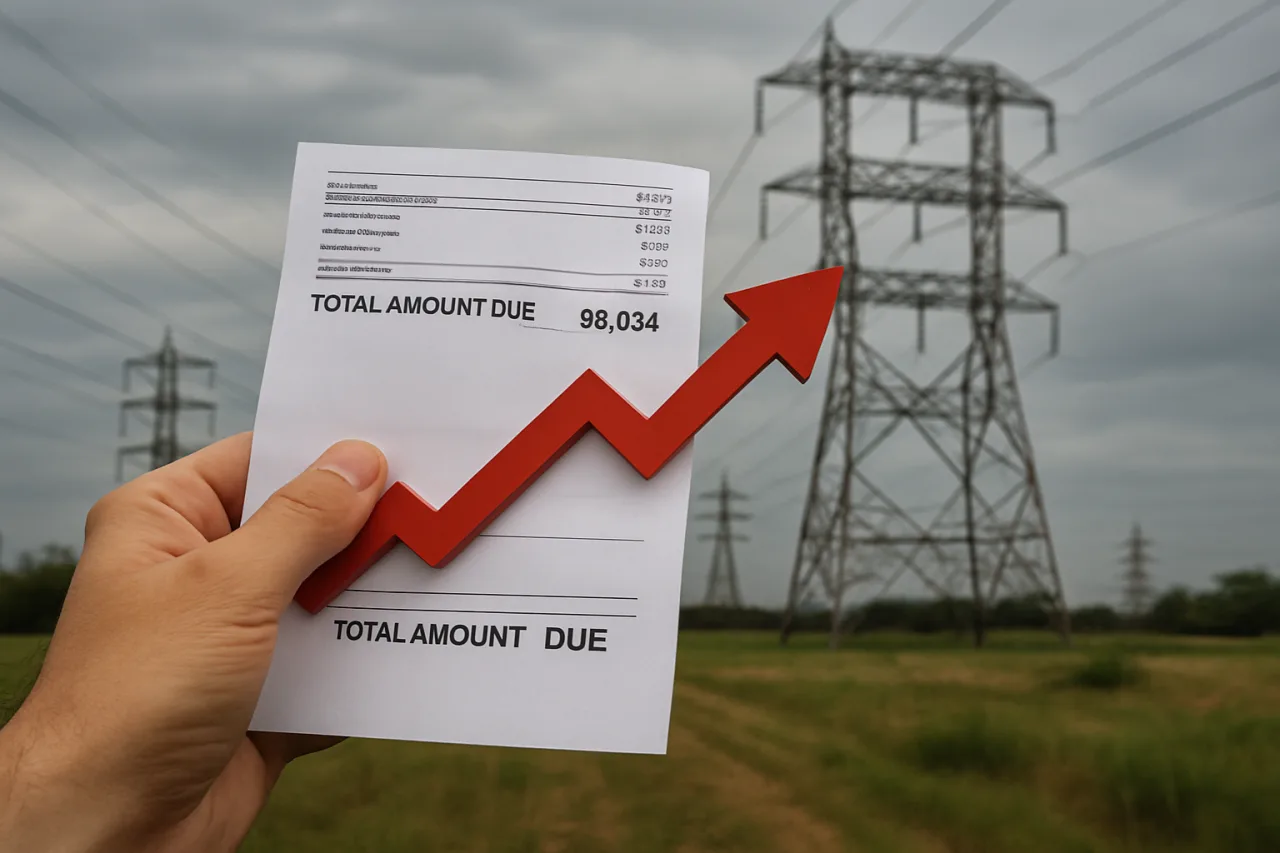
Your August electricity bill is going to be higher than expected. The National Grid Corporation of the Philippines (NGCP) announced that overall transmission rates for the July 2026 billing period — which will be billed to consumers this August — rose by 22.22% to ₱1.7560 per kilowatt-hour, up from ₱1.4367 per kWh in June.
The increase, reported by GMA News on August 15, 2026, is driven by a sharp rise in ancillary service (AS) charges — the pass-through costs for backup power supplied by generators during supply-demand imbalances. AS rates increased by 30.85%, from ₱0.7941 per kWh in June to ₱1.0391 per kWh in the July billing period.
Breaking Down the Numbers: What Your Electricity Bill Pays For
To understand why your electricity bill is rising, you need to understand what the transmission charge actually covers. The transmission charge on your Meralco bill is the cost of delivering electricity from power suppliers — usually located in other provinces or remote areas — to Meralco’s distribution system. This is paid to NGCP, the transmission service provider.
The overall transmission charge has two main components:
1. Transmission Wheeling Rate: The fee for delivering power through the transmission grid. This rose from ₱0.5044 per kWh in June to ₱0.5436 per kWh in July — a more modest 7.8% increase.
2. Ancillary Service (AS) Charge: Pass-through costs for power supplied by generators who provide backup capacity during supply-demand imbalances. This is where the biggest jump occurred — 30.85%, from ₱0.7941 to ₱1.0391 per kWh.
NGCP clarified that it does not earn from ancillary service charges and does not benefit from any change in AS prices. These payments are remitted directly to generation companies with bilateral contracts with NGCP, and to the Independent Electricity Market Operator of the Philippines (IEMOP) for AS sourced from the Reserve Market.
How Much More Will You Pay?
The impact on your electricity bill depends on your monthly consumption. Here is a breakdown of the additional cost from the transmission charge increase alone:
| Monthly Consumption | Old Charge (₱1.4367/kWh) | New Charge (₱1.7560/kWh) | Additional Cost |
|---|---|---|---|
| 200 kWh (small household) | ₱287.34 | ₱351.20 | ₱63.86 |
| 300 kWh (average household) | ₱431.01 | ₱526.80 | ₱95.79 |
| 500 kWh (large household) | ₱718.35 | ₱878.00 | ₱159.65 |
| 1,000 kWh (small business) | ₱1,436.70 | ₱1,756.00 | ₱319.30 |
| 2,000 kWh (medium business) | ₱2,873.40 | ₱3,512.00 | ₱638.60 |
For the average Filipino household consuming 300 kWh per month, the transmission charge increase alone adds approximately ₱96 to the August electricity bill. This does not account for other charge components — generation, distribution, taxes, and subsidies — which may also fluctuate.
The Visayas Grid Crisis: Why Ancillary Costs Are Surging
The 30.85% spike in ancillary service charges is directly connected to the power supply crisis in the Visayas grid. On August 18, 2026, NGCP placed the Visayas grid on red alert for six hours, from 3:00 PM to 9:00 PM, after available power supply fell below peak demand.
According to NGCP’s advisory, 26 power plants were on forced outage while 14 others were running at reduced output, leaving 836.9 MW of generating capacity unavailable to the grid. The key factors included the unavailability of Visayas’ large coal plants TVI 1 and TVI 2, limited power import from Mindanao due to coal plant outages and high system demand, and an increase in forecasted demand.
When the grid is under red alert, the power supply is insufficient to meet consumer demand and the grid’s regulating requirement. This triggers the activation of ancillary services — backup generators that are paid premium rates to supply emergency power. The more frequently the grid needs these backup services, the higher the ancillary service charges that flow through to every consumer’s electricity bill.
The Visayas grid continued experiencing red and yellow alerts through August 19, 2026, as reported by ABS-CBN News. A yellow alert means the operating margin is insufficient to meet the grid’s contingency requirement — not a full emergency, but a warning that reserves are thin.
The Bigger Picture: Why Philippines Power Costs Are Rising
The August electricity bill increase is not an isolated event. It reflects systemic challenges in the Philippine power sector that have been building throughout 2026. The Philippine Statistics Agency reported that inflation averaged 5.0% over the first seven months of 2026, above the government’s 3.0% target, with energy costs as a major contributor.
The Meralco refund of ₱9.5 billion, ordered by the Energy Regulatory Commission, provided some relief to consumers earlier in 2026. But the transmission charge increase more than offsets that benefit for most households.
For Filipino professionals and OFW families supporting households back home, rising electricity costs add to the already heavy burden of remittance expenses and mandatory government contributions. Every peso increase in the electricity bill reduces the disposable income that families depend on for education, healthcare, and savings.
What You Can Do: Practical Steps to Lower Your Electricity Bill
While you cannot control transmission charges, you can take steps to reduce your overall consumption and offset the rate increase. Here are five practical strategies:
1. Shift consumption to off-peak hours. Meralco’s time-of-use pricing offers lower rates during off-peak periods (typically 10 PM to 6 AM). Running washing machines, water pumps, and other high-consumption appliances during these hours can reduce your effective rate.
2. Audit your appliances. Refrigerators and air conditioners account for 40-60% of household electricity consumption. A 10-year-old refrigerator uses 2-3 times more electricity than a modern inverter model. The investment in energy-efficient appliances pays for itself within 2-3 years through lower bills.
3. Consider solar. Net metering allows households with rooftop solar to sell excess power back to the grid, offsetting transmission charges. A 3 kW solar system can reduce a 300 kWh monthly bill by 40-60%.
4. Track your consumption. Meralco’s mobile app provides daily consumption tracking. Monitoring helps identify unusual spikes — a sudden 20% increase may indicate a faulty appliance or an undetected power leak.
5. Check your household budget. If your electricity bill is consistently above ₱3,000 per month, an energy audit can identify where the consumption is concentrated. Many electric cooperatives offer free energy audits for residential consumers.
What This Means for Businesses
For Philippine businesses, the 22% transmission charge increase hits directly on the bottom line. A medium-sized business consuming 2,000 kWh per month faces an additional ₱638 in August — and that is just the transmission component. When combined with generation charge increases and the broader inflationary environment, the total impact on operational costs is significant.
Energy-intensive industries — manufacturing, data centers, IT-BPM offices running 24/7 — face the steepest increases. The Philippine data center power crisis has already highlighted the strain on the country’s power infrastructure. The transmission charge increase adds another layer of cost pressure on the same industries that are supposed to drive the country’s digital economy.
For OFW entrepreneurs running online businesses or passive income ventures in the Philippines, the electricity cost increase affects any operation with physical infrastructure — from small server rooms to inventory storage facilities with climate control.
The Regional Divide: Luzon vs Visayas vs Mindanao
The transmission charge increase affects all three Philippine grids — Luzon, Visayas, and Mindanao — but the severity varies dramatically by region. The Visayas grid, which has been under red alert since mid-August, faces the most acute crisis. With 26 power plants on forced outage and 836.9 MW unavailable, the grid is relying heavily on ancillary services to maintain stability, driving the AS charges that inflate every consumer’s electricity bill.
Luzon, which hosts the majority of Philippine economic activity and consumes approximately 70% of the country’s electricity, has avoided red alert status but still faces elevated AS charges due to the regional nature of the reserve market. Mindanao, which has been on yellow alert intermittently, faces similar pressures from coal plant outages and high system demand.
The regional disparity means that electricity costs are rising unevenly across the country. A household in Cebu facing red alert conditions pays more in ancillary service charges than a household in Metro Manila, even though both are served by the same national transmission system. This inequity has prompted calls for reform of the ancillary service procurement mechanism, with some lawmakers arguing for a more balanced cost-sharing model across grids.
The Energy Regulatory Commission (ERC) has acknowledged the transmission charge increase and is reviewing the ancillary service procurement framework. The ERC’s role is to ensure that AS charges are reasonable and that generation companies are not exploiting grid instability to inflate prices. However, the regulatory process is slow, and consumers will bear the cost of the current spike on their August electricity bill regardless of any future regulatory action.
The Department of Energy (DOE) has prioritized the rehabilitation of idled power plants, particularly the large coal facilities TVI 1 and TVI 2 in the Visayas. However, plant rehabilitation timelines typically run 3-6 months, meaning the elevated AS charges may persist through the remainder of 2026.
In the longer term, the DOE’s push for renewable energy expansion — particularly solar and wind, which can be deployed faster than coal or gas — aims to reduce reliance on ancillary services by diversifying the generation mix. The Philippine energy transition and the broader shift toward clean energy will ultimately determine whether transmission charges stabilize or continue their upward trajectory.
Frequently Asked Questions
Why did my August electricity bill increase?
Your August electricity bill increased because the NGCP transmission charge rose 22.22% to ₱1.7560 per kWh, up from ₱1.4367 per kWh in June. The increase is driven by a 30.85% spike in ancillary service charges, which are pass-through costs for backup power supplied during grid supply-demand imbalances.
How much more will I pay for electricity in August 2026?
For an average household consuming 300 kWh per month, the transmission charge increase adds approximately ₱96 to the August electricity bill. For a small business consuming 2,000 kWh, the additional cost is approximately ₱638. The exact amount depends on your consumption and distribution utility.
Does NGCP profit from the transmission charge increase?
No. NGCP clarified that it does not earn from ancillary service charges. These are pass-through costs remitted directly to generation companies with bilateral contracts and to the Independent Electricity Market Operator of the Philippines (IEMOP) for AS sourced from the Reserve Market. NGCP’s transmission wheeling rate increased only 7.8%.
What is a red alert on the power grid?
A red alert is issued when power supply is insufficient to meet consumer demand and the grid’s regulating requirement. Widespread power interruptions or rotational brownouts are expected. The Visayas grid was on red alert for six hours on August 18, 2026, due to 26 power plants on forced outage and 836.9 MW of capacity unavailable.
How can I reduce my electricity bill?
You can reduce your electricity bill by: shifting high-consumption appliances to off-peak hours, upgrading to energy-efficient inverter appliances, installing rooftop solar with net metering, tracking consumption via the Meralco app, and requesting a free energy audit from your electric cooperative.
Will electricity rates continue to rise in 2026?
The trend depends on grid stability. The Visayas grid has been under red and yellow alerts since mid-August due to power plant outages. If plant availability improves, ancillary service charges may decrease. However, the broader inflationary environment and energy import costs suggest sustained upward pressure on electricity bills through the end of 2026.
Financial Disclaimer
This article is for informational purposes only and does not constitute financial advice. The electricity bill calculations are estimates based on NGCP’s published transmission rates and assumed consumption levels. Actual charges may vary by distribution utility, franchise area, and applicable subsidies. Consult your electric cooperative or Meralco for specific rate information.