Key Takeaway
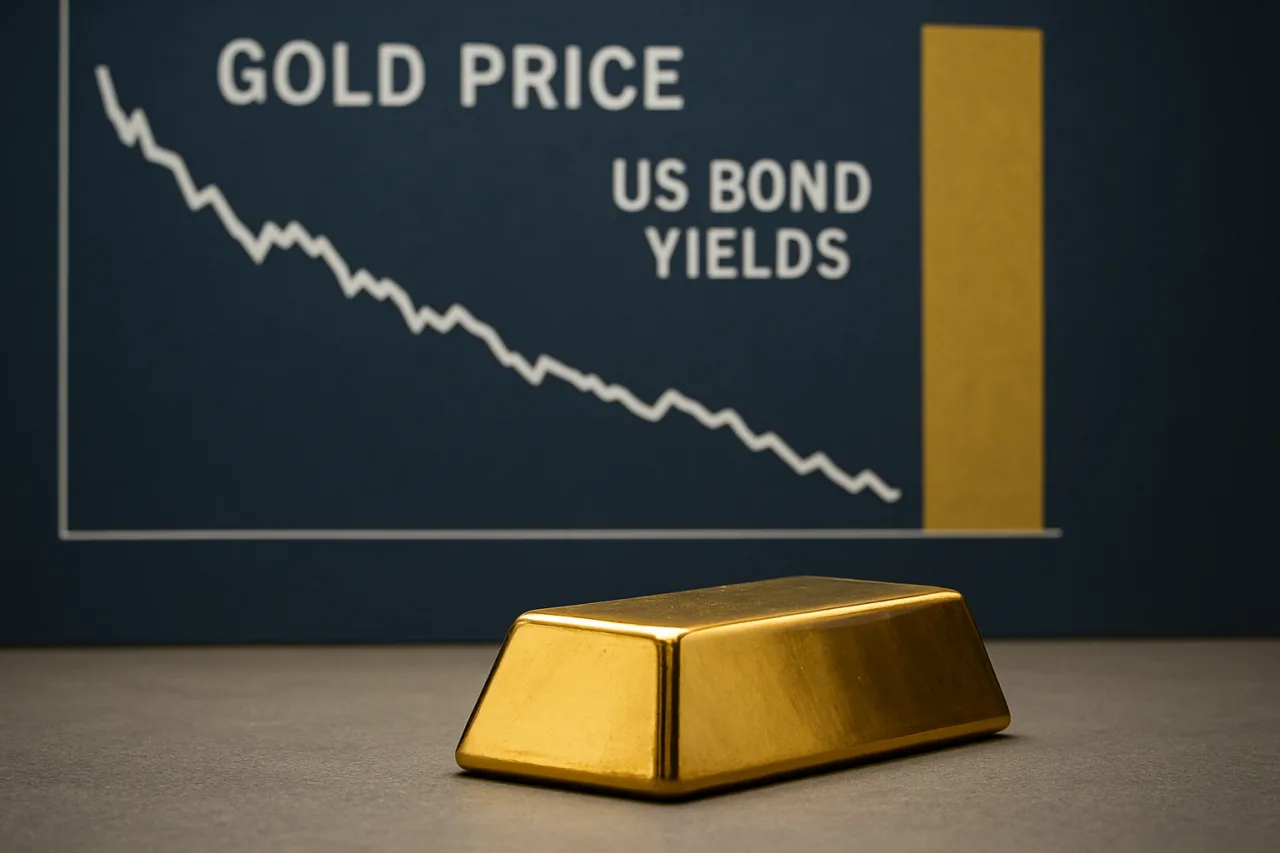
- 📉 The gold price sits at $4,161/oz (Oct 2) — down about a quarter from January’s ~$5,500-5,600 peak — and the reason is structural, not emotional: the US 10-year Treasury yield near 5.3%, its highest in roughly two decades, changed the math of holding a metal that pays nothing.
- 🏦 The Fed stands at 4.00% after the September 30 hike, keeping real (inflation-adjusted) yields positive — historically the single worst environment for gold and the single best for cash instruments.
- 🇨🇳 But central banks disagree with the tape: the People’s Bank of China just logged its largest monthly gold purchase since October 2023 — a 20-month buying streak that treats the dip as a reserve-policy opportunity, not a warning.
- ⚖️ The OFW hedge question has an honest answer now: with risk-free peso and dollar yields this high, gold’s role shrinks to insurance-sizing, not wealth-building — the tranche rules below.
- 🇵🇭 Wednesday adds a PH twist: the BSP’s Oct 7 rates meeting lands midweek; the peso-gold double exposure (jewelry, bullion imports, USB gold) moves on both decisions.
Table of Contents
The gold price fell to $4,161.05 on October 2 — down 6.99% over the past month and roughly 26% below the ~$5,608 all-time high printed in January — and the fall has a single, legible engine: the yield wall. The US 10-year Treasury trades around its highest levels in two decades (north of 5.2% in early-October sessions), the Federal Reserve stands at 4.00% after the September 30 hike, and every percentage point of risk-free yield raises the cost of holding a metal that pays none. This week’s World Investment Watch #010 reads that collision from the Filipino saver’s chair: why the world’s oldest hedge underperforms a passbook for the first time in a generation, who is still buying (a central-bank floor worth knowing), and the practical tranche rules for OFW households deciding between the jewelry drawer, the bullion dealer, and the 5%-yield money fund. Nothing here says gold is dead. It says the hedge has a price, and the price is now visible.
The Yield Wall: Why 5.3% Reshapes Everything
The mechanics first, because the whole week hangs on one sentence: gold produces no cash flow, so its opportunity cost is whatever risk-free money pays. Through October’s first sessions, the 10-year US Treasury yield pushed toward 5.3% — a fresh two-decade high — while the Fed’s policy rate sat at 4.00% after the September 30 hike. A dollar parked in short Treasuries now compounds without volatility; the gold price must appreciate roughly 5% annually just to break even against the risk-free alternative. That inversion is the engine behind three straight weekly losses into early October and the 6.99% monthly slide to $4,161.05 (Trading Economics contract data, Oct 2). The last time yields sat here — the mid-2000s — gold spent years ignored by yield-focused savers, then exploded once the cycle turned. The asymmetry matters: yields at 5.3% are either the peak of a rate regime (gold’s next bull case) or the plateau of one (its worst case), which is precisely why the hedge decision must be sized as insurance rather than timed as a trade. For peso-based readers there is a second layer — the peso interest rate (BSP at 5.00%) competes with the dollar metal — and with the equity shelves tracked in Monday’s PSE order-map in local terms, doubling the yield wall’s effect on Filipino savers.
The Gold Price Tape: a Quarter Off the Peak
The numbers, in ladder form: January 2026 printed the all-time high around $5,608; the 52-week band runs from a $3,858 low to a $5,477 high (USA Today market data, Oct 1); the October 1 spot read was $4,171-4,185 across sessions; October 2 settled at $4,161.05; forecasters’ year-average targets sit at $4,490 (Trading Economics quarter-end estimate; bank desks’ 2026 averages clustering near that level). Silver shows the same DNA — roughly $61/oz, pressed by the same yields plus its own industrial softness. The 12-month view stays constructive (gold +7-8% YoY despite the slide), which is the confusing part for families watching the jewelry price at the mall: the gold price in pesos looks worse than the dollar chart because the peso’s own path compounds the move. The honest read of the tape: not a crash, a re-pricing — the market deducting the new yield regime from a metal that ran 45% above its long average at the January peak. Corrections of this shape historically resolve with the rate cycle, not against it — which is why Wednesday’s BSP decision and the Fed’s post-hike minutes (due three weeks after the September 29-30 meeting, per standard schedule) are the two dates this tape actually hangs on.
Who’s Still Buying: the Central-Bank Floor
Under the retail tape sits a quieter one. The People’s Bank of China reported adding 14.93 tonnes in June 2026 — its largest monthly purchase since October 2023 — extending a buying streak to twenty consecutive months, a stretch it sustained even through gold’s worst quarterly slide since 2013. Central-bank demand is the market’s slow money: uninterested in Wednesday’s yields, focused on reserve diversification away from the dollar system. The World Gold Council’s mid-year framework placed fair value near $4,100 ±5% on assumptions of one Fed hike by October — meaning the current gold price sits almost exactly at the institutional fair-value band — the risk-pricing lens our Anthropic S-1 decode applied to another asset class, not through it. Translation for the Filipino saver: the panic scenario (gold in freefall) and the moonshot scenario (January again) both lack support; the tape is a standoff between yield-driven Western selling and reserve-driven official buying. Standoffs end with the macro calendar, and the macro calendar this week runs through Manila.
The OFW Hedge Question, Answered With Numbers
Put the competing instruments on one table, in the units families actually hold. A ₱1,000,000 emergency fund in a Philippine money market or digital-bank time deposit earns roughly ₱50,000-60,000/year risk-free at current BSP-level yields; the same ₱1M in gold at $4,161 needs the metal (plus the peso rate) to appreciate faster than ₱50-60K/year just to tie — and gold’s entire modern-history edge has been crisis performance, not carry. A dollar variant: $17,500 in 10-year Treasuries (via ETFs like the ones Filipino brokers offer, or direct through global platforms) locks ~5.3% for a decade; the same sum in the gold price needs a >26% recovery merely to revisit the January peak. The honest conclusion: at 5.3% yields, gold stops being a wealth-builder and becomes exactly what it always claimed to be — insurance. Insurance gets sized, not maximized. The sizing rule that survives this tape: insurance-sized gold means 5-10% of liquid savings, reviewed once a season, not 30%+ chased on a chart. The families hurt by the January peak were not wrong to own gold; they were over-sized for an asset whose cash-flow absence had been forgotten during the boom.
The Tranche Playbook: Insurance Sizing, Not Wealth Building
- Tranche 1 — the carry core (50% of whatever you save): risk-free yield first. PH digital-bank time deposits, Treasury-bill placements through broker apps (₱1,000 minimums at the big online brokers), or USD money funds for the dollar side. This is the tranche the yield wall pays directly.
- Tranche 2 — the insurance sleeve (5-10% of savings, not more): the gold price at $4,161 sits at the institutional fair-value band — a defensible entry for insurance-sizing in up to three adds (now, plus below $4,000, plus on a BSP/Fed turn), each a fixed peso amount, never a lump.
- Tranche 3 — the crisis asset (0-5%, optional): physical bullion (coins with documented premiums) for the tail scenario — stored, insured, documented. The jewelry drawer is cultural, not investment; buy it for weddings, count nothing on it for yield.
- The trigger map: add only on (a) a confirmed Fed pause/turn (watch the post-hike minutes language), or (b) a PBoC-scale acceleration in official buying. Skip both triggers, keep the money in Tranche 1 — the discipline that made last cycle’s buyers rich was buying gold when it was hated and un-owned, not when the mall queue wrapped the block.
- The peso-gold double edge: PH gold retailers reprice with both the dollar metal and the USD/PHP rate; a peso seller of old jewelry benefits from the same wall that punishes buyers — the season’s best gold trade for many households is the one on the sell side of the pawnshop counter. The sending-side half of the same map — fees and rails — lives in our BSP stablecoin 2027 read.
Wednesday’s Peso Angle: the BSP Meeting
October 7 puts Manila at the center of the same collision. The BSP’s rate decision lands with policy at 5.00% and inflation prints running hot (the August reading sat at 6.10% per Trading Economics data) — the exact configuration that keeps peso yields attractive and keeps pressure on gold priced in pesos. For OFW families, Wednesday’s decision matters in two directions: it sets the peso side of the yield wall (the carry core’s rate, published with the BSP’s official releases), and it moves the USD/PHP rate that doubles every dollar-gold entry. The standing playbook from our Fed-flip issue still governs the dollar side — odds flipped from 70% to 17% after one weak jobs report, and December’s meeting now carries the tape — while Wednesday decides the local leg. The two decisions in one week, Manila then the Fed’s minutes trail, form the complete macro ring around the gold price: carry first, insurance second, charts last.
The Jewelry Counter Math: Where the Gold Price Meets the Pawnshop
PH retail gold carries two spreads the spot chart never shows: the fabrication premium when buying (often ₱150-350/gram over the peso-converted spot on 18k pieces, higher on 24k bars) and the buyback discount when selling (pawnshops and dealers typically pay 80-92% of melt value depending on assay). At a $4,161 gold price, one troy ounce converts to roughly ₱7,300-7,600/gram at current rates before premiums — so a ₱250/g premium on a 50-gram purchase is real money, around ₱12,500 on the counter, and the same spread works against you on the sell side. Practical rules from the counter: (1) buy bars over jewelry when the goal is value storage — the lower premium compounds in your favor; (2) keep receipts and assay certificates — the buy-back spread tightens by 10 points with paperwork; (3) negotiate with the peso rate open on your phone — dealers update boards at different speeds, and the gaps are yours. The same math reversed explains this season’s sell-side opportunity: old 21k jewelry bought in the 2010s carries melt value the family never sees quoted honestly until they ask. Ask.
Frequently Asked Questions
Why is the gold price falling while inflation stays high?
Because gold competes with yields, not inflation directly. With the 10-year Treasury near 5.3% and the Fed at 4.00%, risk-free money pays more than the metal’s crisis premium justifies at the margin — the classic high-real-rate squeeze. Inflation hedge demand persists among central banks, but Western yield-driven selling set the October tape.
Is gold still worth buying for OFW families?
As insurance: yes, sized at 5-10% of savings with phased adds. As a wealth-builder: not at 5.3% risk-free yields — a time deposit or Treasury placement outpaces the metal’s required break-even. The January buyers’ mistake was sizing, not direction.
What is the fairest current price estimate for gold?
The World Gold Council’s mid-year framework placed fair value near $4,100 ±5% — the Oct 2 spot of $4,161 sits inside that band. Bank forecasters’ 2026-average targets cluster near $4,490, which is the upside case if the rate cycle turns.
Should I sell the family jewelry now?
Separate the roles: heirloom jewelry is cultural capital, not a trade. But pawnshop-sellable old gold, broken chains, and loose pieces get the best peso prices when both the metal and the exchange rate align — worth pricing this week before Wednesday’s BSP decision moves the peso leg.
How does the BSP decision affect gold in pesos?
Two channels: the policy rate sets peso yields (the carry core’s alternative — the same carry arithmetic as our Fed odds-flip read), and the announcement moves USD/PHP, which multiplies every dollar gold price into the local counter price. A hawkish BSP strengthens both walls for peso-based savers.
Financial Disclaimer: This article is for general information and education only and does not constitute investment advice. Commodity prices, yields, and forecasts cited are reporting snapshots as of October 4, 2026 (sources: Trading Economics, USA Today market data, World Gold Council commentary). Verify with official disclosures and licensed advisers before financial decisions.