Table of Contents
Key Takeaway
- 📜 The Bill: House Bill 9465, the Digital Media Anti-False Information Act, passed the House on third reading with 286 votes in favor, 3 against, and 7 abstentions. It is now before the Senate.
- ⚖️ The Penalties: Criminal offenses carry 6 to 12 years in prison and fines up to P12 million. Digital platforms face penalties up to 6 percent of Philippine annual gross revenue for non-compliance.
- 🛡️ The Protections: The bill expressly protects political opinions, criticism of government, satire, journalism, whistleblowing, academic discourse, and artistic and religious expression.
- ⚠️ The Opposition: Human Rights Watch, journalists, academics, and civil society groups warn the bill gives the government sweeping censorship powers and could criminalize legitimate dissent.
- ⚡ What You Should Do: Filipino professionals who publish online, create content, or engage in public discourse should understand what this anti-disinformation bill Philippines is debating and how it may affect their digital speech.
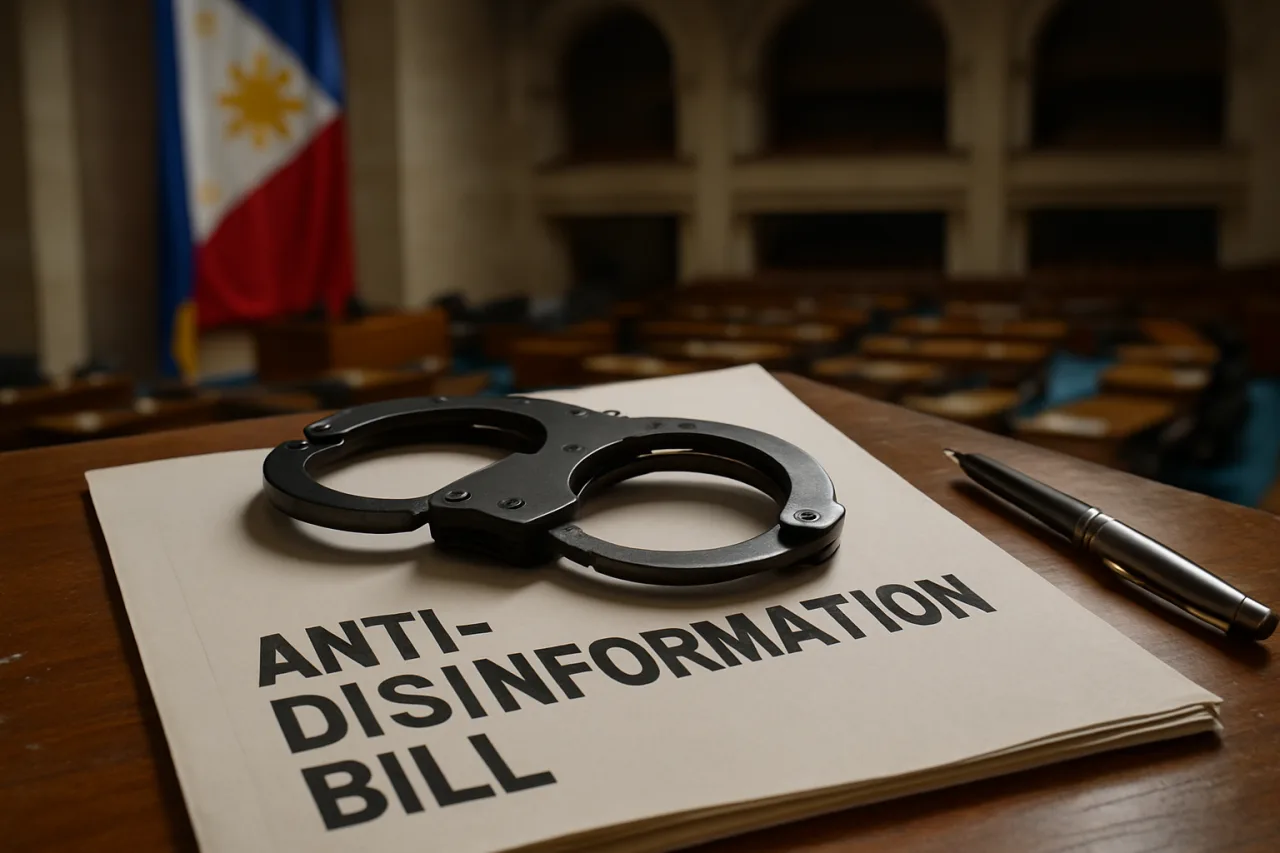
The anti-disinformation bill Philippines is debating sits at the intersection of two undeniable truths: the country has a disinformation problem, and the government has a history of using legal tools against its critics. House Bill 9465, the Digital Media Anti-False Information Act, passed the House of Representatives with 286 votes in June 2026, a margin so lopsided it suggests political consensus. But the bill’s journey to the Senate has been met with something far more complex: a coalition of journalists, academics, and human rights organizations arguing that the cure may be worse than the disease.
The anti-disinformation bill Philippines is considering was authored by House Majority Leader Sandro Marcos, the president’s eldest son, and backed by Speaker Faustino Dy III. It is a LEDAC priority measure, endorsed for passage by June 2026. But its Senate counterpart has stalled since a February 11, 2026 hearing under the Committee on Public Information and Mass Media, then chaired by Sen. Robinhood Padilla. The delay speaks volumes about the bill’s central tension: lawmakers agree that disinformation is a threat, but they cannot agree on who gets to define what is false.
What the Anti-Disinformation Bill Philippines Proposes
HB 9465 makes it a criminal offense to publish, disseminate, finance, direct, or materially assist in the dissemination of false information that causes public harm. The penalties are severe: imprisonment of six to twelve years and fines ranging from P500,000 to P2 million for individuals, and up to P12 million for organizations. Digital platforms operating in the Philippines would be required to establish a legal presence in the country and comply with transparency, disclosure, and user protection standards. Platforms that fail to act on verified complaints face penalties of up to 6 percent of their Philippine annual gross revenue.
The bill sets what its authors describe as a high threshold for criminal liability. It expressly protects political opinions, criticism of government and public officials, satire, journalism, whistleblowing, academic discourse, artistic expression, and religious expression. It requires the government to prove both falsity and intent to cause public harm, not merely that information was inaccurate. And it mandates due process, including a right to appeal takedown orders.
But the protections are where the debate begins, not where it ends. Critics argue that the exemptions for journalism and political speech are only as strong as the institutions that enforce them, and in the Philippines, those institutions have a complicated record.
Why Journalists Fear the Anti-Disinformation Bill Philippines
The opposition to HB 9465 is not coming from the margins. It is coming from the institutions that produce and verify information for a living.
Dean Diosa Labiste of the University of the Philippines College of Media and Communication organized a roundtable discussion that brought together journalists, researchers, and civil society groups to examine the bill’s risks. The Inquirer reported that a broad front of professionals is forming to oppose the legislation, warning that efforts to curb disinformation could end up worsening the problem.
Carlo Nazareno of Democracy.net.ph, which has been actively engaging with Congress on the legislation, raised a specific concern: the bill’s penalties for platforms, up to 6 percent of annual gross revenue, may encourage companies to remove borderline or lawful content to avoid liability. This phenomenon, known as oversensorship, would suppress legitimate speech not because it is false, but because platforms cannot afford the risk of leaving it up.
Human Rights Watch called on lawmakers to withdraw the measure entirely. Carlos Conde, a Philippines researcher for the organization, warned that the Philippines already has several laws that threaten free speech, and adding this bill provides the government with sweeping powers to restrict speech that would further stifle internet freedom.
The Reuters Institute for the Study of Journalism, in its 2026 Digital News Report on the Philippines, noted that some proposals look set to treat journalists as aggravating offenders, triggering maximum penalties if they are found liable for spreading disinformation. This provision, if retained in the Senate version, would invert the traditional role of the press as a check on power by making journalists more legally vulnerable than ordinary citizens for publishing the same information.
The Philippines’ Disinformation Problem Is Real
The urgency behind the anti-disinformation bill Philippines is debating stems from a documented crisis. The Philippines has been identified by multiple international research organizations as one of the countries most affected by online disinformation. A 2026 study by the Oxford Internet Institute ranked the Philippines among the top targets of coordinated disinformation campaigns in Southeast Asia. The Reuters Institute Digital News Report 2026 documented intensified government efforts to combat false information, including partnerships with major news organizations and new legislative proposals.
The problem is not abstract. Disinformation campaigns have been linked to election outcomes, public health misinformation during the COVID-19 pandemic, and coordinated attacks on journalists and activists. The Senate’s own February 2026 hearing on disinformation heard testimony from multiple agencies about the scale of the challenge, with senators calling on social media platforms to join the government in a united front against fake news.
Reporters Without Borders ranks the Philippines as one of the most dangerous countries in the world for journalists, citing the 2009 Maguindanao massacre that killed 32 reporters and the near-total impunity for crimes against the press. In this context, a law that could be used to prosecute journalists for publishing false information, even unintentionally, carries weight beyond its text.
What the Anti-Disinformation Bill Philippines Means for Professionals
The bill’s reach extends beyond journalists and activists. For Filipino professionals who publish online, whether through blogs, social media, LinkedIn posts, or business websites, the anti-disinformation bill Philippines is debating creates a new legal landscape.
If your work involves publishing information that could be contested, whether it is a product review, a market analysis, a political commentary, or a health recommendation, the bill’s definition of false information becomes directly relevant. The protections for academic discourse and professional journalism may not cover a business consultant posting on LinkedIn or a financial advisor publishing a market outlook on a personal blog. The distinction between professional journalism and individual speech is one the Senate will need to clarify. For guidance on protecting your digital identity and online accounts, see our proven guide to email security, and for broader context on how Philippine legislation intersects with technology policy, our analysis of the cybersecurity bill Philippines is now debating covers the parallel legislative track.
For OFWs and overseas Filipino professionals, the bill raises a different question. Philippine law applies to acts committed within the Philippines, but the Cybercrime Prevention Act of 2012 was already used to prosecute online speech that originated outside the country. If HB 9465 follows the same jurisdictional logic, an OFW posting on social media from Saudi Arabia could theoretically face Philippine prosecution for content deemed false and harmful under the new law.
For digital businesses and content creators, the platform compliance requirements are the provision to watch. Requiring digital platforms to establish a Philippine legal presence, respond to takedown requests, and face revenue-based penalties for non-compliance will reshape how Meta, Google, X, and TikTok operate in the country. The Inquirer reported that the bill requires transparency, disclosure, and user protection standards that go beyond what platforms currently provide. Businesses that rely on social media for customer engagement should also review our proven 10-step guide to using AI tools for business to understand how content moderation obligations may affect their digital marketing strategies.
The Senate Is Where the Bill Will Be Decided
The House passed HB 9465 with near-unanimity. The Senate will not. The upper chamber has historically been more cautious on speech-related legislation, and the February 2026 hearing already surfaced concerns from multiple stakeholders. The Senate Committee on Public Information and Mass Media, now under new leadership after Padilla’s departure, has not yet scheduled follow-up hearings.
The anti-disinformation bill Philippines is debating will likely be amended in the Senate. Key questions the Senate must resolve: whether journalists should face aggravated penalties, whether the threshold for criminal liability is high enough to protect legitimate speech, whether the platform compliance requirements will cause oversensorship, and whether the bill’s protections for political criticism and satire will survive in enforceable form.
For now, the bill remains in committee. But the political momentum behind it, driven by the LEDAC priority designation and the Marcos administration’s push, means it is unlikely to die quietly. The question is not whether an anti-disinformation law will pass, but what shape it will take when it does.
The stakes of this debate extend beyond the Philippines. Southeast Asian governments are watching how Manila balances the need to combat disinformation with the obligation to protect free expression. Singapore passed its Protection from Online Falsehood and Manipulation Act (POFMA) in 2019, which has been used to issue correction orders against opposition politicians and independent media. Malaysia repealed its Anti-Fake News Act in 2019 after criticism that it was used to suppress political dissent. Indonesia has introduced content moderation regulations that require platforms to remove content deemed disruptive to public order. The anti-disinformation bill Philippines is debating will become another data point in this regional experiment, and its enforcement record will shape how other ASEAN governments approach the same challenge.
Frequently Asked Questions About the Anti-Disinformation Bill Philippines
What is House Bill 9465?
House Bill 9465, the Digital Media Anti-False Information Act, is a bill authored by House Majority Leader Sandro Marcos that criminalizes the publication and dissemination of false information causing public harm. It passed the House on third reading with 286 votes in favor, 3 against, and 7 abstentions, and is now before the Senate.
What are the penalties under the anti-disinformation bill Philippines?
Individuals convicted face 6 to 12 years in prison and fines from P500,000 to P2 million. Organizations face fines up to P12 million. Digital platforms that fail to comply with takedown orders face penalties up to 6 percent of their Philippine annual gross revenue.
Does the bill protect journalists and free speech?
The bill expressly protects political opinions, criticism of government, satire, journalism, whistleblowing, academic discourse, and artistic and religious expression. However, critics warn that some provisions could treat journalists as aggravating offenders with maximum penalties, and that the protections depend on enforcement by institutions with a mixed record on press freedom.
What is the status of the bill in the Senate?
The Senate Committee on Public Information and Mass Media held a hearing on February 11, 2026, but has not yet scheduled follow-up hearings. The bill remains in committee. The Senate is expected to introduce amendments addressing concerns raised by journalists and civil society groups.
Could this affect OFWs posting on social media from abroad?
Potentially. The Cybercrime Prevention Act of 2012 has been used to prosecute online speech that originated outside the Philippines. If HB 9465 follows the same jurisdictional framework, OFWs posting content deemed false and harmful could face Philippine prosecution, though this would depend on how the final law defines its jurisdictional reach.
What is the difference between this bill and existing cybercrime laws?
The Cybercrime Prevention Act of 2012 (RA 10175) addresses cybercrime broadly, including hacking and online fraud. HB 9465 specifically targets the dissemination of false information and imposes content moderation obligations on digital platforms. It is the first Philippine bill focused exclusively on disinformation.
Why is the bill controversial?
Critics, including Human Rights Watch, the Reuters Institute, and UP’s College of Media and Communication, warn that the bill gives the government power to define what is false, which could be used to suppress dissent. They also warn that platform penalties could cause oversensorship, where companies remove lawful content to avoid liability.
Disclaimer: This article is for informational purposes only and does not constitute legal advice. Readers should consult qualified legal professionals for guidance on how proposed legislation may affect their specific circumstances. Legislative proposals may change during the congressional process.