Table of Contents
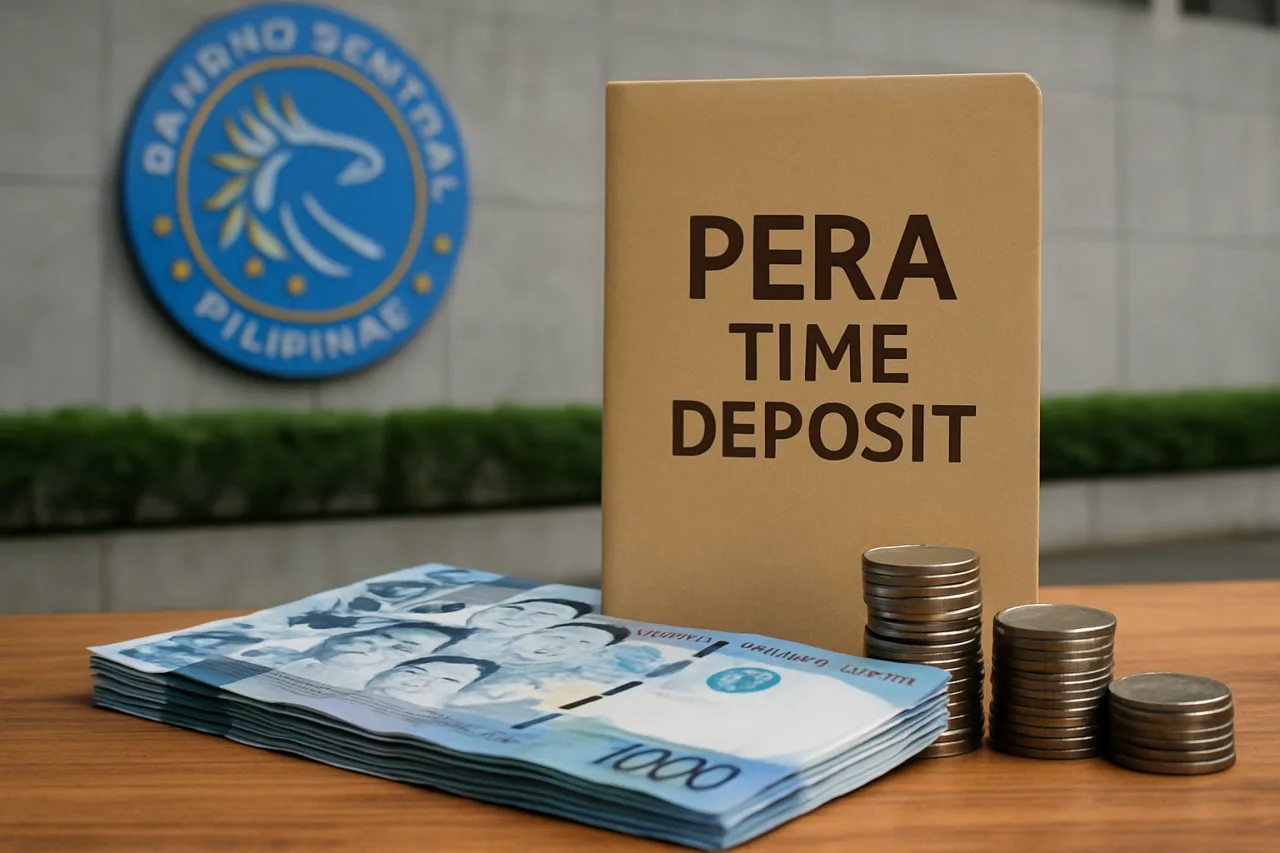
PERA time deposits are now a reality for Filipino savers after the Bangko Sentral ng Pilipinas opened the door for qualified banks to offer time deposits as investment products under the Personal Equity and Retirement Account — expanding retirement options with the tax incentives Filipinos already understand and trust.
Key Takeaway
- 📋 The Rule: BSP Memorandum No. M-2026-044 allows qualified banks to offer PERA time deposits with a minimum 30-day maturity, with proceeds kept in PERA assets upon maturity.
- 💰 The Tax Edge: PERA time deposits may qualify for tax incentives under the retirement savings program — unlike regular time deposits which are fully taxable.
- 📊 The Growth: PERA contributions surged 45% to P757.55 million in H1 2026, with contributors jumping from 6,193 to 30,055 — a nearly fivefold increase.
- 🌍 OFW Advantage: Overseas Filipinos can contribute up to P400,000 annually to PERA, double the P200,000 limit for local contributors.
- 🔑 The Action: Banks must secure BIR accreditation and partner with a PERA administrator before offering placements — check whether your bank is qualified.
The Bangko Sentral ng Pilipinas (BSP) issued Memorandum No. M-2026-044 on August 20, 2026, formally allowing qualified banks to offer time deposits as investment products under the Personal Equity and Retirement Account (PERA). The move adds a familiar, low-risk product to the PERA investment lineup, which already includes unit investment trust funds, stocks, real estate investment trusts, and government securities. For Filipino professionals planning for retirement — especially overseas Filipino workers who can contribute up to P400,000 annually — PERA time deposits represent the simplest entry point into the tax-advantaged retirement program to date.
Related: Big Pension Funds Are Watching AI Risk: What Investors Should See
How PERA Time Deposits Work
Under the new BSP guidelines, PERA time deposits must have a minimum maturity of 30 days. Upon maturity, the proceeds are kept in PERA assets and are not counted as a withdrawal. Contributors can roll over, transfer, or reinvest the proceeds in another accredited PERA investment product based on their instructions or existing investment arrangement.
A PERA time deposit functions similarly to a regular bank time deposit — it holds funds within a contributor’s PERA and may qualify for tax incentives under the retirement savings program. The deposits remain subject to all rules governing PERA, including contribution limits, withdrawal restrictions, and tax treatment under Republic Act No. 9505.
BSP Deputy Governor Lyn I. Javier said in a statement: “Retirement planning should be simple, accessible, and within reach of every Filipino. By introducing PERA time deposits, we are providing another practical option for individuals who want to build their retirement savings through a product they already understand and trust.”
What Banks Need to Qualify
Banks that wish to offer PERA time deposits must meet three requirements before accepting placements:
- BSP Prudential Requirements: Banks must meet applicable BSP prudential standards and notify the central bank of their plans to offer PERA time deposits.
- BIR Accreditation: Banks must secure accreditation from the Bureau of Internal Revenue before offering PERA time deposit placements.
- PERA Administrator Partnership: Banks must partner with an accredited PERA administrator to manage the retirement account framework.
These requirements ensure that only banks with the financial stability and regulatory compliance to handle retirement savings can offer the product. The BIR accreditation step is critical because it is what enables the tax incentives that make PERA time deposits more attractive than regular time deposits.
PERA Contribution Growth in 2026
The latest BSP data reveals significant momentum in PERA adoption. Contributions surged 45 percent to P757.55 million in the first half of 2026, up from P521.36 million in the same period a year earlier. The number of PERA contributors rose nearly fivefold to 30,055 from 6,193 during the same period.
| Contributor Type | H1 2026 Contributions | Share of Total |
|---|---|---|
| Employees | P449.45 million | 59.3% |
| Self-employed | P207.9 million | 27.4% |
| Overseas Filipino Workers | P100.2 million | 13.2% |
Employees accounted for the largest share at P449.45 million, followed by self-employed Filipinos at P207.9 million and overseas Filipino workers at P100.2 million. The OFW contribution figure, while the smallest segment, represents significant growth potential — especially given that overseas Filipinos can contribute up to P400,000 annually, double the P200,000 limit for local contributors. According to Inquirer Business, the increase in contributions came alongside a nearly fivefold rise in the number of PERA contributors to 30,055 from 6,193 during the same period.
How PERA Time Deposits Compare to Other Retirement Options
The addition of time deposits to PERA gives Filipino savers a broader toolkit for retirement planning. Each PERA-eligible product serves a different risk profile and time horizon:
| PERA Investment Product | Risk Level | Best For |
|---|---|---|
| PERA Time Deposits (NEW) | Low | Capital preservation, short-to-medium term |
| Unit Investment Trust Funds (UITFs) | Medium to High | Diversified growth, professional management |
| Government Securities | Low | Fixed income, long-term stability |
| Stocks | High | Long-term capital appreciation |
| REITs | Medium | Regular dividend income, real estate exposure |
For Filipino professionals who have been hesitant to open a PERA because they were uncomfortable with market-linked products like UITFs or stocks, PERA time deposits remove the barrier. Time deposits are the most widely understood banking product in the Philippines — adding them to PERA means the tax-advantaged retirement program is no longer just for investors comfortable with market risk. It is now accessible to anyone who has ever placed money in a bank time deposit.
The Tax Advantage Explained
PERA was created under Republic Act No. 9505 as a voluntary retirement savings program that supplements state-based pension plans (SSS, GSIS) and employer-sponsored retirement plans. The program offers several tax incentives that make it more advantageous than saving through regular, taxable investment accounts:
First, PERA contributions are eligible for a tax credit equivalent to 5% of the annual contribution, which can be used to reduce income tax liability. For an overseas Filipino contributing the maximum P400,000 annually, that is up to P20,000 in tax credits per year. Second, all investment income earned within the PERA — including interest from PERA time deposits — is exempt from the final withholding tax on deposit interest, which is currently 20%. On a P400,000 time deposit earning 3% annually, that is P2,400 in tax savings per year that would otherwise go to the BIR. Third, withdrawals made after age 55 and five years of contributions are entirely tax-free.
These incentives mean that a PERA time deposit is structurally superior to a regular time deposit for retirement savings. The interest rate may be the same, but the after-tax return is higher because the earnings are sheltered. For Filipino professionals in the 20% tax bracket, the difference compounds significantly over a 20-30 year retirement horizon.
What This Means for Overseas Filipinos
The P400,000 annual contribution limit for overseas Filipinos is the most underutilized tax advantage available to OFWs. Many overseas workers are unaware that PERA exists, let alone that they can contribute twice as much as local-based Filipinos. The H1 2026 data shows OFW PERA contributions at P100.2 million — just 13.2% of total contributions despite OFWs having the highest contribution ceiling.
PERA time deposits could change this. Unlike UITFs or stocks, which require investment knowledge and risk tolerance, time deposits are universally understood. An OFW in Saudi Arabia or the UAE who already holds time deposits at a Philippine bank can now move those deposits into a PERA-eligible structure — gaining the tax incentives without changing their investment behavior. The simplicity of the product is its strategic value.
For OFWs planning their return to the Philippines, PERA time deposits offer a low-risk way to build a retirement corpus while still abroad. A P400,000 annual contribution over 20 years, even at a conservative 3% interest rate with tax-free compounding, would accumulate to approximately P10.8 million — a meaningful retirement nest egg funded entirely by the tax-advantaged growth that PERA provides. This strategy complements other OFW investment approaches like PSEi investing and Philippine REITs, creating a diversified retirement portfolio that balances growth assets with the capital preservation that PERA time deposits provide.
Steps to Open a PERA Time Deposit
For Filipino professionals ready to take advantage of this new option, the process is straightforward:
- Check if your bank is PERA-accredited. Not all banks offer PERA products. The BSP maintains a list of qualified banks that have met prudential requirements and secured BIR accreditation.
- Open a PERA account. If you do not already have one, you will need to open a PERA with an accredited administrator. This is separate from your regular bank account.
- Choose PERA time deposit as your investment product. Within your PERA, you can allocate contributions to time deposits, UITFs, government securities, stocks, or REITs — or a combination.
- Set your maturity terms. PERA time deposits have a minimum 30-day maturity. Choose the term that matches your retirement timeline and cash flow needs.
- Reinvest on maturity. Upon maturity, proceeds stay in your PERA. You can roll over into another time deposit, transfer to a different PERA investment product, or reinvest based on your instructions.
The Bigger Retirement Picture for Filipinos
The introduction of PERA time deposits comes at a critical moment for Philippine retirement readiness. The country’s pension system faces well-documented structural pressures: SSS benefit sustainability concerns, GSIS coverage limitations, and a large informal sector with no employer-sponsored retirement plan. PERA was designed as the voluntary supplement to fill these gaps — but adoption has been slow since the program launched in 2008. The H1 2026 data showing 30,055 contributors is significant, but it still represents a tiny fraction of the roughly 1.9 million OFWs and millions of self-employed Filipinos who could benefit from the tax incentives.
The fivefold increase in contributors from 6,193 to 30,055 in a single year suggests that awareness is finally catching up to the program’s value. BSP’s decision to add time deposits — the most accessible and widely understood financial product in the country — could accelerate this trend further. When savers who have never considered a PERA realize they can now use a product they already trust (time deposits) within a tax-advantaged framework, the psychological barrier to entry drops significantly.
However, adoption still faces structural hurdles. Not all banks will offer PERA time deposits immediately — the BIR accreditation requirement and PERA administrator partnership take time to establish. Contributors in provincial areas or banking with smaller institutions may find limited availability. The BSP’s notification requirement means the market will develop gradually as qualified banks roll out their PERA time deposit products over the coming months. Filipino professionals who want to be early adopters should proactively ask their bank about PERA time deposit availability rather than waiting for marketing campaigns.
Frequently Asked Questions About PERA Time Deposits
What is a PERA time deposit?
A PERA time deposit is a bank time deposit held within a Personal Equity and Retirement Account that may qualify for tax incentives under the retirement savings program. It functions like a regular time deposit but is structured within the PERA framework, meaning the interest earned is exempt from the 20% final withholding tax on deposit interest.
What is the minimum maturity for PERA time deposits?
Under BSP Memorandum No. M-2026-044, PERA time deposits must have a minimum maturity of 30 days. Banks may offer longer terms based on their product offerings and contributor preferences.
How much can I contribute to PERA annually?
Individual contributors in the Philippines can place up to P200,000 annually in PERA. Overseas Filipinos, including OFWs, may contribute up to P400,000 per year — double the local limit. These limits apply across all PERA investment products combined, including the new time deposits.
Are PERA time deposit earnings tax-free?
Yes. Investment income earned within a PERA, including interest from PERA time deposits, is exempt from the final withholding tax on deposit interest. Additionally, PERA contributions qualify for a 5% tax credit, and withdrawals made after age 55 with at least five years of contributions are entirely tax-free.
Which banks can offer PERA time deposits?
Banks must meet three requirements: applicable BSP prudential requirements, BIR accreditation, and a partnership with an accredited PERA administrator. Not all banks will offer PERA time deposits immediately — check with your bank to confirm availability.
What happens when my PERA time deposit matures?
Upon maturity, the proceeds are kept in PERA assets and are not counted as a withdrawal. You can roll over the proceeds into another time deposit, transfer to a different PERA investment product (such as a UITF or government securities), or reinvest based on your existing investment arrangement.
Financial Disclaimer: This article is for informational and educational purposes only and does not constitute financial, investment, or tax advice. Tax rules and contribution limits may change. Readers should consult a licensed financial advisor or tax professional before making retirement planning decisions. The author and publisher are not liable for any actions taken based on the information presented here.