Table of Contents
Key Takeaway
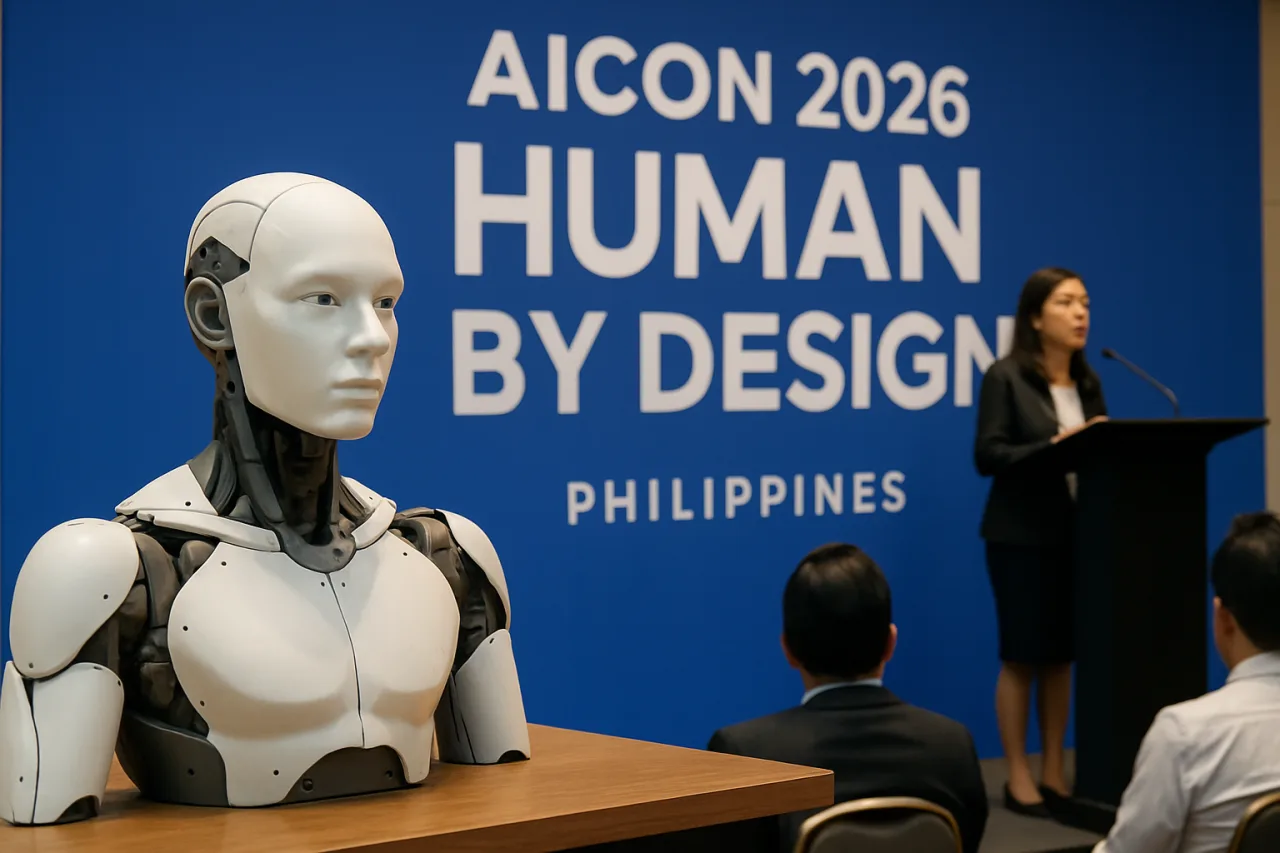
- 🏛️ The Event: AICON 2026 Philippines filled One Ayala in Makati on August 25 for its 11th edition, under the theme “Human by Design: Building the AI Future We Choose” — a deliberate bet on augmentation over replacement.
- ⚔️ The Contrast: The same week brought Bill Gates’ warning of AI upheaval with no plan, Oracle’s 6 a.m. layoff emails, and Meta’s stalled plan to replace staff with AI — making the Philippine theme a live counterargument, not a slogan.
- 🧭 The Real Test: “Human by Design” only means something if budgets, training pipelines, and policy back it; an AI-ready Philippines requires worker retraining, SME adoption support, and guardrails — not stage applause.
- 📋 The 90-Day Plan: Professionals, employers, and policymakers each have concrete moves to convert the theme into practice — the article lays them out step by step.
AICON 2026 Philippines chose its theme while the world chose its fears. While Bill Gates was warning the world that no plan exists for AI’s upheaval, while Oracle employees watched their inboxes for the next 6 a.m. layoff email, and while Meta’s grand plan to replace staff with AI lay in documented ruins — the Philippines’ flagship AI conference opened in Makati with a theme that read like a deliberate counterargument: “Human by Design: Building the AI Future We Choose.” The conference, held August 25 at SPACE at One Ayala in its 11th edition, chose augmentation over substitution as the country’s official AI story. The question this essay pursues is whether that choice is a strategy — or a slogan the global replacement economy will test harsher than any panel discussion can simulate.
The contrast the AICON 2026 Philippines organizers drew is not rhetorical decoration; it is the entire strategic question facing every Filipino professional this decade. The same week produced a 6,000-word American essay proposing to reserve jobs for humans by law, a tech giant funding data centers by cutting 13 percent of its workforce, and an extortion crisis putting 284 million records up for auction. Against that backdrop, AICON 2026’s bet — that the Philippines can build an AI future that “empowers rather than replaces, includes rather than excludes” — is either the smartest positioning a talent-exporting nation has attempted, or the most expensive wishful thinking since “the BPO sector is automation-proof.” This article takes the conference seriously enough to audit it: what was actually said, what AI-ready means in practice, and what the augmented future requires from you specifically.
What AICON 2026 Philippines Actually Was
The AICON 2026 Philippines program brought together executives, practitioners, researchers, educators, policymakers, and innovators — the full stack of the country’s AI conversation — for a day of sessions at One Ayala in Makati, per the official conference site. The 2025 edition drew more than 600 attendees, and the 11th edition’s programming reflected a maturing conversation: less “what is AI” and more “how do Philippine enterprises actually deploy it.” Manila Bulletin’s conference coverage noted that AICON 2026 showcased diverse strategies for implementing AI in enterprises, with a primary focus on translating pilots into production — the unglamorous work that separates countries that use AI from countries that merely discuss it.
The framing matters. AICON 2026 Philippines was not a hype conference. The theme “Human by Design” was a positioning statement aimed at the exact anxiety our reporting has tracked for months — the trust recession in which a majority of surveyed Americans now fear AI more than they admire it. AICON’s organizers are arguing, in effect, that the Philippines can win the talent war by refusing the terms of the fear: build AI around human capability, train workers to wield it, and capture the augmentation economy that the replacement-first economies are fumbling.
The Week That Tested the ‘Human by Design’ Thesis
AICON 2026 Philippines timing made it a live experiment. Its opening week delivered the harshest possible counter-programming. Gates’ essay — which our detailed analysis covered — proposed “Human Reserved” job categories and a robot tax precisely because he believes markets alone will substitute machines for people faster than societies can adapt. Oracle’s restructuring — 21,000 jobs gone while $55.7 billion flows to data centers — demonstrated what “AI-first” financing looks like when it reaches payroll. And Meta’s Project OT collapse — documented in the Reuters investigation — proved even the most aggressive replacement plans fail on execution, but not before wrecking careers and trust.
Against that ledger, the AICON 2026 Philippines choice looks less naive and more shrewd. A country whose economy sells time, care, and English-speaking judgment — BPO services, healthcare workers, remote professionals — cannot win a race to the bottom against machines doing machine-shaped work. But the failure modes documented this week all share a pattern: companies that cut humans before the technology was ready paid in quality, security, and retreat. The augmented workforce — humans operating AI, catching its errors, and owning its outcomes — is the scarce resource every one of those companies discovered it still needed. AICON 2026’s human-centered framing is not sentimentality. It is a bet on which side of the shortage the Philippines wants to supply.
What ‘AI-Ready Philippines’ Requires Beyond the Stage
The phrase “AI Ready Philippines” at the heart of AICON 2026 collapses into three measurable requirements, and honesty requires grading each. First, enterprise adoption: translating AI strategies into deployed systems — the focus Manila Bulletin documented — which demands change managers, data engineers, and the AI-operations roles our management-automation analysis described as this decade’s appreciating skills. Second, workforce readiness at scale: the country’s outsourcing sector ranked fifth globally on AI readiness in recent benchmarking but trails the leaders on investment, per our outsourcing AI readiness analysis — a gap that conferences alone cannot close, but that conference-triggered corporate budgets can begin to address. Third, infrastructure: the physical compute layer that Pax Silica and the New Clark City hub aim to anchor, without which “AI-ready” remains a services-layer ambition.
The gap between the AICON 2026 Philippines theme and throughput is where careers live. A professional who left AICON 2026 with a notebook full of inspiration holds nothing; one who used it to identify which enterprises are hiring for deployment roles, which certifications their industries price, and which pilot projects are hiring — that professional converted a conference into a career asset. The practical read of any flagship conference is the vendor floor and the hallway conversations, not the keynotes. The professionals who treat AICON as a market signal — who is building, who is hiring, which industries are funding deployments — extract months of research from one paid day.
The National Choice Behind the Theme
Zoom out and the real significance of AICON 2026 Philippines is that the Philippines is consciously choosing its AI narrative while the choice still exists. Small open economies do not set the direction of AI technology — that is decided in Redmond, Shenzhen, and Riyadh, as our coverage of the $14.3 trillion LEAP summit documented. But countries do choose their posture toward it: Singapore chose regulation-plus-adoption; the Gulf chose infrastructure; and the Philippine conference circuit is now visibly arguing for augmentation-plus-training. The 11th edition’s language — “the future of AI is not something that happens to us” — is a policy stance disguised as a conference theme, and it aligns neatly with the government’s parallel moves: AI legislation moving through Congress, the national AI strategy roadmap, and the industrial bet on the semiconductor supply chain.
The AICON 2026 Philippines risk, of course, is that themes do not pay severance. The global replacement economy does not consult national preferences — Oracle’s 6 a.m. emails arrive in Manila’s client organizations regardless of conference themes, and the AI-generated-code “firefighting” that burned Meta’s engineers will burn Filipino teams managing the same stacks. “Human by Design” only survives contact with that economy if it converts into skills contracts: certified AI operators, model evaluators, hybrid-team managers — the credentials that make augmentation claims bankable. The conference supplied the narrative. The next 24 months of corporate training budgets, university curricula, and individual certifications will supply the verdict.
The 90-Day Conversion Plan the Theme Implies
If ‘Human by Design’ is the destination, the route is a 90-day plan any professional can execute without waiting for national programs. Days 1 to 30: map your current role against the augmentation frontier — list every recurring task you perform, mark which ones your industry’s AI tools already do at 80 percent quality, and identify the oversight layer those tools create. The professionals who survived this week’s replacement headlines were, without exception, the ones who could name their oversight value in a sentence. Days 31 to 60: certify in one AI-operations skill your sector actually prices — prompt systems administration, model output evaluation, AI-assisted quality assurance, or hybrid-team workflow design — using the free and low-cost credentials the conference vendors and our AI career preparation guides catalog.
Days 61 to 90: convert credentials into visible practice. Volunteer for the AI pilot project every mid-sized Philippine enterprise is quietly running; document one measurable outcome — hours saved, error rates reduced, response times improved — and write it up internally. The augmentation economy does not hire believers; it hires operators with receipts. And the timeline matters: the trust recession our adoption-gap analysis documented means enterprises are slowing wholesale replacement plans and expanding augmentation pilots instead — a window in which human-AI hybrid skills command a premium precisely because the replacement bets keep failing. AICON 2026 Philippines handed its attendees the narrative. The 90 days after the conference are where the theme stops being a slogan and starts being a salary.
Frequently Asked Questions About AICON 2026 Philippines
What is AICON 2026?
AICON 2026 Philippines is the 11th edition of the Philippines’ flagship artificial intelligence conference, held August 25, 2026, at SPACE at One Ayala in Makati. The event brought together executives, practitioners, researchers, educators, policymakers, and innovators under the theme “Human by Design: Building the AI Future We Choose,” focusing on enterprise AI implementation and human-centered adoption across Philippine industries.
What does “Human by Design” mean?
It is AICON 2026’s positioning statement that AI should be built to empower rather than replace workers — placing people at the center of AI adoption rather than treating automation as the goal. The theme argues that the challenge is ensuring AI systems reflect human values, protect dignity, and contribute to human flourishing, which the organizers frame as a choice the Philippines is making deliberately rather than accepting by default.
How does AICON 2026 compare to the global AI conversation this week?
It is a deliberate contrast. The same week delivered Bill Gates’ warning about AI upheaval, Oracle’s layoff anxieties around its $55.7 billion AI buildout, and the collapse of Meta’s staff-replacement plan. AICON 2026 argued the augmentation path — training Filipinos to operate AI — while global headlines documented the replacement path’s failures and costs, making the Philippine conference a live counter-thesis to the automation-first narrative.
Who should attend events like AICON?
Professionals whose roles intersect AI adoption: enterprise managers planning deployments, BPO and shared-services leaders evaluating automation roadmaps, educators designing curricula, and technologists building careers in AI operations. The practical value concentrates in the vendor floor and networking — identifying who is hiring, which industries are funding deployments, and which certifications the market prices.
Is the Philippines actually ready for enterprise AI?
Partially. The country ranks fifth among global outsourcing destinations on AI readiness benchmarks but trails leaders on AI investment, and enterprise deployment remains early-stage relative to Singapore or the Gulf states. The readiness gap is a training and investment problem more than a talent problem — which is precisely the gap conferences like AICON 2026 exist to accelerate closing.
What should professionals do after AICON 2026 Philippines?
Convert the narrative into credentials. Pick the AI-operations skill your industry prices — deployment management, model evaluation, AI-assisted quality control — and certify in it within two quarters. Follow the enterprise deployments announced at the conference as hiring signals, and build the hybrid human-AI workflow experience that the augmentation economy actually buys. The theme only pays those who operationalize it. Follow every deployment signal the AICON 2026 Philippines circuit produces, because in this market the narrative is only the opening bid — the hiring is the close.
Does a human-centered theme actually protect jobs?
A theme protects no jobs by itself — skills do. What a national narrative like AICON 2026 Philippines can do is direct corporate budgets, university curricula, and public attention toward augmentation training rather than replacement planning, which changes which opportunities exist locally. The protection, however, is always individual: the professional with certified AI-operations skills, documented hybrid-workflow outcomes, and oversight experience is employable in either scenario the global economy produces. Themes shape the environment; credentials protect the career.
This analysis is based on the official AICON Manila 2026 conference materials and press coverage as of September 1, 2026. It is for informational purposes only.