Table of Contents
AI Infrastructure Philippines 2026: The Complete Guide to the Country’s Artificial Intelligence Buildout
Key Takeaway
- 🏗️ AI Infrastructure Scale: The Philippines data center market reached USD 735 million in 2025 and is projected to hit USD 2.48 billion by 2031, growing at 22.5% CAGR — one of the fastest in Southeast Asia.
- 🤝 Government Push: The DICT-Google Cloud partnership (June 2026) and the Philippine AI+ Infrastructure Masterplan (pending NEDA approval) commit PHP 2.6 billion to AI projects by 2028, with 200 MW of current data center capacity expected to reach 1 GW by end of 2026.
- 📊 Enterprise Adoption: 68% of Filipino knowledge workers say personal AI use has increased their trust in AI tools at work (Salesforce, March 2026), while global enterprise AI adoption jumped from 41% to 78% among Global 2000 companies between 2024 and 2026.
- 💼 Career Impact: AI is projected to deliver PHP 2.8 trillion (USD 50.7 billion) in economic benefits to Philippine businesses by 2030, with the IT-BPM sector targeting USD 59 billion in revenue and 2.5 million workers by 2028.
- 🎯 Action Item: Filipino professionals must develop AI skills now — 72% of employers will skip candidates without AI skills, and the government’s CREATE MORE Act offers tax incentives for qualified AI and data center investments.
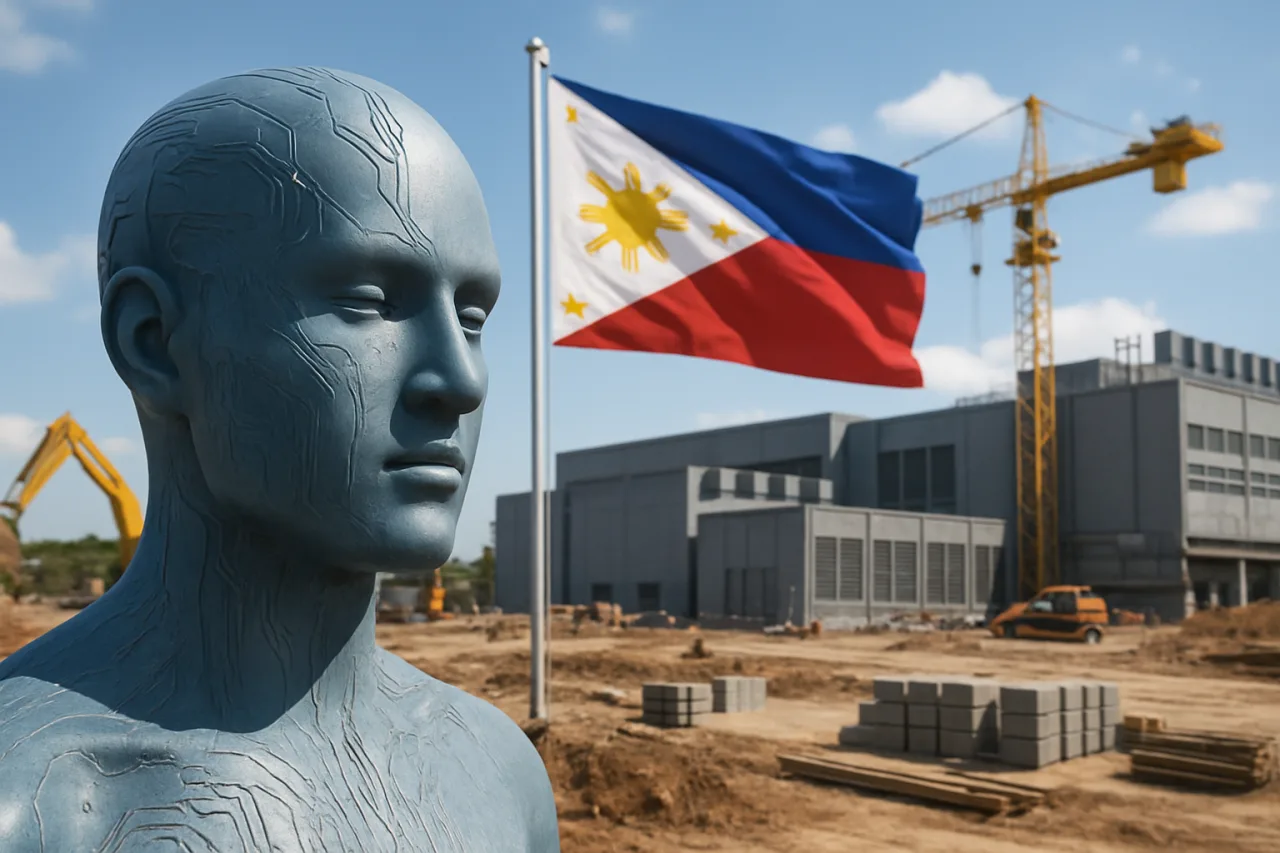
AI infrastructure Philippines has become the defining investment story of 2026. The country that once lagged behind Singapore and Malaysia in data center capacity is now racing to build the physical backbone of the artificial intelligence revolution — and the numbers are staggering. From a USD 735 million data center market in 2025 to a projected USD 2.48 billion by 2031, the Philippines is positioning itself as Southeast Asia’s next AI hub. This comprehensive guide covers everything Filipino professionals, investors, and technology leaders need to know about AI infrastructure Philippines — from government policy and enterprise adoption to career opportunities and the regulatory landscape shaping the country’s digital future.
The State of AI Infrastructure Philippines in 2026
The AI infrastructure Philippines landscape has transformed dramatically in the past 18 months. According to Arizton Advisory, the Philippines data center market was valued at USD 735 million in 2025 and is projected to reach USD 2.48 billion by 2031, growing at a compound annual growth rate of 22.5%. Market Research Future projects an even longer runway: USD 5.48 billion by 2035 at a 21.08% CAGR. The country currently has approximately 200 MW of total data center capacity nationwide, but the DICT expects this to reach 1 GW by the end of 2026 and 1.5 GW by 2033.
This expansion is concentrated in Metro Manila and nearby provinces including Laguna and Cavite, where ePLDT’s VITRO Santa Rosa facility leads the market. STT GDC, Globe Telecom, and Total Information Management are also major players. The 2026 Strategic Investment Priority Plan (SIPP) has identified digital infrastructure as a priority sector, and qualified AI and data center projects may benefit from incentives under the CREATE MORE Act (RA 12066), including income tax holidays and duty-free importation of capital equipment.
| Metric | Value | Source |
|---|---|---|
| Data center market size (2025) | USD 735 million | Arizton, Feb 2026 |
| Projected market size (2031) | USD 2.48 billion | Arizton, Feb 2026 |
| Current data center capacity | 200 MW nationwide | DICT, 2026 |
| Target capacity (end 2026) | 1 GW | DICT, 2026 |
| AI economic benefit projection (2030) | PHP 2.8 trillion (USD 50.7 billion) | Access Partnership / Google |
| Government AI commitment | PHP 2.6 billion by 2028 | Salesforce / DICT, March 2026 |
| Submarine cables (operational) | 21+ operational, more under development | Arizton, Feb 2026 |
DICT-Google Cloud Partnership and the AI+ Infrastructure Masterplan
The most significant government push for AI infrastructure Philippines came on June 21, 2026, when the DICT and Google Cloud announced an expanded, multi-year collaboration to embed enterprise AI into public service delivery. The partnership focuses on making government services simpler, faster, and more secure for every Filipino, advancing the Philippine Development Plan 2023-2028 while empowering public servants with agentic AI tools to boost productivity and national cyber defense.
The collaboration includes integration of Google’s trans-Pacific subsea cable systems with DICT-managed connectivity infrastructure, benefiting local organizations and communities in the agentic AI era. This is part of a broader push: the Philippine AI+ Infrastructure Masterplan is in its final review stage and was expected to be approved by NEDA by July 2026 and officially released within the year.
Abraham Cuevas, Country General Manager of Salesforce Philippines, noted at the Agentforce World Tour Manila in March 2026: “The growing trust in AI across the Philippines is being driven from the bottom up, with personal curiosity currently outpacing corporate strategy. However, individual use alone doesn’t translate into enterprise-scale impact. With the government committing PHP 2.6 billion to AI projects by 2028, businesses must act now to fuel our national transformation from a service economy into a knowledge-driven innovation hub.”
Enterprise AI Adoption Philippines: The Data
AI infrastructure Philippines is not just about physical data centers — it is about how Filipino businesses are actually using AI. The data reveals a rapid shift. Globally, enterprise AI adoption among Global 2000 companies jumped from 41% in early 2024 to 78% by the first quarter of 2026, a 37-percentage-point increase, according to Presenc AI research. Large enterprises (1,000-9,999 employees) saw similar growth, from 32% to 69%, while mid-market companies grew from 21% to 54%.
In the Philippines specifically, Salesforce’s February-March 2026 survey of 1,057 Filipino knowledge workers found that 68% said their personal use of AI had increased their trust in using AI tools at work. This bottom-up adoption pattern is unique — Filipino professionals are driving enterprise AI adoption through personal experimentation rather than top-down corporate mandates. The government’s commitment of PHP 2.6 billion to AI projects by 2028 is meant to accelerate this transition from individual curiosity to enterprise-scale transformation.
However, a 2026 Writer.com survey reveals a global challenge that applies to the Philippines: while 97% of executives deployed AI agents in the past year, only 29% are seeing significant ROI. The gap between deployment and value creation is the single biggest barrier to sustained AI infrastructure investment. Filipino companies that focus on practical use cases — customer support automation (62% deployment, 3.4x median ROI), software engineering assistance (58% deployment, 2.9x ROI), and document analysis (47% deployment, 3.1x ROI) — are more likely to see returns.
AI Infrastructure Philippines: Jobs and Careers
The career implications of AI infrastructure Philippines are profound. According to Access Partnership’s report for Google, AI-powered products and solutions could deliver PHP 2.8 trillion (USD 50.7 billion) in economic benefits to Philippine businesses by 2030. The same study found that narrowing the digital skills gap through training could add PHP 809 billion (USD 14.5 billion) to annual GDP by 2030.
The IT-BPM sector — the Philippines’ second-largest source of foreign exchange after remittances — is the bellwether. In 2024, the industry employed 1.8 million workers (3.8% of total employment) and generated USD 38 billion in revenue (8.2% of GDP), according to AMRO Asia. By 2025, revenue surpassed USD 40 billion with employment approaching 1.9 million. IBPAP President and CEO Jack Madrid announced in August 2026 that the industry expects 6% revenue growth in 2026, with employment reaching 1.94-1.95 million digital workers. The Roadmap 2028 targets USD 59 billion in annual revenue and 2.5 million professionals.
But the AI skills gap is real. A 2026 survey found that 72% of employers will skip candidates who lack AI skills, making AI literacy a non-negotiable for Filipino professionals. The fastest-growing outsourcing sectors — AI operations, healthcare outsourcing, data analytics, software development, cybersecurity, and cloud services — all require AI-adjacent skills. For detailed guides on building these skills, see our coverage of AI skills for job hunters and AI coding tools for Philippine developers.
AI Infrastructure Philippines: Regulation and Governance
The regulatory landscape for AI infrastructure Philippines is evolving rapidly. The Philippine Congress has introduced multiple AI governance bills in 2026, including House Bill 10362 (the Diokno AI Governance Act), House Bill 9448 (the AI Labor Protection Act), Senate Bill 25 (the Cayetano AI Regulation Act), and House Bill 7396 (AIDA). The Philippine AI Regulation 2026 guide covers these in detail.
The Bangko Sentral ng Pilipinas has also entered the AI governance space with its STARS framework for AI in banking, while the University of the Philippines College of Law made headlines by banning ChatGPT — a signal that Philippine institutions are grappling with AI’s implications even as the government pushes infrastructure investment. For the full regulatory landscape, see our UP Law AI Ban analysis.
AI Infrastructure Philippines: Startups and Innovation
The startup ecosystem is where AI infrastructure Philippines meets entrepreneurial energy. Companies like PLDT are making billion-peso bets on data center expansion, with PLDT’s 100 MW facility in Southern Luzon positioning the Philippines as a regional AI hub. For a deep dive, see our analysis of PLDT’s data center strategy.
Meanwhile, agentic AI in the Philippines is moving from hype to production. Filipino developers are shipping 55% faster using AI coding tools, and practical guides on building AI agents without coding are helping non-technical professionals participate in the AI economy. The fintech AI skills gap remains a critical area where 93% of Philippine firms were breached in 2026, underscoring the need for AI-literate security professionals.
AI Infrastructure Philippines: Education and Learning
The Philippine government is investing heavily in AI education. The PSAC-CHED fund of PHP 650 million is designed to reshape the workforce by integrating AI skills into higher education curricula. For working professionals, the ETEEAP program offers a pathway to earn a college degree from work experience, while Southeast Asia upskilling initiatives show that 96% of employers are prioritizing skills over degrees.
Practical AI education resources on WorldNgayon include guides on using AI for presentations, AI email automation workflows, AI for data analysis, and setting up Claude AI for work. For students, our AI tools guide for Filipino students ranks the best free and paid options.
The Future of AI Infrastructure Philippines: 2026-2030
Looking ahead, AI infrastructure Philippines faces both enormous opportunity and significant risk. Capital Economics warned in August 2026 that the Philippines is on the wrong side of the AI boom — not because of missing investment, but because of structural challenges including an electricity grid that cannot reliably power 1 GW of data center capacity, a talent pipeline that produces too few AI engineers, and a regulatory framework still in draft form.
The OECD Economic Survey for the Philippines 2026 projects real GDP growth of 5.1% in 2026, picking up to 5.8% in 2027. But the OECD also notes that the public equity market remains shallow, with market capitalization at approximately 50% of GDP — well below Malaysia and Thailand. This limits the ability of Philippine AI startups to raise domestic capital at scale.
What Filipino Professionals Should Do Now
- Build AI literacy immediately. Start with free tools and progress to structured learning. The 72% employer skip rate for AI-illiterate candidates is not a future projection — it is happening now.
- Understand the regulatory landscape. AI governance bills are moving through Congress. Professionals who understand compliance will be in high demand as companies navigate new rules.
- Track data center investments. PLDT, Globe, and STT GDC are expanding capacity. Property values, energy demand, and job creation around these facilities will create opportunities for engineers, project managers, and support professionals.
- Position for the IT-BPM transformation. The industry is moving from contact center provision (83% of revenue) to higher-value AI operations, data analytics, and cybersecurity. Workers who upskill now will capture the premium.
Complete AI Infrastructure Philippines Resource Library
AI Career and Skills
- If You’re Job Hunting Without AI Skills, 72% of Employers Will Skip You — The data behind the AI skills mandate
- AI Coding Tools Philippines: How Developers Are Shipping 55% Faster — Practical developer guide
- AI Presentations Guide: Build Presentations in 60 Seconds — Productivity guide for professionals
- AI Email Automation: Cut Email Time by 70% — Workflow guide with exact steps
- AI Data Analysis: How to Use AI for Data Safely — 48% of AI numbers are wrong — here’s the fix
- Claude AI for Work: From Generic to Excellent in 30 Minutes — Setup guide
- Best AI Research Tool Is Free and You’re Not Using It — Research tools guide
- Build an AI Agent Without Coding in 5 Steps — No-code AI agent guide
AI Industry Analysis
- PLDT Data Center: 100 MW Bet Could Make Philippines an AI Hub — Infrastructure investment analysis
- Philippines Is on the Wrong Side of the AI Boom, Capital Economics Warns — Risk analysis
- Agentic AI Philippines: What Is Actually Working in 2026 — Production AI analysis
- AI BPO Philippines: How the $42 Billion Industry Adapts to AI — IT-BPM sector analysis
- AI Economic Impact Philippines: A P1.8 Trillion Opportunity — Economic analysis
- AI Model Pricing 2026: How China Cut Frontier AI Costs 14x — Cost analysis
- AI Small Business Philippines: 5 Practical Workflows — SME guide
- AI Tools for Small Business: What to Use and Avoid — Tool selection guide
AI Policy and Regulation
- Philippine AI Regulation 2026: Congress and UP Law Racing to Govern AI — Regulatory overview
- House Bill 10362: Diokno AI Governance Act Explained — Bill analysis
- House Bill 9448: AI Labor Protection Act Explained — Labor protection analysis
- Senate Bill 25: Cayetano AI Regulation Act — Senate bill analysis
- UP Law AI Ban: 5 Critical Facts — Institutional AI policy
- BSP AI Governance: STARS Principles for Banks — Banking AI regulation
- ASEAN AI Governance 2026: 5 Critical Facts — Regional framework
AI Thought Leaders and VIP Quotes
- The Godfather of AI Says It Will Be Smarter Than Us — Two Pioneers Disagree — Hinton vs. LeCun vs. Ng
- DeepSeek Founder: OpenAI Is Not God, AI Is a Tide No Company Can Own — Liang Wenfeng
- Baidu CEO: AI Agents Will Create Super Individuals and Flatten Organizations — Robin Li
- 50% of Entry Level White Collar Jobs Could Disappear, Says Anthropic CEO — Dario Amodei
- Use AI or Lose Your Job: Jensen Huang and Andrew Ng Agree — Huang and Ng
- Zuckerberg Superintelligent AI for Everyone: What It Means for Your Job — Mark Zuckerberg
- Lawyers and Accountants Will Be Replaced by AI, Says Bill Gates — Bill Gates
- AI Suffers From a Crisis of Trust, Anthropic CEO Admits — Dario Amodei
AI Weekly Series
- Grok 4.6 Matches GPT-5.6 at Half the Price: AI World This Week — August 10-16, 2026
- Coding Will Be Dead by December, Elon Musk Says — AI World This Week analysis
- AI Remote Work Philippines: 1.5 Million Professionals Must Learn — Remote work impact
- AI Workflow: Combine ChatGPT, Claude, and Gemini for Maximum Productivity — Multi-tool guide
- Switching From ChatGPT to Claude? Read This Before You Move — Platform comparison
Frequently Asked Questions (FAQ)
What is the size of the AI infrastructure Philippines market?
The Philippines data center market was valued at USD 735 million in 2025 and is projected to reach USD 2.48 billion by 2031, growing at a 22.5% CAGR according to Arizton Advisory. The broader AI economic impact is projected at PHP 2.8 trillion (USD 50.7 billion) by 2030 per Access Partnership’s report for Google.
How much is the Philippine government investing in AI infrastructure?
The Philippine government has committed PHP 2.6 billion to AI projects by 2028, as announced at the Salesforce Agentforce World Tour Manila in March 2026. The DICT-Google Cloud partnership (June 2026) is a multi-year collaboration focused on embedding enterprise AI into public service delivery. The CREATE MORE Act (RA 12066) also provides tax incentives for qualified AI and data center investments.
How many data centers are in the Philippines?
The Philippines currently has approximately 200 MW of total data center capacity nationwide, concentrated in Metro Manila, Laguna, and Cavite. The DICT expects this to reach 1 GW by the end of 2026 and 1.5 GW by 2033. Major players include PLDT/ePLDT (VITRO Santa Rosa), Globe Telecom, STT GDC, and Total Information Management.
What is the Philippine AI+ Infrastructure Masterplan?
The Philippine AI+ Infrastructure Masterplan is a government plan that was in its final review stage as of mid-2026 and was expected to be approved by NEDA by July 2026. It outlines the national strategy for AI infrastructure development, including data center capacity expansion, submarine cable integration, and workforce development.
How does AI infrastructure affect Filipino jobs?
AI infrastructure investment is transforming the Philippine job market. The IT-BPM sector, which employs 1.9 million workers and generates over USD 40 billion in revenue, is shifting from contact center provision to higher-value AI operations, data analytics, and cybersecurity. 72% of employers will skip candidates without AI skills, making AI literacy essential. The sector targets USD 59 billion in revenue and 2.5 million workers by 2028.
What is the CREATE MORE Act and how does it support AI infrastructure?
The CREATE MORE Act (RA 12066) is a Philippine law that identifies digital infrastructure as a priority sector. Qualified AI and data center projects may benefit from incentives including income tax holidays and duty-free importation of capital equipment. This makes the Philippines more competitive against Singapore and Malaysia for foreign data center investment.
What are the biggest risks to AI infrastructure Philippines?
Capital Economics warned in August 2026 that the Philippines faces structural risks including an electricity grid that cannot reliably power 1 GW of data center capacity, a talent pipeline producing too few AI engineers, and a regulatory framework still in draft form. The OECD also notes the shallow equity market (50% of GDP) limits domestic capital for AI startups.
How can Filipino professionals prepare for AI infrastructure jobs?
Filipino professionals should build AI literacy immediately using free tools, understand the evolving regulatory landscape (House Bills 10362, 9448, 7396, and Senate Bill 25), track data center investments by PLDT, Globe, and STT GDC, and position for the IT-BPM transformation from contact centers to AI operations and data analytics. The ETEEAP program also offers a pathway to formalize work experience into a degree.
What is the DICT-Google Cloud partnership?
The DICT-Google Cloud partnership, announced June 21, 2026, is a multi-year collaboration to embed enterprise AI into Philippine public service delivery. It includes integration of Google’s trans-Pacific subsea cable systems with DICT-managed infrastructure, agentic AI tools for public servants, and advances the Philippine Development Plan 2023-2028.
Disclaimer: This article is for informational purposes only and does not constitute investment advice. Readers should consult qualified financial advisors before making investment decisions. Statistics cited are from named sources and were current as of their publication dates. For official data, visit the Department of Information and Communications Technology (DICT) or the Bangko Sentral ng Pilipinas (BSP).