Table of Contents
Key Takeaway
- 📋 Chair’s Mandate: The Philippines, as 2026 ASEAN chair, is drafting the region’s first binding AI legal framework — covering 10 nations and 700 million people — with the ASEAN Digital Economy Framework Agreement (DEFA) set for signing in Manila this November.
- 💰 $2 Trillion Stakes: DEFA could double ASEAN’s digital economy to US$2 trillion by 2030, and the AI governance rules the Philippines writes will determine who benefits — businesses, workers, or neither.
- 🏗️ Foundation Built: The DTI’s NAISR 2.0 roadmap, the Center for AI Research (CAIR), and the BSP STARS framework already give the Philippines a domestic foundation to lead from — but AI-specific legislation is still underdeveloped.
- 👥 Filipino Professional Impact: 86% of Filipino workers already use AI tools and 70% of business leaders won’t hire without AI skills — the governance framework will shape whether Filipino professionals become rule-makers or rule-takers in the AI economy.
- ⚡ What You Should Do: Learn AI governance, compliance, and policy frameworks now. Companies across ASEAN will need professionals who can navigate cross-border AI rules — and the Philippines is writing those rules.
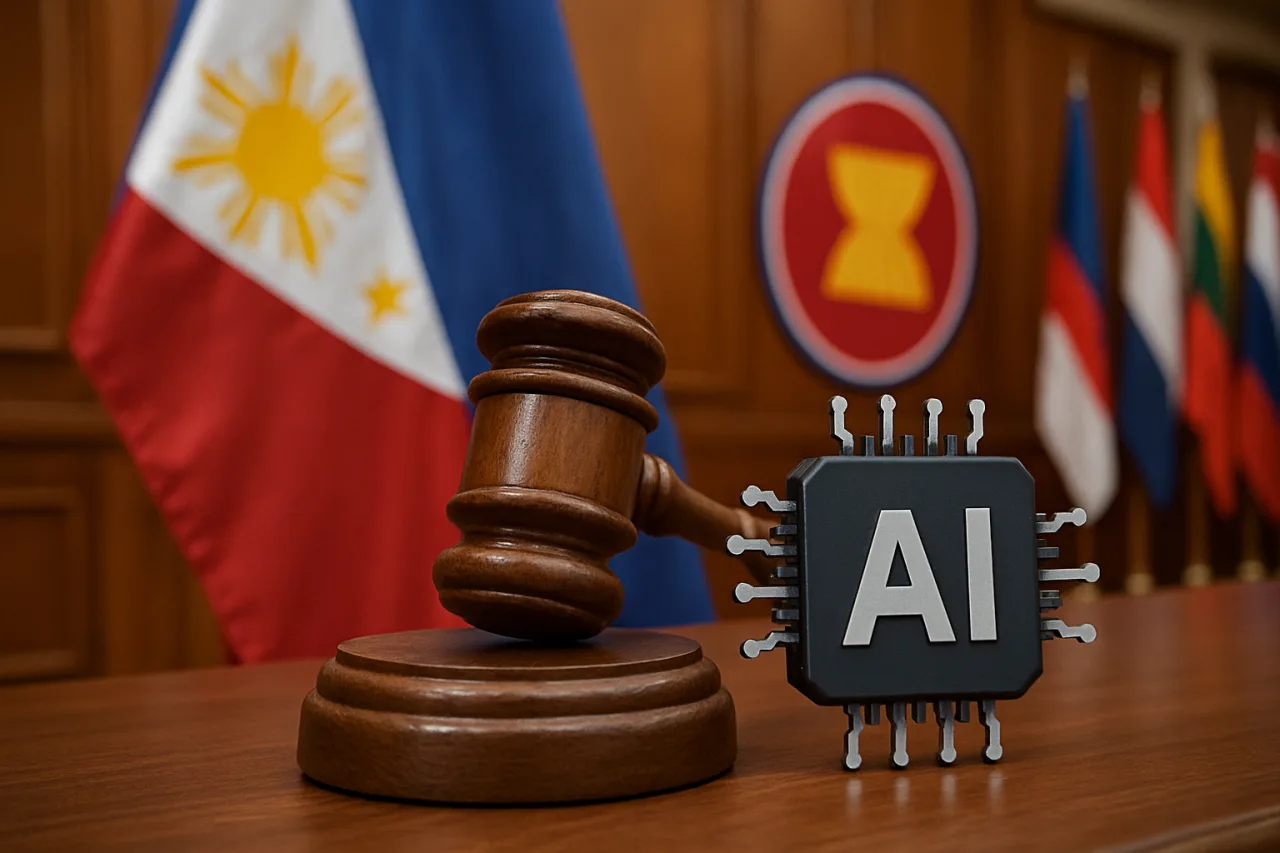
The Philippines assumed the ASEAN chairmanship in 2026 with an agenda that no previous chair has attempted: writing the region’s first binding legal framework for ASEAN AI governance. The announcement was made by House Speaker Martin Romualdez at the World Economic Forum in Davos, and the framework is expected to be based on the Philippines’ own national draft AI legislation. The stakes are enormous — ASEAN’s digital economy could reach US$2 trillion by 2030 if the framework succeeds, and the ASEAN AI governance rules written in Manila will govern AI adoption across 10 nations representing 700 million people.
On May 27-29, 2026, in Manila, ASEAN senior economic officials concluded negotiations on the ASEAN Digital Economy Framework Agreement (DEFA) — described by the ASEAN Secretariat as “the world’s first major region-wide, comprehensive digital economy agreement.” DEFA breaks new ground by addressing AI, financial technology, and source code protection within a binding regional trade framework. The agreement is targeted for signing at the 49th ASEAN Summit in November 2026, hosted in Manila. For Filipino professionals, this is not abstract diplomacy — it is the regulatory environment that will govern how they build, deploy, and sell AI systems across Southeast Asia for the next decade.
What ASEAN AI Governance Means for the Region
The ASEAN AI governance framework is designed to address a region where AI policy is fragmented. According to Access Partnership, ASEAN member states are at different stages of AI policy development — Singapore has its Model AI Governance Framework, Indonesia has issued circular letters on AI ethics, and the Philippines has the NAISR 2.0 and BSP STARS framework. No ASEAN country has yet enacted comprehensive AI-specific legislation. The Philippine-led framework aims to harmonize these approaches into interoperable, risk-based rules that allow cross-border AI development without forcing every country to adopt identical laws.
The US-ASEAN Business Council (USABC) and ASEAN-BAC Philippines convened a roundtable on April 14, 2026, in Pasig City to push this agenda forward. The roundtable brought together Representative Brian Poe Llamanzares, Assistant Majority Floor Leader and Chairman of the Global AI Council Philippines; DTI Undersecretary Allan Gepty, who also serves as Philippine Chief Trade Negotiator; and DOST-ASTI Director Franz de Leon. The private sector was represented by Atty. Mark Gorriceta of Go Digital Philippines, Dr. William Yu of the President’s Private Sector Advisory Council, and Ms. Josephine Romero of ASEAN-BAC Philippines.
Four priorities emerged from the roundtable: establishing interoperable and risk-based AI governance frameworks, strengthening data governance for secure cross-border AI data flows, enhancing critical infrastructure protection through coordinated security measures, and accelerating workforce development for inclusive AI adoption. These priorities are aligned with Philippine Priority Economic Deliverables (PEDs) and will feed into the Strategic Action Plan presented to the Philippine government ahead of the ASEAN Leaders’ Summit.
The Philippines’ Domestic AI Foundation
The Philippines has built a domestic AI governance foundation that positions it to lead the ASEAN framework. The Department of Trade and Industry (DTI) soft-launched the National AI Strategy Roadmap (NAISR) 2.0 in July 2024, updating the original 2021 roadmap to address generative AI, AI ethics, and governance. NAISR 2.0 is structured around strategic pillars including governance and ecosystem development, advanced education, targeted research, and cross-sector adoption. The roadmap calls for a dedicated committee of AI and data ethics experts to oversee AI usage and provide regulatory guidance, working alongside the National Privacy Commission, the Intellectual Property Office, and the Philippine Competition Commission.
The Center for AI Research (CAIR), established under the Tatak Pinoy Act, serves as the country’s centralized AI research hub. According to UNESCO’s Global AI Ethics and Governance Observatory, the Philippines has produced approximately 4,359 AI-related publications, ranking 6th in ASEAN. However, chronic underinvestment constrains the research ecosystem — gross domestic expenditure on R&D stood at only 0.32% of GDP in 2018, well below UNESCO’s 1% benchmark, while the government’s annual R&D budget fell from PHP 57.6 billion in 2018 to PHP 4.03 billion in 2024, including just PHP 350.5 million earmarked for CAIR.
The Bangko Sentral ng Pilipinas (BSP) has already moved ahead with its own AI governance framework. On June 30, 2026, BSP issued Memorandum No. M-2026-031, “Governance Principles for Artificial Intelligence in Financial Services” — the Philippines’ first formal regulatory framework for AI in banking, built on the STARS principles: sustainability, transparency, accountability, responsibility, and security. This framework, covered in detail on worldngayon.com, applies not only to banks but also to third-party vendors and outsourced service providers. It represents exactly the kind of sector-specific, risk-based governance that the ASEAN framework aims to harmonize across the region.
The Economic Case: Why This Matters Now
The numbers driving the ASEAN AI governance push are substantial. UNESCO estimates that AI adoption could contribute up to PHP 2.8 trillion (US$50.7 billion) to Philippine GDP by 2030. The domestic Philippine AI market is projected to grow from approximately US$772 million in 2024 to US$3.5 billion by 2030 — a compound annual growth rate of 28.57%. The broader digital economy already contributed 8.4% of Philippine GDP in 2023, with the Philippine Statistics Authority updating its measurement to 9.8% in 2025.
At the regional level, DEFA implementation could double ASEAN’s digital economy to US$2 trillion by 2030, according to studies cited by the ASEAN Secretariat. This is the economic prize that makes the ASEAN AI governance framework more than a diplomatic exercise — it is the rulebook for a market worth more than the entire GDP of most G20 economies.
Philippine workplace AI adoption is already exceptionally high. UNESCO reports that 86% of surveyed Filipino employees use AI tools, above the global average of 75%. A separate finding shows that 70% of Philippine business leaders would not hire someone without AI skills, a hiring shift documented on worldngayon.com. Yet the Philippines ranked only 65th out of 174 countries on the IMF’s 2023 AI Preparedness Index, behind several ASEAN peers — meaning adoption is outpacing governance, and the framework the Philippines writes as ASEAN chair will directly shape its own regulatory environment.
Rule-Maker or Rule-Taker: The Gepty Warning
DTI Undersecretary Allan Gepty, speaking at the USABC roundtable, framed the choice in stark terms: “We will prioritize initiatives that are both impactful and feasible within the Chairship year — from the Data Corridor Pilot to AI workforce development and platforms such as the U.S.-ASEAN AI Summit to sustain dialogue and cooperation.” His most pointed remark was this: “What we do next will determine whether ASEAN becomes a rule-maker in the digital economy, or remains a rule-taker within it.”
This is the core tension. The EU has its AI Act. The US has the AI Action Plan. China has its Generative AI Measures. If ASEAN does not write its own framework, it will adopt rules written by others — rules designed for different economies, different labor markets, and different regulatory traditions. The Philippines, as chair, has the opportunity to ensure that ASEAN AI governance reflects the realities of Southeast Asian economies: high BPO dependence, large informal sectors, mobile-first digital adoption, and cross-border data flows that power the region’s IT-BPM industry.
Atty. Herminio “Third” Bagro III, USABC’s Philippines Chief Representative, reinforced this urgency: “As AI adoption accelerates across ASEAN, there is a clear need to move from strategy to execution — developing governance frameworks that are not only responsible and secure, but also practical and interoperable across the region. Consistent, execution-driven partnerships — focused on delivering real projects, building local trust, and aligning with national priorities — are essential to ensuring that innovation translates into resilience and long-term growth.”
What Filipino Professionals Should Do Now
The ASEAN AI governance framework creates immediate career and business opportunities for Filipino professionals. Companies across all 10 ASEAN member states will need compliance officers, AI auditors, data governance specialists, and policy analysts who understand the framework. Filipino professionals — already among the most AI-adopting workers in the world at 86% usage — have a head start. But adoption is not governance. Knowing how to use AI tools is different from knowing how to audit, certify, or regulate them.
Specific actions for Filipino professionals:
1. Learn AI governance frameworks. The BSP STARS framework is the Philippines’ first domestic model. Study its five principles — sustainability, transparency, accountability, responsibility, and security — and how they apply across the AI system lifecycle. This is the template that the ASEAN framework will likely build on. Our BSP STARS framework guide breaks down each principle with implementation steps.
2. Develop cross-border data governance skills. DEFA’s core promise is enabling secure cross-border data flows. Filipino professionals who understand data residency rules, cross-border transfer mechanisms, and ASEAN-specific data protection standards will be in demand across the region. The Philippines’ Data Privacy Act of 2012 provides a domestic foundation, but ASEAN-wide rules will require new expertise.
3. Build AI compliance and audit capability. The ASEAN AI governance framework will require organizations to demonstrate compliance — meaning AI audits, risk assessments, and impact evaluations. This is a new professional service category. Filipino IT professionals, already leading ASEAN in digital workforce participation at 23.1%, can pivot from implementation to governance.
4. Monitor the DEFA signing timeline. DEFA is targeted for signing at the 49th ASEAN Summit in November 2026. Between now and then, the Philippine government will finalize the AI governance framework provisions. Filipino professionals who track this process — through DTI announcements, ASEAN Secretariat publications, and DICT’s digital economy initiatives — will be first to identify compliance requirements and business opportunities.
5. Prepare for the AI talent gap to become an AI governance gap. The Philippines faces a critical AI talent shortage — 76% of companies report difficulty finding AI-skilled workers. The governance framework will create a new layer of demand: not just people who can build AI, but people who can audit it, certify it, and ensure it complies with cross-border rules. This is a higher-value, higher-paid category than implementation alone.
Gaps and Risks: What Could Go Wrong
The ASEAN AI governance framework faces three significant risks. First, the Philippines’ own AI-specific legislation remains underdeveloped. UNESCO notes that the country’s legal framework is anchored in the Data Privacy Act of 2012 and the Cybercrime Prevention Act of 2012 — both predate the generative AI explosion. The Philippine Innovation Act, Innovative Startup Act, Philippine Digital Workforce Competitiveness Act, and Tatak Pinoy Act provide horizontal support, but the country has not yet adopted binding AI-specific rules. Leading a regional framework while lacking domestic legislation creates a credibility gap.
Second, the R&D investment shortfall limits the Philippines’ ability to lead by example. With R&D spending at 0.32% of GDP and the number of researchers per million inhabitants declining from 172 in 2018 to 84 in 2022, the country’s capacity to produce the technical evidence base for AI governance is constrained. AI governance requires technical depth — you cannot regulate what you cannot technically understand. The PHP 350.5 million allocated to CAIR is a start, but it is a fraction of what Singapore, Malaysia, and Vietnam are investing in their AI research ecosystems.
Third, the skills gap threatens both governance and adoption. UNESCO reports that approximately 91% of Filipino children at late-primary age cannot understand an age-appropriate text, around 90% of the population lacks basic ICT skills, and the Philippines ranked 99th out of 100 countries in Coursera’s 2023 Global Skills Report. Only 60% of schools are connected to the internet. Building an ASEAN AI governance framework requires a workforce that can understand, implement, and enforce the rules — and that workforce does not yet exist at scale.
The Philippines did improve its trust infrastructure, rising to 53rd place in the ITU Global Cybersecurity Index 2024 with a score of 93.49, moving from Tier 3 (“Evolving”) to Tier 2 (“Advancing”). Its E-Government Development Index score increased to 0.7621 in 2024, ranking 73rd globally, up from 89th in 2022. These improvements matter — but they are starting from a low base compared to Singapore, which ranks consistently in the top tier across all governance indices.
The November Deadline: What to Watch
The 49th ASEAN Summit in November 2026 is the target signing date for DEFA. Between now and then, several milestones will shape the ASEAN AI governance framework. The USABC roundtable series has concluded, with insights feeding into a Strategic Action Plan. DTI is leading the Philippine technical negotiations. The ASEAN Expanded Guide on AI Governance and Ethics — which supplements the 2024 ASEAN Guide on AI Governance with generative AI considerations — provides the conceptual foundation.
The ISEAS-Yusof Ishak Institute notes that the establishment of regulatory infrastructure and the appointment of regulatory authorities for AI are set for 2026. This means the framework is moving from principle to implementation — and implementation is where Filipino professionals can participate. Whether the Philippines becomes a rule-maker or rule-taker in the AI economy will be determined not just by what the government signs in November, but by whether Filipino professionals are ready to build, govern, and scale AI systems under the new rules.
The Alibaba Cloud survey showing 95% of Philippine organizations planning to increase AI spending signals that adoption will continue regardless of governance timelines. The question is whether the governance catches up — or whether Filipino companies find themselves operating in a regulatory vacuum while their ASEAN competitors benefit from clear, harmonized rules. As the Gemini Southeast Asia report showed, Filipino professionals are already leading the region in AI adoption for career development. The ASEAN AI governance framework could turn that adoption lead into a governance lead — if the Philippines writes the rules well.
Frequently Asked Questions About ASEAN AI Governance
What is the ASEAN AI governance framework?
The ASEAN AI governance framework is a proposed legal framework for artificial intelligence that the Philippines, as 2026 ASEAN chair, is developing for all 10 ASEAN member states. It aims to create interoperable, risk-based AI governance rules that enable cross-border AI development while addressing cybersecurity, data protection, and workforce development. The framework is expected to be part of the ASEAN Digital Economy Framework Agreement (DEFA), which is targeted for signing in November 2026 in Manila.
Why is the Philippines leading ASEAN AI governance?
The Philippines holds the 2026 ASEAN chairmanship and has positioned AI governance as a priority deliverable. The country has built a domestic foundation through the DTI’s NAISR 2.0 roadmap, the Center for AI Research (CAIR), and the BSP STARS framework for AI in banking. House Speaker Martin Romualdez announced the initiative at the World Economic Forum in Davos, framing the framework as a “gift” from the Philippines to ASEAN.
What is DEFA and how does it relate to AI governance?
The ASEAN Digital Economy Framework Agreement (DEFA) is the world’s first major region-wide comprehensive digital economy agreement. Negotiations were concluded on May 27-29, 2026, in Manila. DEFA addresses digital trade, cross-border e-commerce, AI, financial technology, and source code protection. Studies project that DEFA implementation could double ASEAN’s digital economy to US$2 trillion by 2030. The AI governance framework is a component of DEFA.
How does ASEAN AI governance affect Filipino professionals?
The framework will shape the regulatory environment for AI adoption across the 10 ASEAN member states where Filipino professionals work and do business. It creates demand for AI governance specialists, compliance officers, data protection experts, and policy analysts who understand cross-border AI rules. With 86% of Filipino workers already using AI tools and 70% of business leaders requiring AI skills for hiring, the governance framework will determine whether Filipino professionals are rule-makers or rule-takers in the AI economy.
When will the ASEAN AI governance framework be implemented?
DEFA is targeted for signing at the 49th ASEAN Summit in November 2026. According to ISEAS-Yusof Ishak Institute, the establishment of regulatory infrastructure and appointment of regulatory authorities for AI are set for 2026. Implementation will follow signing, with individual ASEAN member states expected to align their domestic laws with the framework. The Philippines will need to pass its own AI-specific legislation to comply with the framework it is championing.
What is the BSP STARS framework and how does it connect to ASEAN AI governance?
The BSP STARS framework — sustainability, transparency, accountability, responsibility, and security — is the Bangko Sentral ng Pilipinas’ governance framework for AI in financial services, issued as Memorandum No. M-2026-031 on June 30, 2026. It is the Philippines’ first formal AI regulatory framework and applies to banks and third-party vendors. The STARS principles represent exactly the kind of sector-specific, risk-based governance that the ASEAN framework aims to harmonize across the region and across sectors.
What are the risks of the ASEAN AI governance framework?
Three key risks exist: the Philippines lacks its own binding AI-specific legislation, creating a credibility gap; R&D investment is only 0.32% of GDP versus UNESCO’s 1% benchmark, limiting technical governance capacity; and the skills gap — 90% of the population lacks basic ICT skills — threatens the workforce’s ability to implement and enforce governance rules. Additionally, if ASEAN does not write its own framework, the region will adopt rules written by the EU, US, or China — rules designed for different economies and labor markets.