THE BOARD — Friday, October 2, 2026 → The Affiliate Ledger, The Freeze-Week Rate Card: The DCPay partial suspension made this the sharpest week in years for one boring question: what does your remittance actually cost — and what happens to your incoming rail tomorrow? This week’s verified rate card: BSP’s own fee-disclosure PDF runs Wise Pilipinas at ₱35 flat across InstaPay/PESONet digital channels — while bank digital transfers sweep from free (CIMB, UnionBank) to ₱50 (BDO, MBT) to 1.5%-floor cards — and e-wallet rails sit uniform at ₱15 (GCash/GXI, Maya-class, GrabPay, ShopeePay). The Wise USD-PHP remittance route earns its slot this week because of one number: InstaPay funding capped at ₱50,000, PESONet up to ₱9M — meaning a freeze on one rail stops being your problem if your funding paths are plural.
Table of Contents
Key Takeaway
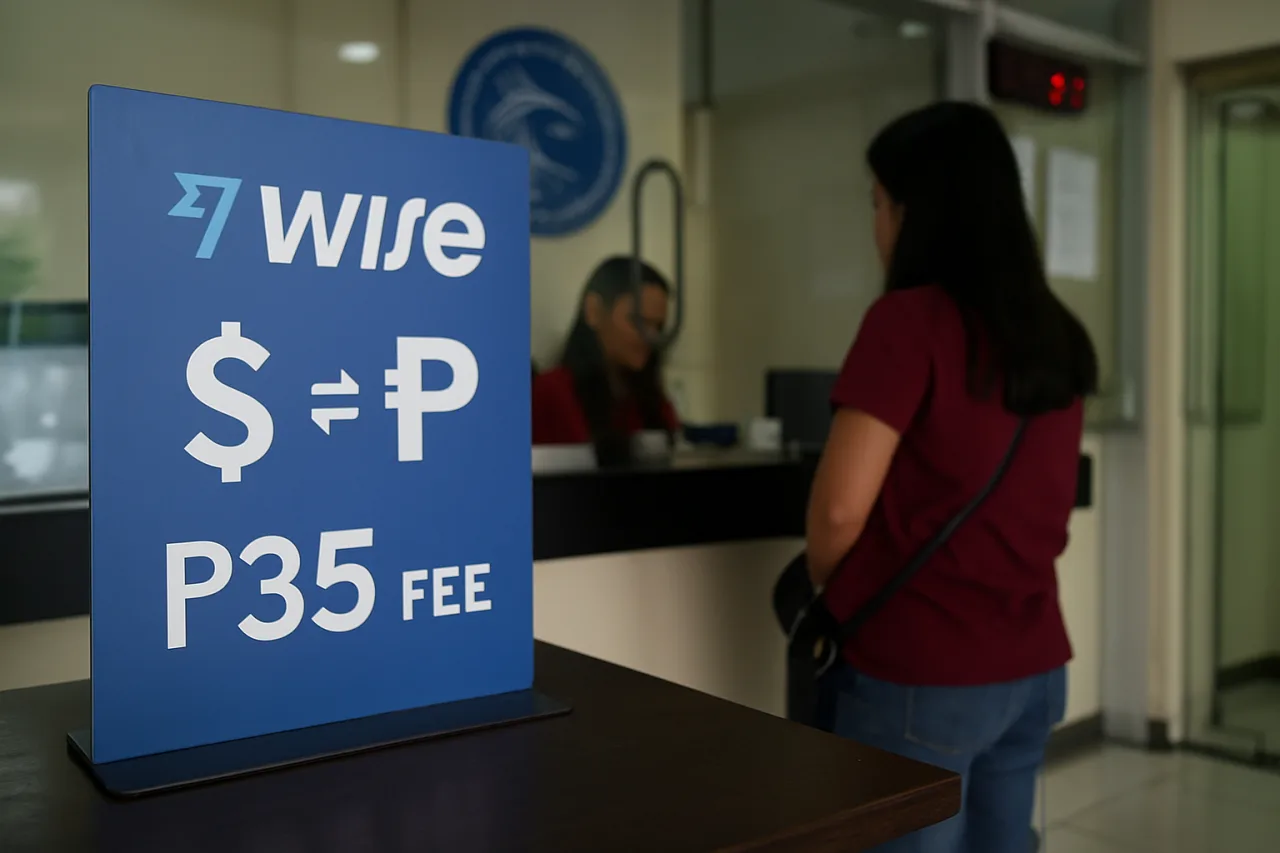
- 🧾 The ₱35 read on the Wise USD-PHP remittance rail: per the BSP disclosure file table (extracted April 12, 2026), Wise Pilipinas runs ₱35 across all four digital-channel columns — flat, disclosed, no menu — versus ₱15 e-wallet transfers and bank transfers ranging free-to-₱50 by institution.
- 🔀 The plural-rails doctrine is this week’s lesson: sending USD-to-PHP into GCash/banks through a mid-market-rate provider is one rail; InstaPay funding is another; PESONet is the large-ticket rail. The Families best served this freeze-week hold at least two independent rails per direction.
- 💸 The rate math dominates the fee math: at ₱50,000 sent, a 1% exchange-rate markup hidden in the rate costs ₱500 — fourteen times Wise’s ₱35 flat fee. Compare total cost (fee + rate markup), never the fee line alone.
- ⚖️ Regulatory posture: Wise Pilipinas is BSP-regulated — the same regulator that suspended DCPay — which cuts both ways: supervision is real; suspension of a rail you depend on is also real. Plural rails aren’t paranoia; they’re the BSP’s own lesson delivered twice this month.
- 🧭 The freeze-week drill below: a 3-check decision card for choosing the rail per remittance, the funding-limit table, and the two-cornerstone rules (rate transparency and destination-first).
The Wise USD-PHP Remittance Read: Freeze Week From the Fee Table
The Wise USD-PHP remittance trigger event is documented in this week’s crypto and PSE coverage BSP’s Monetary Board Resolution No. 839 suspended DCPay Philippines’ inbound InstaPay/PESONet processing (PPMI Advisory 2026-0929-029) — no public end date, outbound and QRPh-merchant flows alive. The remittance-rail consequence was instant: users who funded Coins.ph through banks and e-wallets lost their top-up path overnight, and readers of this site’s suspension playbook rerouted within a day. The lesson generalizes to every money app you hold: any single rail is a policy decision away from freezing.
Related: The Freelance AI Pay Split: 45% Up, 13% Down
Related: AI Act Article 50: What the New Transparency Rules Require
Into that context, the Wise USD-PHP remittance rate card and the fee table become strategy documents. BSP publishes the digital-channel transfer fees of every supervised institution — the April 2026 extraction shows the structure that matters: wallet rails (GCash/GXI, Maya-class EMI networks, GrabPay, ShopeePay, Starpay) cluster at ₱15; bank digital transfers scatter from free (CIMB, UnionBank personal) to ₱50 (MBT, BDO top-tier); Wise Pilipinas prints ₱35 across the board — the only column where four numbers read identical. Flat-rate disclosure is itself information: no fee surprises by corridor, size, or funding rail.
The Wise USD-PHP remittance rate line is where the real comparison lives. Money-transfer marketplaces and provider documentation agree on the shape: Wise prices at the mid-market rate with a transparent fee from ~0.5% (its published GCash-bound corridor pages), while fee-free or flat-fee competitors typically recover cost in the exchange-rate markup instead. At a ₱50,000 transfer, the difference between a true mid-market rate and a 1%-padded one is around ₱500 — a Wise USD-PHP remittance fee of ₱35 is 7% of that markup alone. The disciplined comparison: fee + rate markup = total cost; anyone quoting only their fee line is selling the spread, not disclosing it.
The freeze-week audit doesn’t stop at the main corridor — it deserves a table run across the actual remittance lanes a Filipino household uses, because the BSP fee table plus provider disclosure covers each one differently. Lane one, bank-to-bank USD outbound: the Swift-corridor banks (BPI ₱15-₱50 digital, BDO ₱50 individual InstaPay) work when the family already holds dollar accounts, but the correspondent-bank charges hide in the receiving end — the receiving-bank deducts are the famous silent killers, which is why the disclosed digital-channel tables matter more than the send-side quote. Lane two, InstaPay-class instant: ₱15-₱50 per send by institution with per-transaction caps (₱50K standard), ideal for weekly allowances where the fee amortizes against speed — and exactly the rail class the DCPay order froze, which is why “instant” never means “only.” Lane three, PESONet batch: up to ₱9M, typically ₱10-₱25, settling same-or-next-day — the tuition-and-property lane where a few hours’ delay costs nothing and the ticket ceiling forgives the calendar. Lane four, wallet inbound (GCash/GXI, Maya-class, GrabPay, ShopeePay): the uniform ₱15 row — the cheapest disclosed peso-move in the table, and the right destination when the family runs its budget in-wallet. Lane five, cash pickup: the Western Union/MoneyGram/Remitly class where the fee line reads zero or low and the rate markup carries the cost — transparent only if you compute the full rate delta. A Wise USD-PHP remittance serves lanes one through four on the funding side (and wallet destinations via integration), but pickup-only families still need lane five on speed — destination-first means the lane map comes before the provider choice, every time. Run your own year’s send-log through the five lanes and the honest total cost of the family’s money pipeline appears in one sitting — most households that run this audit for the first time find a mid-three-figure percent of their annual fee spend sitting in the lane they chose by habit.
The Freeze-Week Decision Card: Three Checks Before You Send
Check 1 — Destination first, provider second. The cheapest transfer is worthless if it can’t land where the family actually banks. Wise moves money to bank accounts and (via GCash integration) wallets; it “should not be treated as a substitute for cash pickup” — if your recipient needs counter cash in a remote town, the Western Union/MoneyGram/Remitly class is the honest comparison, not Wise. Write down where the peso must physically appear, then choose.
Check 2 — Match the funding rail to the amount. The verified funding table for peso inbound: InstaPay funding up to ₱50,000 (instant-class); PESONet up to ₱9 million (batch, larger tickets); PHP SWIFT unavailable. Practical translation: tuition-and-bond-sized remittances ride PESONet; weekly allowances ride InstaPay; the freeze taught the third column — have a funding method that doesn’t transit the suspended rail at all (a domestic bank the family controls, a second wallet) for the weeks when policy moves rails under you.
Check 3 — Regulator-map your provider. Same-week proof that regulation is live supervision: the BSP suspended a licensed EMI’s inbound rails without hesitation. Wise Pilipinas holds BSP registration (it is not a bank; balances are e-money, not deposits — read the fine print before parking balances). The mature Wise USD-PHP remittance posture isn’t “regulator = safe”; it’s “regulated = the rules can bind, so diversify where the rules could bind you.”
The Two-Cornerstone Rules: Rate Transparency and Destination-First
Every remittance decision survives freeze weeks on two invariants. Rule one: buy rate transparency. Mid-market rate + published fee = the only quote you can audit after the fact; if the app won’t show you both numbers before sending, it’s recovering margin somewhere you can’t see. Rule two: destination-first architecture. Choose the rail by where money must land and how fast it must arrive — instant small-ticket (InstaPay-class), large batch (PESONet-class), counter cash (pickup class) — then pick the cheapest provider that serves that destination at that speed. Providers change prices monthly; destinations don’t. Anchor on destinations and the fee tables are just noise you re-read at leisure.
And the freeze-week bonus rule from this month’s evidence: rehearse the second rail. The DCPay suspension caught thousands with one funding path. A ₱500 test-run through your backup route — today, while nothing is broken — converts “what’s another wise option” panic into a known 90-second procedure. The rails you’ve verified under calm are the ones that work under fire.
For the OFW sending from the Gulf — the corridor this site’s audience knows best — the freeze-week card runs with one more layer. Gulf-to-Manila rails traditionally run through bank correspondent chains (the SWIFT-class deductions above) or through cash-network counters with strong brand loyalty but rate opacity; the digital-era alternative that changed the corridor’s economics is the mid-market-rate provider funded from a Gulf-side bank account into Philippine peso rails. The BSP’s own OFW-focused remittance resources (its OFW-focused remittance guidance on bsp.gov.ph) publish exactly this class of information — which institutions are licensed, what the digital-channel fee ceilings look like, where complaints go. The freeze-week homework for a Riyadh worker isn’t exotic: verify your provider’s peso licensing on the BSP register, compute one real quote’s total cost (fee + rate delta against mid-market), then run the plural-rails test-send. A Wise USD-PHP remittance through a licensed peso rail with the rate visible is the audit-able version of what the corridor has always done through two strangers and a desk — and when a regulator can freeze a rail with an advisory (this week’s proof), the audit-able version stops being a preference and becomes the standard.
One closing discipline completes the freeze-week card: document your rails the way you’d document any household system. A one-page note — provider, corridor, fee observed, rate observed, funding path, licensing citation — per active rail turns every future freeze or fee change into a five-minute review instead of a scramble. Families who kept this note through the DCPay suspension rerouted in one evening; families rebuilding from memory lost days. The audit-able remittance pipeline, rehearsed and written down, is the quiet version of emergency planning — and the ₱35-fee-class Wise USD-PHP remittance rail fits in it as the rate-transparent lane, alongside whatever rails the family already trusts.
Frequently Asked Questions
How much does Wise charge to send money to the Philippines?
Per BSP’s April 2026 disclosure table, Wise Pilipinas prints ₱35 flat across digital-channel transfers (InstaPay/PESONet classes both directions). On the international corridor, the USD→PHP transfer runs from about 0.5% in fees with the mid-market rate and no markup — compare that total (fee + rate) against flat-fee competitors who pad the rate.
What are the funding limits for Wise into the Philippines?
InstaPay funding up to ₱50,000 per transfer; PESONet funding up to ₱9 million; PHP SWIFT funding is unavailable. Large remittances (tuition, property-related, business transfers) route through PESONet; small frequent sends ride InstaPay.
Is Wise cheaper than GCash or Maya transfers in the Philippines?
They’re different rails: domestic wallet-to-wallet transfers (GCash/GXI, Maya-class, GrabPay, ShopeePay) run ₱15 in the BSP table — cheaper per transfer. But Wise’s lane is currency conversion (USD→PHP at mid-market): your wallet’s ₱15 doesn’t buy you the conversion — the rate markup that usually hides there is where Wise’s cost advantage lives. Compare fee-and-rate totals for the actual corridor, not fee lines across different lanes.
Is Wise regulated in the Philippines?
Yes — Wise Pilipinas is registered with the Bangko Sentral ng Pilipinas. Two honest caveats: it is not a bank (balances are e-money, not deposit-insured bank accounts), and this same regulator suspended DCPay’s inbound rails this week — regulated status means bound by rules, not immune from policy action.
What should OFW families do during the DCPay freeze?
Hold plural rails: two independent funding paths per money direction (e.g., bank-to-bank via PESONet + wallet top-up via a separate licensed EMI), rehearse the backup with a small test transfer while it’s calm, and match each remittance’s destination (bank, wallet, cash counter) to the provider that actually serves it. The suspension playbook maps the Coins.ph case in detail; the weekly reconciliation ritual pairs with POTD #011’s remittance-reconciliation prompts.
Does the 1% US remittance tax apply to Wise transfers?
Per 2026 reporting on the US remittance-tax provision effective January 1, 2026, the 1% applies to cash and money-order transfers — digital sender-side transfers are designed around it. US-corridor senders should confirm their specific provider’s compliance language on the current pages.
Financial Disclaimer
This article is money-transfer analysis with affiliate context — it is not financial advice and not a recommendation to use any specific provider. Fees, rates, and funding limits are from the BSP’s published disclosure table and provider pages as of their cited extraction dates, and change without notice; verify both fee and exchange rate on the provider’s live quote screen before sending. Affiliate relationships are disclosed on this site’s disclaimer page. The editor holds no position in any provider named.
Live Rate Note — October 7
Oct 7 print: the banking-association reference shows ₱62.771 to the dollar, with the tracking-mid at ₱62.836 — the peso's softest week of the quarter. For remitters this is the GOOD side of volatility: every $1,000 sent this week lands ₱62,771-62,836 before fees, versus the ₱61.8-62.0 band many family budgets still carry from August mathes — a quiet ₱700-900 bonus per $1,000. The freeze-week drill below exists for exactly this tape: check the reference print the morning you transfer, and split no transfer around a rate you haven't verified. The rate-card math has not changed; only the peso leg moved.
>