THE BOARD — Friday, October 2, 2026 → Cyber Watch #006, Gov Watch Friday: Two NTC refurbished phones fronts and one privacy front moved this week on the device-and-data territory every Filipino phone holder lives on. The NTC refurbished phones draft rules reported October 1 (Manila Bulletin, BusinessMirror, Bilyonaryo) — would require dealers of used and refurbished mobile phones, tablets, and gadgets to prove legitimate sourcing, carry permits and warranties, and show paid-up capital of ₱20 million up to ₱50 million. And the NTC’s broadband enforcement escalated: ₱100,000-per-day fines against Globe, Smart, and DITO (show-cause orders, effective Sept 25) over failed mobile-broadband revalidations — while telco group PCTO publicly questioned the testing standards themselves. Meanwhile the NPC Data Subject Rights circular comment window closes October 5 — the privacy rules behind every DSR (data subject request) your team fields.
Table of Contents
Key Takeaway
- 📱 The refurb crackdown targets the stolen-device pipeline: the draft rules (importation, dealership, accreditation, labeling, sale) exist to curb “stolen, tampered, and defective devices” — meaning the bargain-phone stall you buy from could soon need a permit, a warranty, and ₱20-50M in paid-up capital.
- 💰 The capital floor is the market-shaper: ₱20M minimum (up to ₱50M) paid-up capital would formalize the refurb trade — good for warranties and traceability, brutal for the small Greenhills-style dealer; expect industry consolidation and a pricing ripple in the secondhand market.
- 🌐 The ₱100K/day telco fines are a service-quality era signal: Globe, Smart, and DITO face daily penalties until network revalidations pass; telcos counter that the testing methodologies were never clearly defined (MC No. 001-01-2026 contemplates audits — parameters still pending). Watch the every-2-weeks retest cycle.
- ⚖️ The scope lesson from the fintech freeze: like this week’s BSP action on DCPay, these are NTC draft rules and show-cause orders — not final law. Verify which level (draft vs MC vs order) before reacting; the device rules are comment-stage.
- 🪪 NPC Circular deadline Monday (Oct 5): comments on the Data Subject Rights draft close via email — for Philippine websites and BPOs, this becomes the DSR rulebook; the practical compliance read is below.
What the NTC Refurbished Phones Rules Actually Propose
The verified scope of the NTC refurbished phones rules, per published reports: the National Telecommunications Commission has drafted the NTC refurbished phones rules covering the importation, dealership, accreditation, labeling, and sale of refurbished and used mobile phones, tablets, and similar devices. The stated goal (per the NTC’s positioning): curbing stolen, tampered, and defective devices moving through the Philippine market — the gray trade where a phone’s IMEI history, part provenance, and warranty status are mostly unverifiable today. The draft’s centerpiece requirements as reported: permits for dealers, proofdevices are legitimately sourced, warranties, and paid-up capital of at least ₱20 million but not more than ₱50 million. Manila Bulletin’s Oct 1 report carries the full requirement set; Inquirer adds the government framing: refurbished phones are “next on the list of markets it wants to regulate.”
Related: The AI Data Privacy Ledger: Where Your Pasted Work Data Actually Goes —…
Related: The AI Note Taker Privacy Ledger: Who Trains on Your Meetings, Who Kee
The honest structural read: this is a formalization squeeze. The Philippine secondhand-device market runs overwhelmingly on informal sellers — stalls, online marketplaces, Facebook groups — and none of them hold ₱20M in paid-up capital. If the NTC refurbished phones rules land as drafted, the industry consolidates toward formal dealers and importer-of-record chains; prices in the informal circuit rise or go darker; and the consumer-protection upside (warranties, traceable IMEIs) arrives mostly for formal-channel buyers. For the OFW angle — the balikbayan phone, the Riyadh-bought handset resold in Batangas, the Facebook Marketplace side-hustle — the draft rules touch daily commerce. Comment-stage status means the shape can still bend: the NTC’s own precedent (the fine-vs-telcos fight below) shows how contested standards take months to settle.
The security read of the NTC refurbished phones push matters as much as the commerce read. Stolen and tampered phones are the Philippines’ recurring e-waste and fraud vector: re-locked IMEIs, swapped motherboards, refurbished units sold as brand-new to buyers who can’t tell. A paper-trail regime — legitimate sourcing proofs, labeling, accreditation — is also an anti-fraud regime for NTC refurbished phones commerce. For buyers, until enforcement details exist, this site’s standing advice holds (the verification drill from the web security checklist carries): verify IMEI before purchase, buy from sellers who offer at least a short warranty, and treat too-cheap-to-be-true flagship deals as the fraud signal they’ve always been.
The ₱100K/Day Telco Fines: Enforcement Meets Due Process
The second front: NTC show-cause orders hit Globe, Smart, and DITO with ₱100,000 daily penalties starting September 25, over “poor mobile broadband” flagged in September revalidation testing — Globe (Makati, Quezon City), DITO (San Juan, Pasay, Las Piñas), Smart (Parañaque, Manila, Pasig), with the NTC clarifying the orders are not limited to NCR. The telcos’ pushback runs through the Philippine Chamber of Telecommunications Operators (PCTO): penalties under “standards that have not been clearly defined and consistently applied,” with MC No. 001-01-2026 contemplating annual performance audits whose detailed methodologies and testing parameters have yet to be established — and a warning that regulatory uncertainty plus substantial fines could divert resources from network expansion. The NTC’s answer: retest every two weeks; fines continue until deficiencies clear.
The telecom-economics reality check: ₱100K/day is rounding error against operators with millions-per-hour revenue — the comments sections make that joke for free. The real mechanism is reputational plus precedent: a regulator willing to fine daily on validated retests, and telcos publicly disputing methodology, sets up the first big service-quality standardization fight of the memo-circle era. For businesses that run on mobile data — the thousands of GCash-adjacent merchants, BPO field ops, and delivery riders of Metro Manila — the two-week retest cycle is the number to watch: pass, and the fines stop; a pattern of “no improvement” (September testing showed none versus Q1/Q2 baselines) invites escalating measures.
Connect the two fronts and the NTC’s October posture is legible: the regulator is moving from consumer complaints to standing enforcement — device provenance on one flank, network quality on the other, both via draft-rule/comment processes where stakeholders still get a say. The fintech freeze — the BSP-DCPay suspension this site mapped — and these actions rhyme: 2026 is the year Philippine regulation of digital life shifted from reactive to programmatic.
The NPC Circular: Monday’s Deadline and What DS Rights Become
The third front is Monday’s: the National Privacy Commission’s draft Circular on Data Subject Rights — comments due by end of day October 5 via the NPC’s published address (subject line “Public Consultation – DS Rights”), with an in-person consultation October 19 at the NPC office (attendance sign-up closes October 15). The draft’s purpose, per the NPC’s notice: update current guidelines to prescribe consistent rules and procedures for exercising data subject rights — access, correction, erasure, objection, and portability-type requests — aiming to fix “varying interpretations across public and private sectors” and “uneven compliance.”
The practical translation for Philippine businesses (including this site’s operations): DSR handling currently runs on NPC advisories and case-by-case interpretation; the circular would standardize — likely formalizing request intake, identity verification, response timelines, and documentation duties for every PIC and PIP. For BPOs handling foreign-client data, HR-tech platforms, e-commerce shops, and any site collecting form data (yes — the magenta line: this includes worldngayon.com’s own Brevo-powered list), the circular becomes the compliance spine once adopted. The draft full text is on privacy.gov.ph as a PDF (NPC Circular No. 2026-xx, “Data Subject Rights”). This site’s editorial note: a submission of comments is under consideration for this consultation — the deadline makes Monday real, and Mon’s explicit go remains the gate for anything external.
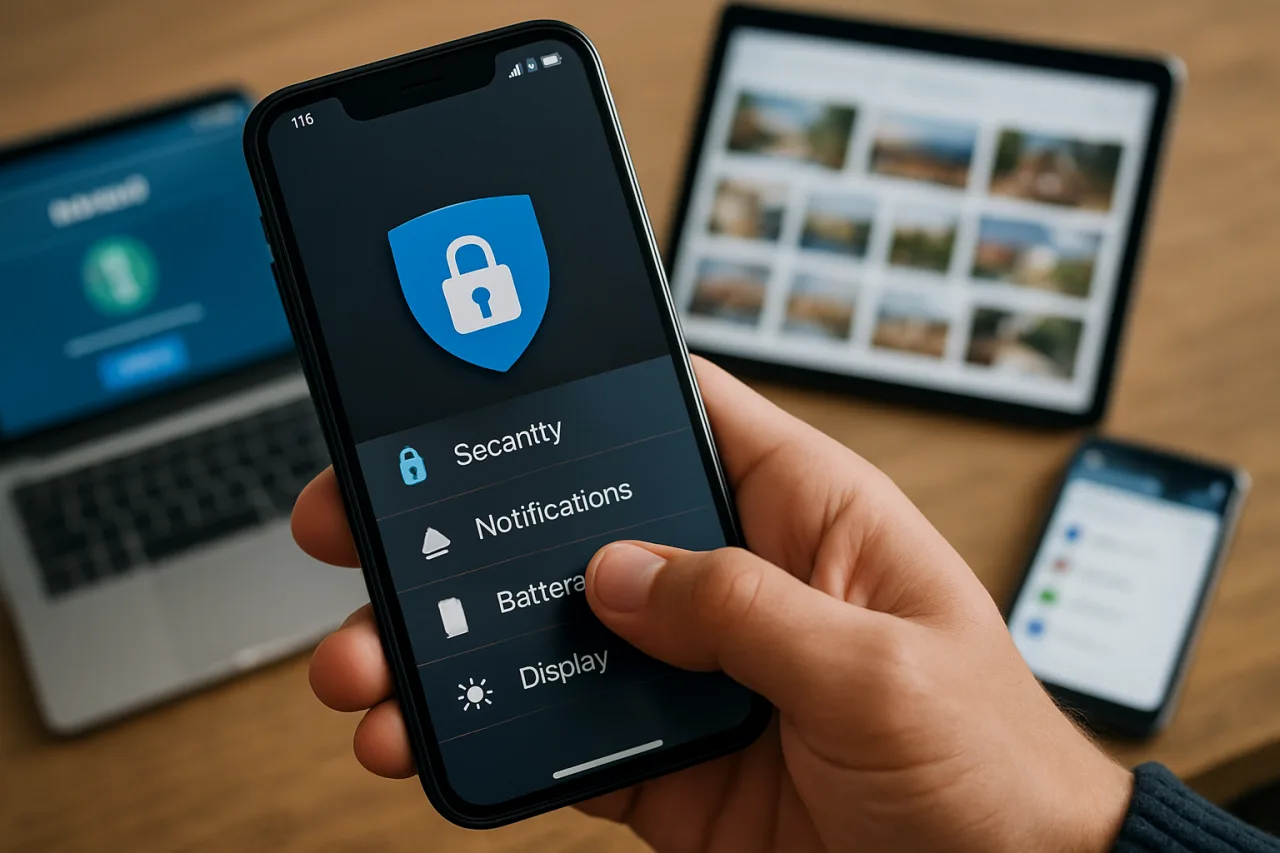
The device-side drill deserves its full detail, because the refurbished-market fraud it defends against is precisely what the NTC refurbished phones rules are chasing. Run the six-point inspection before any secondhand money leaves your hands: (1) IMEI verification — dial *#06#, match the number against the box, the SIM tray, and the settings screen; three mismatches of any digit is a walk-away, and a quick check against GSMA blocked-device databases catches blacklisted units. (2) Activation-lock status — an iPhone still signed into a stranger’s account or an Android with Factory Reset Protection armed is a brick or a stolen unit; demand a live factory-reset in front of you. (3) Battery health and part history — iOS shows battery cycle counts and (since the parts-pairing era) flags non-genuine parts in Settings; Android units should show a clean boot loader. (4) Tamper tells — mismatched screws, gap around the frame, glue residue near the camera, or a screen with off-touch response near edges all signal board-level surgery. (5) Price sanity — a current-generation flagship at half market price is not a deal; it is the fraud signal with a price tag. (6) Receipt and seller identity — even in the informal market, get a written receipt with the seller’s name and number; if the NTC’s accreditation labels arrive, they will mean something only if you check them the way you check every claim above. None of this requires technical skill — it requires the same discipline an OFW applies to any ₱20,000 decision, applied to the device that now holds your bank, your investments, and your family’s chats.
The Watch-Conditions: Three Triggers to Circle
- Refurb draft → final: when the NTC publishes the final NTC refurbished phones rules (or a revised draft after comments), the capital-floor number is the market’s verdict — ₱20M intact means consolidation; a lowered threshold means compromise with the informal trade.
- The two-week retest: the first revalidation results (targeting the flagged cities) decide whether fines stop (telcos fix fast) or escalate (a methodology fight becomes a courtroom one — PCTO’s “due process” line is already pre-staged).
- NPC adoption timeline: comments close Oct 5, consultation Oct 19 — a circular adopted before year-end makes DSR procedures a 2027 compliance budget line for Philippine digital businesses.
What a Filipino Professional Does With This Week’s Regulatory Tape
The decision layer, four moves: (1) If you buy phones secondhand — keep doing the IMEI-check ritual, prefer sellers offering warranties, and watch for the accreditation labels if the rules finalize; the formal market will advertise its legitimacy the moment regulation forces it. (2) If you sell devices — the draft rules are your early-warning system: permits, sourcing proofs, and capital floors are coming for NTC refurbished phones sellers; the comment period is when small-dealer associations push for thresholds that don’t kill livelihoods. (3) If your business runs on mobile broadband — the telcos’ contested-fine war is your service-quality leverage: complaint records referencing NTC revalidation data give your complaints teeth. (4) If you run any website or data-handling operation in PH — read the NPC draft circular before Monday (30 minutes), inventory how you’d answer a DSR today, and decide whether to comment or adapt — because adopted circulars don’t renegotiate.
Frequently Asked Questions
What are the new NTC refurbished phones rules?
The NTC refurbished phones rules are draft regulations (reported October 1, 2026) covering importation, dealership, accreditation, labeling, and sale of refurbished and used phones, tablets, and gadgets — requiring dealer permits, proof of legitimate sourcing, warranties, and paid-up capital of at least ₱20 million (up to ₱50 million). They’re draft rules at comment/review stage, aimed at curbing stolen, tampered, and defective devices.
Do I need a permit to sell secondhand phones in the Philippines?
Not yet — the rules are draft. If finalized as proposed, dealers would need permits and meet the ₱20-50M paid-up capital floor, which would formalize or squeeze out most informal sellers. Small sellers should watch the final text and any transition provisions.
Why is the NTC fining Globe, Smart, and DITO?
Show-cause orders with ₱100,000 daily fines (from September 25, 2026) over “poor mobile broadband” in revalidation tests of specific areas — Globe in Makati/Quezon City, DITO in San Juan/Pasay/Las Piñas, Smart in Parañaque/Manila/Pasig — with the NTC clarifying coverage isn’t NCR-limited. Fines continue until retests pass; retests run every two weeks.
What are the telcos saying about the fines?
Via PCTO, they argue penalties shouldn’t apply under standards “not clearly defined and consistently applied” — MC No. 001-01-2026 contemplates annual audits but the testing methodologies and parameters were never established, and uncertainty could divert investment from network improvement. They’re reviewing the orders and responding within the specified period.
What is the NPC draft circular on Data Subject Rights?
The National Privacy Commission’s proposed circular to standardize how data subject rights (access, correction, erasure, objection, etc.) are exercised across Philippine organizations — fixing inconsistent interpretation and uneven compliance. Draft comments are due October 5, 2026, by email to the NPC with subject “Public Consultation – DS Rights,” with an in-person consultation October 19 (attendance sign-up by October 15).
Does the NPC circular affect small websites?
The draft applies to personal information controllers and processors — which includes websites collecting personal data, newsletters, and e-commerce. If adopted in current form, standardizing DSR intake, verification, and response procedures becomes mandatory, so small sites need documented request-handling procedures too. Comments before the deadline are the influence window.
Editorial Note
Scope discipline per this site’s watchlist law: every claim above is level-checked — the device rules are NTC draft-stage (not law); the telco penalties are NTC show-cause orders (contested, ongoing); the NPC circular is a public-comment draft (not adopted). Primary sources: NTC draft coverage via Manila Bulletin, BusinessMirror, Inquirer, Bilyonaryo; fines via ABS-CBN, GMA, BusinessWorld, Developing Telecoms; NPC via privacy.gov.ph’s official notice and draft PDF. This article is regulatory intelligence, not legal advice; consult counsel for compliance decisions.