Table of Contents
Key Takeaways
- Historic peace deal: The US and Iran have reached a landmark peace agreement (June 14–15, 2026) to end months of conflict, reopening the Strait of Hormuz. The US-Iran peace deal fuel prices effect is already being felt across Asia and OFW communities.
- Oil prices drop 5%: Brent crude fell below $84/barrel (from above $87) within hours of the announcement. Diesel prices in the Philippines could see rollbacks of up to ₱4/liter in the coming weeks.
- Philippines is #1 beneficiary: Nomura Global Markets Research says the Philippines stands to gain the most in Asia from sustained lower oil prices due to its unsubsidized, pass-through fuel pricing system.
- OFW repatriation continues: DMW has repatriated 61 OFWs from Kuwait and Bahrain, and 138 OFWs with 59 dependents from Dubai and Doha, as the Middle East crisis displaces thousands of Filipino workers.
- Remittances under pressure: OFW cash remittances hit $2.7 billion in April 2026 but fell to a nine-month low in February. The peace deal could stabilize the pipeline, but the Middle East conflict has already disrupted the growth trend.
- ASEAN crisis plan activated: Southeast Asian leaders adopted a contingency plan with fuel-sharing, power grid expansion, and food security measures to counter Middle East conflict disruptions.
- Pag-IBIG launches SAFE Loan: The Home Development Mutual Fund rolled out the Special Assistance for Financial Emergencies (SAFE) loan to help members cope with lingering inflation from the Middle East crisis.
US-Iran peace deal fuel prices are dropping fast — but the crisis is far from over for OFW families. On June 14, 2026, the United States and Iran reached a landmark peace agreement to end months of war in the Middle East. The immediate effect on oil prices could mean real relief for millions of OFW families back home. But with hundreds of Filipinos still being repatriated from Kuwait, Bahrain, Dubai, and Doha — and remittances showing signs of strain — every OFW needs to understand what this moment means for their family’s finances, safety, and future.
US-Iran Peace Deal Fuel Prices: What OFW Families Need to Know
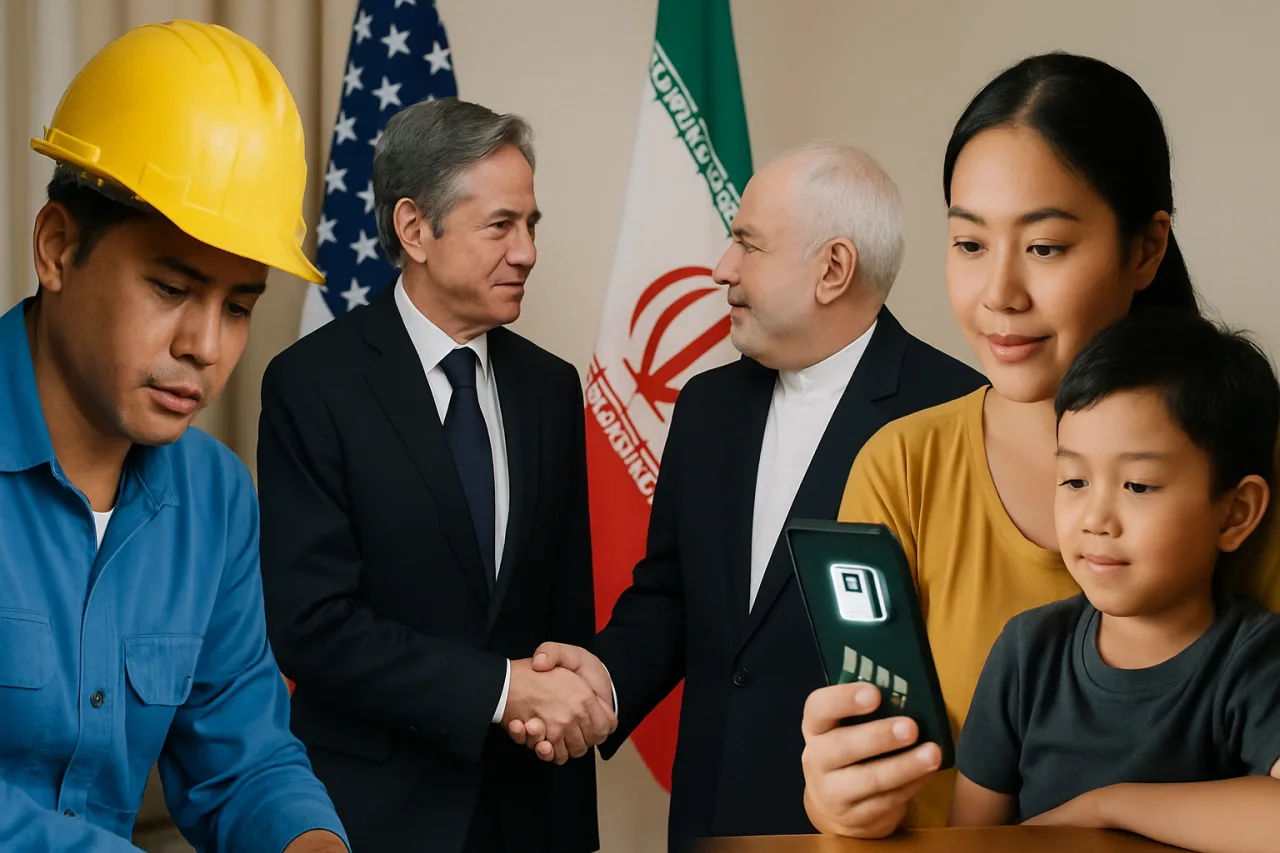
The agreement, brokered with Pakistan’s mediation, includes the reopening of the Strait of Hormuz — the narrow waterway through which about 20% of the world’s oil supply passes. During the conflict, the strait’s closure threat had pushed global oil prices sharply higher, with Brent crude trading above $87 per barrel. The US-Iran peace deal fuel prices connection is straightforward: peace means open shipping lanes, more oil supply, and lower costs for fuel-importing nations like the Philippines.
Within hours of the peace announcement, oil prices fell 5% to a three-month low. Brent crude dropped below $84 per barrel. US President Donald Trump posted “Let the oil flow!” as markets reacted to the prospect of uninterrupted Middle Eastern oil exports. For the Philippines, which imports nearly all of its crude oil, the US-Iran peace deal fuel prices effect is direct and immediate.
Unlike countries that subsidize fuel, the Philippines uses a pass-through pricing system — meaning global oil price changes from events like the US-Iran peace deal fuel prices shift are reflected at the pump almost immediately. When world oil prices fall, Filipino motorists see the benefit in the next price adjustment cycle.
OFW Repatriation Crisis: Hundreds Still Coming Home
Even as the US-Iran peace deal fuel prices relief brings hope, the human cost of the Middle East crisis continues to mount for Filipino families. The Department of Migrant Workers (DMW) has been actively repatriating OFWs from conflict-affected Gulf states:
61 OFWs from Kuwait and Bahrain were brought home on May 23, 2026, as part of the government’s ongoing repatriation effort. Just weeks earlier, 138 OFWs with 59 dependents arrived from Dubai and Doha in two separate flights — one of the largest single repatriation operations this year.
These numbers add to the over 6,600 OFWs already repatriated from 10 Middle East countries as of April 2026. The DMW has assured families that repatriation operations will continue as needed, with OWWA providing psychosocial support and cash assistance to returning workers.
For OFWs still in Saudi Arabia, the Philippine Embassy has launched new VFS Global Migrant Workers Office (MWO) Contract Verification Service centers in Riyadh, Dammam, and Jeddah — making it easier for Filipino workers to verify their employment contracts without traveling long distances. This is particularly important for the thousands of OFWs in the Eastern Province (Khobar, Dammam, Jubail) who make up a significant portion of the Filipino community in KSA.
Why the Philippines Is the Biggest Winner in Asia
According to Nomura Global Markets Research, the Philippines is poised to be the biggest beneficiary in Asia from the peace dividend of lower oil prices. The reason is structural: the Philippines has no fuel subsidies, so the full benefit of lower global prices flows directly to consumers and businesses.
Nomura’s research arm noted that the inflation impact on the Philippines will be “more direct” because fuel costs are passed through to consumers without government intervention. This means every dollar drop in oil prices translates to measurable savings at the pump and lower costs for transportation, food, and basic goods.
The Philippines’ vulnerability to oil price shocks has been well-documented. During the height of the US-Iran conflict in early 2026, Nomura had flagged the Philippines — along with India and Indonesia — as one of the most vulnerable twin-deficit countries in the region. The peace deal effectively reverses that risk, and the US-Iran peace deal fuel prices effect could be the single biggest factor shaping the Philippine economy — and OFW household budgets — in the second half of 2026.
ASEAN Crisis Plan: Fuel Sharing and Food Security
Beyond the bilateral US-Iran deal, the regional response has been significant. ASEAN leaders adopted a crisis plan that includes fuel-sharing arrangements, power grid expansion, and food security measures to counter Middle East conflict disruptions — acknowledging that the US-Iran peace deal fuel prices stabilization benefits the entire region.
The plan was endorsed at the ASEAN summit in Cebu, Philippines — a symbolic choice given the country’s heavy dependence on Middle East oil and OFW remittances. While analysts acknowledge the plan will be “difficult to enforce,” it signals that Southeast Asian nations are preparing for prolonged instability in the Gulf region.
For OFWs, this regional coordination means governments are taking the crisis seriously — not just as a diplomatic issue, but as a direct threat to the welfare of migrant workers and their families.
OFW Remittances 2026: Growth Slows Amid Crisis
The Middle East crisis has directly impacted the money pipeline that millions of Filipino families depend on — and the US-Iran peace deal fuel prices stabilization is only part of the recovery story. Here’s the latest remittance data:
January 2026: $3.02 billion (+3.5% year-on-year)
February 2026: Fell to a nine-month low (exact figure pending BSP confirmation)
March 2026: $2.87 billion
April 2026: $2.718 billion
While the full-year 2025 remittance total hit a record $35.6 billion, the 2026 trend is showing clear signs of pressure. The Middle East conflict — which disrupted banking operations, displaced workers, and created uncertainty in Gulf labor markets — is a key factor.
The US-Iran peace deal fuel prices relief at the pump won’t directly fix the remittance slowdown, but it does reduce the financial burden on families back home. When fuel and food prices drop, the same remittance amount stretches further — partially offsetting the slower growth in dollar terms.
Meanwhile, Filipino investors are increasingly diversifying into global markets as the PSEi struggles with geopolitical shocks, peso weakness, and inflation pressures. For OFWs who invest part of their income in Philippine stocks, the US-Iran peace deal fuel prices stabilization is a welcome development — but diversification remains the smarter long-term strategy.
Related: Middle East Conflict Threatens OFW Remittances — How to Protect Your Family’s Income
5 Ways the US-Iran Peace Deal Saves OFW Families Money
The US-Iran peace deal fuel prices impact goes far beyond the gas station — it touches every part of an OFW family’s monthly budget. Here are five concrete ways lower oil costs translate to real savings:
1. Cheaper commuting: A typical Filipino worker spending ₱150/day on jeepney and tricycle fares could save ₱30-40/day when fuel prices drop. That’s ₱900-1,200/month — enough to cover a week’s rice supply for a family of five.
2. Lower food costs: Transporting rice from Nueva Ecija to Manila, vegetables from Benguet to public markets, and fish from coastal provinces to urban centers all require diesel. When fuel drops, logistics costs fall, and retail food prices follow within 2-4 weeks. The Department of Agriculture estimates that a ₱5/liter diesel reduction translates to a ₱2-3/kg drop in rice prices.
3. Reduced utility bills: Meralco and other electric utilities factor fuel costs into generation charges. While the effect is smaller than transport and food, lower oil prices can reduce monthly electricity bills by ₱50-150 for typical households.
4. Stronger peso: Lower oil imports reduce the Philippines’ trade deficit, which supports the peso against the dollar. A stronger peso means OFW remittances converted to pesos buy more — a direct boost to household purchasing power.
5. Lower inflation expectations: When fuel prices fall consistently, businesses adjust their pricing expectations downward. This creates a virtuous cycle where inflation slows across the board, not just in fuel-related items.
Fuel Price Rollbacks: What to Expect at the Pump
Filipino motorists have already been seeing relief even before the peace deal was finalized. On June 2, 2026, fuel retailers implemented a major price rollback, with diesel prices dropping by as much as ₱7.50 per liter after five straight weeks of gasoline increases. The US-Iran peace deal fuel prices effect is expected to continue this downward trend through Q3 2026.
As of mid-June 2026, industry analysts project further diesel rollbacks of up to ₱4 per liter in the coming weeks, driven by the sustained drop in global crude prices following the peace agreement.
Current Metro Manila pump prices (as of June 16, 2026) show unleaded gasoline (RON 91) ranging from ₱84.57 to ₱85.61 per liter at major stations. Diesel prices have been on a downward trend since the June 2 rollback. If the peace deal holds and the Strait of Hormuz remains open, the US-Iran peace deal fuel prices impact could mean total reductions of ₱8-12 per liter from peak prices by Q3 2026.
Related: Fuel Price Hikes Hit OFWs: What the P12 Diesel Increase Meant (April 2026)
How Lower Fuel Prices Affect OFW Remittances and Family Budgets
For the estimated 10 million OFWs and their families, US-Iran peace deal fuel prices movements are not just a headline — they directly affect household purchasing power. Here’s how:
Transportation costs: Fuel accounts for a significant portion of transportation expenses in the Philippines. Jeepney fares, bus tickets, and tricycle rides all adjust with oil prices. When fuel drops, the cost of commuting to work, school, and market decreases — meaning the same remittance amount stretches further.
Food prices: The cost of transporting agricultural products from farms to urban markets is heavily fuel-dependent. Lower diesel prices reduce logistics costs, which typically translate to lower prices for rice, vegetables, meat, and other staples within 2-4 weeks.
Inflation relief: The Bangko Sentral ng Pilipinas reported that May 2026 inflation eased to 6.8%, partly due to slower fuel cost increases. The year-to-date average of 4.5% remains above the government’s 2-4% target, but the peace deal provides a clear downward trajectory.
OFW remittances, which totaled $35.6 billion in 2025, gain purchasing power when domestic prices fall. The US-Iran peace deal fuel prices effect means every dollar sent home stretches further at the grocery store, the gas station, and the utility bill. A family receiving $500/month from a worker in Saudi Arabia or the UAE effectively gets “more” when fuel and food prices decline.
Related: How OFWs Can Save Money on Remittances in 2026: Complete Guide
What You Don’t Know: The Hidden Risks of the US-Iran Peace Deal
While the US-Iran peace deal fuel prices effect is overwhelmingly positive for OFW families, there are risks that most coverage overlooks. The peace is real, but the recovery will be uneven — and OFWs need to plan for both scenarios:
Deal fragility: The agreement is an initial framework, not a final treaty. Iranian officials have already flagged the “history of broken commitments” from the US side. If the deal collapses, oil prices could spike violently — worse than before, because markets have already priced in peace.
BSP won’t rush to cut rates: Despite the easing effect on inflation, analysts at BusinessMirror report that the BSP is unlikely to turn dovish based solely on the peace deal. Inflation remains above target, and the central bank wants to see sustained disinflation before adjusting monetary policy. This means borrowing costs for OFW housing loans and business loans may stay elevated for now.
Strait of Hormuz reopening takes time: Even with a deal signed, the physical reopening of the strait and resumption of normal shipping traffic will take weeks. Some oil tankers may avoid the route initially due to lingering security concerns. The full price benefit may not reach Philippine pumps until July or August 2026.
Gold prices surged: While oil fell, gold prices jumped sharply after the peace deal announcement — a classic “risk-on” signal. For OFWs who hold savings in gold or gold-backed instruments, this is a short-term positive. But it also signals that markets see the deal as reducing global uncertainty broadly, which could strengthen the US dollar against the peso over time.
Remittance disruption may persist: Even with peace, the banking and labor infrastructure in conflict-affected Gulf states may take months to fully normalize. OFWs in Saudi Arabia, UAE, Kuwait, and Bahrain should monitor their employers’ financial health and have backup remittance channels ready.
Pag-IBIG SAFE Loan: Emergency Relief for Members
Recognizing that the Middle East crisis has strained household finances even as peace emerges, the Pag-IBIG Fund launched the SAFE Loan program (Special Assistance for Financial Emergencies) on June 16, 2026. While the US-Iran peace deal fuel prices drop brings long-term relief, the SAFE loan provides immediate cash assistance to members still coping with earlier price spikes from the crisis.
The SAFE loan is available to active Pag-IBIG members and is designed as a short-term financial cushion. It follows directives from President Ferdinand R. Marcos Jr. to provide timely relief to Filipino workers struggling with inflationary pressures from the Middle East conflict.
OFW families in the Philippines who are Pag-IBIG members can apply for the SAFE loan through Pag-IBIG branches or online channels. The program complements existing offerings like the Pag-IBIG 0% Down Payment Housing Loan and the MP2 savings program, which remain strong options for long-term financial planning.
What This Means for OFW Investors
The peace deal has implications beyond fuel prices. For OFWs invested in the Philippine stock market or considering entry, the US-Iran peace deal fuel prices stabilization creates a more favorable macro environment — but caution is still warranted:
PSEi outlook: Lower oil prices reduce input costs for Philippine companies, particularly in transportation, manufacturing, and consumer goods. This could boost corporate earnings and support the Philippine Stock Exchange index (PSEi), which had been under pressure from last-minute profit-taking in early June.
Bond market: The Philippines launched a fresh global bond offering on June 16, 2026 (5.5-year, 10-year, and 2051 tranches). Lower global oil rates and reduced geopolitical risk could improve demand for Philippine sovereign debt, potentially lowering borrowing costs for the government.
Sector rotation: Airlines, logistics, and consumer discretionary stocks typically benefit from lower fuel costs. OFW investors with exposure to these sectors through UITFs or direct stock holdings may see improved returns.
Diversification trend: With the PSEi struggling amid geopolitical shocks, more Filipino investors are diversifying into global markets. The US-Iran peace deal fuel prices stabilization helps the Philippine market, but OFWs with excess income should consider maintaining a balanced portfolio across Philippine and international assets rather than concentrating in a single market.
Related: PSE Stock Market 2026: Top Philippine Fund Sees Bargains After Selloff
FAQ
How much can fuel prices drop in the Philippines from the US-Iran peace deal?
Industry analysts project diesel rollbacks of up to ₱4 per liter in the weeks following the June 14, 2026 peace deal. The June 2 rollback already cut diesel by up to ₱7.50/liter. If the Strait of Hormuz remains open and Brent crude stays below $85, total reductions of ₱8-12/liter from peak prices are possible by Q3 2026.
Will the US-Iran peace deal lower inflation in the Philippines?
Yes, but gradually. May 2026 inflation was 6.8%, already easing from earlier peaks. The BSP projects further deceleration if oil prices remain low, but the year-to-date average of 4.5% is still above the 2-4% target. The peace deal supports the downward trend but won’t immediately bring inflation within target range.
How many OFWs have been repatriated from the Middle East in 2026?
Over 6,600 OFWs have been repatriated from 10 Middle East countries as of April 2026. In May alone, 61 OFWs were brought home from Kuwait and Bahrain, and 138 OFWs with 59 dependents arrived from Dubai and Doha. The DMW continues to conduct repatriation operations as needed.
How does lower fuel prices help OFW families specifically?
Lower fuel prices reduce transportation, food, and utility costs in the Philippines. Since OFW remittances are spent on these essentials, the same dollar amount buys more when fuel is cheaper. A ₱5/liter diesel reduction can save a typical Filipino household ₱500-1,000/month in combined transport and food costs.
Is the Pag-IBIG SAFE loan available to OFWs?
The SAFE loan is available to active Pag-IBIG members, including OFWs who maintain their membership and contributions. OFW families in the Philippines who are members can also apply. Check the Pag-IBIG website or visit a branch for eligibility requirements and loan terms.
Should OFW investors buy Philippine stocks now?
The improved macro environment from lower oil prices is generally positive for Philippine equities. However, OFW investors should maintain diversified portfolios and avoid timing the market. Consider peso-cost averaging into quality stocks or UITFs rather than making large lump-sum investments based on a single geopolitical event.
What happens if the US-Iran peace deal falls apart?
If the deal collapses, oil prices could spike above pre-deal levels (above $87/barrel) due to disrupted market expectations. This would reverse the inflation gains and put pressure on the peso. OFW families should use the current relief period to build emergency savings and lock in lower costs where possible (e.g., advance payments on utilities or bulk purchases of non-perishable goods).
How are OFW remittances affected by the Middle East crisis?
OFW remittances showed mixed results in early 2026: $3.02B in January (+3.5%), but February fell to a nine-month low, followed by $2.87B in March and $2.718B in April. The Middle East conflict disrupted banking operations and displaced workers, putting pressure on the growth trend. The US-Iran peace deal fuel prices stabilization could help restore confidence, but full recovery of remittance flows may take months.
This article is for informational purposes only and does not constitute financial advice. OFW readers should consult licensed financial advisors before making investment decisions. Data sourced from Nomura Global Markets Research, Reuters, Philippine News Agency, Rappler, BusinessMirror, Manila Standard, BSP reports, DMW, and OWWA (as of June 2026).