The OFW Middle East repatriation 2026 has become one of the most urgent crises the Philippine government has faced this year. Table of Contents
More than 6,605 Filipino workers have returned home from the Middle East since the regional conflict escalated — and thousands more are still waiting. The government’s response includes a $200 cash aid package, but most OFWs don’t know what it actually covers or how to claim it.
The Department of Migrant Workers (DMW) confirmed the repatriation figure on April 17, 2026, as part of its ongoing repatriation effort covering OFWs in 10 conflict-affected countries. By April 19, the total had climbed to 6,706 when dependents and other overseas Filipinos airlifted home were included.
The numbers keep rising. What isn’t rising as fast is the information reaching OFWs on the ground — or those who just landed and don’t know where to go next.
The Money: What the $200 Actually Covers
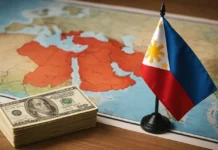
The financial aid package that has circulated on social media is straightforward on the surface: $200 in onsite cash assistance, released before OFWs board the flight home. It is intended for immediate personal needs — food, communication, and basic costs while still abroad.
Once back in the Philippines, OFWs receive an additional P10,000 from the DMW. That puts the combined total at roughly P20,000 to P21,000, depending on the exchange rate at the time of disbursement.
DMW Secretary Hans Leo Cacdac clarified the breakdown at a press briefing on April 18. “From the DMW, it’s P20,000 that we provide. Actually, $200 onsite and then another P10,000 once they’re back home. So it’s a little over P20,000 because the $200 is not just merely P10,000,” he said.
The adjustment from previous aid levels was a deliberate response to scale. When Lebanon was the only country affected, the DMW was able to give higher individual amounts. With the conflict now spanning multiple countries, the funds had to stretch further.
“But now, we all know that it is more than one country involved so we adjusted in terms of financial assistance we provide,” Cacdac said.
Which Countries Are Covered
The $200 aid applies to OFWs currently in — or recently displaced from — 10 countries in the Middle East:
- Bahrain
- Iran
- Israel
- Jordan
- Kingdom of Saudi Arabia (KSA)
- Kuwait
- Lebanon
- Oman
- Qatar
- United Arab Emirates (UAE)
To qualify, OFWs must be registered with the Overseas Workers Welfare Administration (OWWA) and must have been displaced due to the conflict or its direct consequences — job terminations, employer shutdowns, or inability to return to work because of the security situation.
Where the Money Is Coming From
The entire financial assistance package — the onsite $200, the P10,000 upon arrival, transport logistics, and charter flights — is drawn from the AKSYON Fund. AKSYON stands for Agarang Kalinga at Saklolo para sa mga OFWs na Nangangailangan, a dedicated emergency fund under the DMW.
As of April 18, 2026, the DMW had already spent P1.2 billion of the fund’s P2 billion total. About P381 million of that went directly to transport. The government extended the fund by an additional P800 million specifically to sustain services as repatriation continues.
The scale of the spending reflects how serious the government is treating this. P1.2 billion in less than two months, for a crisis that shows no immediate sign of ending.
What OWWA Covers on Top of That
OWWA provides a separate layer of assistance for registered members, beyond the DMW’s cash package. This includes:
- Legal assistance for OFWs with pending cases or unresolved contract disputes
- Medical assistance for workers who arrived with health concerns
- Livelihood and reintegration support through the Enterprise Development and Loan Program (EDLP)
- Psychosocial counseling for workers affected by trauma or displacement
The reintegration programs are a critical bridge for OFWs who don’t plan to go back abroad. OWWA’s livelihood loans and skills training give returning workers a starting point that doesn’t require redeployment to another country.
What DOLE Is Doing
The Department of Labor and Employment (DOLE) has activated its own track for displaced OFWs who want to enter the local job market instead.
The Tulong Panghanapbuhay sa Ating Disadvantaged Workers — TUPAD — is a community-based livelihood program that provides short-term wage employment to displaced workers while they search for regular jobs. As of the latest available data, 54 repatriated OFWs from the Middle East conflict have been enrolled in TUPAD.
DOLE has also coordinated with Public Employment Service Offices (PESOs) nationwide to fast-track job matching for returning workers. Regional job fairs have been set up specifically to absorb OFWs back into the local labor market.
The DMW separately held reintegration fairs — one designed to serve around 500 repatriated OFWs at a time, combining job matching, financial literacy training, and livelihood assistance in a single venue.
How OFW Middle East Repatriation 2026 Aid Is Claimed
For OFWs still abroad in the 10 covered countries, the process starts at the nearest Philippine Overseas Labor Office (POLO). POLO coordinates the $200 onsite disbursement and arranges flight slots based on vulnerability — priority goes to workers in active conflict zones, undocumented workers, and those who have already lost income.
For those who have already returned home without claiming:
- Go to the nearest DMW or OWWA regional office
- Bring your passport, OWWA membership card, and employment records
- File for the P10,000 cash assistance if not yet received
- Ask about OWWA reintegration programs if you plan to stay in the Philippines
Over 30,000 OFWs have already received some form of government support since the crisis began — whether cash, medical care, legal aid, or livelihood assistance. But that figure also means there are thousands still working through the system.
The Bigger Picture
President Marcos has mobilized 25 government agencies to coordinate the reintegration of returning OFWs. The task force spans airport reception, local job placement, medical care, and skills retraining.
Roughly half of the repatriated OFWs have said they want to stay in the Philippines — some to start small businesses, others to find local employment. The other half is waiting for the situation to stabilize before considering redeployment.
About 67 percent of those who came home left specifically because of the conflict. They didn’t choose to leave their jobs — the conflict made staying impossible. That distinction matters for their benefits and reintegration pathway.
The DMW hotline is available 24/7 at 1348 for OFWs who need immediate guidance on repatriation, documentation, or assistance claims. POLO offices in the 10 covered countries remain operational and are the first point of contact for OFWs still abroad.
The repatriation flights are ongoing. The question now is whether the aid pipeline moves fast enough to meet the people who need it most.
📤 Repatriate Your Money Cheaply
If you’re sending remittances back to family, skip Western Union’s high fees. Wise saves OFWs 3-5 times on transfer costs — especially for large amounts.