Table of Contents
Key Takeaway
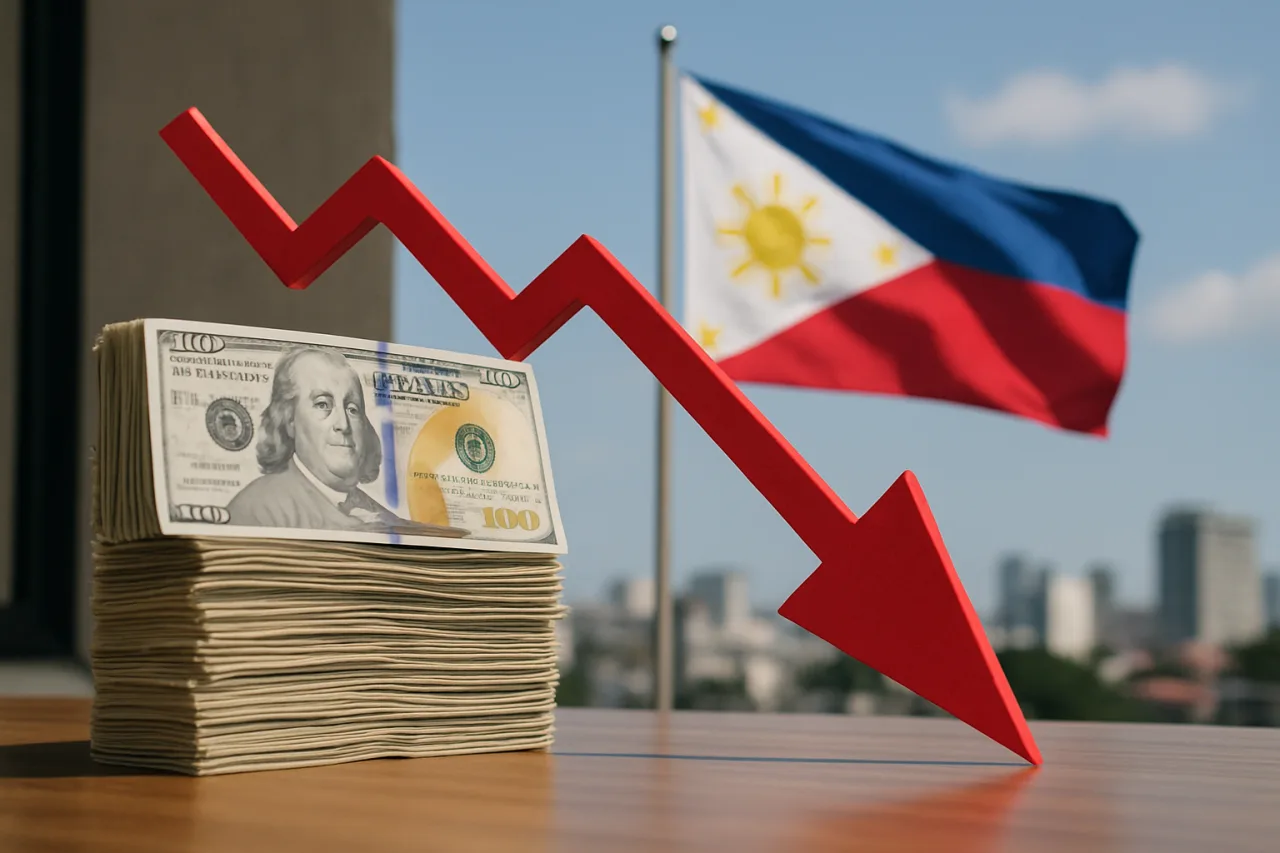
- 💰 Record Monthly High: Remittance growth reached $3.04 billion in cash remittances in June 2026 — the highest monthly level in the first half of the year, according to the Bangko Sentral ng Pilipinas.
- 📉 4-Year Low Growth: The 1.7% year-on-year growth rate was the slowest in four years and four months, since the 1.3% recorded in February 2022.
- 📊 H1 Total: First-half cash remittances reached $17.15 billion, up 2.4% from $16.75 billion in the same period last year — but still below the BSP’s revised full-year forecast of 2.7% growth.
- 🌍 Top Sources: The United States remained the largest source of remittance inflows, followed by Singapore and Saudi Arabia.
- ⚡ What It Means: Slowing remittance growth despite record absolute amounts signals a structural shift — the peso’s record low, Middle East tensions, and changing OFW demographics are all factors Filipino families should understand.
Overseas Filipino workers sent home a record $3.04 billion in cash remittances in June 2026 — the highest monthly total in the first half of the year. But beneath that headline number lies a trend that should concern every Filipino family dependent on remittances: the growth rate has fallen to its lowest point in over four years. The 1.7% year-on-year increase was the weakest annual growth since February 2022, when remittance growth stood at just 1.3%, according to data released by the Bangko Sentral ng Pilipinas (BSP) on August 17, 2026.
The paradox of remittance growth — record absolute amounts but decelerating growth — is not a statistical anomaly. It reflects a structural shift in the Philippine labor export economy that affects over 1.8 million OFWs and the families who depend on their monthly remittances. The BSP now projects full-year cash remittances to grow by just 2.7% to $36.6 billion in 2026, slower than the 3.3% growth that produced $35.6 billion in 2025. For a country where remittances account for roughly 8% of GDP, the deceleration matters.
The Numbers Explained
According to BusinessWorld, cash remittances from Filipinos abroad reached $3.039 billion in June 2026, up 1.7% from $2.987 billion in the same month last year. This brought first-half cash remittances to $17.149 billion, up 2.4% from $16.753 billion in the first half of 2025. Personal remittances, which include cash sent through banks and informal channels as well as remittances in kind, reached $3.388 billion in June, up 1.8% year-on-year, bringing the first-half personal remittance total to $19.123 billion.
The deceleration is visible in the monthly trend. May 2026 saw cash remittances of $2.71 billion, up 2% year-on-year — matching April’s rate. June’s 1.7% growth marked a further slowdown from an already-decelerating trend. The pattern is clear: absolute remittance amounts continue to rise because the base of OFWs is larger than ever, but the rate of growth is compressing as the marginal dollar sent home becomes harder to generate.
| Metric | June 2026 | June 2025 | Change |
|---|---|---|---|
| Cash remittances | $3.039 billion | $2.987 billion | +1.7% |
| Personal remittances | $3.388 billion | $3.329 billion | +1.8% |
| H1 cash remittances | $17.149 billion | $16.753 billion | +2.4% |
| H1 personal remittances | $19.123 billion | $18.672 billion | +2.4% |
Why Remittance Growth Is Slowing
Several factors are contributing to the deceleration in remittance growth, and understanding them is essential for any Filipino family that depends on money from abroad.
The peso’s record low. The Philippine peso hit a record low near P62 per dollar in August 2026, as reported in a WNG analysis. While a weaker peso means each dollar sent home converts to more pesos for the recipient family, it also creates uncertainty. OFWs may delay remittances hoping for a better exchange rate, or they may split transfers across multiple months to average out the volatility. This timing behavior can suppress monthly growth rates even when annual totals remain healthy.
Middle East tensions. The conflict involving Iran earlier in 2026 created significant uncertainty for OFWs in the Gulf Cooperation Council (GCC) countries, which host over 2 million Filipinos. The PSE itself cited “the Israel-US attack on Iran” as a factor that affected market sentiment and capital raising timelines. For OFWs, geopolitical tensions in the Middle East can mean reduced overtime opportunities, delayed salary payments, and in some cases, evacuation costs that reduce the amount available for remittance. Saudi Arabia remained the third-largest source of remittance inflows in June 2026, but the growth rate from the region has been affected by the broader regional uncertainty.
Changing OFW demographics. The composition of the OFW workforce is shifting. Traditional markets in the Middle East are seeing slower growth in new hires, while newer markets in Europe (particularly the UK, Germany, and Poland) and East Asia (Japan, South Korea, Taiwan) are growing. This shift affects remittance patterns because newer OFWs in newer markets typically take 6-12 months to establish stable remittance channels, and their initial transfers are often smaller as they recover deployment costs. According to BSP data, the United States remained the top source of remittance inflows, followed by Singapore and Saudi Arabia — but the growth is increasingly coming from non-traditional corridors.
The base effect. The Philippine remittance base is now so large — $35.6 billion in 2025 — that maintaining high percentage growth rates requires ever-larger absolute increases. A 3.3% growth rate on a $35.6 billion base requires $1.17 billion in additional remittances. As the base grows, the same absolute increase translates to a smaller percentage, creating a mathematical drag on growth rates even when the underlying volume of remittances continues to expand.
What This Means for Filipino Families
For the millions of Filipino families that depend on remittances, the slowing growth rate has practical implications that go beyond statistics.
First, remittance growth at 1.7% is below Philippine inflation, which means the real purchasing power of remittance income is declining. If the peso weakens further, the nominal peso value of remittances may increase, but imported goods and services — including fuel, electricity, and food items sensitive to global commodity prices — will also become more expensive. The net effect depends on each family’s consumption basket, but for families that spend heavily on imported goods, the real value of remittances may be flat or declining.
Second, the slowing growth rate affects the macroeconomic stability that remittances have historically provided. The Philippines has relied on steady remittance inflows to cushion its current account deficit, support the peso, and provide a stable source of foreign exchange reserves. If remittance growth continues to decelerate, the BSP may face pressure to maintain higher interest rates to defend the peso — a dynamic already visible in the market expectation that the BSP will hike rates by 25 basis points, as reported by BusinessWorld. Higher interest rates, in turn, affect borrowing costs for Filipino businesses and consumers.
Third, the geographic shift in remittance sources means that families with OFWs in traditional markets (Middle East, US) may experience different growth patterns than families with OFWs in emerging markets (Europe, East Asia). Understanding which corridor your family’s remittances come from can help you anticipate whether the national trend applies to your specific situation.
The Broader Economic Context
The remittance growth slowdown does not exist in isolation. It coincides with several other economic signals that paint a picture of a Philippine economy navigating headwinds. The World Bank maintained its 2026 Philippine growth forecast at 3.7% — a modest figure for a developing economy. The BSP’s balance of payments deficit is widening, and foreign reserves are dwindling, as BusinessWorld reported. The peso’s record low near P62 per dollar adds imported inflation pressure.
At the same time, there are positive signals. The Philippine Stock Exchange is projecting P204 billion in capital raising for 2026, a 20% overshoot of its original target, driven by the upcoming GCash and VITRO REIT IPOs. Philippine life insurance premiums jumped 17.9% to P229.98 billion in the first half of 2026, indicating growing domestic financial activity. The PSEi hovering near 6,000 with a P/E ratio of 8.1x remains one of the cheapest markets in the region, potentially attracting value investors.
The remittance story, therefore, is not one of collapse but of transition. The absolute amounts continue to set records because the OFW population continues to grow. But the growth rate is compressing as the base expands, geopolitical risks persist, and the composition of the OFW workforce shifts. For the Philippine economy, the question is whether domestic growth drivers — capital markets, digital economy, domestic consumption — can accelerate fast enough to compensate for the decelerating contribution of remittances.
What OFWs and Their Families Should Do Now
For OFWs and their families, the slowing remittance growth rate is a signal to review financial strategies:
- Lock in favorable exchange rates: With the peso at a record low, consider using forward contracts or timed remittances to maximize the peso value of dollar earnings. Some banks and remittance services offer rate-lock features.
- Diversify income sources: Families that rely entirely on remittances should consider building secondary income streams — small businesses, freelance work, or investments — to reduce dependence on a single source of foreign exchange.
- Build emergency funds: The geopolitical uncertainty in the Middle East and the slowing growth rate both argue for maintaining a 6-month emergency fund in peso savings, separate from remittance income.
- Invest in financial literacy: The difference between 1.7% remittance growth and Philippine inflation means families are losing purchasing power. Understanding basic investment principles — including the PSE capital raising opportunities available through local stock market investments — can help families grow their money faster than inflation erodes it.
- Monitor the BSP forecast: The BSP’s revised forecast of 2.7% full-year remittance growth, down from previous estimates, sets a benchmark. If actual growth falls below this, it may signal deeper structural issues that warrant more aggressive financial planning.
Frequently Asked Questions About Remittance Growth
How much did OFWs send home in June 2026?
Overseas Filipino workers sent home $3.039 billion in cash remittances in June 2026, the highest monthly level in the first half of the year. This was a 1.7% increase from $2.987 billion in June 2025. Personal remittances, which include cash and in-kind transfers, reached $3.388 billion in June 2026.
Why is remittance growth slowing in 2026?
Remittance growth slowed to 1.7% in June 2026 — the weakest in over four years — due to several factors: the peso’s record low creating exchange rate uncertainty, geopolitical tensions in the Middle East affecting OFWs in GCC countries, changing OFW demographics as newer markets take time to establish stable remittance channels, and the mathematical base effect as the $35.6 billion annual remittance base grows larger.
What is the BSP’s remittance forecast for 2026?
The Bangko Sentral ng Pilipinas projects full-year cash remittances to grow by 2.7% to $36.6 billion in 2026, slower than the 3.3% growth that produced $35.6 billion in 2025. First-half cash remittances of $17.15 billion grew 2.4%, remaining below the full-year forecast.
Which countries send the most remittances to the Philippines?
The United States remained the top source of remittance inflows in June 2026, followed by Singapore and Saudi Arabia, based on reported remittance transactions by origin. However, growth is increasingly coming from non-traditional corridors including the UK, Germany, Poland, Japan, South Korea, and Taiwan.
How do remittances affect the Philippine economy?
Remittances account for roughly 8% of Philippine GDP and provide a stable source of foreign exchange that supports the peso and cushions the current account deficit. Slowing remittance growth can pressure the BSP to maintain higher interest rates, affect foreign reserves, and reduce the macroeconomic stability that remittances have historically provided.
Is the record $3.04 billion monthly amount a positive sign?
Yes and no. The absolute amount is a record for the first half of 2026 and reflects the growing OFW population. However, the 1.7% growth rate is the slowest in over four years, meaning the rate of increase is decelerating even as total amounts rise. When growth falls below inflation, the real purchasing power of remittance income declines.
What should OFW families do about slowing remittance growth?
OFW families should consider locking in favorable exchange rates, diversifying income sources beyond remittances, maintaining a 6-month emergency fund, investing in financial literacy to grow money faster than inflation, and monitoring the BSP’s remittance forecasts as a benchmark for financial planning.
How does the peso’s record low affect remittances?
A weaker peso means each dollar sent home converts to more pesos for the recipient family. However, it also creates uncertainty that may cause OFWs to delay or split remittances, and imported goods become more expensive, potentially offsetting the gains from the favorable exchange rate. The net effect depends on each family’s spending patterns.
Financial Disclaimer: This article is for informational purposes only and does not constitute financial advice. Remittance data is based on Bangko Sentral ng Pilipinas reports as of August 2026. Always consult with a licensed financial advisor before making investment or financial planning decisions.