Table of Contents
Key Takeaway
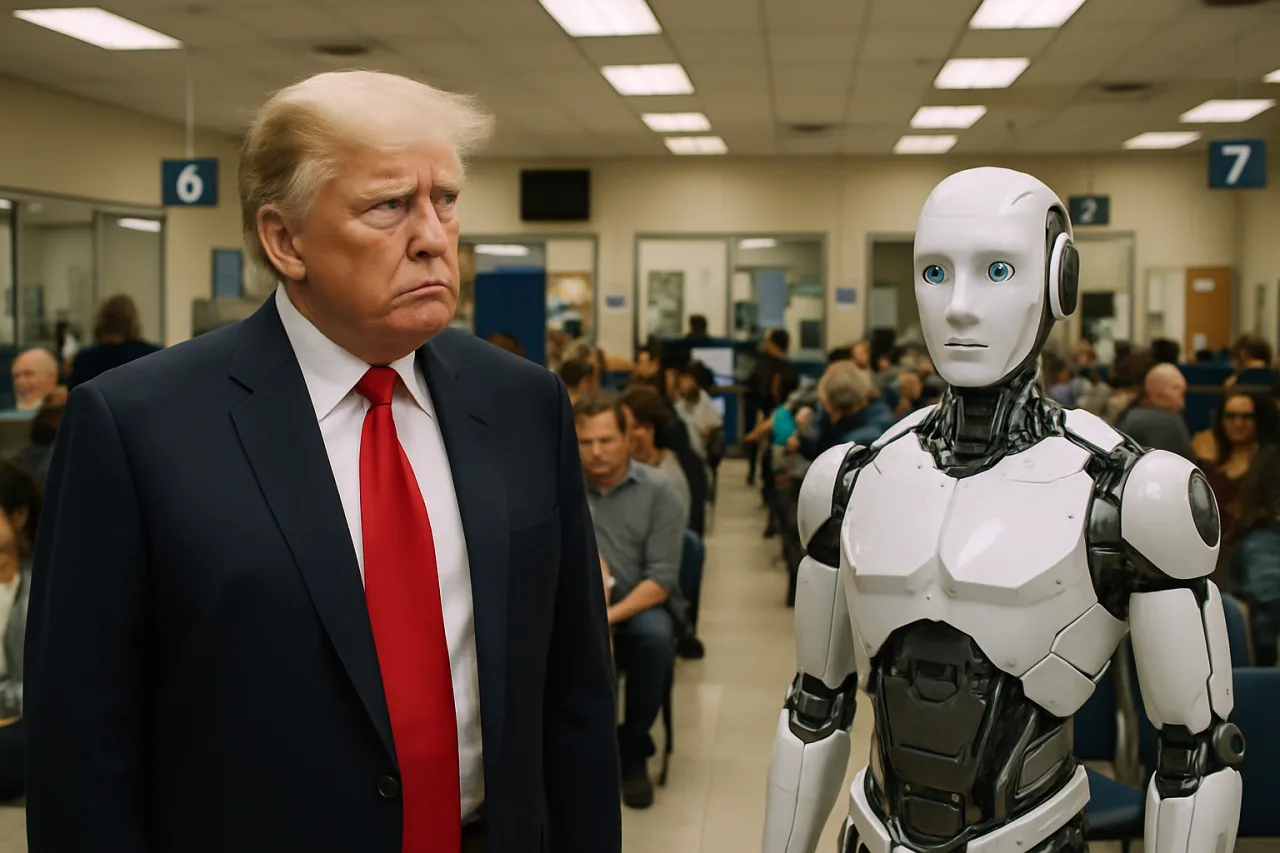
- ⚖️ The Debate: Former Trump AI czar David Sacks called Anthropic CEO Dario Amodei’s approach to AI regulation a “DMV for AI” that would hobble U.S. tech and hand the AI race to China.
- 🏛️ Sacks’ Position: AI regulation would create long queues as models wait for testing and approval, concentrate power in a few companies, and handicap the U.S. against China, which will not adopt the same constraints.
- 🔬 Amodei’s Response: The Anthropic CEO argued that regulation is not inherently regulatory capture, that Silicon Valley libertarians live in a “bubble” where all regulation equals corporate favoritism, and that the public’s negative view of AI is a “crisis of trust” — not a messaging problem.
- 🍔 The Restaurant Analogy: Fortune’s Jeremy Kahn noted that a sandwich shop in San Francisco complies with more regulation than OpenAI or Anthropic — and there are still over 3,000 restaurants competing in the city.
- ⚡ What’s at Stake: The Sacks-Amodei debate will shape how governments worldwide regulate AI — and whether open-weight models, which 270+ companies just endorsed in an open letter, can coexist with frontier model safety rules.
One billionaire says AI safety rules will kill innovation. Another says without them, AI will kill us. The debate between former Trump AI czar David Sacks and Anthropic CEO Dario Amodei over AI regulation escalated over the weekend of August 16-17, 2026, when Amodei made a rare post on X defending his company’s approach — months after his admission that AI suffers from a “crisis of trust” — and Sacks responded by calling his vision a “DMV for AI.” The exchange crystallizes the central fault line in AI policy: whether AI regulation protects the public or protects incumbents: whether regulation protects the public or protects incumbents, and whether the answer differs depending on what the regulation actually says.
The debate matters beyond Silicon Valley. The Sacks-Amodei exchange will shape how governments worldwide approach AI regulation — from the U.S. Congress to the European Union to the Philippines’ own pending cybersecurity and AI legislation. The question of whether AI regulation should apply to frontier AI models like food safety, like nuclear material, or like nothing at all is not theoretical. It determines who can build AI, who can access it, and who bears the cost when it causes harm.
How the AI Regulation Debate Started
According to Fortune, the exchange began when investor Gavin Baker appeared on the “All In” podcast — co-hosted by Sacks — and claimed that Amodei had told multiple people that Anthropic was so confident in AI’s potential and its own position that “Anthropic might be the only private company in the world at some point.” Baker described this as evidence of Anthropic’s “maximalist” vision, in which only it and the U.S. government would decide who could access super-powerful AI.
Sacks called the vision “hubristic” and repeated his longstanding accusation that Amodei’s strategy amounts to regulatory capture — using fear of AI’s risks to persuade the government to enact stringent regulation that only Anthropic can easily comply with, thereby eliminating competition from other AI startups and open-source models. Baker went further, criticizing Amodei for fueling the public’s overwhelmingly negative perception of AI, which he argued was playing into opposition to data center construction across the United States and imperiling American AI leadership.
Anthropic denied the claim. Sasha de Marigny, Anthropic’s chief brand and communications officer, called it “complete and utter nonsense” on X. Sacks later pointed out that Amodei himself did not directly address Baker’s specific claim — a tactical silence that allowed the accusation to hang in the air while Amodei pivoted to a broader defense of Anthropic’s regulatory philosophy.
Amodei’s Defense: “It’s Complicated”
Amodei’s response on X was notably nuanced — a departure from the binary framing that dominates AI policy debates. He argued that Silicon Valley libertarians like Baker tend to see all regulation as slowing technology down and resulting in regulatory capture, while people “outside of this bubble” see regulation as constraining corporate power and benefiting ordinary people. Both positions oversimplify things, he said. “It’s complicated and really depends on what the ‘regulation’ consists of.”
On the regulatory capture accusation, Amodei made a specific counterargument: Anthropic’s regulatory proposals are designed to disadvantage frontier AI companies while advantaging smaller competitors. He noted that many of the regulations Anthropic has favored contained specific exemptions for companies below certain revenue thresholds or that spent less than a certain amount on model training, or were designed to apply only to cutting-edge models while exempting less-capable ones. This is a direct rebuttal to the claim that Anthropic’s regulatory advocacy is self-serving — if the rules only apply to the most powerful models, they create a competitive moat for Anthropic but also create a protected space for startups below the threshold.
On the concentration of economic power, Amodei acknowledged that AI naturally tends to concentrate because of the compute requirements to train and serve powerful models — but he said this was different from saying only one or a few companies would exist in the future. He said he favored “rules of the road” that would “leave room for open-weights models while also addressing the specific risks that they bring.” This is a significant position because it separates Amodei from those who would ban open-weight models entirely — he accepts their right to exist while arguing for tailored risk management.
Sacks’ Response: The “DMV for AI”
Sacks’ response was blunt. He wrote that creating any kind of regulatory agency for AI — which he called “a DMV for AI” — would hobble the U.S. tech sector, “create long queues as AI models wait for testing and approval,” and “handicap the U.S. relative to China, which will not adopt the same constraints.” This framing draws on a familiar libertarian argument: that government bureaucracy inevitably slows innovation, and that in a geopolitical race, the side with fewer constraints wins.
Sacks added a philosophical distinction that cuts to the heart of the debate: “Dario believes frontier AI is too powerful to distribute; we believe it is too powerful to centralize.” This is a sharp formulation of the two camps. Amodei’s position — that frontier AI is too powerful to distribute freely — implies that access to the most capable models should be restricted to entities that can demonstrate the capacity to handle them safely. Sacks’ position — that frontier AI is too powerful to centralize — implies that concentrating control over AI in a few companies or a government agency creates a different kind of danger: the danger of a few actors controlling a technology that affects everyone.
Both positions have merit, and both have blind spots. Amodei’s position risks creating a regulatory regime that, in practice, benefits the largest companies with the resources to comply — the very outcome he claims to want to avoid. Sacks’ position risks a race to the bottom where no country regulates AI because each fears losing the geopolitical race, leaving the public unprotected from genuine harms. The question is not which position is correct — it is what specific regulatory architecture can balance both risks.
The Restaurant Analogy: Why Regulation Does Not Always Mean Monopoly
Fortune’s Jeremy Kahn offered perhaps the most clarifying perspective in the debate. He noted that a sandwich shop in San Francisco has to comply with more regulation than OpenAI or Anthropic — a gap that narrowed after California’s state-level frontier AI law but remains true at the federal level. The point is that regulation does not inherently prevent competition. There are over 3,000 restaurants in San Francisco, all complying with food safety, labor, and product liability regulations.
Do larger restaurant chains have an easier time complying? Probably — there are economies of scale to compliance, and big chains have lobbying muscle that small shops do not. But the public is better served by having food safety regulations than by having none. The same logic applies to the auto industry, which Sacks maligns through his “DMV” metaphor. Most people support licensing drivers and periodically inspecting vehicles. There is concentration in the auto industry, but regulation is not the primary reason — market dynamics, capital requirements, and brand equity drive consolidation far more than safety rules.
The restaurant analogy also addresses the China argument. China already has AI laws around data labeling and identifying AI-generated content that are stricter than those in the United States. If the concern is national security, the U.S. could exempt models developed specifically for national security purposes from civilian regulations — although Kahn noted this is probably a bad idea, citing the cautionary tales of WarGames and Terminator. The Cold War was won while maintaining strict regulation around the manufacture and transport of nuclear material. There is no inherent reason AI safety rules should be different.
The Open-Weight Letter: 270 Companies Weigh In
The Sacks-Amodei debate does not exist in a vacuum. In July 2026, more than 270 companies and organizations signed an open letter titled “Open Weights and American AI Leadership,” calling for policymakers to support open-weight AI models. The letter’s signatories include Sam Altman (OpenAI), Satya Nadella (Microsoft), Sundar Pichai (Google), Elon Musk (xAI), and Jensen Huang (Nvidia) — figures whose views on enterprise AI strategy and AI jobs we have covered extensively — a coalition that spans the competitive spectrum of AI development. The letter argues that open-weight models benefit startups, researchers, and universities by allowing them to build on advanced models without paying for API access, and that restricting open-weight models would disadvantage American AI leadership.
This letter complicates the Sacks-Amodei binary. The signatories are not arguing for no AI regulation — they are arguing that open-weight models should be allowed to exist alongside regulated frontier models. Amodei’s position — that he favors rules that “leave room for open-weights models while also addressing the specific risks that they bring” — is actually closer to the open-weight coalition’s position than Sacks’ framing suggests. The real debate is not between regulation and no regulation, but between regulation that accommodates open-weight models and regulation that effectively bans them.
What This Means for the Philippines and Global AI Policy
For countries like the Philippines, which are still developing their AI regulatory frameworks, the Sacks-Amodei debate offers a template for how not to approach the issue — and a few signals for how to do it better. The Philippine Congress has filed multiple bills related to AI and cybersecurity, and the Department of Information and Communications Technology (DICT) has been developing AI governance guidelines. The question of whether to exempt smaller companies, whether to allow open-weight models, and how to balance innovation with safety is not unique to the United States.
The key takeaway from the debate is Amodei’s point that “it’s complicated and really depends on what the regulation consists of.” Blanket opposition to all AI regulation — Sacks’ position — ignores the genuine risks — Sacks’ position — ignores the genuine risks that frontier models pose, from bioweapons assistance to automated cyberattacks. Blanket support for all AI regulation — the position Sacks attributes to Amodei — risks creating a compliance moat — the position Sacks attributes to Amodei — risks creating a compliance moat that only the largest companies can cross. The answer, as Amodei suggests, is tailored regulation: exemptions for smaller companies, different rules for different capability levels, and a framework that allows open-weight models to exist with appropriate risk management.
For professionals working in AI — whether in Silicon Valley, Manila, or Riyadh — the debate also signals that the AI regulation landscape will remain uncertain for the foreseeable future. Companies building AI products should design with regulatory flexibility in mind: the ability to demonstrate safety, the ability to operate under different regulatory regimes, and the ability to adapt if the rules change. The worst outcome would be building a product that works under today’s non-existent rules but fails under tomorrow’s inevitable ones.
The Trust Crisis: Why AI Companies Have Not Delivered
Perhaps the most striking moment in Amodei’s post was his admission about why the public distrusts AI. He rejected Baker’s claim that his warnings about AI risks were responsible for the public’s negative perception. “I don’t think [the public’s negative view of AI] is primarily caused by me or any other AI leader warning about AI’s risks. I think it is fundamentally a crisis of trust.”
He said the AI industry could not win back that trust with “a glitzy marketing campaign with a positive spin.” Instead, AI companies had to actually deliver on the positive benefits of AI — such as actually curing cancer. “I think by far the most accurate criticism of AI companies including Anthropic is that we haven’t yet delivered on our big promises to benefit the world,” he wrote. “That is totally on us, and I think it’s the criticism you should be making, instead of all this stuff about messaging and marketing.”
This is a remarkable admission from a CEO of a company valued at over $60 billion. Amodei is saying, in effect, that the AI industry’s credibility problem is not about messaging — it is about results. The public does not trust AI because AI has not yet delivered enough tangible benefits to outweigh the visible risks. No amount of positive PR can fix that. Only actual achievements — cured diseases, solved problems, improved lives — can build the trust that regulation alone cannot create and that marketing alone cannot manufacture.
Frequently Asked Questions About AI Regulation
What is the “DMV for AI” debate?
The “DMV for AI” debate refers to the exchange between former Trump AI czar David Sacks and Anthropic CEO Dario Amodei in August 2026. Sacks argued that creating a regulatory agency for AI would be like creating a “DMV for AI” — creating long queues, hobbling innovation, and handing the AI race to China. Amodei responded that regulation is not inherently regulatory capture and that the specific content of regulation matters more than whether regulation exists at all.
What is David Sacks’ position on AI regulation?
David Sacks opposes creating a regulatory agency for AI, arguing it would create long queues as AI models wait for testing and approval, concentrate power in a few companies that can comply with regulations, and handicap the United States relative to China. His core argument is that “Dario believes frontier AI is too powerful to distribute; we believe it is too powerful to centralize.”
What is Dario Amodei’s position on AI regulation?
Dario Amodei argues that regulation is not inherently regulatory capture and that “it’s complicated and really depends on what the regulation consists of.” He says Anthropic’s regulatory proposals are designed to disadvantage frontier AI companies while advantaging smaller competitors through exemptions for companies below certain revenue or training cost thresholds. He favors “rules of the road” that leave room for open-weight models while addressing their specific risks.
What is regulatory capture in the context of AI?
Regulatory capture occurs when regulation is designed to benefit incumbents by creating compliance costs that only the largest companies can afford, effectively eliminating competition from startups and open-source models. David Sacks accuses Anthropic of pursuing regulatory capture by using fear of AI risks to push for stringent rules that only Anthropic can easily comply with.
What is the open-weight AI letter?
The “Open Weights and American AI Leadership” open letter, signed by over 270 companies including OpenAI, Microsoft, Google, xAI, and Nvidia in July 2026, calls for policymakers to support open-weight AI models. The letter argues that open-weight models benefit startups, researchers, and universities and that restricting them would disadvantage American AI leadership.
Does regulation always reduce competition?
No. Fortune’s Jeremy Kahn noted that a sandwich shop in San Francisco complies with more regulation than OpenAI or Anthropic, yet there are over 3,000 restaurants in the city. While larger companies may have economies of scale in compliance, regulation does not inherently prevent competition — it sets minimum standards that all participants must meet.
What did Amodei say about the public’s trust in AI?
Amodei said the public’s negative view of AI is “fundamentally a crisis of trust” — not caused by AI leaders warning about risks. He said the AI industry cannot win back trust with marketing but must actually deliver on promises like curing cancer. He acknowledged that “the most accurate criticism of AI companies including Anthropic is that we haven’t yet delivered on our big promises to benefit the world.”
How does the Sacks-Amodei debate affect countries like the Philippines?
Countries developing AI regulatory frameworks can learn from the debate that blanket opposition to all regulation ignores genuine risks, while blanket support for all regulation risks creating compliance moats for large companies. The recommended approach is tailored regulation: exemptions for smaller companies, different rules for different capability levels, and a framework that allows open-weight models with appropriate risk management.