Table of Contents
Reading Time: 9 minutes
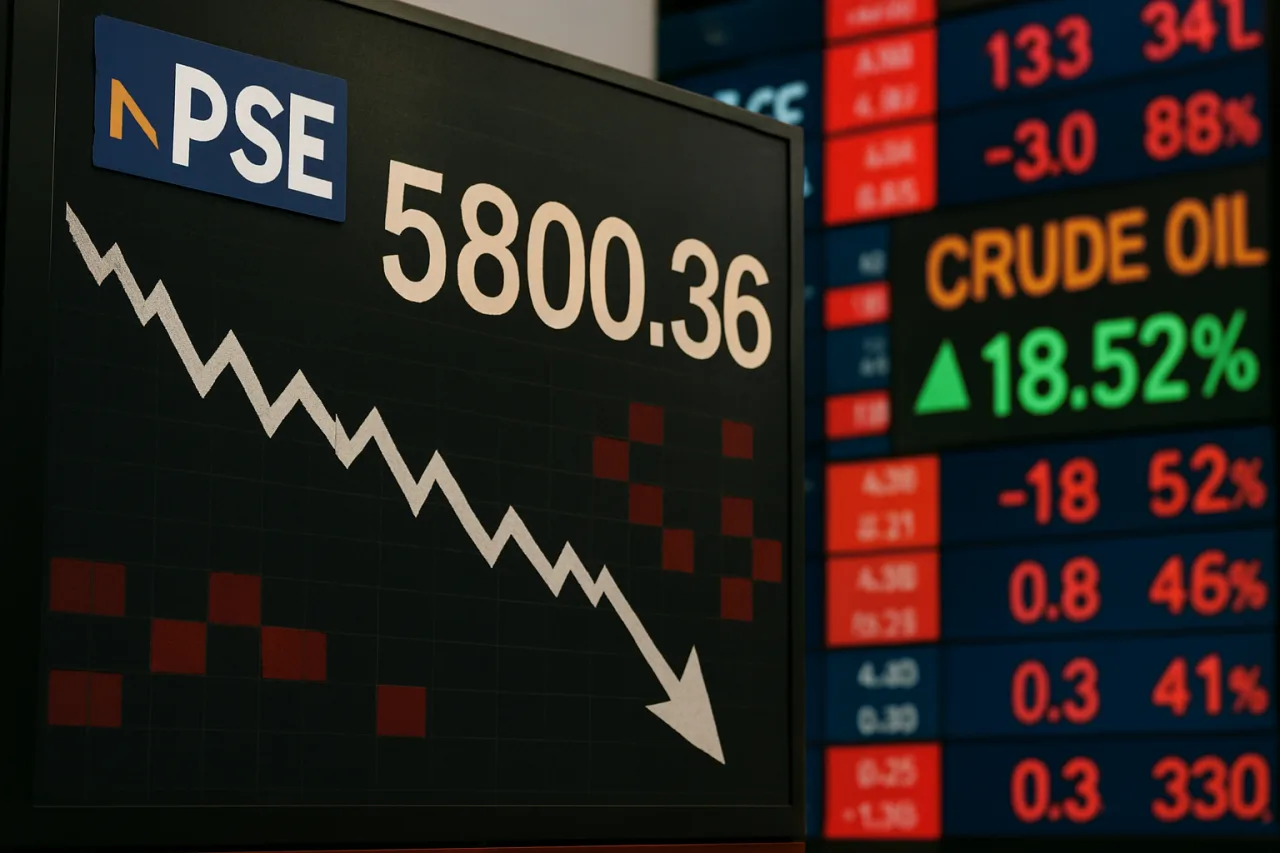
📊 THE BOARD — Monday, September 28, 2026: PSEi trading around 5,800 (−0.44% from Friday’s 5,825.97 close, CFD print) · down 4.82% this month · Brent crude $106.49 (+2.1% Monday, +18% this month) · Fed October hike odds 66% (CME FedWatch) · dollar index 101.39, two-month high · gold $4,212–4,265, fourth straight weekly loss.
Key Takeaway
- 📉 PSE stocks slipped to the 5,800 area Monday — 0.44% under Friday’s 5,825.97 close and down 4.82% for the month — as oil’s 18% monthly surge and 66% October Fed-hike odds kept foreign money cautious.
- 🛢️ The oil bite is the story, not the index level: Brent at $106.49 after Trump rejected Iran’s Hormuz reopening proposal means cost inflation is heading into every Philippine balance sheet that transports, manufactures, or feeds.
- 💰 The GCash IPO window (October 6–12) will absorb retail cash in two weeks — the ladder plan below times your PSE stocks tranches around it instead of pretending it isn’t there.
- 🪜 Bottom-timing loses; laddering wins: four ₱5,000 tranches keyed to 5,700/5,600/5,500 levels plus an IPO-date tranche turn an uncertain tape into a calendar — no headline required.
- 📋 You can finish this piece with a written ber-months plan: exact tranche dates, the two index levels that trigger early buys, and the one oil headline that would change the whole reading.
PSE stocks opened the ber-months on the back foot, and the reason sits halfway around the world: Brent crude popped above $106 a barrel Monday — 18% higher this month — after US President Trump rejected Iran’s proposal to reopen the Strait of Hormuz, and suddenly the same inflation fear that pushed the Federal Reserve’s October hike odds to 66% was repricing every asset in Asia, including the Philippines. The PSEi traded around 5,800, a 0.44% dip from Friday’s 5,825.97 close, extending a month in which the index has given back 4.82% while the dollar climbed to a two-month high at 101.39 and gold — the classic inflation hedge — fell for a fourth straight week to the $4,212–4,265 area. This is not a crash and it is not a bottom; it is a squeeze, and squeezes reward the investor who planned for them and punish the one guessing. The PSE stocks reading below is the whole-market intelligence: what the oil spike does to Philippine earnings, why the October 6–12 GCash IPO changes the liquidity picture, and the four-tranche ber-months ladder that turns 5,800 from a worry into an entry schedule. The reader who needs the one-line version: your ₱5,000 does not care where the index closes today — it cares which dates you committed to this month.
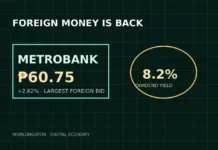
Related: Metrobank Stock at ₱60.75: Why Foreign Money Is Piling Back In
The Board, Read Like a Trader
Seven numbers, one story. 5,800 — the PSEi’s Monday trading area, a 0.44% slip that keeps the index camped near the 10-month-low zone it fell into last week before Friday’s 1.67% bounce. −4.82% — the month-to-month damage, which is why every “cheap” call needs the word relative attached. $106.49 — Brent, up 2.1% Monday and 18% this month, the single biggest macro input for an energy-importing archipelago. 66% — the CME FedWatch odds of an October hike, which would be the second consecutive increase after the September move to 3.75–4.00%. 101.39 — the dollar index at a two-month peak, with the euro shedding 2% this month, the pressure that eventually transmits to the peso. $4,212–4,265 — gold’s Monday range, down more than 4% this month, proof that this is a rate-driven repricing and not a risk-off stampede. Oct 6–12 — the GCash IPO offer window, the domestic liquidity event that will pull retail cash toward one ticker at precisely the moment the index is deciding whether 5,800 is a floor. Read together: global costs are rising, the Fed is still tightening, and the local market is about to share its retail attention with the biggest IPO of the year. That combination is not a reason to freeze — it is a map.
WorldNgayon Analysis: The 5,800 print is doing two jobs at once — repricing PSE stocks against a harder global cost base AND setting the entry landscape for the largest retail onboarding event in Philippine market history. The investor who treats these as separate stories will get whipsawed; the one who plans for both owns the window.
Bottom Line: Every number on Monday’s board points the same direction — higher costs, tighter money, cautious flows — and every one of them was visible before October’s first bell.
Why Oil Bites PSE Stocks Harder Than Wall Street
The Philippines imports most of its fuel, which turns every dollar of Brent into a line item on Philippine cost structures — logistics fleets, food processors, utility bills, airline fuel surcharges. Monday’s Reuters tape carried the detail that matters for earnings: a global refining-capacity shortage has pushed diesel prices to all-time highs, far above crude, which is how energy inflation reaches wages and price tags even when pump prices look stable. “The high bond yields and high oil price tandem continues to act as a thorn in the market’s side,” as KCM Trade chief market analyst Tim Waterer put it in Monday’s coverage of gold — and the same tandem applies with more force to a net energy importer’s equity market. The transmission has a second stage through the currency: the dollar index at 101.39 makes every oil-import bill heavier in peso terms, and the peso’s direction in this window is one of the two variables that decides how your dollar remittance converts this quarter — the World Investment Watch #001 playbook covers the conversion side in full. For PSE stocks specifically, the sectors split cleanly: energy producers and banks with pricing power can pass costs through; consumer-facing names with fixed price points and logistics-heavy retailers absorb the squeeze in margins first. That is the difference between an index number and a portfolio decision.
Bottom Line: Oil at $106 is not a headline for PSE stocks — it is a margin line item, and the companies that cannot pass it through are where the damage concentrates.
The GCash IPO Window Reshapes October’s Flows
Here is the local variable no global macro model prices: between October 6 and 12, the GCash IPO offer window opens, and the country’s largest retail onboarding event starts pulling subscription cash toward a single ticker ahead of the October 20 listing. The pricing lands October 1–2 — this week — and the secondary market for attention follows: brokers report the same pattern ahead of every blockbuster local IPO, where retail cash that would otherwise circulate among PSE stocks sits in wallet balances waiting for one allocation. The smart read from the PNB Holdings debut lesson applies directly: pre-booked demand (the cornerstone book stood at 68.8% before the price was even set) tells you the institutions are not waiting for dips, and the retail investor’s edge is not out-guessing them but joining the structure — with the understanding that listing-day pops are never guaranteed. The practical consequence for this week’s tape: expect PSE stocks to trade heavy into the offer window as cash consolidates, and treat that heaviness as liquidity positioning rather than verdict. The investor who splits attention — half the ber-months budget into the IPO offer, half into index tranches — captures both the debut option and the discounted index, and never has to explain to the family why the whole budget chased one ticket.
Bottom Line: The IPO window is a liquidity event, not a market verdict — plan the tranche calendar around it instead of reading the quiet tape as a signal.
The Ber-Months Question Everyone Asks and the Answer Nobody Wants
The seasonal story writes itself every year: ber-months bring spending, remittances peak, and the market folklore says Philippine equities rally into the holidays. The part nobody wants to hear is that the folklore is not a strategy — 2026’s ber-months open with the index 10% under the year’s mood, an oil spike feeding global inflation, and a central bank that just hiked and prices 66% odds of doing it again in October. What IS verifiable: Friday’s 1.67% bounce off the 10-month-low area showed buyers exist near 5,800; the 7,500 year-end street target from PSE Watch #002 implies a 29% gap that nobody closes in one quarter; and the Fed’s own dot path plus the week’s data calendar — Australian rate decision Tuesday, US personal consumption expenditures inflation print Wednesday, US nonfarm payrolls Friday — will set the tone before any Philippine seasonal effect gets a word in. The disciplined reading for PSE stocks: ber-months is a time window, not a price promise. The window matters because OFW money arrives on schedule regardless of headlines — which is precisely why the tranche structure below works: it converts scheduled income into scheduled positions without requiring any forecast to be right.
Bottom Line: Seasonality is a window; the ladder is the strategy — and the two only work together when the dates are written down before the headlines arrive.
The OFW Ber-Months Ladder — Four Tranches, Two Levels, One Rule
The playbook, sized for the reader with ₱20,000 of ber-months capital and a job that pays in dollars: Tranche one (₱5,000, now): the index traded 5,800–5,826 through the bounce; entering at 5,800 with 20% of the budget is the anti-perfectionism move — the money that buys at “not the bottom” is the money that also buys at the top of the next range. Tranche two (₱5,000, level-triggered at 5,700): the level that would mark a 2% further slide from Friday’s close; if it never prints, the tranche rides to the IPO-date slot instead. Tranche three (₱5,000, level-triggered at 5,600): the panic-zone entry — if global risk-off pushes the index there, that is not a signal to hide, it is the level where the month’s 4.82% drawdown becomes a 7%+ discount on the year. Tranche four (₱5,000, IPO-date keyed October 6): deploy into diversified PSE stocks or an index-tracking position the day the GCash offer opens — either your IPO allocation clears and the market’s retail tide is confirmed, or it scales and the tranche catches the post-offer liquidity return. The one rule: every tranche goes into instruments you have verified on the PSE’s official market information page — broad index products or blue chips — and none of it rides on one stock, one tip, or one debut-day pop. The BSP’s investor-education materials say it the regulatory way: match the instrument to the horizon; the ladder is how a remittance schedule becomes a PSE stocks portfolio.
Bottom Line: Four dates, two levels, one rule — written down this Monday, executed without emotion, reviewed at the October 20 GCash listing.
What Would Change This PSE Stocks Reading — the Two Watch Conditions
Intelligence means knowing what falsifies the plan. Watch condition one — the Hormuz deal: Trump rejected Iran’s reopening proposal over the weekend and said talks continue; an actual de-escalation would knock oil’s inflation premium out of the tape, ease the Fed’s hike math, and relieve the peso — the fastest possible turn from “squeeze” to “relief,” and the ladder’s early tranches would look prescient rather than early. Watch condition two — the Wednesday PCE print: the US inflation number due Wednesday is the Fed’s preferred gauge; a cooler-than-expected print cuts the 66% October odds and weakens the dollar overnight, which lifts both gold’s bid and emerging-market flows — including Manila’s. The asymmetric risk sits the other way: another hot print plus one more oil leg higher pushes hike odds toward 80% and tests whether 5,700 holds at all. Neither condition requires prediction — both require only that the tranche calendar survives them, which it does, because the ladder buys strength weakness alike on written dates. That is the difference between intelligence and commentary on PSE stocks: the commentary ends with a forecast, the intelligence ends with an instruction.
WorldNgayon Analysis: The October window compresses three uncertainties — oil, rates, and the IPO’s liquidity pull — into one month. The investor who resolves none of them but schedules around all three ends the quarter with positions; the one who waits for clarity ends it with the same wallet and a better story.
Bottom Line: Write the two watch conditions next to the tranche dates — if Wednesday’s PCE surprises or Hormuz de-escalates, you will know exactly which numbers on your card just changed.
Frequently Asked Questions
Why are PSE stocks falling while US markets hold up?
The squeeze hits importers first: Brent’s 18% monthly rise lifts diesel to record highs, feeding Philippine cost structures and strengthening the dollar (101.39, a two-month high). Add 66% October Fed hike odds and foreign money turns cautious on emerging markets like the PSE before it flinches on US large caps — the same AI-investment tailwind that props up Wall Street does not reach Manila’s index weights.
Is 5,800 a good entry point for PSE stocks?
It is a reasonable zone to START a laddered entry — 4.82% under last month and near the 10-month-low area — not a signal to deploy everything. The four-tranche structure (now / 5,700 / 5,600 / IPO-date) exists precisely because nobody verifies the bottom until it is behind them; the ladder replaces the guess with dates.
Should I put my ber-months budget into the GCash IPO instead?
Split it. The IPO’s offer window runs October 6–12 with pricing set October 1 — the cornerstone book pre-committed 68.8% of the offer, which tells you institutions are participating without waiting for dips. A 50/50 split between the IPO subscription and diversified PSE stocks tranches captures both the debut option and the discounted index; the PNB debut lesson shows why listing-day pops are never guaranteed.
How does the oil price affect Philippine stocks specifically?
The Philippines imports most of its energy, so Brent at $106 raises peso cost structures across logistics, food, and utilities; diesel at all-time highs above crude is the pass-through channel into wages and prices. Energy producers and banks with pricing power absorb it best; fixed-price consumer names and margin-thin retailers feel it first.
What should OFW investors watch this week?
Three dated events: the RBA decision Tuesday (regional tone), the US PCE inflation print Wednesday (moves Fed odds), US nonfarm payrolls Friday (moves the dollar — and your conversion rate). Domestically, October 1’s GCash IPO pricing announcement is the local event of the week. Each one either reinforces or relaxes the squeeze that is pressing PSE stocks.
Financial Disclaimer: This article is for general information and education, not personalized investment advice. Market data reflect CFD-based quotes and published reports as of September 28, 2026 and change intraday; IPO dates and prices follow the preliminary prospectus and may shift. WorldNgayon.com is not a stockbroker or investment adviser; verify all figures with official PSE and BSP sources before acting.