Table of Contents
Reading Time: 7 minutes
Key Takeaway
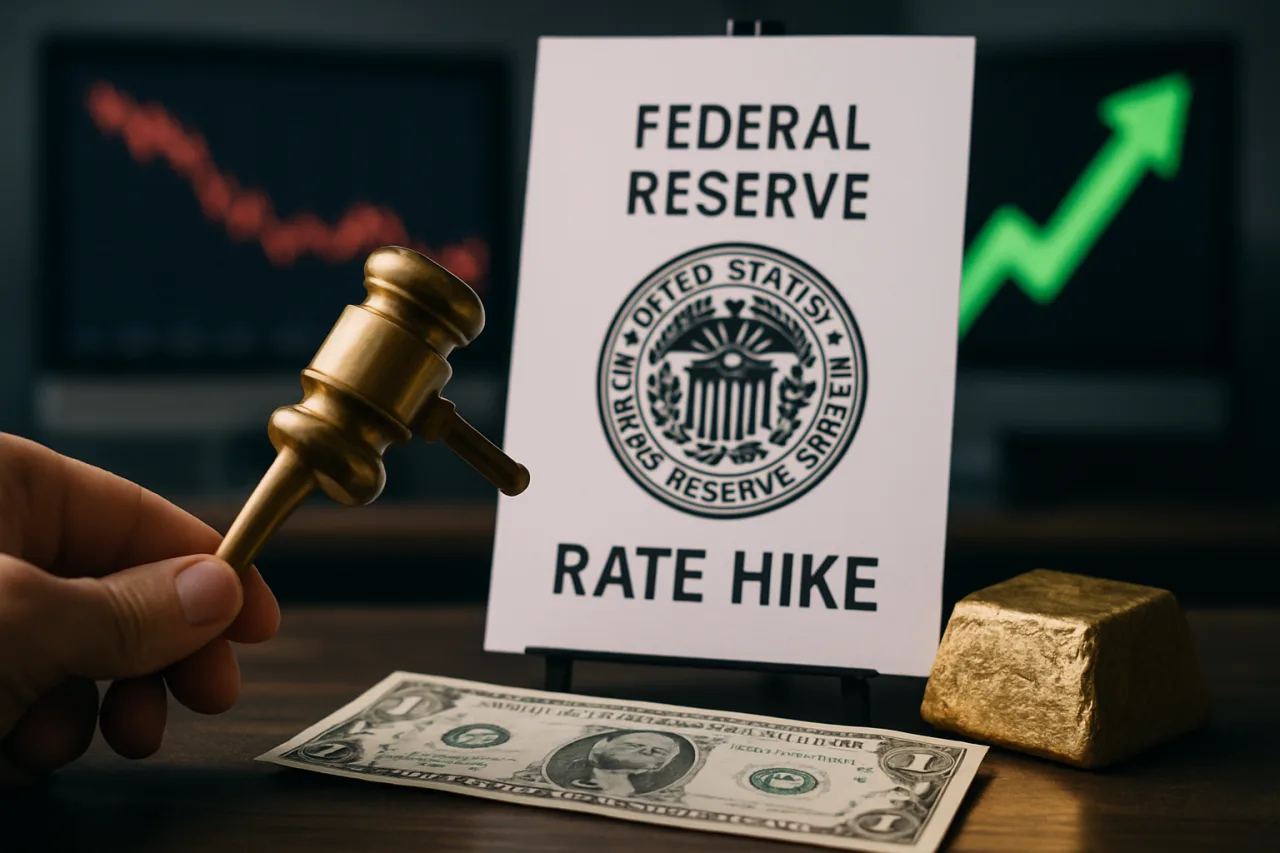
- 🌍 World Investment Watch #001. The week’s global trade is the hawkish Fed rate hike repricing: after a hotter core CPI print, the odds of a hike at the next meeting spiked from 69% to 86% on the CME FedWatch tool — and every asset class repriced around it.
- 🥇 Gold felt the Fed rate hike odds first. The metal sits at $4,285 — down 6.7% in a month and a third straight weekly loss — after touching a record $5,608 in January; the gap between panic and price is now the year’s best hedge-versus-entry debate.
- 💵 The dollar’s strength is an OFW story. Hawkish Fed = strong dollar = stronger remittance conversion — the same force that pressures gold and bonds fattens the peso value of every dollar an OFW sends home.
- 📈 Equities refused to roll over. US stocks held their ground through the Fed rate hike repricing — analysts note hikes don’t automatically end climbs — while AI equities entered the week’s dueling-launch aftermath with fresh price-war margins.
- 🧭 The Fed rate hike playbook: laddered peso-cost entries into dollar-heavy weeks, gold tranches below $4,200 as the hedge line, and the 86% odds treated as weather — sized for, never chased.
One number moved the world’s money this week, and it was not a stock price: the market’s implied odds of a Federal Reserve rate hike at the next meeting — the Fed rate hike trade itself — jumped to 86% on CME FedWatch after a core inflation print came in hotter than expected — 0.3% monthly against forecasts of 0.2%. In one week, that single Fed rate hike repricing knocked gold toward its third weekly loss, pushed Treasury yields higher, lifted the dollar, and still left the world’s equity markets standing — a four-way sequence that tells you exactly who is winning the tug-of-war between inflation and growth. This is the first edition of World Investment Watch, the weekly worldwide Fed rate hike trend brief for Filipino investors: what moved, why it matters to a peso-based, remittance-funded portfolio, and the three practical moves this particular rate environment rewards. If AI World This Week covers the technology race, this series covers the money race — and this week the money race has one name on the scoreboard: the hawkish Fed rate hike trade.
Related: Bitcoin Holds $82,000 as the Fed Rate Hike Odds Flipped — the October 28…
Related: Tokenized Money Market Fund: the $9B Cash Layer Behind Your USDT
The Week’s Worldwide Tape, in Six Numbers
| Number | Level (Sep 25–27) | What It Says |
|---|---|---|
| Fed hike odds | 86% (CME FedWatch) | The market’s verdict after hot core CPI — from 69% in hours |
| Fed funds rate | 4.00% | Already hiked 25bp this month; more priced in |
| Gold | $4,285/oz | Third weekly loss; record $5,608 in January; +13.7% year-on-year |
| US Treasury yields | Surging | The pressure behind gold’s slide and the dollar’s rise |
| Bitcoin | ~$84,400 | ETF inflows $2.39B — the one risk asset institutions bought harder |
| Peso/dollar | Stronger dollar | Remittance conversion math tilts toward OFW households |
Read as one sentence: rising yields raised the dollar, the strong dollar and higher yields punished gold, Fed rate hike odds priced a tighter year, and yet the risk assets with structural demand stories — Bitcoin’s ETF channel, the AI complex riding its price war — held their ground. That divergence is this week’s defining worldwide trend: money is not fleeing risk; it is rotating toward the stories that outlive a rate cycle.
Theme One — Gold: the Hedge That Got Ahead of Itself
Gold’s year is a masterclass in how fast a hedge can run. The metal broke $5,500 early in the year on its way to the January record of $5,608 — an all-time high driven by the year’s first round of central-bank buying and geopolitical hedging — and then spent eight months giving a third of it back as the macro turn did what macro does: a stronger dollar and surging Treasury yields made a non-yielding metal expensive to hold. At $4,285, gold sits 24% off its record but still 13.7% above its level a year ago, with Trading Economics’ model panel projecting roughly $4,706 in twelve months — the sell-side consensus that the secular story survives the hawkish detour. The weekly pattern tells the trader’s version: down more than 2% mid-week on dollar strength, recovering to a 1% weekly loss as buyers re-emerged near $4,270.
For the Filipino saver, this is the year’s most instructive asset because it exposes the difference between hedging and chasing. The OFW household that bought gold at $5,500 in January bought insurance at panic prices; the one averaging tranches near $4,200 is buying the same insurance at a 24% discount while the world’s central banks (China’s reserves ticked up again this quarter) keep doing exactly that. The practical line: gold’s hedge case survives the hawkish spell — the allocation case (5–10% of long-term money) is unchanged — but the entry discipline improves precisely when the price is falling, not when the record prints.
WorldNgayon Analysis: The hawkish repricing turned gold from a crowded momentum trade back into a hedge — which is the version of gold a remittance-funded household should actually own. The entry discipline is tranche-based: below $4,200, accumulate; below $4,000, accelerate; never fund it from the household floor.
Bottom Line: A 24% discount on the year’s best-performing hedge is not a crash — it is the market handing back the panic premium.
Theme Two — the Fed Rate Hike-Dollar Loop That Pays OFW Households
The same forces that pushed gold down push the peso conversion up: hawkish Fed rate hike expectations strengthen the dollar, and a strong dollar converts each remittance dollar into more pesos at the receiving end. For the millions of Filipino households whose budget is denominated in both currencies, this is the quiet upside of a rate-hike scare — and it is also why the BER-month remittance season lands differently in a hawkish year: the seasonal volume peak meets a favorable conversion window. The household playbook writes itself in two lines: send the fixed obligations as usual, and if the dollar’s strength persists through October, split larger seasonal transfers into two tranches to average the conversion rate rather than betting it on one payday. The second-order effect lands on the investing side — a peso earned by dollars invested abroad converts stronger this quarter, which is the practical window for funding the GCash IPO application or the stock-market tranches we mapped in PSE Watch #002.
The cost side deserves equal honesty: the same hawkish path that fattens remittances raises every peso-denominated borrowing cost — credit cards, consumer loans, and the re-pricing of anything floating. The household that captures the strong dollar on the income side and dodges variable-rate debt on the expense side nets the full benefit; the one that runs credit-card balances into the BER season gives the bank back twice what the exchange rate gave.
WorldNgayon Analysis: A hawkish Fed is usually narrated as bad news for emerging markets; for the remittance-funded Filipino household it is a mixed hand with a real upside — conversion strength now, borrowing pain later. Play the conversion window deliberately, and treat the BER season’s strong dollar as the year’s best funding window for investments, not just expenses.
Bottom Line: The strong dollar is a windfall only if you convert it on purpose — schedule the remittance, fund the investment tranches, and keep the debt plastic in the drawer.
Theme Three — Risk Assets That Refused to Flinch on Fed Rate Hike Odds
The week’s most instructive worldwide Fed rate hike trend is what did not crash. Equities held through the hike-odds spike — and the Goldman Sachs analysis published this quarter argues the point directly: a Fed rate hike may not keep the US stock market from climbing, because hikes arriving from strength (growth and earnings) price differently from hikes arriving in panic. The AI complex offered the week’s proof: two frontier labs halved each other’s prices in a single afternoon, and the market read margin compression at the model layer as margin expansion at the application layer — the same logic that carried the Nasdaq through September’s wobble after the pacing essay. Bitcoin, the other rate-sensitive risk asset, did not flinch either: $2.39 billion of weekly ETF inflows — the strongest since October — landed precisely in the week Fed rate hike odds spiked to 86%, which is as clean a demonstration as markets have produced that structural demand now decouples parts of the risk complex from the rate cycle. The worldwide pattern for the week: the rate repricing sorted assets by demand story, not by risk label — stories with structural buyers (ETF allocators, AI budgets, corporate treasuries) held; stories without one (gold’s January froth, long-duration anything) paid for the detour.
WorldNgayon Analysis: The Filipino portfolio lesson from the week is a sorting rule, not a prediction: own the assets whose demand does not depend on the next Fed meeting (remittance-funded peso equities bought on tranche, the household’s gold hedge, a capped crypto sleeve through regulated rails), and borrow nothing whose price depends on the hike landing exactly as the market currently prices it.
Bottom Line: Rate fear sorted the world’s assets this week — structural demand held, froth paid, and the household that mirrors that sorting is the one the cycle cannot shake — the Federal Reserve’s own policy page is the primary source for every meeting decision that drives it.
The World Investment Watch Scoreboard, Next Week
One glance a day keeps this watch honest. Watch one: the CME FedWatch odds line — if 86% moves above 90%, the hike is a certainty and the conversion window is closing; schedule the remittance before the meeting, not after it. Watch two: gold at the $4,200 tranche line — the alarm is the trade, and the response is written. Watch three: the weekly Bitcoin ETF flow print — a second $2B-plus week confirms structural demand through the Fed rate hike decision; a negative print says wait. Watch four: the peso rate at your remittance provider — a 50-centavo move against the dollar is worth real money on a seasonal transfer. That is the whole scoreboard: four lines, five minutes a day, and every response pre-written. The investor who reads only these four numbers this week is better informed than one who refreshes five screens an hour — which is the point of a worldwide watch that ends in moves instead of moods.
The Weekly Playbook, Compressed
One paragraph, five moves against the Fed rate hike backdrop: one — schedule this month’s remittance conversion deliberately inside the strong-dollar window rather than defaulting to payday; two — fund the investment tranches from that conversion, not from borrowed pesos; three — set the gold tranche alarm at $4,200 and let the hedge buy itself on weakness; four — keep the crypto sleeve inside its 5% cap through the Fed decision — the GCash IPO price piece carries the peso-side window — using the $82,000 line as the second-tranche trigger our Crypto Watch #002 detailed; and five — watch the Fed’s next meeting with a calendar, not a chart: the 86% odds mean the decision is mostly priced, and the surprise is what happens after, not during. A Filipino professional who ran these five lines this week outperformed every ticker-chaser in the building — with less screen time, not more.
Bottom Line: The worldwide trend this week was repricing, not collapse — and repricing weeks are where disciplined households quietly buy what panic is selling.
Frequently Asked Questions
What are the current odds of a Fed rate hike?
About 86% on CME’s FedWatch after the hotter-than-expected core CPI print of 0.3% monthly — up from roughly 69% within hours of the data landing, one of the fastest hawkish repricings of the year.
Why is gold falling if it is a hedge?
Because a hawkish Fed lifts the dollar and Treasury yields, making non-yielding gold more expensive to hold — the same mechanism that pushed gold to its $5,608 January record in the easy-money phase reversed into a 24% give-back. The hedge case returns on weakness, which is why tranche entries below $4,200 are the disciplined play.
How does a Fed rate hike affect OFW remittances?
Positively on conversion: hike expectations strengthen the dollar, so each remitted dollar converts to more pesos. The offset arrives in borrowing costs — peso credit cards and floating-rate loans reprice upward. Households that capture the conversion windfall while avoiding new variable-rate debt net the full benefit.
Is gold still worth buying at $4,285?
As a 5–10% long-term hedge, yes — the year-on-year gain is still +13.7% and central-bank demand continues. As a momentum trade at January’s record, it failed. The difference is entry: averaging in near $4,200 is a hedge with a discount; buying records is a bet on momentum.
What should Filipino investors watch next week?
Three numbers: the Fed rate hike decision against that 86% pricing, the weekly Bitcoin ETF flow print (does the $2.4 billion pace hold?), and the peso-dollar conversion rate into the BER remittance peak. Each has a written response in the playbook above.
Financial Disclaimer: This article is for general information and education, not personalized investment advice. Prices, odds, and policy expectations reflect reports available as of September 27, 2026, and change rapidly with every data release. WorldNgayon.com is not a broker, dealer, or investment adviser; do your own research or consult a licensed adviser before making investment decisions.