Table of Contents
Reading Time: 8 minutes
Key Takeaway
- 💸 The invoice follow up gap is the most expensive one. Most freelancers lose money not to non-payment but to silence — an unpaid invoice sits untouched because the follow-up email feels risky, and the money waits an extra week or two for no reason at all.
- 🤖 AI removes the fear, not the professionalism: six reusable prompts generate the whole escalation ladder — the day-3 nudge, the day-7 second notice, the formal statement of account, the firm-but-fair escalation draft, the phone script, and the payment-plan negotiator.
- 📋 Only 14.9% of Philippine firms use AI (the PIDS gap published this week) — which means the freelancer who runs a prompt-driven invoice follow up process is operating with an edge most of the market has not picked up yet.
- 🧾 The worked example is the artifact: a ₱45,000 design invoice 15 days overdue, run through the ladder, ending in a payment plan and a client relationship intact — every prompt is copy-paste ready in this piece.
- 🔁 The system runs on a calendar: due date +3, +7, +14 triggers turn receivables from an anxiety into a checklist — twenty minutes a week, not an hour of drafting dread.
The hardest email a Filipino freelancer ever writes is the invoice follow up — not the pitch, not the delivery note, but the polite sentence that says you owe me money. So most freelancers don’t send it. The invoice sits in the client’s inbox growing quieter by the day, the rent in the Philippines doesn’t wait, and the relationship you’re protecting by staying silent is the same one an honest, well-written reminder would have strengthened. This invoice follow up task is exactly what generative AI was built for: it drafts the uncomfortable message in seconds, holds a professional tone that never sounds desperate or accusatory, and scales from a gentle nudge to a formal statement without you typing an angry word at 11pm. And the timing matters — a PIDS study this week found only 14.9% of Philippine firms using AI at work, while the freelance economy runs on the same tools for free. The six prompts below are the complete invoice follow up ladder: copy them, paste your invoice details, and get paid without sending a single message you’ll regret. That is the full artifact — prompts, worked example, and the calendar that runs it.
Why Invoice Follow Up Goes Quiet — and Why AI Fixes the Draft, Not the Discipline
The invoice follow up silence has a logic to it. The freelancer who follows up feels like they’re nagging a client they may want to work with again; the freelancer who doesn’t follow up teaches every client that deadlines are decoration. Both fears are real and both resolve the same way: the problem was never the reminder, it was the wording — and wording is the one thing large language models do best. A well-built prompt makes the AI do the emotional labor: it separates the facts (invoice number, amount, due date, days overdue) from the feelings (frustration, awkwardness, resentment), and produces the calm, factual, gently firm invoice follow up message a professional sends when the feelings are loud. The PIDS research published this week — the 14.9% AI-adoption gap — adds the market context: most of your competition is not doing this. The freelancer who sends a structured, polite, escalating invoice follow up sequence reads as more professional than the one who goes quiet, and the one who goes quiet reads as less professional than the one who never invoiced at all.
WorldNgayon Analysis: The receivables ladder is the single highest-return AI workflow a solo professional can adopt this week — zero software cost, one prompt file, and it attacks the cash-flow problem every freelancer knows first-hand.
Bottom Line: Clients don’t leave because you asked for your money; they leave because of how you asked — and the invoice follow up pack below removes the how from your hands entirely.
The 6-Prompt Invoice Follow Up Pack
Set the scene once, then run each prompt at its calendar slot. Every prompt assumes you paste three facts at the end: [CLIENT NAME], [INVOICE #, AMOUNT, DUE DATE, DAYS OVERDUE], and [YOUR PAYMENT DETAILS].
Prompt 1 — the Day-3 Polite Nudge:
You are my accounts assistant. Draft a 3-sentence email reminding [CLIENT] that invoice [#, ₱AMOUNT] was due [DATE] and is now [N] days overdue. Tone: warm, assumes an oversight, zero guilt. Offer the payment link again and one line of help ("if anything on our end is holding this up, tell me and I'll fix it today"). End with a specific ask: a payment date or a reply today.Why it works: the “assumes an oversight” frame gives the client a face-saving exit — 80% of late invoices end at this step because the nudge arrived before pride got involved.
Prompt 2 — the Day-7 Second Notice:
Draft a second-notice email for invoice [#, ₱AMOUNT], now [N] days overdue, referencing my [DATE] reminder. Tone: still courteous but explicit — quote the original payment terms (net 15), restate the amount, and note that future work pauses until this clears. One paragraph. No emotion words. End with two options: pay today, or reply with a firm date you will commit to.Why it works: it converts the nudge into a record — quoted terms and a paper trail that matters if the relationship ever needs a third party’s help.
Prompt 3 — the Formal Statement of Account:
Build a formal Statement of Account for [CLIENT]: a table listing invoice number, description, issue date, due date, amount, and days overdue, with a total outstanding at the bottom. Add a short cover note: neutral tone, "for your records," and a line that this statement supersedes prior reminders. Output as text I can paste into a PDF.Why it works: finance departments respond to documents, not conversations — a statement of account gets routed to the person who actually releases the money.
Prompt 4 — the Day-14 Escalation Draft:
Draft a final-notice email for invoice [#, ₱AMOUNT], [N] days overdue. Professional and firm: state that work is complete and delivered, list the previous reminders with dates, and say plainly that if payment or a written payment arrangement doesn't arrive within 7 days, I will [NEXT STEP — e.g., pause all ongoing work / refer to a collections process]. No threats beyond that sentence, no insults, one paragraph.Why it works: the escalation is credible precisely because it stays inside one calm sentence — threats dilute leverage; deadlines concentrate it.
Prompt 5 — the Phone Script:
Write a 30-second phone script for calling [CLIENT] about invoice [#, ₱AMOUNT], [N] days overdue. Structure: one-line greeting and reason for calling, one sentence stating the facts, one open question ("what's the best way to get this settled this week?"), and two responses — one if they promise a date, one if they deflect. Keep it human: no corporate phrases.Why it works: some clients simply don’t answer email — the script keeps the call short, factual, and repeatable even when you’re nervous in the first ten seconds.
Prompt 6 — the Payment-Plan Negotiator:
[CLIENT] says they can't pay the full ₱AMOUNT right now. Draft a reply offering a structured plan: 50% this week, balance in two installments on stated dates, in exchange for written confirmation. Tone: understanding, businesslike, zero sympathy theater. Include one line that future work requires current payment — and ask for the agreement in writing today.Why it works: most unpaid invoices aren’t disputes, they’re cash-flow problems — the plan recovers the money and keeps a client who’s merely broke, not bad-faith.
The Invoice Follow Up Worked Example — ₱45,000, 15 Days Overdue, One Relationship Saved
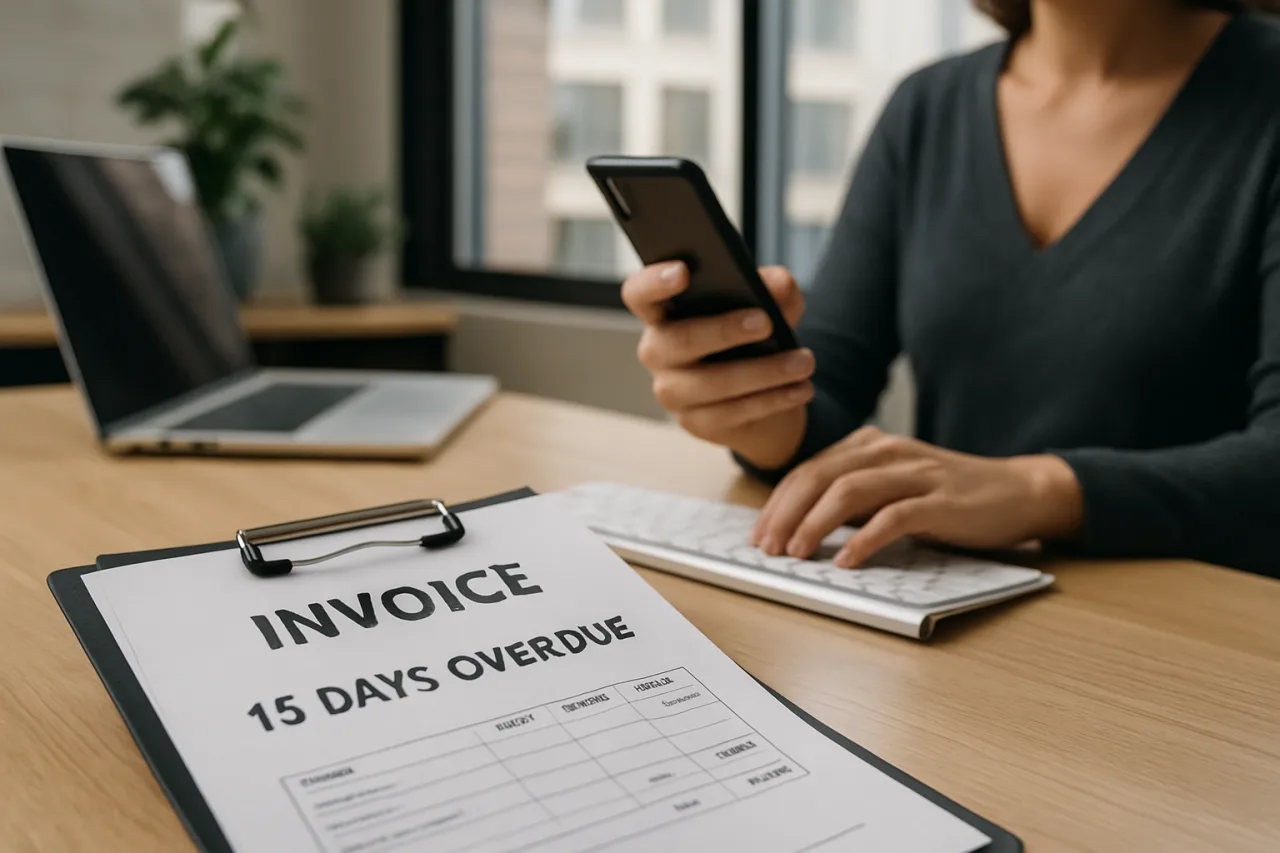
Real-shaped scenario, full run-through. The invoice follow up scenario: a freelance designer finishes a brand kit for a Manila retail client: invoice ₱45,000, net 15, due September 12. Silence. Day 15, Prompt 1 runs — the AI returns the invoice follow up in three sentences: warm greeting, invoice restated, “if anything on our end is holding this up, tell me and I’ll fix it today.” Reply within an hour: “apologies, we’re sorting our cash flow.” Day 17, Prompt 6 runs — the offer lands: 50% now (₱22,500), ₱11,250 on September 26 and October 3, written confirmation requested. The client signs the plan the same afternoon; the first half lands the next morning. Day 24, Prompt 3’s statement of account goes out with the second installment reminder attached — no awkwardness, because every message so far read like a professional accounts desk, not a frustrated supplier. Final installment arrives October 3, two days early. Total freelancer time across the whole sequence: eleven minutes. The client books a second project a week later — citing, of all things, “how easy your billing was to work with.”
Bottom Line: The ladder didn’t just recover ₱45,000 — it converted the most dreaded part of freelancing into a process the client experienced as professionalism.
The Calendar That Runs Itself
The prompts are the ammunition; the calendar is the discipline. Set three recurring rules the day you send any invoice: due +3 → Prompt 1; due +7 → Prompt 2; due +14 → Prompt 4, with Prompt 3 ready as the attachment. Two free layers make this effortless: a simple Google Calendar repeat (five minutes per invoice at issue time), or the full pattern this site documented in the Prompt of the Day #007 meeting-minutes system — one AI session on Friday that drafts all next week’s follow-ups from your invoice ledger in a single pass. Pair the Friday session with the money-transfer timing of the Wise USD-to-PHP playbook and the receivables loop closes end to end: client pays, you convert at the mid-market rate, the family budget never feels the gap. The system’s total maintenance cost is twenty minutes a week — which is exactly the trade the PIDS adoption analysis says separates the 14.9% from everyone else.
Bottom Line: Three calendar rules and one Friday AI session turn “chasing payments” into a system that runs itself while you do billable work.
What Not to Prompt in an Invoice Follow Up — Three Lines That Cost Freelancers Money
The same AI that writes the perfect invoice follow up can write the message that torches a client can write the message that torches a client — keep these boundaries. No threats beyond the stated consequence: legal-action language you don’t intend to execute is unenforceable leverage and a reputation risk; Prompt 4’s single next-step sentence is the whole escalation. No public shaming: naming-and-shaming a client in freelancer groups feels righteous and reads as unprofessional to every future client who sees it — the BIR’s invoicing rules and the DTI’s small-business resources and a written contract are the instruments that carry weight, not screenshots. No anger in the prompt itself: if you draft the invoice follow up while furious, the output inherits the fury — write the prompt when calm, let the model stay calm, send when the message reads like Prompt 1’s tone no matter how you feel. And the boundary this site keeps in every money piece: AI drafts the letter; it is not your lawyer, and for genuinely disputed work the contract and the facts — not the email — win the day.
WorldNgayon Analysis: The prompt pack’s value is asymmetric: eleven minutes of drafts recovers weeks of frozen cash flow, and the invoice follow up discipline it builds — terms quoted, dates committed, records kept — is the same discipline that separates pros from hobbyists in every client industry.
Bottom Line: Prompt for the outcome (money moving), never for the emotion (being right) — the invoice follow up ladder already contains every word the outcome needs.
Frequently Asked Questions
What do I write in an invoice follow up email?
Five facts and one ask: your name, the invoice number and amount, the due date and days overdue, the payment details again, and a specific request (“confirm a payment date today”). The six prompts above generate every variation from polite nudge to final notice with those facts pasted in.
How many times should I follow up on an unpaid invoice?
Three structured touches before escalation: day 3 (nudge), day 7 (second notice), day 14 (final notice with a stated next step), then the statement of account and payment-plan prompts as recovery tools. Beyond that, stop drafting and decide — either the negotiated plan or formal collection.
Can I use ChatGPT to write collection emails?
Yes — it’s the ideal use case: factual, tone-sensitive, repetitive drafting. Paste the invoice facts and the escalation prompt, keep the consequence sentence single and real, and never let the AI add threats you don’t intend to carry out.
How do I ask for payment without sounding rude?
State facts, assume oversight, and give the client an exit: “flagging in case this slipped” reads as professional, not rude — rudeness lives in adjectives, and the prompt pack keeps them out. The worked example above recovered ₱45,000 with a client who later cited the billing process as a reason to rehire.
What is a payment plan for overdue invoices?
A written agreement splitting the balance into dated installments — typically half up front — in exchange for staying engaged. Prompt 6 drafts it, the client confirms it in writing, and the statement of account tracks each installment until zero.
Financial Disclaimer: This article is for general information and education, not legal or financial advice. Follow-up templates and payment terms depend on your contract and jurisdiction; consult a professional for disputes or collections that escalate. WorldNgayon.com is not a financial adviser.