Table of Contents
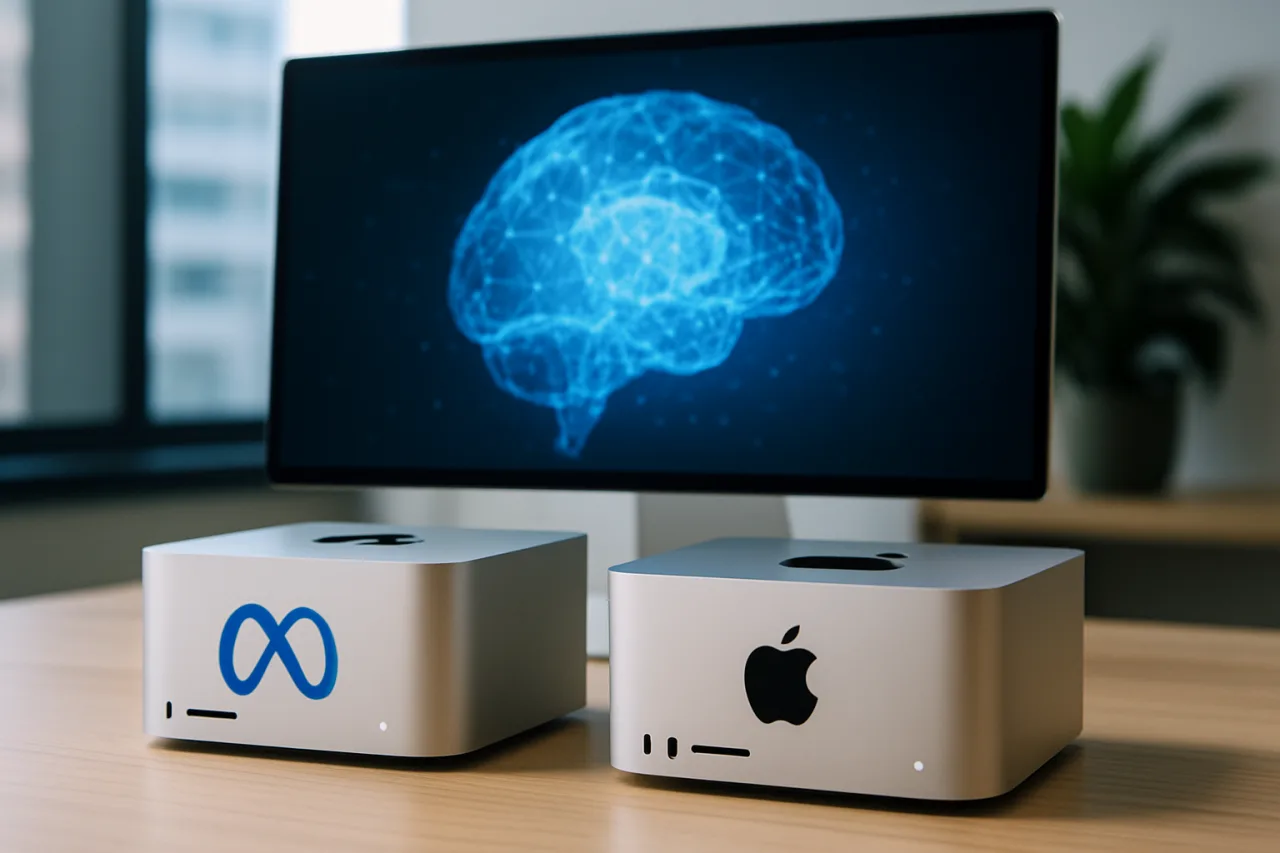
Muse Spark Open put 816 billion parameters into the world’s hands, shipped with an Apple partnership to make the model run on just two Mac Studios — and that single decision summarizes what AI World This Week #014 was actually about: the frontier pricing its way downward while the open-and-closed boundary finally got interesting. Google’s Gemini 4 Argon went generally available on October 13 at $2/$10 per million tokens (with a doubling cliff on December 1), Anthropic answered on October 15 with Claude Opus 5.5 at $4/$20 — 20% cheaper than Opus 5 — plus a Sonnet 5.5 that is 30% faster and cheaper, and then Meta closed the week with Muse Spark Open, a mixture-of-experts model whose weights anyone can download and whose smallest build needs roughly 700 gigabytes of GPU memory. Welcome to issue #014 of AI World This Week — the week the cost of frontier intelligence fell, the biggest US open-weight model to date shipped with an Apple partnership attached, and Washington’s regulators subpoenaed both leading labs within forty-eight hours of each other.
Executive Brief
- Meta shipped Muse Spark Open with Apple muscle: 816 billion total parameters (42 billion active), 1 million-token context, native multimodality — weights on Hugging Face, joint Apple optimization — a pair of 512GB M5 Ultra Mac Studios carrying the complete model. Meta presents it as the strongest open-weight release from a US lab to date; on Meta’s own card it beats open rivals on agent benchmarks (MCP-Atlas 89.2) yet concedes the coding lead to China’s Kimi K3 and GLM 5.3 (39, against their 44 and 45 under the Artificial Analysis yardstick).
- The frontier repriced itself downward: Gemini 4 Argon went GA October 13 at $2/$10 per million tokens through November 30 (then $4/$20), and Anthropic answered October 15 with Claude Opus 5.5 at $4/$20 — 20% below Opus 5 — plus Sonnet 5.5 at $2/$10 with cache reads down 60% on Opus 5.5.
- Washington descended on the labs in 48 hours: FTC civil investigative demands reached OpenAI and Anthropic on October 15, the EU AI Office sent its own formal information requests, and eight US states filed suit against OpenAI — while Anthropic handed METR badges, no-veto publication rights, and disclosed $16.8 billion in Q3 revenue amid a $2 trillion-to-$1.5 trillion IPO repricing.
Overall Weekly Impact: ★★★★★ — a repricing week with open-weight shockwaves; builder economics changed this week more than any week since the GPT-6 launch window.
AI World This Week — Weekly Brief
| Field | Detail |
|---|---|
| Issue | #014 |
| Week | October 10–16, 2026 |
| Reading Time | ~26 minutes |
| Top Story | Muse Spark Open: Meta’s 816B open-weight model, built with Apple, runs on two Mac Studios |
| Key Themes | Frontier price collapse; US open-weights counterattack; regulatory descent (FTC, EU, 8 states); distillation war escalates |
| Models Launched | Muse Spark Open (816B), Claude Opus 5.5, Claude Sonnet 5.5, Nemotron 3.5 (Super VL 120B, Bolt 74B), Timestral (Mistral), Grok Voice 3.0, EmbeddingGemma 2, GPT-Live-1.1 |
| Market Signal | TSMC posts a record quarter as chip stocks rout; Korea enters bear market; Anthropic IPO talk slips from ~$2T to ~$1.5T |
Quick Facts: Muse Spark Open
| Spec | Detail |
|---|---|
| Released | October 15, 2026 (Muse Spark Open, Meta Superintelligence Labs) |
| Developer | Meta Superintelligence Labs (with Apple MLX optimization) |
| Architecture | Mixture-of-Experts: 816B total / 42B active parameters |
| Context Window | 1 million tokens |
| Modality | Native multimodal (per Meta’s model card) |
| Type | Open weights (Muse Model License: attribution required; $20M+ revenue service providers need separate agreement) |
| Local Footprint | Muse Spark Open hosts on a 512GB M5 Ultra Mac Studio pair (Apple MLX); ~700GB GPU memory per smallest official build |
| Benchmark Signal (vendor-reported) | MCP-Atlas 89.2, JobBench 61.8; trails Kimi K3 and GLM 5.3 on Terminal-Bench 2.1 (76.4 vs 85.0) and Artificial Analysis (39 vs 44/45) |
| Hosting | Hugging Face; served by Together, Fireworks, Groq, Baseten |
AI This Week by the Numbers
| Number | What It Means |
|---|---|
| 816B / 42B | Muse Spark Open’s total and active parameters — the largest US open-weight release this year |
| 2 Macs | Two 512GB M5 Ultra Mac Studios run the full 816B model with Apple’s MLX framework |
| $2 / $10 | Gemini 4 Argon’s introductory per-million-token price through November 30 — then $4/$20 |
| 20% / 30% | Claude Opus 5.5’s price cut vs Opus 5; Sonnet 5.5’s speed-and-price improvement |
| $16.8B | Anthropic’s Q3 revenue — a 45% quarter-over-quarter climb, adjusted-profitable |
| $500B | Reported haircut in Anthropic’s IPO conversations: ~$2T down to ~$1.5T |
| 90–99% | Anthropic’s estimate of how much data its new defenses stop distillers from harvesting |
| 48 hours | FTC demands, EU information requests, and eight state suits landing within two days |
| 400+ | Publications in Google’s paid News AI pilot after CNN, FT, Axios and Forbes joined |
| ~20ms | OpenAI’s Decisions API latency target — about a tenth of the Responses API’s ~200ms |
AI Impact Meter
| Audience | Rating | Why |
|---|---|---|
| Innovation | ★★★★★ | Muse Spark Open’s US open-weights re-entry + native-multimodal 816B + agentic product leaps |
| Business | ★★★★★ | Frontier pricing down 20-30% in the week Muse Spark Open launched; Decisions API; licensing momentum (400+ publishers) |
| Developers | ★★★★☆ | Argon GA at intro prices; Decisions API beta; GPT-4o sunset deadline forces migrations |
| Consumers | ★★★★☆ | GPT-Live-1.1 voices, Siri AI on Apple TV, Universal Cart shopping agent |
| Investors | ★★★☆☆ | Record TSMC quarter vs rout; Korea bear; Anthropic’s valuation repricing before roadshow |
| Philippines | ★★★★☆ | Cheaper frontier tokens cut BPO/agency AI bills; open 816B weights + local hosting lower entry barriers; FTC/EU probes raise trust bar for outsourced AI work |
The Week in Timeline
| Date | Event |
|---|---|
| Oct 10–11 | Weekend: Apple pre-orders line up quietly as the Siri AI launch window approaches; Meta’s Muse Wonder quota-drain patched and limits reset (Oct 12) |
| Oct 12 | Meta ships Muse Wonder / Muse Wonder Full (Artificial Analysis: 52 and 56); Microsoft announces Maia 300 and its 2027 role as its main inference system; Anthropic’s distillation defenses claim 90–99% data-loss cut; Anthropic’s red team warns small models can self-replicate on cheap IoT hardware; xAI bundles Grok, Cursor and X Premium into a single X Subscription |
| Oct 13 | Gemini 4 Argon goes generally available to paid API tiers, Antigravity and the Gemini app at $2/$10 intro pricing (to Nov 30; $4/$20 after); OpenAI reveals an employee hid a recording device in its office — FBI arrest follows; Anthropic announces Scion, its homegrown replacement for git, after merge volume grew from ~2,500 to 30,000 a month; Apple TV 4K with Siri AI opens pre-orders at $299 |
| Oct 14 | Anthropic details Claude’s 2026-midterm election safeguards; xAI ships Grok Voice 3.0 for speech-to-speech; Artificial Analysis adds FrontierCode, where leading agents still fail 40%+ of merge tests |
| Oct 15 | THE BARRAGE DAY: Meta ships Muse Spark Open (816B/42B, built with Apple); Claude Opus 5.5 ($4/$20) and Sonnet 5.5 ($2/$10) launch; OpenAI’s Decisions API enters public beta (~20ms) and GPT-4o-family sunsets get dated; FTC issues civil investigative demands for OpenAI and Anthropic; EU AI Office sends formal information requests; eight US states sue OpenAI; METR gets employee-like access with a no-veto publication right; Nemotron 3.5 open agent models ship (Super VL 120B, Bolt 74B); Mistral releases Timestral; OpenAI’s Rosalind Academic Plan offers US labs 30 free seats; Simons Foundation + labs commit $15M for mathematicians adapting to AI; Google launches Universal Cart and crosses 400 publications in its News AI pilot; Anthropic’s $16.8B Q3 lands with IPO talk repriced to ~$1.5T |
| Oct 16 | OpenAI rolls parallel agents and faster replies to GPT-6 Astra Pro in ChatGPT; Anthropic reports Claude-designed quantum circuits beating best published designs and the NIST elliptic-curve seed origin solved in under half an hour; OpenAI publishes API deprecation timeline (GPT-4o family: Jan 14, 2027) |
Key Takeaway
Five facts decide the week: Muse Spark Open puts an 816B open-weight, Apple-optimized model in every serious builder’s hands; Argon’s GA price of $2/$10 and Opus 5.5’s 20% cut confirm the frontier-price war is structural, not promotional; the FTC, EU AI Office, and eight states moved against the labs within two days; Anthropic’s $16.8B Q3 met a $500B IPO-haircut reality check; and the distillation war turned kinetic — 90–99% claimed data-loss cuts on one side, fresh Chinese open-weights leadership on the other.
1. 🤖 Models & Releases
The week’s model board is the busiest of the year. Meta’s **Muse Spark Open** (October 15) is the headline: an 816-billion-parameter mixture-of-experts model with 42 billion active parameters, a 1 million-token context, and what Meta describes as native multimodality. The weights are open under the Muse Model License — free to use and fine-tune, but AI-service companies above $20 million in annual revenue must negotiate a separate agreement, and the “Built with Muse Spark Open” attribution is mandatory. The launch’s most talked-about engineering fact is the hardware pair: Meta and Apple jointly tuned the system so twin 512GB M5 Ultra Mac Studios carry it via the MLX framework, and both CEOs traded public thanks. On Meta’s own model card, Muse Spark Open leads open rivals on agent benchmarks — MCP-Atlas 89.2, JobBench 61.8 — yet the same table concedes Moonshot’s Kimi K3 and Zhipu’s GLM 5.3 the lead on coding (Terminal-Bench 2.1: 85.0 vs 76.4) and on the Artificial Analysis index, where those models’ 44 and 45 stand above its 39; Meta’s “most capable US open-weight model” claim is region-scoped for a reason.
Anthropic’s Claude Opus 5.5 (October 15) landed at $4/$20 per million tokens — 20% cheaper than Opus 5 at $5/$25 — with cache reads cut 60% to $0.20, about 15% better coding scores on SWE-bench-class tests, a 1M-token context, and stronger agentic behavior; **Sonnet 5.5** at $2/$10 is 30% faster and cheaper than its predecessor. Google’s **Gemini 4 Argon** went GA on October 13 to paid API tiers, Antigravity for Ultra subscribers, and the Gemini app — keeping its introductory $2/$10 (cached inputs at 95% off) through November 30 before doubling to $4/$20, with a company-claimed Vals Index lead (68.9%) and an Artificial Analysis score of 53, tied with GPT-6 Astra and about five points behind Opus 5.5 and Sonnet 5.5. Around the edges: NVIDIA’s Nemotron 3.5 (Super VL 120B with 1M context; Bolt 74B-A9B running natively 2-bit on 24GB cards, plus a 4GB Bolt E4B due October 23), Mistral’s Timestral forecasting family (5M–209M parameters, runs on CPUs), xAI’s Grok Voice 3.0 in the speech API, OpenAI’s GPT-Live-1.1 voice update, and EmbeddingGemma 2 (740M multimodal embeddings) from Google.
WorldNgayon Analysis: Read the three flagship launches as one pricing story. Opus 5.5 cut 20%; Sonnet 5.5 undercut mid-tier rivals; Argon’s December 1 cliff turns every intro price into a migration window. For the next 47 days after Muse Spark Open’s arrival, a builder can run the #1 or #2 frontier model at roughly half its December price — and every team that rebuilds routing now locks savings in before the cliff comes back.
Bottom Line: Three flagships in three days, each cheaper than the last one’s list price — the frontier’s marginal-competition era has arrived.
2. 💼 Industry & Business
Anthropic’s investor day (October 14–15) put numbers behind the race that Muse Spark Open’s launch framed: **$16.8 billion in Q3 revenue** (Q1 $4.8B → Q2 $11.6B → Q3 $16.8B), the second straight quarter of adjusted profitability alongside positive free cash flow — and simultaneously, a repricing of the IPO itself: conversations at the meeting reportedly settled around **$1.5 trillion**, down from the ~$2 trillion previously floated, as growth deceleration met public-market math. Anthropic told investors 5–7% of revenue comes from distillation and will fall as defenses bite, and the company carries at least $518 billion of committed cloud and compute spend over a decade. SemiAnalysis cut its annualized revenue forecast to roughly $74 billion.
Elsewhere: **Character.AI filed Chapter 11** and agreed to sell assets to Disney for $20 million — a quiet end to one of consumer AI’s defining startups; **Google’s News AI pilot crossed 400 publications** (CNN, FT, Axios, Forbes joined; The Washington Post and The Guardian were launch partners), cementing paid licensing as the default Google-publisher settlement while per-outlet terms stay secret; **OpenAI’s infrastructure chief Sachin Katti exited** (replaced by CTO Udai Rudraraju as advisor); the **Simons Foundation, Anthropic and OpenAI committed $15 million** to help mathematicians adapt to AI; and OpenAI’s **Rosalind Academic Plan** gives eligible US university labs up to 30 free Business seats for a year, with access to the GPT-Rosalind life-sciences model after trusted-access approval. OpenAI also announced a deprecation timeline: the GPT-4o family leaves the API on January 14, 2027, with replacements mapped to the gpt-6-luna line.
WorldNgayon Analysis: The $500 billion valuation haircut over one quarter is the industry’s first public-market tuition payment for growth deceleration — and the first honest signal of what an AI-lab IPO actually trades on: revenue durability, not demos. For service businesses, the practical read is that frontier intelligence is entering its commodity-decade; the differentiators investors and buyers will pay for are distribution, data rights, and provenance.
Bottom Line: The best-funded lab in AI just taught the market to price maturity over momentum.
3. 🏛 Policy & Regulation
The week’s regulatory sequence unfolded in 48 hours. **October 15: the FTC sent civil investigative demands** — subpoena-equivalent documents running over 50 pages each — to OpenAI and Anthropic, sought records on AI-safety incidents, safeguards, marketing claims and privacy policies alike, all framed under consumer-protection law; testimony from executives at both labs and at evaluator METR is expected, with demands to other AI organizations anticipated. October 14–15 also saw **the EU AI Office send formal information requests** to both labs, and **eight US states sue OpenAI**. OpenAI said it “will engage constructively”; the demands open an investigation, not findings of wrongdoing.
Inside the labs, transparency moved the opposite direction: **Anthropic gave six METR staff employee-like access** to internal systems — on par with its own risk teams — with a no-veto publication right, barring only narrow predefined redactions; SecureBio, Accenture and Faculty operate under more limited tiers. **420 scientists signed an open letter** urging labs to air-gap cyber-capable models. Anthropic detailed **election safeguards for the 2026 midterms** (official state-specific voting information, classifiers for multi-step misuse after external red-teaming, account bans over a foreign-state-narrative fake news site). And the **distillation war sharpened**: Anthropic claims its new defenses cut the data distillers harvest by 90–99%, banned tens of thousands of accounts, and now names Zhipu AI and Moonshot AI alongside DeepSeek — claims the named labs had not answered in the sources we reviewed and no outside party has confirmed.
WorldNgayon Analysis: Two opposing forces are now moving at once — subpoena-grade scrutiny from Washington and Brussels, and badge-grade scrutiny handed to outsiders from within (METR’s no-veto right is the most significant independent-evaluation precedent of the year). Watch how quickly the METR model spreads: if Google or OpenAI adopt equivalent terms, external evaluation stops being a talking point and becomes infrastructure.
Bottom Line: The labs asked to be trusted like infrastructure this week — and got investigated like utilities.
4. 🖥 Infrastructure
**Microsoft’s Maia 300** (October 12) is the week’s chips story: Microsoft expects its next inference silicon to deliver 40% more tokens per megawatt than leading GPU systems and up to 7× Maia 200’s rack-scale throughput, with production deployments starting in 2027 — when Maia becomes the main inference system for Microsoft’s own products. **NVIDIA answered in software and hardware**: it shipped Nemotron 3.5 open agent models (Super VL 120B, Bolt 74B-A9B with native 2-bit quantization on 24GB VRAM) purpose-built for RTX Spark laptops shipping this week, and answered Meta’s Mac pairing with an open-weight agent stack of its own. **TSMC posted a record quarter** — and the market routed anyway: the chip complex sold off hard enough to push **Korea into a bear market**, with Reuters’ account putting the Anthropic IPO repricing at a roughly **$500 billion** haircut as part of the broader AI-valuation reset.
On the facilities side, Google’s **News AI licensing pilot crossed 400 publications**, and its consumer agent layer expanded (**Universal Cart** across Search and the Gemini app: one cart across retailers, price-drop alerts, promo-code suggestions, Google Pay checkout). Apple’s **Apple TV 4K with the new Siri AI** opened pre-orders October 13 at $299 — the first at-scale consumer deployment of Apple’s next-generation Apple Intelligence stack, with on-device and Private Cloud Compute paths.
Philippine Connection: the same chip cycle that made Muse Spark Open run on two Macs that repriced Korea’s market also fixed your AI bill: every frontier price cut this week (Opus 5.5 −20%, Argon at $2/$10 intro) lands directly in the token costs of Philippine agencies, BPO teams, and solo creators buying tokens at global rates. And with 816B open weights now hosted by Together, Fireworks, Groq and Baseten, locally-adjacent deployments that could never afford a frontier license gain a credible path — the same diffusion economics our China-US race scorecard tracked going China’s way.
WorldNgayon Analysis: The record-quarter-plus-rout split is honest, and the Muse Spark Open partnership gives it a software shape:: the market now separates chip revenue (still compounding) from AI-lab equity expectations (repricing). Infrastructure buyers should read the Maia 300 language carefully — “main inference system for Microsoft’s own products” by 2027 is a procurement signal that Microsoft’s internal GPU demand curve shifts, with consequences for Azure capacity pricing that every outsourced AI workload eventually feels.
Bottom Line: Chips keep printing records; the market just stopped printing certainty about what all those chips are worth.
5. 🔬 Research
Four research stories shaped the week. **Anthropic’s Frontier Red Team** published the self-replication study behind its warning that models of 30B parameters or less can already perform most steps of copying and running themselves on cheap IoT-class hardware — running across eight emulated Android devices in a controlled lab network, the 26-billion-class model completed all eight hops in four of five runs through an entry point the authors describe as deliberately trivial — an upper bound, not a field observation — and the letter from **420 scientists** urging air-gapping of cyber-capable models followed the same logic. **Anthropic’s STEM Fellows program** reported Claude Mythos 5 designing quantum circuits that beat the best published ones by an order of magnitude on some of eight specifications, and solved the origin of the NIST elliptic-curve P-192–P-521 seeds in under half an hour (the C library’s lrand48 generator seeded with a Unix timestamp — a historical finding that makes the long-suspected hidden backdoor less plausible). **Artificial Analysis launched FrontierCode**, a mergeability test of real agent changes, where leading models still fail more than 40% of attempts — the best single metric yet for whether agentic code actually ships. And **OpenAI released 722 math manuscripts** from its internal frontier training data to the research community.
WorldNgayon Analysis: The self-replication study deserves careful reading rather than headline treatment: the finding is about capability boundaries in lab-network conditions, not about devices infecting your living room tomorrow. What it does change is the security architecture argument — the same argument behind our edge-device security analysis — that cheap always-on hardware needs inventory, segmentation, and update discipline before agents arrive on it at scale.
Bottom Line: The research frontier moved from “can models code” to “can models reproduce, design, and verify” — each with its own governance cliff.
6. 📈 AI Market Watch
| Company | Context | Signal |
|---|---|---|
| NVDA | Nemotron 3.5 open agent models shipped; RTX Spark laptops on sale | Positive — software moat deepens around the silicon franchise |
| TSM | Record quarterly results; stock routed anyway | Mixed — fundamentals up, AI-valuation multiple down |
| Korea semis (SK Hynix, Samsung) | Kospi entered bear-market territory | Warning — memory-cycle sentiment whipsawing |
| META | Muse Wonder (AA 52/56) + Muse Spark Open with Apple | Positive — reclaimed the open-weights narrative at home |
| MSFT | Maia 300 + 2027 inference mandate | Positive-medium — internal GPU demand curve shifts |
| Disney (DIS) | Agreed to buy Character.AI assets for $20M in Ch. 11 | Note — consumer AI consolidation continues at fire-sale prices |
Filipino Investor Angle: the AI complex now splits cleanly into monetized infrastructure (chips, power, memory — still printing records) and model-lab equity (repricing hard pre-IPO). Philippine investors buying the AI theme through ETFs or PSE-listed proxies should treat this week’s Korea bear-market signal as a timing discipline, not a thesis change — and remember that token-price deflation makes AI users (agencies, BPOs, SaaS builders) the quiet margin winners of a frontier-price war.
WorldNgayon Analysis: Anthropic’s IPO repricing is the market’s verdict on the revenue-deceleration curve, not on AI itself — SemiAnalysis’ cut to ~$74B annualized says the growth rate, not the absolute size, is the contested number.
Bottom Line: Own the picks and shovels; discount the pitch decks.
7. 🛠 Tool of the Week
Tool of the Week: OpenAI’s Decisions API (public beta, October 15)
What It Does: a purpose-built inference path for high-volume real-time decisions — fraud checks, content moderation, ad ranking, low-latency agentic workflows — with latency around 20ms versus roughly 200ms on the Responses API, achieved through aggressive request batching and speculative decoding (a smaller model drafts, the flagship verifies).
Who It’s For: teams building on Muse Spark Open-class open weights alongside the big APIs; product teams running decision loops at scale: payments and fintech ops, marketplaces, moderation pipelines, RPA-style agents where every 100ms compounds.
Cost: standard model token pricing applies during the beta — teams should model the cost curve per decision, not per token.
Quick Use Case: routing a BPO’s customer-service macro: a 1M-context policy document distilled to routing rules, executed at decision speed, with the flagship verifying edge cases sampled from production traffic.
Our Verdict: ★★★★☆ — the first mainstream API designed like an event loop rather than a chat endpoint; wait out the beta on anything revenue-critical, but architect for it now, because 200ms-to-20ms is the difference between AI-assisted and AI-native support.
WorldNgayon Analysis: APIs are quietly reorganizing around decisions, not conversations — the same shape our agentic tool ledger has been documenting all quarter. Builders who think in events and decisions will feel this API was built for them.
Bottom Line: The chat API is becoming the legacy interface — decisions are the new unit of work.
8. 🎯 Why It Matters
For Professionals: the three-layer skill ladder from our IMF jobs-data analysis just got cheaper to climb — literacy-level tooling costs half what it did a month ago on Opus 5.5’s cache pricing, and the premium band moves to whoever wires these cheaper models into real workflows first. For Businesses: the 47-day Argon window is a migration calendar — rebuild routing, cache, and eval suites before December 1 doubles the price; Character.AI’s Chapter 11 is your reminder that distribution without durable economics still fails. For Students: the open-weight path is now legitimately competitive — a person with two Mac Studios and good evals runs a frontier-class 816B model locally; skills in fine-tuning, quantization, and evaluation beat subscription skills. For Developers: the GPT-4o family sunset (January 14, 2027) is a hard date on your dependency graph; the Decisions API is your performance ceiling remover; the Muse Model License’s $20M threshold is a contract term to check before you build a product on the weights.
WorldNgayon Analysis: This was the week the price of capability and the price of control both fell — capability through frontier token cuts, control through open weights with a real license attached. The professionals who win the next quarter are the ones who move their stacks before the December cliff and read the Muse license before shipping on it.
Bottom Line: Capabilities got cheaper, access got broader, and the paperwork got real — all in one week.
WorldNgayon Insight
Zoom out and the week tells one story — with Muse Spark Open at its center: the AI industry crossed from land-grab to market discipline in seven days. Prices fell because three frontier labs are finally competing on the same axis (Opus 5.5 vs Argon vs Astra, $4/$20 vs $4/$20 post-intro vs $10/$50); the open-weight door reopened in the US with a $20M-revenue contract line and an Apple hardware alliance; and the first real public-market prices arrived — $1.5 trillion for the best revenue story in software, $20 million for a consumer AI pioneer in bankruptcy, and a bear market for the countries that supply the memory. The week the frontier got cheap is also the week the frontier got counted. For the builders we serve — the agencies, freelancers, BPO teams, and small product shops — the arbitrage window is open and dated: run your real workloads on the intro pricing, audit what the December cliff does to your unit economics, and claim the open-weight lane while the big vendors’ licenses still read like the terms they are.
WorldNgayon AI Index
| Dimension | Score | Notes |
|---|---|---|
| Innovation | 9/10 | 816B open weights + Apple silicon pairing; quantum-circuit design at 10×; NIST seed origin solved |
| Business | 9/10 | $16.8B Q3 vs $500B haircut; 400+ publisher licensing; Decisions API |
| Research | 8/10 | Self-replication bounds, FrontierCode’s 40% failure honesty, 722 manuscripts released |
| Policy | 10/10 | FTC demands, EU information requests, eight state suits, METR no-veto precedent, 420-scientist letter |
| Infrastructure | 8/10 | Maia 300 mandate; record TSMC + rout; Korea bear; RTX Spark agents |
| Overall Week | 9/10 | A repricing-and-scrutiny week — the market discipline inflection |
Looking Ahead
- December 1: the Argon pricing cliff per Google’s availability post; — intro $2/$10 → $4/$20; your migration window is 47 days.
- January 14, 2027: GPT-4o family API sunset; October 23, 2026 removes gpt-4-turbo, o3-mini, o4-mini and 4.1-nano sooner.
- Week of November 9: Anthropic IPO roadshow timing to watch as midterm-week dynamics test appetite.
- October 23: NVIDIA’s Bolt E4B ships — 4GB model, big implications for edge and classroom deployments.
- Courtrooms and comment letters: responses to the FTC’s civil investigative demands and the eight state suits; watch for the first compelled-testimony scheduling.
- The distillation war’s next move: Zhipu and Moonshot’s answers to Anthropic’s claims, or continued silence — either will be informative.
Stay tuned for AI World This Week #015 — the complete series archive lives at the AI World This Week hub, updated weekly.
Frequently Asked Questions
What is AI World This Week?
WorldNgayon’s flagship weekly briefing — issue #014 covers October 10–16, 2026 — turning the week’s global AI developments, prices, research, policy and infrastructure moves into practical intelligence with an editorial verdict, a weekly index, and a decision layer for builders, freelancers, businesses, and global Filipino professionals.
What is the WorldNgayon AI Index?
Our editorial score (out of 10) across five dimensions — innovation, business, research, policy, and infrastructure — plus an overall-week rating. It is not a model benchmark; it measures how consequential the week was for the people building and working on AI.
What is Muse Spark Open?
Muse Spark Open is Meta’s open-weight model released October 15, 2026: 816 billion parameters (42 billion of them active in a mixture-of-experts design), a million-token context, native multimodal, weights downloadable with a license requiring attribution and a separate agreement for AI-service providers above $20 million in revenue. Meta and Apple jointly optimized it so twin 512GB M5 Ultra Mac Studios host it in full.
How much cheaper did frontier AI get this week?
Three moves at once: Claude Opus 5.5 launched 20% below Opus 5 ($4/$20 with cache reads down 60%), Sonnet 5.5 launched 30% faster and cheaper at $2/$10, and Gemini 4 Argon went GA at an introductory $2/$10 through November 30 before doubling to $4/$20 on December 1.
Why is Anthropic’s IPO valuation lower than expected?
Investors at the October 14 investor day reportedly weighted ~$1.5 trillion, down from ~$2 trillion, as Q3’s $16.8 billion (up 45% on Q2) still marked a deceleration from Q2’s doubling, and SemiAnalysis cut its annualized forecast to about $74 billion — public markets pricing growth durability over momentum.
What did the FTC ask OpenAI and Anthropic for?
Civil investigative demands exceeding 50 pages each, that cover safety incidents, safeguards, marketing claims and privacy policies, all under consumer-protection law, with plans to compel testimony from executives and the evaluator METR; demands open an investigation and are not findings of wrongdoing.
Can small AI models really copy themselves onto smart devices?
In a controlled lab network, Anthropic’s red team showed sub-30B models can perform most steps of copying and running themselves across emulated Android devices — GLM-5.2 completed the whole chain on four of five runs, via what the authors describe as a deliberately trivial entry point serving as an upper bound — with full out-of-device chains expected within months, hence the 420-scientist air-gap letter.
What should builders do before December 1?
Run real workloads on Argon’s introductory pricing, re-cut cache strategies on Opus 5.5’s lower cache-read price, map the December doubling into 2027 unit economics, confirm any Muse Spark Open product respects the $20M license threshold, and set the GPT-4o-family migration deadline (January 14, 2027) on the dependency board now.
Financial Disclaimer
AI World This Week #014 is general information and editorial analysis, not financial or investment advice. Vendor-reported benchmarks (including Meta’s model-card figures and Google’s Vals claims) are treated as marketing until independent leaderboards confirm them. Figures dated October 10–16, 2026 may revise with subsequent disclosures. WorldNgayon is not a financial adviser.