Table of Contents
Key Takeaway
- 💰 The number: The Anthropic IPO story starts here: 2028 revenue projected at $190-200 billion — a figure reported by Reuters on August 14 that had never been public before, and more than four times the $47 billion run-rate the company disclosed in May.
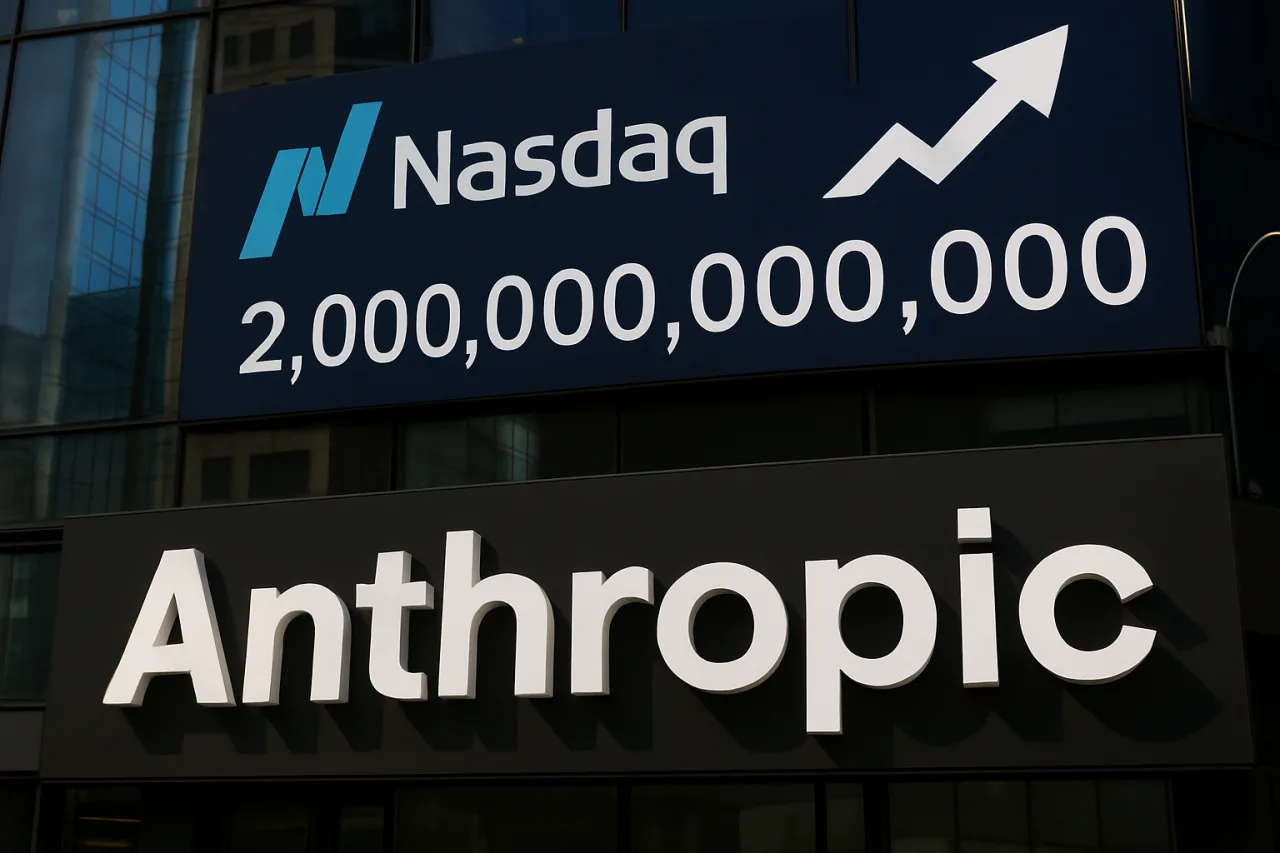
- 🏦 The price: Bankers are testing an Anthropic IPO valuation near $2 trillion that could list on Nasdaq as early as October 2026, led by Goldman Sachs, JPMorgan and Morgan Stanley — which would make it the largest listing in history.
- 📈 The quarter: Preliminary Q2 2026 revenue exceeded $11.5 billion with adjusted operating income turning positive — on track for a projected first-ever frontier-lab operating profit of roughly $559 million.
- ⚠️ The fragility: The whole valuation rests on unaudited 2028 projections; a forced gross-to-net revenue restatement could cut headline figures 20-40% in one print, and Cerebras and SpaceX both fell 40%+ from post-IPO peaks once actuals replaced narratives.
- 🇵🇭 The relevance: Filipino investors cannot buy the IPO directly — but the listing reprices the entire AI economy, including the data-center buildout landing in Philippine industrial policy.
Anthropic IPO math has officially left the realm of the familiar. On August 14, Reuters reported — via two people familiar with the company’s financials — that the artificial-intelligence lab behind Claude is projecting revenue of roughly $190 billion to $200 billion by 2028, a number that had never previously been disclosed and that sits more than four times above the $47 billion annualized run-rate the company itself publicized in May. That projection is the fulcrum on which a potential $2 trillion listing turns: the largest IPO ever attempted, priced not on what Anthropic earns today, but on what bankers and investors are being asked to believe it will earn three years from now. The S-1 has sat in confidential SEC review since June 1. The underwriters — Goldman Sachs, JPMorgan, Morgan Stanley — are preparing for an October window. And the entire valuation debate now hinges on a single question that public-market investors have not had to ask at this scale before: how do you price a company whose past is extraordinary but whose price depends entirely on its future?
The $190 Billion Number Nobody Had Seen
Every valuation story needs an anchor, and Anthropic’s anchor moved twice this year. At the end of 2025, the company’s annualized revenue run-rate stood at roughly $9 billion. By May 2026, the company disclosed it had crossed $47 billion — a figure that already stretched belief, announced alongside a $65 billion Series H round that priced the company at $965 billion post-money, briefly overtaking OpenAI as the world’s most valuable private AI startup. Reuters’ August report added the layer nobody had seen: internal projections of $190-200 billion in 2028 revenue, shared with investors assessing the IPO. The company declined to comment, as it has throughout the process — Yahoo Finance’s analysis priced the $2 trillion question in full.
The scale of the ask becomes clear when the growth curve is written down. The run-rate grew roughly five-fold in five months. The 2028 projection assumes the company sustains hyper-growth for two and a half more years — not doubling, but quadrupling again from May’s pace. This is the figure bankers are using to justify the Anthropic IPO’s price-to-sales multiple that no listed software company in history has carried at this size, and it is why the S-1’s eventual gross-versus-net revenue presentation has become, per one analysis, “the single most-discussed line” that will appear when the filing goes public.
The Money Math Behind a $2 Trillion Price Tag
Put the numbers in a table and the shape of the bet becomes visible.
| Anthropic IPO benchmark | Figure | What it implies |
|---|---|---|
| Run-rate, end-2025 | ~$9 billion | Starting point of the hype cycle |
| Run-rate, May 2026 | $47 billion | ~5x growth in five months |
| Preliminary Q2 2026 revenue | >$11.5 billion | Adjusted operating income turned positive |
| 2028 projection | $190-200 billion | ~4x the May run-rate, unaudited |
| Valuation underwriters carry | Up to ~$2 trillion | ~10x projected 2028 revenue |
| Comparable listed multiple | Palantir ~53x 2026E, Cloudflare ~41.6x 2026E | Anthropic’s multiple prices 2-year-out revenue |
The comparison to listed peers is where the audacity shows. Palantir — the market’s most aggressive premium-grower — trades around 53 times current-year estimated revenue. Anthropic’s mooted $2 trillion valuation against $190-200 billion of 2028 revenue is roughly 10 times a number two years away, which on a current-revenue basis is a multiple the public markets have never certified for a company of this size. The bull case is that AI unit economics improve faster than any software category before it — Anthropic has told investors gross margins should climb from roughly 50% toward 77% by 2028 as training and inference efficiency improves, with enterprise customers (about 80% of revenue, and a business where Anthropic passed OpenAI’s enterprise share in April) providing the durable base. The bear case is simpler: that is a lot of things that have to keep going right, simultaneously, for three years.
The Quarter That Changed the Story
What turned the Anthropic IPO from a speculative listing into a credible one was the quarter now closing. Bloomberg reported that Anthropic’s preliminary second-quarter revenue exceeded $11.5 billion and — the sentence that moved the conversation — that adjusted operating income turned positive. Company projections shared in fundraising contexts point to a first-ever quarterly operating profit of roughly $559 million on $10.9 billion of Q2 revenue, which would make Anthropic the first frontier AI laboratory to post one. For context, the company lost around $5.6 billion in 2024, and OpenAI is not widely expected to reach sustained profitability until after 2027.
That profitability claim comes with a manufacturer’s warning the company itself attached: planned data-center spending could push subsequent quarters back into the red. The compute bill is the whole game — Anthropic is estimated to be carrying some $80 billion in cloud-infrastructure commitments through 2029, the physical cost of the growth curve every multiple above depends on. Revenue growing faster than compute spending means unit economics are improving; it does not yet mean the machine prints cash. The gap between the run-rate narrative investors have been trading on and the audited GAAP income statement the S-1 will eventually show is precisely where the listing’s truth will land.
The Risks: Three Ways the Math Breaks
The first break is accounting. Frontier-model revenue is reported in ways that can blend enterprise commitments, usage-based inference and partnership structures; if SEC review forces a gross-to-net restatement, headline run-rate could drop 20-40% in a single filing, and every multiple in the table above breaks at once. Forecasters tracking the listing put the downside scenario — an S-1 forced restatement plus thin operating margins — near a $1.0-1.1 trillion first-day cap rather than $2 trillion, a 45% haircut before the stock ever trades.
The second break is historical. The most recent mega-IPOs priced on future-growth narratives have a sobering afterlife: Cerebras and SpaceX both fell more than 40% from their post-IPO peaks once quarterly results began replacing roadshow excitement. A $2 trillion debut priced on 2028 revenue is the most aggressive version yet of that pattern — institutional buyers are being asked to underwrite not the company’s present but its compounding, and compounding is exactly what a growth slowdown interrupts. The third break is competitive: OpenAI’s enterprise push, Google’s distribution muscle and the open-weight ecosystem all price pressure on Claude’s margins in precisely the years the 2028 projection assumes pricing power holds. The labor-narrative softening we covered this week fits the same pattern — a company with a trillion-dollar listing approaching tells its story in the register that listing requires.
The Philippine Angle: Reading a US Listing from Manila
Filipino retail investors cannot buy a share of this IPO — pre-listing allocations go to institutions and sovereign funds, and the Philippine Stock Exchange has no direct participation mechanism for a Nasdaq debut. What the listing does reach Manila through is three transmissions. First, global funds: the same allocators pricing Anthropic at $2 trillion are managing the flows that set emerging-market risk appetite, including PSE foreign flows — a mega-IPO of this size absorbs liquidity that would otherwise seek yield in markets like ours. Second, the AI capex supercycle the listing validates: Anthropic’s $80 billion infrastructure commitment is the same compute buildout that has NVIDIA building $105 billion AI factories abroad and Philippine policymakers courting data-center investment through initiatives like Pax Silica. Third, the valuation template: if the market certifies 2028-revenue multiples for Anthropic, every AI-adjacent asset on earth — including the Philippine stocks with AI exposure that we track — gets repriced by sympathy, fairly or not.
The practical Anthropic IPO guidance for Filipino investors is the same discipline that applies to any narrative stock: distinguish the company’s real economics from its story multiple, wait for the audited S-1 before believing any revenue figure, and remember that the most valuable information in the filing will be in the risk factors — the one section not written for the roadshow. The Anthropic IPO will be a landmark either way: the moment the AI economy’s private valuations meet public-market accountability, with the most consequential earnings call in the industry’s history scheduled to precede it.
What to Watch Between Now and October
Four markers will tell the story early. One: the public S-1 — the moment confidential becomes audited, and the gross-versus-net revenue question gets answered in a document nobody can spin. Two: the Nasdaq calendar — an October window is the working assumption among the banking trio, and market conditions in late September will decide whether the window holds or slides toward the December-January stretch. Three: the Q3 print — if the projected operating profit proves durable rather than a one-quarter artifact, the bear case weakens materially. Four: OpenAI’s countermoves — its own 2027 listing timeline and enterprise pricing will shape the competitive assumptions embedded in Anthropic’s 2028 number. The forecast distributions currently put the median listing date in late October, with tails reaching into early 2027 — which means the largest IPO ever attempted is now weeks, not years, from its first real test.
Frequently Asked Questions About the Anthropic IPO
When is the Anthropic IPO?
No Anthropic IPO date is confirmed. The company confidentially filed its S-1 with the SEC on June 1, 2026, and press reports point to a potential Nasdaq listing as early as October 2026, led by Goldman Sachs, JPMorgan and Morgan Stanley. Forecast models place the median listing date in late October 2026, with plausible slippage into early 2027 depending on SEC review and market conditions.
How much is the Anthropic IPO valuation?
Bankers and reports have floated valuations from roughly $1 trillion to $2 trillion, with the top of the range resting on projected 2028 revenue of $190-200 billion per Reuters’ August 2026 report. The company’s last private round priced it at $965 billion post-money in May 2026. Downside scenarios that assume revenue restatement or weaker growth center near $1.0-1.1 trillion.
Can Filipino investors buy Anthropic IPO shares?
Not directly — the Anthropic IPO will list on a US exchange, and pre-listing allocations go to institutional investors. Filipino investors get exposure only after listing, through brokers offering US markets, or indirectly through global funds and ETFs that buy the stock post-listing. The listing still matters locally because it reprices the global AI sector that Philippine tech and telecom holdings are exposed to.
What is the Anthropic IPO’s $190-200 billion 2028 revenue projection?
An internal Anthropic projection reported by Reuters on August 14, 2026, citing two people familiar with the company’s financials — more than four times the $47 billion annualized run-rate the company disclosed in May 2026. The figure is unaudited, has not been formally confirmed by the company, and is the central assumption underpinning the ~$2 trillion valuation discussions.
Is Anthropic profitable before its IPO?
Barely, and possibly temporarily. Preliminary Q2 2026 revenue exceeded $11.5 billion with adjusted operating income turning positive, and company projections shared with investors point to a first-ever quarterly operating profit of roughly $559 million — which would be a first among frontier AI labs. The company has cautioned that planned data-center spending (an estimated $80 billion in cloud commitments through 2029) could push later quarters back into loss, and cash-flow positivity is targeted for 2028.
What are the biggest Anthropic IPO risks?
Three stand out. Accounting: an SEC-forced gross-to-net revenue restatement could cut headline figures 20-40% and break the multiple math. Precedent: recent growth-narrative mega-IPOs (Cerebras, SpaceX) fell 40%+ from post-IPO peaks once actuals replaced projections. And competition: OpenAI’s enterprise push and open-weight alternatives could compress the margins the 2028 projection assumes. The S-1’s risk factors, not the roadshow, are where these get priced.
Financial Disclaimer: This article is for general information only and does not constitute investment advice or an offer to buy or sell securities. Anthropic is a private company; its shares are not currently available for public purchase in the Philippines or elsewhere, and projected figures cited are unaudited and subject to change. Consult a licensed financial advisor before making investment decisions.