Table of Contents
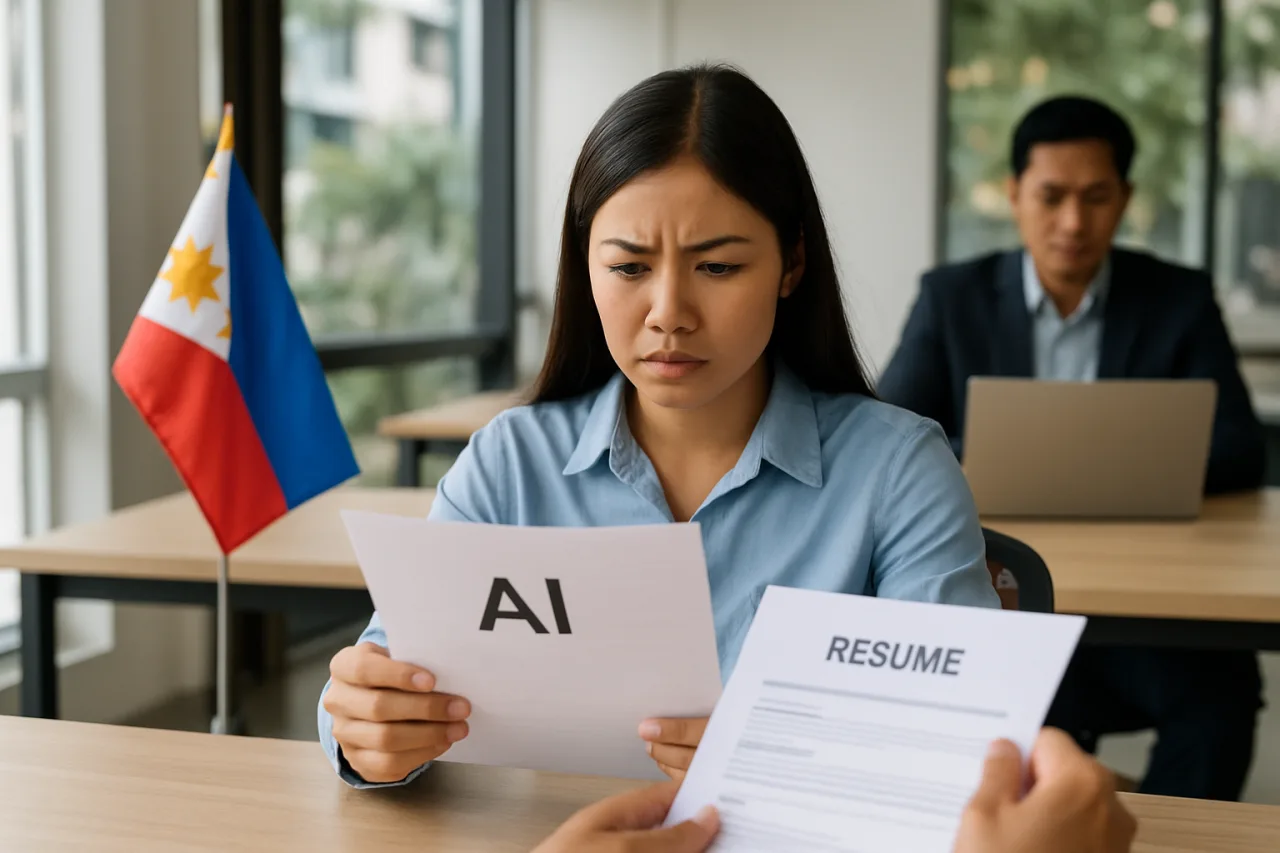
The Philippine job market has crossed an AI threshold that most professionals have not noticed. According to Jobstreet by SEEK Philippines Managing Director Dannah Majarocon, 72 percent of Philippine organizations now look for some level of AI knowledge when recruiting new employees, and 36 percent have already embedded AI tools directly into their workflows as of the first quarter of 2026. AI skills are no longer a niche qualification reserved for software engineers and data scientists. They have become a baseline expectation — the digital literacy equivalent of knowing how to use email a decade ago. Filipino professionals who recognize this shift and act on it will find themselves in rising demand. Those who do not will find themselves competing for a shrinking pool of roles that have not yet been touched by automation.
Key Takeaway
- 🎯 72% of PH employers want AI skills: Nearly three-quarters of Philippine organizations now screen for AI knowledge during hiring, according to Jobstreet by SEEK Philippines MD Dannah Majarocon, speaking at the HP Elevate 2026 summit.
- 🤖 36% have embedded AI in workflows: Over a third of Philippine organizations have already integrated AI tools into their daily operations as of Q1 2026, fundamentally changing what skills they need from employees.
- 💼 AI augments, not replaces: Industry leaders emphasize AI serves to augment human roles, not replace them. The shift is from productivity metrics to value-driven, human-centered outcomes.
- freelancers and MSMEs benefit too: AI tools like ChatGPT are already being used by small businesses for social media, marketing, and cross-functional work, leveling the playing field with larger competitors.
- ⚡ Action required: Filipino professionals should invest in AI literacy now — learn prompt engineering, data analysis with AI, and AI-assisted productivity tools. Continuous learning and adaptability are the essential traits for the modern workforce.
Why AI Skills Are Now a Hiring Baseline in the Philippines
The data from Jobstreet by SEEK is striking not for its extremity but for its speed. In early 2025, AI skills were a differentiator — something that made a candidate stand out. By the first quarter of 2026, they have become a baseline expectation for 72 percent of Philippine organizations. The trajectory suggests that by 2027, candidates without demonstrable AI literacy will face the same disadvantage as candidates who could not use Microsoft Excel in the 2000s.
Ms. Majarocon’s remarks at the HP Elevate 2026 summit, reported by BusinessWorld on June 19, 2026, framed the shift in clear terms: the adoption of AI tools is “continuously evolving” what organizations need from talent. This is not a prediction about the future of work. It is a description of hiring practices already in effect.
The 36 percent figure — organizations that have embedded AI tools in workflows — matters because it represents the demand side of the equation. These organizations are not just passively accepting AI-literate candidates; they are actively restructuring their operations around AI capabilities. When a company automates recruitment tabulation, generates client pitch decks from raw data, or uses AI for customer service routing, the nature of every role in that organization changes. Employees who can work alongside AI become more valuable. Employees who cannot become a bottleneck. For a broader analysis of how AI is transforming the Philippine digital workforce, see our ASEAN workforce comparison.
What AI Skills Actually Mean — Beyond the Buzzword
“AI skills” is a term that gets thrown around without much precision. In the context of Philippine hiring, it refers to a specific set of competencies that fall into three tiers.
Tier 1 — AI Literacy (Baseline): Understanding what AI can and cannot do. Knowing the difference between generative AI, machine learning, and automation. Being able to use AI tools like ChatGPT, Claude, or Google Gemini for basic tasks: drafting emails, summarizing documents, generating ideas, formatting data. This is the tier that 72 percent of employers now expect from candidates.
Tier 2 — AI-Assisted Productivity (Differentiator): Using AI tools to accomplish tasks faster and better than manual methods. This includes prompt engineering (crafting effective instructions for AI models), data analysis with AI assistance (using tools like ChatGPT’s Code Interpreter or Google Sheets AI features), and AI-assisted content creation (editing AI-generated drafts, fact-checking AI outputs). Candidates at this tier are not just AI-literate — they are AI-fluent. They know when to use AI and when not to. Our 10-step guide to using AI tools for business covers the practical entry points.
Tier 3 — AI Integration (Specialist): Designing and implementing AI workflows within an organization. This includes building AI-powered automations, integrating AI APIs into business systems, and training teams on AI tool adoption. This tier is where the salary premium lives — professionals who can not only use AI but architect its implementation are commanding 25-40 percent salary premiums according to industry data from the Asian Development Bank.
What the Numbers Miss — The Human Side of AI Skills
The 72 percent figure tells us what employers want. It does not tell us what employees need to become. Ida Evina Ong-Co, HP Inc. Philippines Managing Director, offered a critical insight at the same summit: successful AI adoption requires a “business-first” approach, not a “technology-first” approach. The implication is that AI skills without business judgment are insufficient. An employee who can generate a perfect AI pitch deck but cannot assess whether the pitch addresses a real customer need has only half the skill.
Ms. Ong-Co also noted that the conversation around performance is shifting. Companies are moving away from traditional metrics like attendance and hours logged, toward outcomes and value produced. This means the professional who uses AI to produce better results in less time will outperform the professional who works longer hours without AI. The metric of value is replacing the metric of effort — and AI skills are the tool that enables the shift.
Miko David, President of the Digital Marketing Association of the Philippines, pointed to another dimension: AI is training young talent to “ask better questions,” while leaders managing them are “asking even harder questions.” This framing — AI skills as the ability to ask better questions — is perhaps the most accurate description of what Tier 2 AI fluency actually looks like. The professional who knows how to prompt an AI model effectively is fundamentally a professional who knows how to decompose a problem into clear, specific instructions. That skill transfers to every domain of work.
The Second-Order Effect — AI Skills and Philippine Economic Competitiveness
The hiring shift has implications beyond individual careers. If 72 percent of Philippine organizations are screening for AI skills, the aggregate effect is a national workforce that either adapts rapidly or falls behind regional competitors. The Asian Development Bank’s June 2026 study, which ranked the Philippines lowest in digital skills demand among six Asia-Pacific economies with a score of 0.45 versus South Korea’s 0.53, provides the baseline. The AI hiring trend is the market’s response to that gap — employers are trying to close it by demanding AI skills from new hires. The full ADB digital transformation research covers the regional competitiveness data in detail.
For Filipino professionals working abroad as OFWs, the AI skills shift creates both risk and opportunity. The risk is that AI automation in host countries — particularly in administrative, customer service, and basic knowledge work — could reduce demand for OFW labor in those categories. The opportunity is that Filipino professionals who develop AI integration skills become more valuable, not less, in the global market. A Filipino virtual assistant who can automate routine tasks using AI tools delivers more value than one who performs those tasks manually. See our practical guide to using AI agents for work for specific workflows.
What Every Filipino Professional Should Do Now
The actionable response to the 72 percent hiring signal is specific and immediate. Here is what Filipino professionals at different career stages should do.
For employed professionals (30-45 years old): Audit your current role for tasks that AI can automate. If you spend more than 20 percent of your time on tasks that an AI tool could handle — data entry, report formatting, meeting summaries, email drafting — you are in the automation risk zone. Invest 2-3 hours per week learning to use AI tools for those tasks. Start with ChatGPT or Claude for text tasks, and explore AI features in tools you already use (Excel, Google Workspace, Microsoft 365 Copilot). The goal is not to replace yourself but to become the person who uses AI to do your job better.
For job seekers and recent graduates (22-30 years old): Build a portfolio of AI-assisted work. Employers screening for AI skills want evidence, not claims. Create sample projects: a marketing campaign developed with AI tools, a data analysis report generated with AI assistance, a workflow automation built with an AI-powered tool. Document your process — show not just the output but how you directed the AI to produce it. Reference the AI tools you use on your resume and LinkedIn profile using specific terms: “prompt engineering,” “AI-assisted data analysis,” “generative AI for content creation.”
For freelancers and MSME owners: Mr. David noted that AI benefits are extending beyond corporations to freelancers and micro, small, and medium-sized enterprises, with many already using generative AI tools for social media advertisements. If you are a freelancer, AI skills let you take on more clients by automating routine work. If you are an MSME owner, AI tools can replace functions you cannot afford to hire for — basic marketing, customer service chatbots, data analysis. The playing field between small and large businesses is leveling because AI tools that once required enterprise budgets are now available for the cost of a monthly subscription.
For all professionals: The industry leaders at the HP Elevate 2026 summit identified two traits as essential for the modern workforce facing rapid AI development: continuous learning and adaptability. AI tools will change every 6-12 months. The specific tool you learn today may be obsolete in two years. The meta-skill — the ability to learn new AI tools quickly and integrate them into your work — is what will remain valuable. Invest in the meta-skill, not just the tools.
Frequently Asked Questions About AI Skills for Filipino Professionals
What percentage of Philippine companies want AI skills in hiring?
According to Jobstreet by SEEK Philippines Managing Director Dannah Majarocon, 72 percent of Philippine organizations now look for some level of AI knowledge when recruiting new employees. The data was presented at the HP Elevate 2026 summit and reported by BusinessWorld on June 19, 2026.
How many Philippine companies have embedded AI in their workflows?
As of the first quarter of 2026, 36 percent of Philippine organizations have already embedded AI tools in their workflows, according to Jobstreet by SEEK Philippines. This means over a third of companies are not just passively accepting AI-limited candidates but actively restructuring operations around AI capabilities.
What AI skills should Filipino professionals learn first?
Start with AI literacy: understanding what AI can and cannot do, and using tools like ChatGPT or Claude for basic tasks (drafting, summarizing, brainstorming). Then progress to AI-assisted productivity: prompt engineering, AI-assisted data analysis, and content creation with AI tools. The goal is not to become an AI developer but to become AI-fluent in your existing domain.
Will AI replace Filipino professionals?
Industry leaders at the HP Elevate 2026 summit emphasized that AI serves to augment rather than replace human roles. The shift is from productivity metrics to value-driven outcomes. Professionals who use AI to produce better results will outperform those who work without AI. The risk is not AI replacing you — it is another professional who uses AI replacing you.
How can freelancers and small business owners benefit from AI skills?
Miko David, President of the Digital Marketing Association of the Philippines, noted that AI benefits are extending to freelancers and MSMEs. Many small businesses already use generative AI tools like ChatGPT for social media advertising and marketing. AI tools let freelancers take on more clients by automating routine work, and let MSME owners replace functions they cannot afford to hire for.
How does the Philippine AI skills gap compare to other Asian countries?
The Asian Development Bank’s June 2026 study ranked the Philippines lowest in digital skills demand among six Asia-Pacific economies, with a score of 0.45 compared to South Korea’s 0.53. The 72 percent hiring signal from Jobstreet suggests the Philippine market is responding to this gap by demanding AI skills from new hires.
Disclaimer: This article is for informational and educational purposes only and does not constitute career advice. Readers should evaluate their own professional circumstances and consult relevant industry resources before making career decisions.
Related reading: The training paths that matter: AI skills training for OFWs — the complete 2026 guide.
Related reading: AI heart monitoring arriving in Philippine hospitals illustrates the clinical-AI roles emerging alongside the BPO and IT tracks.
Related reading: Policy meets disinformation: HB 9465, the anti-disinformation bill — what tech workers should know.