Table of Contents
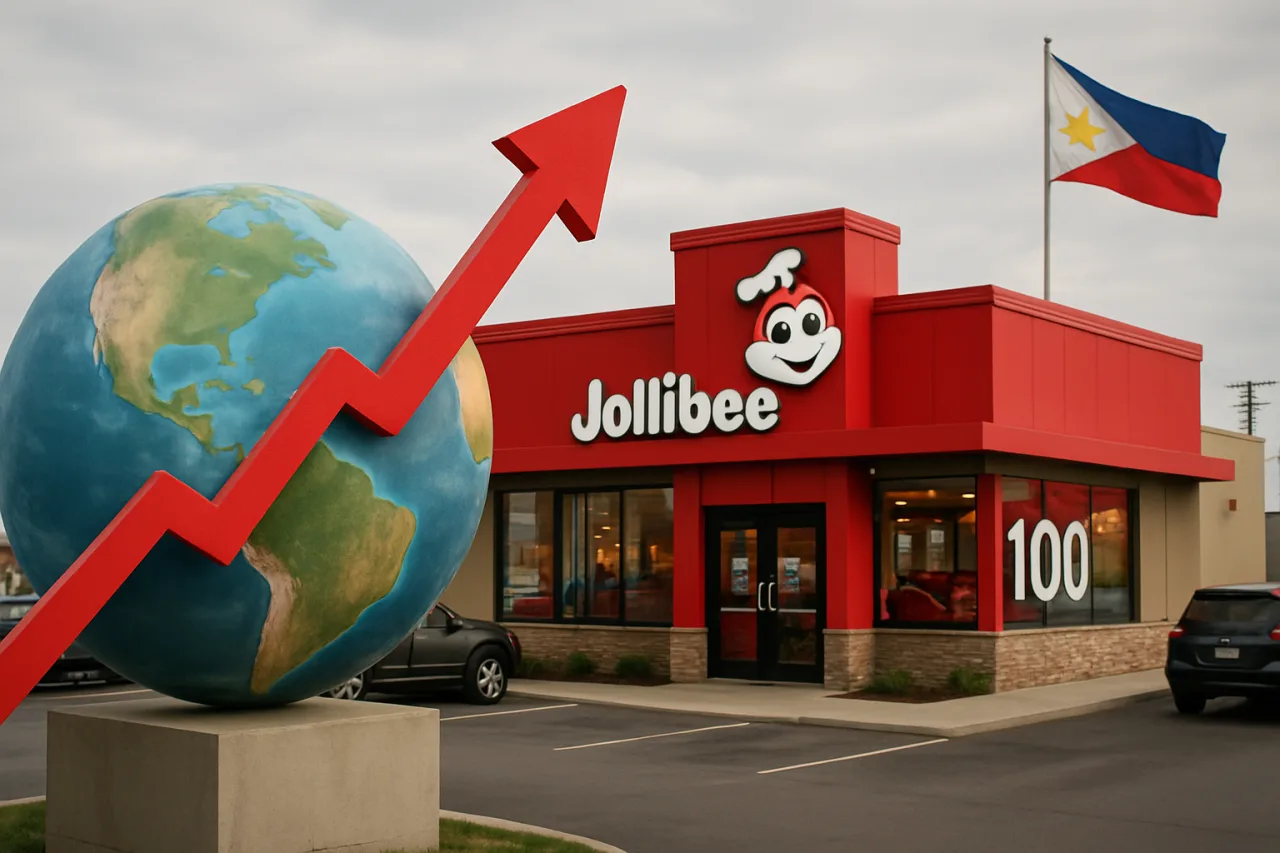
Jollibee has surpassed 100 stores in North America and been named one of the TIME100 Most Influential Companies of 2026, marking the most significant milestone in the Filipino fast-food brand’s global expansion. President and CEO Ernesto Tanmantiong announced a target of 350 stores across North America in the coming years and 1,200 new stores globally in 2026 alone, positioning Jollibee as what TIME magazine called a “plucky fried-chicken joint” that is now “a global giant.” The Jollibee global expansion represents the most successful Filipino consumer brand internationalization in history — and it carries specific lessons for every Filipino professional and entrepreneur watching how a homegrown brand conquered foreign markets.
Key Takeaway
- 🌍 100+ stores in North America: Jollibee now operates 109 stores across North America — 81 in the United States and 28 in Canada — including three locations in Manhattan, New York City.
- 🏆 TIME100 Most Influential Companies 2026: TIME named Jollibee one of the world’s most influential companies and among its 10 Most Influential Food & Drink Companies, alongside global giants.
- 📈 350 stores by 2030 target: Jollibee’s franchise expansion targets 330 US franchise restaurants by 2030, backed by 7 multi-unit franchise developers and average unit sales of $4.91 million (freestanding) and $5.07 million (in-line).
- 💰 18th most valuable restaurant brand: Brand Finance ranked Jollibee the 18th most valuable restaurant brand globally in February 2026; CEO Tanmantiong aims for top-five.
- 🇵🇭 Filipino identity is the strategy: Tanmantiong says staying true to Filipino identity is “absolutely vital” — “It is the heartbeat of our global journey.” The brand did not dilute its Filipino character to succeed abroad.
How Jollibee Global Expansion Reached 100 North American Stores
Jollibee’s journey to 100+ North American stores began in 1998 with a single location in Daly City, California — a city with one of the highest concentrations of Filipino-Americans in the United States. The strategy was deliberate: start where the diaspora already knows the brand, build operational excellence and brand recognition, then expand into mainstream markets where Jollibee competes directly with McDonald’s, KFC, and Chick-fil-A on product quality rather than nostalgia.
By mid-2026, that strategy has delivered 109 stores: 81 in the United States and 28 in Canada. The most recent opening, in Midtown Manhattan, brought the company’s New York City total to three locations. According to the company’s 2026 Franchise Disclosure Document, freestanding restaurants averaged approximately $4.91 million in annual gross sales during 2025, while in-line locations averaged approximately $5.07 million. These are strong numbers by any restaurant standard — the average McDonald’s in the US generates approximately $3.5 million in annual sales per location, meaning Jollibee stores are outperforming the industry benchmark by 40-45 percent. The Jollibee global expansion is not just growing store counts — it is growing revenue per store at rates that exceed the category leaders.
The franchise expansion accelerated significantly in 2026. Jollibee added three multi-unit franchise developers in the first half of the year, bringing its total to seven franchise groups. Peter Wright, vice president of franchise development for Jollibee Group North America, told 1851 Franchise: “We have a high degree of confidence in franchising as a key way to grow, and the quality of the franchise candidates we are engaging with is impressive.” The development pipeline is focused on California and New York as priority markets, with the goal of reaching 330 US franchise restaurants by 2030. For Filipino investors tracking JFC as a PSE-listed stock, see our complete JFC investor guide.
What TIME100 Recognition Means for a Filipino Brand
TIME magazine’s selection of Jollibee for the TIME100 Most Influential Companies of 2026 is not just a PR milestone — it is a signal of institutional recognition from one of the world’s most authoritative media brands. The TIME100 list evaluates companies based on impact, innovation, ambition, and success. Jollibee was additionally named among TIME’s 10 Most Influential Food & Drink Companies, placing a Filipino brand alongside global industry leaders.
TIME’s profile, published in 2026, noted that Jollibee “has been a leader in its home market, outselling McDonald’s and KFC” in the Philippines — a fact that most Filipinos know but that global audiences are discovering for the first time. The magazine described Jollibee as “a global giant” operating as the flagship brand of Jollibee Group, which controls 19 restaurant brands including Smashburger, The Coffee Bean & Tea Leaf, Burger King Philippines, and Chowking. The TIME profile emphasized CEO Tanmantiong’s ambition: turning Jollibee from the 18th most valuable restaurant brand globally (per Brand Finance, February 2026) into a top-five player, driving the Jollibee global expansion into territory no Filipino consumer brand has reached before.
The Business Model: Why Jollibee Global Expansion Works
Three factors explain why the Jollibee global expansion has succeeded where other Asian restaurant brands have struggled to cross over into Western markets.
1. Product differentiation, not price competition. Jollibee does not compete on price in North America. It competes on product uniqueness: Chickenjoy (fried chicken with a distinctly Filipino seasoning profile), Jolly Spaghetti (sweet-style spaghetti with hot dogs and banana ketchup), and Peach Mango Pie. These products do not have direct equivalents in McDonald’s or KFC menus. Customers come to Jollibee not because it is cheaper but because they cannot get these specific products anywhere else. This is the same principle that made Jollibee dominant in the Philippines — differentiation, not discounting.
2. Diaspora-first, mainstream-second market entry. Jollibee opened its first US stores in cities with large Filipino-American populations: Daly City, Los Angeles, Las Vegas, and Honolulu. This gave the brand a loyal customer base that provided revenue while operations were refined for Western markets. Once product quality and operational standards were proven, expansion into non-Filipino markets became viable. The Manhattan locations are the proof: Midtown Manhattan is not a Filipino enclave — it is the most competitive restaurant market in the world, and Jollibee is succeeding there on product quality.
3. Franchise-led scaling. Jollibee’s US franchise program, launched in 2025, is the scaling engine. Seven multi-unit franchise developers are now committed to opening stores across multiple territories. This model shifts capital investment from Jollibee Group to franchisees while maintaining quality control through operational standards. Average unit volumes of $4.91-5.07 million make the franchise economics attractive to experienced operators who expect strong returns. For more on how Filipino businesses scale internationally, see our Philippine semiconductor exports analysis.
What Filipino Entrepreneurs Can Learn from Jollibee Global Expansion
The Jollibee global expansion offers specific, actionable lessons for Filipino entrepreneurs and professionals building their own brands or careers abroad.
Do not dilute your identity. CEO Tanmantiong’s words are worth repeating: “It is absolutely vital that the company stays true to its Filipino identity: It is the heartbeat of our global journey.” In an era of cultural homogenization, authenticity is a competitive advantage, not a liability. Jollibee did not rename Chickenjoy to “Crispy Chicken” to appeal to American tastes. It kept the name, kept the product, and let quality drive adoption. Filipino professionals working abroad should take note: your Filipino identity is an asset, not something to minimize.
Start where you are known, then expand. Jollibee entered the US through Filipino-American communities, not through mainstream American markets. For Filipino entrepreneurs, the equivalent strategy is to build credibility within the Filipino diaspora network first — in professional associations, community organizations, and industry groups — then leverage that credibility for broader market entry. The diaspora is both a market and a launchpad.
Compete on differentiation, not price. Jollibee’s North American stores are not cheap. They compete on unique products that customers cannot get elsewhere. For Filipino businesses entering foreign markets, the lesson is clear: identify what you offer that no local competitor can replicate, and charge what it is worth. Competing on price against established local players with economies of scale is a losing strategy for a new entrant.
The Bigger Picture: Filipino Brands on the Global Stage
Jollibee’s global expansion is the most visible Filipino consumer brand success story, but it is not the only one. Jollibee Group (JFC) now operates over 10,000 stores across 33 countries through 19 brands, including Smashburger, The Coffee Bean & Tea Leaf, Tim Ho Wan, and ownership stakes in Compose Coffee (70%) and SuperFoods Group/Highlands Coffee (60%). The company plans to add more than 1,200 stores globally in 2026 alone — a pace of roughly 3.3 new stores per day.
This scale matters for Philippine economic growth because Jollibee Group is a PSE-listed company (stock ticker: JFC) whose performance influences the PSEi index. The company’s global revenue diversification — earning in dollars, euros, and other currencies while reporting in pesos — provides a natural hedge against peso depreciation. During a period when the World Bank has cut Philippine economic growth forecasts to 3.7 percent, companies like Jollibee with global revenue streams are more resilient than purely domestic businesses. The Jollibee global expansion demonstrates that Filipino brands can compete and win on the world stage, not just within the domestic market. For context on the broader economic environment, see our Philippine economic growth analysis.
The Jollibee global expansion also represents a case study in how emerging market brands can enter developed markets — a playbook relevant to any Filipino company considering international expansion. The model — diaspora-first entry, product differentiation, franchise-led scaling, and cultural authenticity — is replicable beyond the restaurant industry. Filipino technology companies, professional services firms, and consumer brands can apply the same principles: start where Filipino communities provide a customer base, differentiate on what only a Filipino company can offer, scale through local partnerships, and never dilute the cultural identity that makes the brand unique. The success of Jollibee global expansion is proof that the path from Manila to Manhattan is real, documented, and navigable.
Frequently Asked Questions About Jollibee Global Expansion
How many Jollibee stores are in North America?
Jollibee operates 109 stores across North America as of mid-2026: 81 in the United States and 28 in Canada. The most recent opening was in Midtown Manhattan, New York City, bringing the Manhattan total to three locations. The company targets 350 stores across North America in the coming years.
Is Jollibee a TIME100 company?
Yes. TIME named Jollibee one of the TIME100 Most Influential Companies of 2026 and recognized the brand among its 10 Most Influential Food & Drink Companies. The recognition cited Jollibee’s global expansion from a Filipino fast-food chain to a global restaurant group operating 19 brands across 33 countries.
How much does a Jollibee franchise make in the US?
According to Jollibee’s 2026 Franchise Disclosure Document, freestanding restaurants averaged approximately $4.91 million in annual gross sales during 2025, while in-line locations averaged approximately $5.07 million. Individual results vary, with freestanding sales ranging from $2.05 million to $9.82 million.
What is Jollibee’s global expansion target?
CEO Ernesto Tanmantiong announced plans to add more than 1,200 stores globally in 2026 alone and targets 350 stores across North America in coming years. In the US specifically, the franchise development pipeline targets 330 US franchise restaurants by 2030 through seven multi-unit franchise developers.
How does Jollibee’s Filipino identity affect its global success?
CEO Tanmantiong states that staying true to Filipino identity is “absolutely vital” and is “the heartbeat of our global journey.” Jollibee did not dilute its Filipino product identity (Chickenjoy, Jolly Spaghetti) to enter Western markets. The brand competes on unique products that customers cannot get elsewhere, rather than conforming to local fast-food conventions.
Is Jollibee Group a good investment for Filipinos?
Jollibee Foods Corporation (JFC) is a PSE-listed company with global revenue diversification across 33 countries and 19 brands. Its global expansion provides natural currency hedging against peso weakness. However, investment decisions should be based on individual financial circumstances. Consult a licensed financial advisor. For a comprehensive JFC investment analysis, see our JFC investor guide.
Disclaimer: This article is for informational and educational purposes only and does not constitute financial or investment advice. References to Jollibee Foods Corporation (JFC) stock performance are based on publicly available information as of August 4, 2026. Readers should consult qualified financial advisors before making investment decisions. The author and publisher disclaim any liability for actions taken based on this information.