Table of Contents
Key Takeaway
- 📊 The score: UNESCAP’s Asia-Pacific Digital Transformation Report 2026 puts the Philippines at 2.4 on expenditure readiness — the least affordable among fourteen “Emerging Performer” economies for AI-enabling infrastructure.
- 💰 The prize: AI readiness Philippines determines whether an estimated ₱2.8 trillion (US$50.7 billion) AI contribution to GDP by 2030 materializes — a conditional, not a forecast.
- ⚡ The three gaps: region-high power prices, thin data-center capacity, and an AI skills shortage — compounded by institutional fragmentation with no binding AI law yet.
- 🎯 The move: treat the gaps as a targeting problem — the cheapest unlock is governance reform, the personal edge is upskilling before the market prices it.
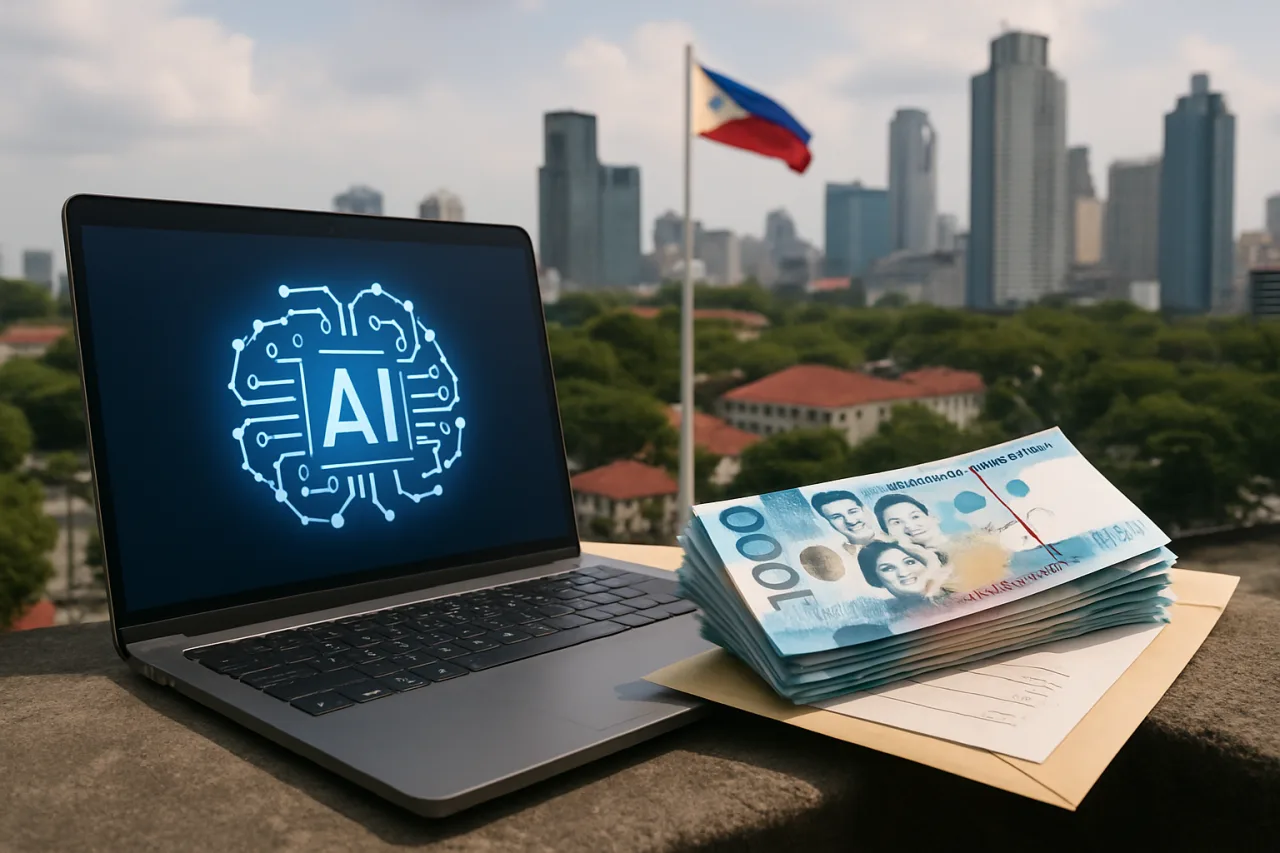
AI readiness Philippines has a price problem that no launch event can fix. Experts consulted for the Philippines’ UNESCO country profile estimate artificial intelligence could add ₱2.8 trillion — about $50.7 billion — to the economy by 2030, and the country has spent three years building the roadmaps to claim it: the DTI’s National AI Strategy Roadmap 2.0, the DOST’s own plan targeting AI-hub status by 2040, a new Center for AI Research, and an ASEAN chairmanship theme that puts digital transformation at the center of the region’s agenda. Then the UNESCAP’s Asia-Pacific Digital Transformation Report 2026 arrived with the receipt nobody wanted to read: among the fourteen “Emerging Performers” in the region, the Philippines posted the worst affordability score in the cohort — a 2.4 on expenditure readiness — because the electricity, connectivity, and computing capacity that AI runs on cost more here, relative to income and budgets, than almost anywhere else being measured. The prize is real. The invoice is also real, and the gap between the two is where the country’s AI decade will be decided.
What the UNESCAP Report Actually Measured About AI Readiness Philippines
The Asia-Pacific Digital Transformation Report 2026, the third edition of UNESCAP’s biennial flagship, is built around a Digital Transformation Index that scores economies across five pillars: network infrastructure, digital skills, financing for digital transformation, expenditure readiness, and governance. Economies in the “Emerging Performers” band carry DTI scores from 40 to below 60 — intermediate digital economies, the middle of the regional pack — and the Philippines sits in that band with a distinctive profile: strong momentum on strategy, weak fundamentals underneath it.
The number drawing attention is the expenditure score. The Philippines recorded 2.4, the highest — and therefore least affordable — expenditure burden among the fourteen Emerging Performers, and that single figure now anchors most AI readiness Philippines commentary coming out of the region. In plain terms, the relative cost of the digital and energy infrastructure that AI requires weighs heaviest on Filipino firms and households compared with regional peers at similar development stages. UNESCAP’s analysis identifies the most significant barriers to AI adoption across the region as shortages of AI-related skills and high infrastructure costs, followed by institutional fragmentation and data governance gaps. The Philippines does not merely appear in those categories; it concentrates them. Power prices are among the region’s highest, data center capacity is thin relative to demand, and the governance architecture — a Data Privacy Act from 2012, a Cybercrime Prevention Act from the same era, and no binding AI-specific law — was drafted before modern machine learning existed.
None of this is a secret in Manila. The UNESCO Readiness Assessment Methodology, completed for the Philippines and published through the Global AI Ethics and Governance Observatory, reached parallel conclusions: real progress on trust infrastructure — the country climbed to 53rd in the ITU Global Cybersecurity Index 2024 with its score rising from 77 to 93.49, and its E-Government Development Index rose to 0.7621, 73rd globally — alongside underdeveloped AI-specific legislation and persistent gaps in skills and infrastructure. When two UN assessments a year apart converge on the same diagnosis, the finding graduates from criticism to consensus.
The Bill Behind the Bill: Power, Compute, and the Price of Ambition
Follow the money and the 2.4 becomes concrete. Every AI workload — training or inference — is ultimately an electricity bill. Data centers are judged on power before ping: hyperscalers choosing where to build look at grid stability, renewable availability, and price per kilowatt-hour before they look at incentives. Philippine electricity rates run among the highest in Southeast Asia, a structural consequence of archipelagic geography, imported fuel exposure, and a power sector still balancing security against the energy transition — the reality the Department of Energy manages daily. When the DOE announced this week’s fuel price adjustments and officials discussed supply outlooks, the same arithmetic sat underneath: every peso in generation cost flows through to the cost of compute, and no serious AI readiness Philippines strategy survives contact with that fact.
That compute bill lands on three audiences at once. The government faces it in every agency modernization project, where AI ambitions meet procurement budgets already stretched by debt service. Enterprises meet it in the choice between building local capacity — expensive power, expensive land, expensive resiliency — and renting capacity from Singapore or Johor, which exports the jobs the strategy is supposed to create. And startups meet it as the difference between running inference on local infrastructure versus pricing in dollar-denominated cloud costs while earning peso revenue. The Globe Telecom story this week — the telco telling analysts it is open to listing its data center business as a REIT — is a capital-markets answer to exactly this problem: recycling balance sheets so infrastructure can scale. It is also a reminder that the money exists; the question is what return it can earn against Philippine power prices. Hyperscalers weighing the region are asking the same question that haunts every AI readiness Philippines discussion: can the returns clear the power bill?
The skills gap compounds the cost gap. UNESCAP flags AI-skills shortages as the region’s most significant adoption barrier, and the Philippine manifestation is acute in the middle of the market: the country produces strong IT-BPM talent and world-class support operations, but the specialized layers between — machine learning engineers, data governance officers, AI compliance leads — remain thin enough that the term “AI talent war” now appears in local HR industry coverage. Training pipelines exist, from DOST scholarships to private upskilling bootcamps, but they are racing against a global market that pays AI-literate professionals in dollars. The Filipino professionals best positioned for the ₱2.8-trillion opportunity are, in the shortest terms, those who self-fund the skills now — because the alternative is waiting for institutions to close a gap that is widening in real time. Our reporting on why Google’s chief thinks AI reshapes the career ladder from the top covers the same logic from the demand side, and our field notes from AICON 2026 in the Philippines show how quickly the local AI talent market is repricing.
The Governance Gap in AI Readiness Philippines
Here is the strategic irony buried in the UNESCAP findings: the most expensive barriers — power, compute, connectivity — take years and billions to fix, but the cheapest barrier to remove is institutional fragmentation, and it sits squarely in Congress’s pending tray. The Philippines enters September 2026 with AI governance bills pending in both chambers, including the Senate’s Artificial Intelligence Regulation Act and multiple House measures proposing a national AI framework, none yet passed out of committee. The UNESCO assessment states the consequence plainly: the legal framework provides a horizontal basis for AI governance, but AI-specific legislation remains underdeveloped, leaving agencies to improvise enforcement through privacy and cybercrime law that predates the technology they are being asked to govern.
Fragmentation has a measurable price. Investors pricing a Philippine AI operation must triangulate the NPC’s privacy rulings, the DICT‘s cybersecurity directives, the DTI‘s investment promotions, and sectoral regulators, without a single statute that defines liability for model decisions, standards for autonomous systems, or a national authority with a mandate. Each of those uncertainties raises the risk premium on capital — the same capital the affordability score says is already expensive. This is why the AI readiness Philippines conversation among policymakers keeps circling back to legislation as leverage: a credible AI law does not directly cut power prices, but it collapses coordination costs, gives investors a regulatory perimeter, and lets the country’s two dozen scattered AI initiatives pull in one direction. The alternative is the status quo the UN documents — strong strategies, strong rhetoric, and an implementation gap that widens every budget cycle.
There are also signs the message is getting through. The ASEAN AI Summit for MSMEs that the Philippines hosted in early September placed small-business adoption — not mega-science — at the center of the regional agenda, a deliberate fit for an economy where micro, small, and medium enterprises employ the majority of workers, and where the Pax Silica debate over whether the Philippines can become an AI power is playing out in real time. The DICT has pushed the National Cybersecurity Plan’s zero-trust agenda into agencies. And the DTI’s CAIR continues to seed research capacity. The building blocks are arriving; UNESCAP’s contribution is the reminder that blocks are not a building, and that the region’s most affordable digital economies — the ones outranking the Philippines on expenditure readiness — got there by treating electricity reform, competition policy, and digital governance as one integrated program rather than three separate files.
What the AI Readiness Philippines Score Means for Filipino Professionals
For the professionals reading this between meetings, the report reads differently depending on which side of the infrastructure line you sit. If you build technology, the affordability findings are a market map: everything the country lacks — efficient compute, power-optimized data services, AI governance and compliance tooling — is where the next decade of Philippine tech margins will live. If you run a business, the report is a planning document: assume AI adoption costs stay structurally higher here than in Singapore or Malaysia, and prioritize the use cases with the fastest measurable payback rather than the flashiest demos. And if you are a policy professional or a voter, the 2.4 is the rarest of things — a quantified, internationally benchmarked argument for the boring stuff: power market reform, right-of-way for fiber, and the pending AI bills gathering dust in committee. Few documents make the case for treating AI readiness Philippines as a national priority as bluntly as a number that says the region’s biggest opportunity is also its least affordable.
The honest reading of both UN reports is neither despair nor complacency. The Philippines has assets no regional peer can copy — a young, English-speaking, services-fluent workforce, a globally trusted brand in business process outsourcing, and now documented momentum on cybersecurity and e-government metrics. What it lacks is the connective tissue between ambition and invoice. The ₱2.8-trillion estimate is not a forecast; it is a conditional — money that arrives only if power gets cheaper, skills get deeper, and rules get written. The UNESCAP score of 2.4 is the sound of that condition being priced. Improving AI readiness Philippines is the rare national project where a worker’s online course, a senator’s committee calendar, and an energy regulator’s ruling all move the same number. The organizations, careers, and companies that act inside the gap — upskilling before the market prices it, building compliance-ready practices before the law forces them, choosing investments that hedge the power question — will collect when the condition clears. The country’s AI future was never in doubt. Its affordability always was.
Frequently Asked Questions
What did UNESCAP say about AI readiness Philippines and the region?
The UNESCAP Asia-Pacific Digital Transformation Report 2026 scored the Philippines among the region’s “Emerging Performers” and recorded an expenditure readiness score of 2.4 — the least affordable among the fourteen economies in that band — citing high infrastructure costs, AI skills shortages, institutional fragmentation, and data governance gaps as the main barriers to adoption.
How much could AI contribute to the Philippine economy?
Estimates consulted for the Philippines’ UNESCO AI Readiness Assessment put the potential contribution at up to ₱2.8 trillion (about $50.7 billion) to GDP by 2030, contingent on infrastructure, skills, and governance gaps being addressed.
Why is the Philippines’ expenditure score the worst among Emerging Performers?
Because the relative cost of AI-enabling infrastructure — electricity, connectivity, and computing capacity — weighs most heavily on Filipino firms and households among the fourteen economies at comparable development stages. High power prices and thin data-center capacity translate directly into higher costs for running AI workloads locally.
What is the Philippines doing to improve its AI readiness?
The DTI has soft-launched the National AI Strategy Roadmap 2.0 and created the Center for AI Research; the DOST targets AI-hub status by 2040; AI governance bills are pending in Congress; and the country improved to 53rd in the ITU Global Cybersecurity Index 2024. The UN assessments’ point is that these efforts remain fragmented without binding, unifying legislation.
Does the affordability gap mean the Philippines should slow down AI adoption?
No. Both UN assessments frame the gap as a targeting problem, not a stop sign. The recommended path prioritizes affordable, high-return adoption — especially for MSMEs, which was the focus of the ASEAN AI Summit hosted in Manila — while structural fixes to power and governance catch up. Improving AI readiness Philippines scores is a decade project, but individual adoption decisions do not need to wait for it.
What should Filipino professionals do about it?
Treat the skills gap as the personal entry point: UNESCAP names AI-skills shortage as the region’s top adoption barrier, which means individual upskilling carries premium value while the institutional gaps persist. Employers and policymakers, meanwhile, get a benchmarked case for pushing power reform and the pending AI legislation.
Financial Disclaimer
This article is provided for general information and educational purposes only. It does not constitute investment, business, or policy advice. Estimates cited, including the AI contribution to GDP, are projections from third-party assessments and may not materialize. Readers should consult official sources, including the United Nations ESCAP, the Department of Trade and Industry, and the Department of Information and Communications Technology, and seek qualified professional advice before making investment or business decisions.