Key Takeaway
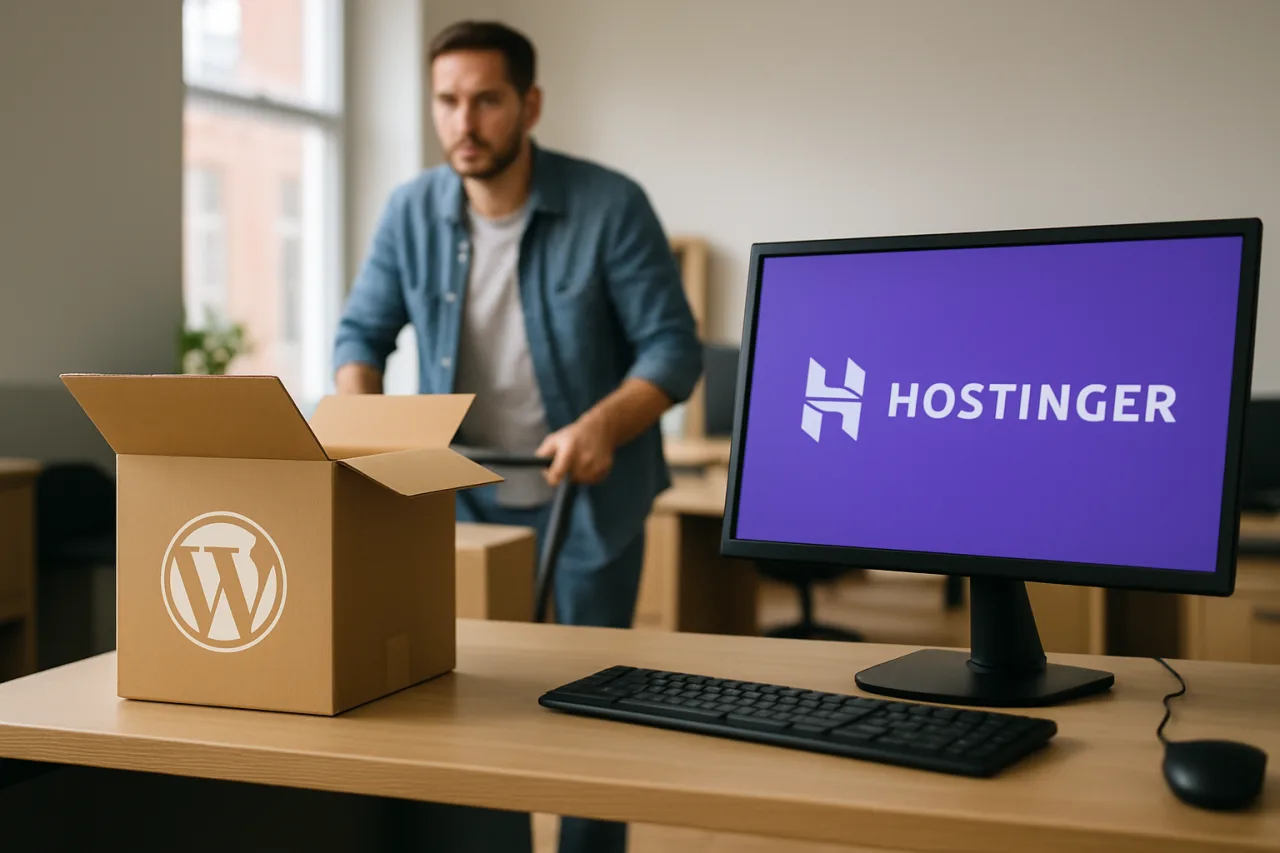
- 🚚 Free builders hold your content hostage: a WordPress migration to Hostinger takes one afternoon with the copy-paste checklist below — no rebuild, no lost posts.
- 📦 The artifact is the backup-migrate pipeline: full-site export on the old host, DNS cutover at the end, zero-downtime order of operations spelled out step by step.
- 💸 The real cost math: a $2.99/mo shared plan beats every “free” builder the day you want your data back — this guide numbers the escape.
- 🔐 Includes the two mistakes that break migrations: exporting without the uploads folder check, and switching DNS before the restore verifies clean.
- 🔗 Completes the Hostinger how-to cluster: Jellyfin, Paperless-ngx, Matrix chat — and now your website itself.
Table of Contents
WordPress migration is the escape from “free” website builders, which write the bill in an invisible currency: your content lives in their format, on their servers, under their terms — and the export button, when it exists at all, produces a mangled skeleton of what you built. WordPress on your own hosting is the opposite arrangement: the database and files are yours, any host can serve them, and moving house is an afternoon, not a negotiation. This guide walks the whole WordPress migration in one sitting — from export to DNS cutover — with the exact commands and the two traps that ruin most first migrations.
What You Need Before Starting (15 Minutes)
- Access to the old host’s file manager or FTP, and phpMyAdmin or an export button.
- A note of your WordPress version, active theme, and plugin list (a screenshot suffices).
- Your domain’s registrar login — the DNS switch is the last step, not the first.
- A Hostinger account with any plan; shared hosting from $2.99/mo moves a typical blog, KVM if you run WooCommerce.
Step 1: Export the Complete Old Site
# If phpMyAdmin is available: select your WP database → Export → Quick/SQL.
# If only SFTP: install the All-in-One WP Migration plugin on the old site
# (Plugins → Add New → search "All-in-One WP Migration") → Export → Download .wpress.
Verify before leaving: the export includes wp-content/uploads (your images), the posts table, and the plugin settings. A 5-year-old blog is typically 1-4GB; a shop, more. Note the exact PHP version the old host ran — Hostinger lets you match it, which dodges half of all plugin breakage.
Step 2: Point a Temporary Address at the New Host
Do not switch DNS yet. Hostinger gives every site a temporary preview address — restore into it first so you can verify everything clean while the live site keeps serving visitors from the old host. This is the zero-downtime order that separates a calm migration from a Sunday emergency.
Step 3: Restore on the New Host
# Hostinger hPanel: Websites → Add Website → WordPress, then:
# MySQL Databases → create DB + user, note credentials.
# Upload the .wpress via the migration plugin on a fresh WP install,
# or upload the SQL + files via File Manager for the manual path (WordPress.org documents both routes).
# Update the two URL rows if needed:
UPDATE wp_options SET option_value='https://yourdomain.com' WHERE option_name IN ('siteurl','home');
Open the temporary address and walk the checklist: homepage renders, one post opens with images, the contact form sends, the shop adds to cart (if WooCommerce), permalinks don’t 404. Fix here, not after cutover — shop migrations deserve an extra pass on payment plugins.
Step 4: The WordPress Migration DNS Cutover
At your domain registrar: replace the old host's nameservers or A record
with the new host's (hPanel shows both). TTL: set it to 300s the night
before for a fast switch.
Propagation is minutes to a couple of hours (the registrar-level mechanics are out of your control; the 300-second TTL is not). The old host keeps serving existing visitors meanwhile — that is the design. Keep the old account active for a full week as the fallback, then close it after you’ve re-exported a final backup from the old server (the last safety copy).
Step 5: Post-Migration Health Check
- Search console: verify the domain still validates; submit the sitemap.
- SSL: hPanel issues the Let’s Encrypt cert automatically on the new host — force HTTPS in WordPress settings.
- Speed: run one PageSpeed check; enable Hostinger’s LiteSpeed caching in hPanel if it flags.
- Backups: turn on the weekly schedule immediately — a migration is the best moment to start the habit the Matrix guide applies to chat and this applies to your website.
Total honest duration: export 30 minutes, restore 30-60, DNS wait, checks 30. One afternoon including coffee. The bill you escape is not just the hosting line item — it is the structural risk of a site you cannot move.
The Cost Ledger: Rent vs Own, Numbered
Run the actual math for a typical professional site. A website builder’s paid tier runs $12-25 a month forever, plus commerce fees on some plans, plus the exit cost you already know — the export that is not really an export. A Hostinger shared plan at $2.99 intro (renewing around $7-9) carries the same WordPress site with email, SSL, and backups included. First-year saving alone covers a domain; over five years the spread is $500-1,000, and the asset — a site that moves anywhere — accrues value the rented room never does. For OFW professionals running a side consultancy or a family store online, that is not a hosting decision; it is a custody decision, and this site’s whole self-hosting arc — media, documents, chat, uptime monitoring — keeps teaching the same lesson: the roof over your digital life should be one you hold the deed to.
The Two Migration Killers, Named
Killer 1: the uploads folder. SQL-only exports restore a site with broken images — media files live on disk, not the database. The .wpress route sidesteps this by packaging everything; manual movers must verify wp-content/uploads transferred with permissions intact. Killer 2: DNS before verify. Pointing the domain first means every visitor becomes your test suite. Restore on the preview address, verify, then cut — the order every WordPress migration should follow — the order that defines a professional WordPress migration. Reversing these two steps is the difference between the migration stories people laugh about and the ones they tell proudly.
What You Gain on the Other Side
The escape is not merely escapist — the destination has its own dividends. On Hostinger, a WordPress site inherits the LiteSpeed stack (server-level caching that shared plans include), one-click staging for testing theme changes, and the same hPanel that runs this site’s own chat server and password vault patterns. The deeper gain is structural: every future choice — theme, plugin, store, newsletter — happens on your terms because the exit door stays open. The builder’s “free” plan is a subscription to immobility; the self-hosted site is a subscription to leverage. After one migration, you will never again read “free website” without hearing the invoice it hides.
Frequently Asked Questions (FAQ)
- Q: Will my site go down during the move?
- No, if you follow the order: restore on Hostinger’s temporary address while the old host still serves live traffic, and only touch DNS after the preview checks pass. Downtime happens when people skip the preview step.
- Q: Do I need a plugin, or can I move files manually?
- Both work. The .wpress migration plugin is the forgiving path for first-timers; the manual SQL+files route suits larger sites and stays fully under your control. This guide’s commands cover both.
- Q: What about my email hosted at the old provider?
- Email is a separate system: set the MX records to point at your new mail provider (or Hostinger’s) after the site cutover, and migrate mailboxes with your provider’s export tools — mail does not move with the website automatically.
- Q: How much does Hostinger cost compared to staying?
- Shared plans start at $2.99/mo intro — typically cheaper than legacy host renewals, with a free domain year, SSL, and email included. The stronger argument is control: WordPress on your own plan moves anywhere, anytime.
- Q: I use a website builder, not WordPress — can I follow this?
- Builders rarely export usable content. WordPress’s open format is the reason this migration works in an afternoon — moving to WordPress first (via import tools) then hosting it yourself is the durable escape path.
Disclosure: this guide contains a Hostinger affiliate link; if you buy through it, the site earns a commission at no extra cost to you.