

Table of Contents
Key Takeaway
- 📋 Solo Parent Benefits: RA 11861 (Expanded Solo Parents Welfare Act) grants 7 days paid parental leave, 10% discount + VAT exemption on baby essentials, PhilHealth coverage, and a P1,000 monthly cash subsidy for eligible solo parents earning below minimum wage
- 🆔 Get the ID First: All benefits require a Solo Parent ID from your local MSWDO — valid 1 year, renewable. Bring barangay certificate, birth certificate of children, and income documents
- 💰 DSWD UPLIFT 2026: The DSWD’s UPLIFT program provides P2,000/month (July-December 2026) to 7.5 million low-income households — solo parents in the 4Ps and CBMS databases are automatically included, no application needed
- 🎓 Education Support: CHED and TESDA prioritize solo parents and their children for scholarships. DSWD’s AICS program also covers educational assistance for dependents of solo parents
- ⚡ Act Now: Visit your City or Municipal Social Welfare and Development Office (C/MSWDO) with complete documents. Processing takes 2-4 weeks. Solo parents earning P250,000/year or below qualify for discounts and subsidies
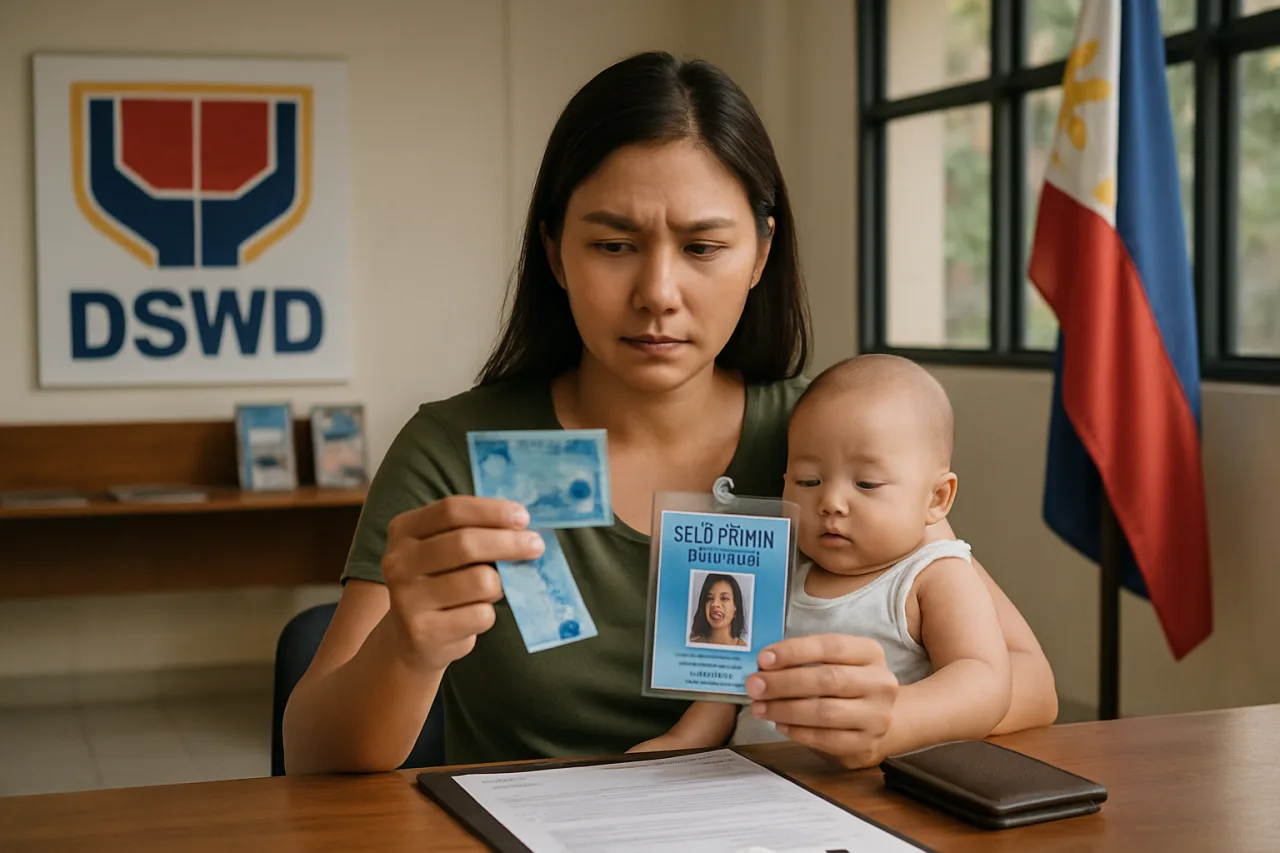
Being a solo parent in the Philippines means carrying a double load — provider and caregiver, breadwinner and homemaker, mother and father. According to data from Quezon City social services, over 60% of registered solo parents earn an average monthly income of just P7,500, well below the national average. The Expanded Solo Parents Welfare Act (Republic Act No. 11861), signed into law in June 2022, recognizes this burden and provides a framework of support — from cash subsidies to parental leave, from healthcare coverage to educational assistance. The full text of the law is available through the Philippine Commission on Women. But many solo parents remain unaware of what they are entitled to, or how to claim it.
This guide breaks down every solo parent benefits available to solo parents in the Philippines in 2026, the exact requirements for qualifying, and the step-by-step process for obtaining a Solo Parent ID — the single document that unlocks all of these programs.
Who Qualifies as a Solo Parent Under RA 11861
The Expanded Solo Parents Welfare Act broadened the definition of a solo parent beyond the traditional image of a single mother. Under RA 11861, a solo parent is anyone who assumes sole parental responsibility for a child or children due to any of the following circumstances:
- Death of a spouse — widowed parents raising children alone
- Separation or annulment — parents legally separated or whose marriage has been annulled, with custody of the child
- Abandonment — a parent whose spouse has left and provides no support
- Unmarried parent — a parent who has never been married and has sole care of the child
- Spouse is incarcerated — a parent whose spouse is serving a prison sentence of at least one year
- Spouse is medically incapacitated — a parent whose spouse has a chronic or terminal illness preventing them from providing support
- Victim of rape — a woman who becomes a parent as a result of sexual assault, as recognized under the law
Crucially, RA 11861 clarifies that a solo parent does not lose their status if the other parent provides occasional assistance or seasonal gifts that do not meet the legal threshold of support under the Family Code. This means even if the other parent sends money occasionally, you may still qualify — as long as that support does not constitute regular, legally sufficient maintenance.
The law also recognizes that the absence of a valid marriage between the mother and father of the child does not disqualify either parent from claiming solo parent status, provided they have sole parental care and support of the child.
The 7 Core Solo Parent Benefits
The solo parent benefits under RA 11861 are not abstract promises — they are specific, claimable entitlements. Here is what a Solo Parent ID unlocks:
1. Seven Days Paid Parental Leave
Solo parents who have rendered at least one year of service with their employer are entitled to seven (7) working days of paid parental leave annually. This is separate from and in addition to standard vacation and sick leave credits. The leave can be used for personal matters related to parental responsibilities — school activities, medical appointments, or family emergencies.
2. Flexible Work Arrangements
Employers are mandated to provide flexible work schedules for solo parents upon request. This can include telecommuting, compressed workweeks, staggered working hours, or reduced-hour arrangements. The law specifies that flexible work arrangements must not result in a reduction in salary or diminution of benefits. For solo parents working in the formal sector, this provision is enforceable through the Department of Labor and Employment (DOLE).
3. Monthly Cash Subsidy of P1,000
Eligible solo parent ID holders earning at or below the minimum wage may receive a monthly cash subsidy of P1,000. The DSWD has clarified that the actual amount and availability of this subsidy depends on the local government unit (LGU) — some cities and municipalities provide the full P1,000 monthly, while others provide it in lump sums. In Tapaz, Capiz, for example, 78 solo parents each received P6,000 in early 2026, covering the period of January to June 2025 at P1,000 per month. The subsidy is means-tested: only solo parents whose income falls at or below the minimum wage threshold qualify.
4. 10% Discount and VAT Exemption
Solo parents earning an annual income of P250,000 or below are entitled to a 10% discount and VAT exemption on specific purchases for children six years old and below. Covered items include:
- Baby formula and milk products
- Diapers and baby necessities
- Medicines and vaccines
- Medical and dental services
- School supplies for children in elementary
The discount is applied at the point of purchase upon presentation of the Solo Parent ID. This benefit alone can save a solo parent thousands of pesos annually on essential child-related expenses.
5. PhilHealth Coverage
Solo parents earning below the poverty threshold are automatically enrolled in PhilHealth, with premiums subsidized by the national government. This ensures that solo parents and their dependents have access to inpatient and outpatient healthcare without the financial barrier of premium payments. The PhilHealth coverage for OFWs works on a similar principle — government subsidy for those who cannot afford contributions.
6. Educational Assistance
RA 11861 mandates that solo parents and their children be prioritized for scholarship programs in basic, higher, and technical-vocational education. The Commission on Higher Education (CHED) and the Technical Education and Skills Development Authority (TESDA) both have programs that solo parents or their dependents can access. Additionally, the DSWD’s Assistance to Individuals in Crisis Situations (AICS) program covers educational assistance for dependents of solo parents — including graduating students of senior high school with a minimum general weighted average of 85%.
7. Medical Assistance and Other Support
Through the Department of Health (DOH) and local government units, solo parents can access medical assistance at provincial, district, city, and municipal hospitals, as well as rural health units. Additional support services include child-minding centers, breastfeeding facilities in the workplace, and social safety assistance during crises.
DSWD UPLIFT Program 2026: Additional Cash Assistance
Beyond the RA 11861 benefits, solo parents may also qualify for the DSWD’s UPLIFT (Unified Package for Livelihoods, Industry, Food, and Transport) program, launched under Executive Order No. 110 signed by President Marcos on March 24, 2026. UPLIFT provides cash assistance to 7.5 million low-income households across three groups:
| Group | Who Qualifies | Assistance |
|---|---|---|
| Group 1 | Current 4Ps and Walang Gutom Program beneficiaries | One-time P2,000 (already enrolled, credited to cash cards) |
| Group 2 | Poor and near-poor households in the PSA CBMS database not enrolled in 4Ps or Walang Gutom | P2,000/month from July to December 2026 (up to P12,000 total) |
| Group 3 | Low-income SSS members (MSC P20,000 or below) in the CBMS database | P2,000/month from July to December 2026 (P12,000 total, credited to SSS disbursement accounts) |
The DSWD has explicitly stated that UPLIFT does not accept applications — beneficiaries are selected from existing government databases (4Ps, CBMS, SSS records). Solo parents who are already enrolled in 4Ps or appear in the CBMS database are automatically included. For Group 3, the DSWD credits the P2,000 monthly assistance directly to the SSS member’s enrolled disbursement account — no forms, no portal, no registration window. The DSWD official website provides updates on disbursement schedules. The DSWD warns that any page offering to file your UPLIFT application for a fee is a scam.
For solo parents who are SSS members, check your status by signing in at My.SSS or calling the SSS hotline at 1455. If your Monthly Salary Credit is P20,000 or below and you appear in the 2024 CBMS data, you may already be receiving this assistance.
How to Get a Solo Parent ID: Step by Step
The Solo Parent ID is the gateway to all benefits under RA 11861. Without it, you cannot claim the discount, the subsidy, the leave, or the PhilHealth coverage. Here is the application process:
Step 1: Visit your City or Municipal Social Welfare and Development Office (C/MSWDO). This is typically located at your city or municipal hall. Some LGUs, like Quezon City, have dedicated Solo Parent Offices. Call ahead to confirm office hours and whether an appointment is needed.
Step 2: Submit the required documents. Bring the following:
- Barangay Certificate — obtain from your barangay hall, confirming your residency and solo parent status
- Birth Certificate(s) of child or children — PSA-issued copies
- Marriage Certificate (if applicable) — for widowed or separated parents, PSA-issued
- Death Certificate of spouse (if widowed) — PSA-issued
- Medical certificate of incapacity (if spouse is medically incapacitated)
- Sworn affidavit declaring solo parent status — stating you are not cohabiting with a partner and have sole parental care and support of the child or children
- Affidavit of a barangay official attesting to your residency and solo parent status
- Proof of income — latest ITR, payslip, or certificate of indigency for informal sector workers
- Valid government-issued ID
- 1×1 ID pictures (usually 2 copies)
Step 3: Attend the Solo Parents Orientation Seminar. Most LGUs require solo parent applicants to attend a brief orientation seminar covering RA 11861 benefits, available programs, and responsibilities. Some LGUs issue the Solo Parent ID at the end of the seminar; others process it within 2-4 weeks.
Step 4: Claim your Solo Parent ID. The ID is valid for one year and must be renewed annually. Renewal typically requires updated proof of income and a new barangay certificate. Keep the ID with you when claiming discounts at pharmacies, grocery stores, and medical facilities.
Income Thresholds: Who Gets Which Solo Parent Benefits
The solo parent benefits under RA 11861 are tiered by income level. Not every solo parent qualifies for every benefit:
| Income Level | Benefits Available |
|---|---|
| At or below minimum wage | All benefits: P1,000 monthly subsidy, 10% discount + VAT exemption, PhilHealth coverage, educational assistance, parental leave, flexible work, medical assistance |
| P250,000/year or below (above minimum wage) | 10% discount + VAT exemption on child essentials, parental leave, flexible work, educational assistance, medical assistance (no monthly subsidy) |
| Above P250,000/year | Parental leave, flexible work arrangements (no cash subsidy, no discount, no PhilHealth subsidy) |
This means a solo parent earning P15,000/month (P180,000/year) qualifies for the full range of benefits, including the P1,000 monthly subsidy and the 10% discount. A solo parent earning P300,000/year still gets the 7-day parental leave and flexible work arrangements, but not the cash subsidy or discount.
For OFW Solo Parents: Accessing Solo Parent Benefits from Abroad
Overseas Filipino Workers who are solo parents face a unique challenge: they are abroad while their children are in the Philippines. The solo parent benefits apply primarily within the Philippine jurisdiction, but several provisions are still accessible:
For OFW solo parents who return to the Philippines, the Solo Parent ID can be obtained at their home LGU. The OWWA benefits for OFWs operate separately from RA 11861 but can complement solo parent benefits — for example, OWWA’s education assistance programs for OFW dependents can stack with CHED’s solo parent scholarship priority. Solo parents who are SSS members working abroad may also qualify for the UPLIFT Group 3 cash assistance if their Monthly Salary Credit is P20,000 or below and they appear in the CBMS database.
For solo parents paying SSS contributions from abroad, maintaining active SSS membership is critical — it ensures eligibility not only for maternity and retirement benefits but also for government cash assistance programs like UPLIFT. The SSS, PhilHealth, and Pag-IBIG benefits guide for OFWs covers how to keep contributions active while overseas. Combining SSS membership with solo parent benefits creates a stronger financial safety net for Filipino families separated by overseas employment.
Common Mistakes That Cost Solo Parent Benefits
Many solo parents miss out on solo parent benefits simply because of avoidable errors in the application process. Here are the most common pitfalls:
Not renewing the Solo Parent ID. The ID is valid for only one year. Many solo parents get the ID once and assume it is permanent. After one year, discounts and subsidies can no longer be claimed until the ID is renewed. Set a calendar reminder for renewal 30 days before expiration.
Not bringing the ID when shopping. The 10% discount and VAT exemption are applied at the point of purchase. Without the physical ID, pharmacies and stores cannot process the discount. Keep the ID in your wallet, not at home.
Assuming the P1,000 subsidy is automatic. The DSWD has clarified that the monthly subsidy depends on LGU implementation. Some LGUs process it monthly; others release it in lump sums every six months. Check with your C/MSWDO about the disbursement schedule in your area.
Not knowing about UPLIFT. The DSWD’s UPLIFT program provides P2,000/month to qualifying low-income households, but many solo parents are unaware they may already be enrolled. If you are a 4Ps beneficiary or appear in the CBMS database, check your cash card or SSS disbursement account — the assistance may already be credited.
Not claiming the SSS solo parent maternity benefit. Solo parents who give birth are entitled to 120 days of maternity leave (105 days standard + 15 additional days for solo parents under RA 8972), as detailed in the SSS Maternity Benefit 2026 guide. Many solo parents do not claim the additional 15 days because they are unaware of the provision.
Frequently Asked Questions About Solo Parent Benefits
What is RA 11861 and what does it provide for solo parents?
RA 11861, the Expanded Solo Parents Welfare Act of 2022, provides solo parent benefits in the Philippines including seven days paid parental leave, a P1,000 monthly cash subsidy (for those earning at or below minimum wage), 10% discount and VAT exemption on child essentials, automatic PhilHealth coverage for those below the poverty threshold, educational assistance through CHED and TESDA, flexible work arrangements, and medical assistance through DOH and LGUs.
How do I apply for a Solo Parent ID in 2026?
Visit your City or Municipal Social Welfare and Development Office (C/MSWDO) with a barangay certificate, birth certificates of your children, proof of income, a sworn affidavit of solo parent status, and a valid government ID. Some LGUs require attendance at a Solo Parents Orientation Seminar. Processing takes 2-4 weeks. The ID is valid for one year and must be renewed annually.
How much is the solo parent monthly cash subsidy?
The subsidy is P1,000 per month for eligible solo parents earning at or below the minimum wage. The DSWD has clarified that the actual amount and disbursement schedule depends on the LGU — some provide it monthly, others in lump sums every six months. For example, in Tapaz, Capiz, 78 solo parents received P6,000 in one payout covering six months.
Who qualifies for the 10% discount and VAT exemption?
Solo parents earning an annual income of P250,000 or below qualify for the 10% discount and VAT exemption on baby formula, diapers, medicines, medical and dental services, and school supplies for children six years old and below. Present your Solo Parent ID at the point of purchase to claim the discount.
Can OFW solo parents claim these benefits?
OFW solo parents can claim benefits when they return to the Philippines by obtaining a Solo Parent ID at their home LGU. The benefits apply within Philippine jurisdiction. However, OFW solo parents who are SSS members with a Monthly Salary Credit of P20,000 or below may qualify for the DSWD UPLIFT program’s P2,000/month cash assistance, credited directly to their SSS disbursement account.
What is the DSWD UPLIFT program and do I need to apply?
UPLIFT (Unified Package for Livelihoods, Industry, Food, and Transport) provides P2,000/month from July to December 2026 to 7.5 million low-income households. No application is needed — beneficiaries are selected from existing government databases (4Ps, CBMS, SSS records). If you are already a 4Ps beneficiary or appear in the CBMS database, the assistance is automatically credited. The DSWD warns that any page offering to file your UPLIFT application for a fee is a scam.
Do I lose my solo parent status if the other parent sends money occasionally?
No. RA 11861 explicitly states that a solo parent does not lose their status if the other parent provides occasional assistance or seasonal gifts that do not meet the legal requirement of support under the Family Code. As long as the other parent is not providing regular, legally sufficient maintenance, you remain qualified as a solo parent.
Can I get the Solo Parent ID if I was never married?
Yes. RA 11861 recognizes unmarried parents who have sole parental care and support of their child. The absence of a valid marriage between the mother and father does not disqualify either parent from claiming solo parent benefits, provided they meet the other requirements.
Disclaimer: This article is for informational purposes only and does not constitute legal or financial advice. Benefit amounts, eligibility thresholds, and program details may change. Always verify with your local C/MSWDO or the DSWD for the most current information. See our full Disclaimer.




Hi.. IS this applicable in the Philippines? I am a single mom of 2 boys and I really need help.
Actually this article is written by our contributor from the US. This might be applicable in their area.
Hi there, i read your blog occasionally and
i own a similar one and i was just wondering
if you get a lot of spam responses? If so how do you protect
against it, any plugin or anything you can advise? I get so much lately it’s driving me insane so any support is very much appreciated.
Also visit my page :: find scholarships and grants – Candra –
I only use Akismet. BTW. Thanks for visiting my site. I am wondering if you would like to exchange link with us. see https://worldngayon.com/exchange-link-worldngayon/
Thanks
Comments are closed.