Table of Contents
Key Takeaway
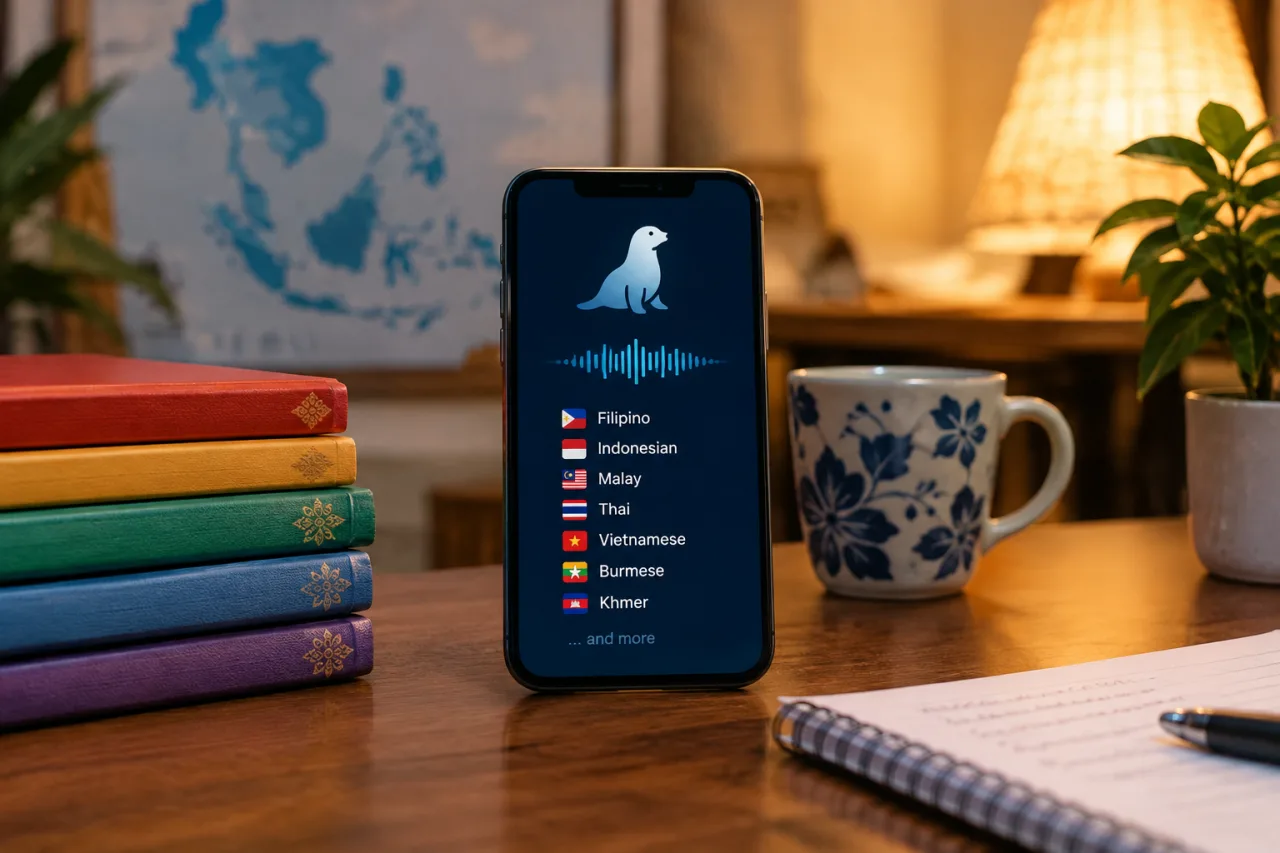
- 🦁 SEA-LION AI is the region’s own answer to Western-trained models: Southeast Asian Languages In One Network is a government-backed model family from AI Singapore that supports 13 languages, including Filipino, Javanese, Sundanese, Burmese, Khmer, and Lao.
- ⚖️ The gap it exists to fill is real: in 2026 benchmark tables on Southeast Asian languages, the top ranks for Vietnamese and Thai sit with Qwen-family open models, and no Western model makes the top five (as of the 2026 regional benchmark map).
- 🆓 It is open-weight and commercially usable: the current Llama-SEA-LION-v3.5-8B release handles reasoning and text generation with a 128K context window, ships as GGUF for local runs, and carries the Llama 3.1 Community License.
- 🧩 Indonesia added its own sibling: Sahabat-AI, built with help from AI Singapore, released a 27B model covering five Indonesian languages in October 2026.
- ✅ Tonight-action: pick a Filipino or Vietnamese question, run it through both SEA-LION AI and your default chatbot, and compare how each handles honorifics and local context.
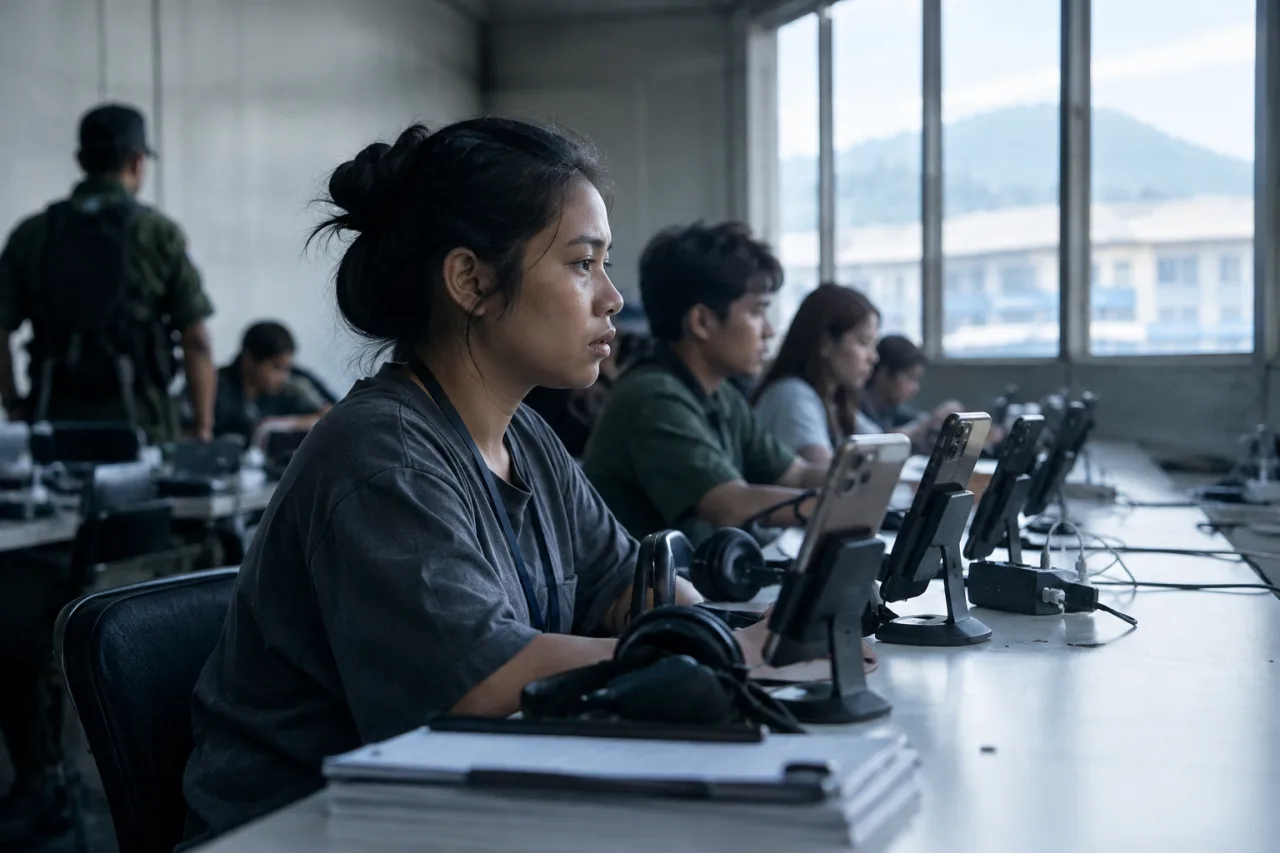
Most of the world’s leading models were mostly trained somewhere else. Ask a Western-trained AI to write a message in Filipino, Thai, or Bahasa Indonesia and it usually gets the words right, yet the register of it often drifts: honorifics flatten, local idioms go missing, and the answer reads like a translation rather than something a person from that place would actually write. SEA-LION AI was built to close that gap, and in 2026 it has quietly become the region’s most complete open attempt to do so.
SEA-LION AI is a family of large language models developed by AI Singapore, the national AI programme funded through the National Research Foundation, and it is trained and evaluated explicitly for Southeast Asian languages. The name decodes simply: Southeast Asian Languages In One Network. The scale of the problem it addresses is easy to forget. The region speaks hundreds of Southeast Asian languages across 11 countries, and the most-used global models allocate the smallest share of their training data to exactly those.
Why Southeast Asian Languages Break Western AI Models
The structural problem is data volume. Low-resource Southeast Asian languages enter a model’s training set in tiny quantities against English or Chinese, and the model compensates with patterns that are close but wrong: a Thai response missing the polite particle a real speaker adds, a Filipino answer that ignores the “po” and “opo” markers that carry respect, an Indonesian business email written at the wrong formality level.
AI Singapore measured this gap publicly. Its SEA-HELM benchmark for Southeast Asian language evaluation, tests question answering, sentiment, toxicity detection, translation, summarisation, reasoning, and natural language inference across the region’s languages, and publishes the results for every model it evaluates. Independent 2026 benchmark maps built on those tables reach one blunt conclusion: for Vietnamese, every top-five scorer is a Chinese or regional open model, and no Western model appears in the 2026 regional benchmark map’s Vietnamese top five; the Thai leaderboards tell the same story (as of the 2026 map).
Cultural context is the second failure mode, and it is harder to quantify. The team behind the regional model describes its advantage plainly: beyond translation quality, the model understands where a speaker is coming from, whether that is Thailand or Indonesia. A phrase that is respectful in Jakarta can read stiff or rude in Bangkok. The systems that rank well on SEA-HELM are the ones that learned those differences from regional data instead of inferring them from translation corpora alone.
This is also why the race for regional language models moved in 2026. The capability exists now on both sides: Qwen’s open models score highest in several regional benchmarks on pure numbers, while the region’s own models compete on cultural fit, local hosting, and commercial licensing. Filipino readers feeling the difference should start by reading our plain-English AI glossary for the vocabulary the rest of this article uses.
What SEA-LION AI Is and Who Built It
AI Singapore launched the programme to build national capability rather than to sell a product. The first model family arrived in August 2023, pretrained on regional languages, and the team presented it as a deliberate correction: a Southeast Asian model trained to represent Southeast Asians, with eleven languages documented in its earliest public coverage.
The lineage since then: the first generation served as proof of concept. The v3 generation rebuilt on top of Meta’s Llama 3.1 architecture, using continued pre-training on regional data, followed by instruction tuning in English, Indonesian, Javanese, Sundanese, Tamil, Thai, and Vietnamese for the 70B instruct model, as stamped on the Hugging Face card dated April 2025. The current generation, SEA-LION AI v3.5, went further still: its 8B model is a hybrid system that handles reasoning tasks and ordinary text generation in one model, and its training pipeline included 1.5 million reasoning traces distilled from DeepSeek-R1 across Southeast Asian languages, per the development team’s own model documentation.
The programme sits inside Singapore’s National AI Strategy 2.0 and showcased its latest releases at the ATxSingapore summit in May 2026. What began as a national project has become the ecosystem’s backbone: regional partners, including Indonesia’s national champions, build on its data pipelines and evaluation infrastructure.
The 13 Southeast Asian Languages in the Current Lineup
The current model documentation lists thirteen supported Southeast Asian languages on the latest hybrid 8B release (as of the 2026 model card):
| Language | Status in the region | Why it matters |
|---|---|---|
| Filipino (Tagalog) | National language of the Philippines | Instruct-tuned; second-largest diaspora market |
| Indonesian | Deepest regional training data | Deepest SEA training data; instruct-tuned |
| Thai | Polite-particle register is hard for global models | Polite-particle register is hard for global models |
| Vietnamese | Strongest benchmark coverage in regional tables | Benchmark leader among regional languages |
| Javanese | Largest regional language of Indonesia | Low-resource; levels of speech (krama) carry respect |
| Sundanese | Distinct speech register from Indonesian | Low-resource; regional-level inclusion |
| Malay | Official in Malaysia, Singapore, Brunei | Close to Indonesian but a distinct register |
| Tamil | Covers Singapore and Malaysian Tamil communities | Instruct-tuned; minority-language inclusion |
| Burmese | Complex script segmentation | Low-resource; script segmentation is hard |
| Khmer | Script without inter-word spaces | Low-resource; no widely-used space between words |
| Lao | Script sibling to Thai | Low-resource; sibling script to Thai |
| Chinese and English | Global lingua francas | Base-model foundation languages |
Read the table with two eyes on the market map. The instruct-tuned headline languages, Filipino, Indonesian, Thai, Vietnamese, Tamil, cover the region’s biggest commercial demand. The inclusion of Javanese, Sundanese, Burmese, Khmer, and Lao is the more unusual commitment: those languages barely register in global model training and are precisely where Western chatbots fail hardest. For a Cambodian user, a model that parses Khmer without word spacing is infrastructure, not a feature list.
One caution on the figures: the population counts above are market-size context, while the exact coverage level per language varies by release and is documented on each model card, so check the card for the version you deploy. What does not vary is the principle: the language list was chosen from regional data realities, not from a marketing tier list.
SEA-LION AI Models Available Today and Their Licenses
Three families matter for anyone deploying this year (all details from AI Singapore’s published model documentation, as of November 2026):
- Llama-SEA-LION-v3.5-8B (hybrid reasoning and generation). The current workhorse: reasoning mode and text-generation mode in one model, selected through the chat template; 128K context window; GGUF release for local hardware; instruction tuning across English and the regional languages listed above.
- Llama-SEA-LION-v3 8B and 70B instruct models. The broader 70B instruct release remains the documented benchmark reference, with instruction tuning in English, Indonesian, Javanese, Sundanese, Tamil, Thai, and Vietnamese (card dated April 2025).
- The SEA-LION-Embedding suite. Released March 2026, built on ModernBERT in 300M and 600M sizes, positioning the ecosystem for regional search and retrieval rather than chat alone; tested on regional retrieval sets and documented in the project repository.
The license story is practical news for builders. The instruct models carry Meta’s Llama 3.1 Community License, while the project’s research paper documents the models as fully open-source and available for commercial use. For comparison of what those terms actually permit, our explainer on who owns AI content under the law and platform rules covers how license choices shape commercial deployments. The short version: regional developers can self-host, fine-tune, and build products on it today, with the license conditions Meta’s community license attaches.
Singapore’s government context helps adoption too: the model family feeds public-sector productivity projects, and the 2026 summit recap shows partnerships expanding across industry and government. The team’s framing stayed consistent throughout: open platforms to benefit Singapore and the wider region, not a closed national product.
How SEA-LION AI Compares in the 2026 Benchmarks
The leaderboard picture first: SEA-LION AI is not the top scorer on every regional benchmark. The 2026 benchmark maps show Qwen-family open models leading several SEA-HELM tables, including Vietnamese and Thai, and no Western model in the Vietnamese top five. A reader choosing a model needs that whole picture, not a home-team cheer.
The comparison runs on three axes:
- Raw benchmark scores: Qwen’s frontier open models currently score highest on several regional tasks (as of the 2026 benchmark map). If your priority is maximum accuracy on benchmarked tasks and you can operate an open model at that scale, they are hard to beat today.
- Regional cultural fit and dedicated coverage: the regional family covers low-resource Southeast Asian languages the bigger labs largely skip: Javanese, Sundanese, Burmese, Khmer, and Lao sit in the language list as first-class supported languages. Benchmarks measure a few Southeast Asian languages deeply; cultural fit shows up in the responses that benchmarks never ask.
- Evaluation transparency: the ecosystem publishes its own test suite, SEA-HELM, covering question answering, translation both directions, sentiment, toxicity, summarisation, causal reasoning, and natural-language inference across regional languages (documented on arXiv since 2025). Few competitors publish equivalent regional evaluations, which makes third-party verification genuinely useful.
The sibling project proves the ecosystem’s reach. Sahabat-AI, the Indonesian open-source model family initiated by GoTo and Indosat Ooredoo Hutchison with development support from AI Singapore, released a 27B model covering five Indonesian languages including Javanese and Sundanese in October 2026. Indonesia is effectively running its own variant of the same play: national stakeholders building an open model on shared regional infrastructure, aimed at Southeast Asian languages the global labs treat as an afterthought.
How to Try SEA-LION AI Today
Three doors are open, and all three are documented in the project’s public repositories (steps as of November 2026):
- Hugging Face weights: the model cards publish everything from 8B to the 70B instruct models, with loading snippets for the standard tooling.
- OpenAI-compatible API: the embedding-suite documentation shows a client configured to the project’s endpoint, which means any tool that speaks the OpenAI API format can point at it. That is the low-effort route for a small team.
- Local GGUF run: the hybrid 8B model ships GGUF weights for consumer hardware, which covers the privacy-sensitive use cases: a law office or clinic that cannot send client text to a foreign API has a local option that still answers in Filipino or Bahasa.
Here is the copy-paste test that shows the difference in one minute:
Test prompt (plain text into any chat interface):
Write a short birthday message to [name], who is your [role: e.g. aunt],
in [language: e.g. Filipino]. Match how a real person from that place
texts a family elder: warm, respectful, natural. No translationese.
A worked example with the same input an OFW in Riyadh would type: name “Nanay Lita,” role “mother,” language “Filipino.” Run it on your default global chatbot and then on the regional model, then read both aloud. The global output often lands grammatically correct but tonally off, using formal constructions a real text to a Filipino mother never uses. The regional output tends to place the respect markers where an actual speaker puts them. That register gap, small as it looks on one message, is exactly what breaks customer service bots, public-sector hotlines, and content localization at scale, per the regional team’s own account of the honorific differences between Thai and Indonesian contexts.
If you are wiring models into a toolchain instead of a chat window, our guide to what each MCP server does and how to add one safely covers the plumbing that connects models like these to your daily tools.
Where SEA-LION AI Still Falls Short
The development team publishes its limitations prominently, and three matter for deployment decisions (per the project’s own model documentation, as of November 2026):
- Hallucination and reasoning consistency. The card warns the model “can hallucinate and occasionally generates irrelevant content,” with reasoning steps that can be inconsistent. Validating responses remains your job.
- No safety alignment out of the box. The models ship with the explicit statement that they have not been aligned for safety, and developers must add their own fine-tuning and safeguards before public deployment. Any customer-facing rollout needs that layer.
- Compute asymmetry. Regional organisations compete against labs with far larger GPU fleets. That shows up in leaderboard movement: bigger open models can leapfrog between releases. The mitigation is deployment strategy, choosing the regional model for languages and use cases where its coverage matters more than generic scale.
Put plainly for each reader: use SEA-LION AI where regional language quality, licensing freedom, or local hosting decides the deal, and use the largest open models where benchmark-topping accuracy on well-resourced languages matters more. Most serious teams in this region will run both, and pick per task.
Recommendations: What To Do With This
Test in your own language first. The one-minute comparison above is the entire deployment case in miniature. If the regional model writes Southeast Asian languages the way your colleagues actually speak them, you have your answer.
If you build products, start with the API door. The OpenAI-compatible endpoint means integrating the regional family into an existing stack is configuration, not engineering. Graduate to self-hosting once volume makes it cheaper than API billing.
If you deploy to the public, budget for the safety layer. The models’ own documentation is explicit: safety alignment is the deployer’s responsibility. Treat that as a build item, not a footnote.
Watch the sibling projects. Sahabat-AI’s October 2026 expansion shows the approach spreading. Each new national model family strengthens the shared data and evaluation infrastructure the whole region’s language AI runs on, and the next expansions are likelier to come from Thailand and Vietnam, whose benchmark numbers already prove the capability exists there.
The longer arc is worth naming plainly too. The region that speaks 13 languages through its own open models is no longer waiting for global labs to notice it. The 2026 benchmark tables already show regional and Chinese open models out-ranking Western systems on the region’s own evaluation suites, and each new release moves engineering talent, datasets, and evaluation infrastructure permanently inside the region.
FAQ
What does SEA-LION AI stand for?
Southeast Asian Languages In One Network. It is the name for the family of large language models developed by AI Singapore, pretrained and instruct-tuned for Southeast Asian languages, and documented openly in the project’s research paper and model hubs.
Which languages does SEA-LION AI support?
The current hybrid 8B release lists thirteen supported languages: Burmese, Chinese, English, Filipino, Indonesian, Javanese, Khmer, Lao, Malay, Sundanese, Tamil, Thai, and Vietnamese, per the development team’s 2026 model card. Instruct-tuning depth varies by generation: the 70B instruct model lists English, Indonesian, Javanese, Sundanese, Tamil, Thai, and Vietnamese.
Is SEA-LION AI free to use commercially?
The research documentation describes the models as fully open-source and available for commercial use, with the released instruct models carrying Meta’s Llama 3.1 Community License. Practical rule: read the specific license on the specific model card you deploy, because terms can differ between releases and between base and instruct versions.
How does SEA-LION AI compare to ChatGPT?
On global English and general tasks, frontier commercial systems from the large labs remain ahead. On Southeast Asian languages and cultural fit, the regional family competes where the global systems are weakest: 2026 regional benchmark tables show Chinese and regional open models, not Western ones, at the top for languages like Vietnamese. Choose per task rather than per brand.
Can SEA-LION AI run on my own computer?
Yes, within limits: the hybrid 8B model ships GGUF weights designed for consumer hardware and supports 128K context windows. The 70B instruct model needs a workstation-class or server setup. Small teams should start with the hosted API configuration and move to local runs when privacy or cost justifies it.
Who is behind SEA-LION AI?
AI Singapore, the national AI programme supported through Singapore’s National AI Strategy 2.0, with partners across the region. Indonesia’s Sahabat-AI, initiated by GoTo and Indosat Ooredoo Hutchison, was developed with support from the same ecosystem, and its October 2026 release added a 27B model for five Indonesian languages.
- Research arxiv.org/abs/2502.14301 — SEA-HELM benchmark for Southeast Asian language evaluation
- digitalinasia.com/llm-benchmarks-asian-languages-tour
- context.news/ai/singapore-builds-ai-model-to-represent-southeast-asia… — its earliest public coverage
- huggingface.co/aisingapore/Llama-SEA-LION-v3-70B-IT
- github.com/aisingapore/sealion/blob/main/models/sea-lion-v3.5/llama-s… — per the development team’s own model documentation
- sea-lion.ai/blog/ai-singapore-at-atxsingapore-2026-a-full-recap — ATxSingapore summit in May 2026
- github.com/aisingapore/sealion — Released March 2026
- Official comp-eng.binus.ac.id/2026/10/14/sahabat-ai-indonesias-own-ai-that-spe…
- Research arxiv.org/abs/2504.05747 — fully open-source and available for commercial use
External sources linked in this article, in order of first mention. Spotted an error or a broken link? Tell us.
Cite this pagePublished Nov 12, 2026
Agron, E. (2026, November 12). SEA-LION: The AI Model Built to Speak Southeast Asian Languages. WorldNgayon. https://worldngayon.com/sea-lion-ai-southeast-asian-languages/
Agron, Edmon. “SEA-LION: The AI Model Built to Speak Southeast Asian Languages.” WorldNgayon, 12 Nov. 2026, worldngayon.com/sea-lion-ai-southeast-asian-languages/.
Agron, Edmon. “SEA-LION: The AI Model Built to Speak Southeast Asian Languages.” WorldNgayon, November 12, 2026. https://worldngayon.com/sea-lion-ai-southeast-asian-languages/.
Agron, E. (2026) ‘SEA-LION: The AI Model Built to Speak Southeast Asian Languages’, WorldNgayon, 12 November. Available at: https://worldngayon.com/sea-lion-ai-southeast-asian-languages/.
E. Agron, “SEA-LION: The AI Model Built to Speak Southeast Asian Languages,” WorldNgayon, Nov. 12, 2026. [Online]. Available: https://worldngayon.com/sea-lion-ai-southeast-asian-languages/
@online{agron2026sealion,
  author       = {Agron, Edmon},
  title        = {{SEA-LION: The AI Model Built to Speak Southeast Asian Languages}},
  year         = {2026},
  date         = {2026-11-12},
  organization = {WorldNgayon},
  url          = {https://worldngayon.com/sea-lion-ai-southeast-asian-languages/},
  urldate      = {}
}TY - ELEC AU - Agron, Edmon TI - SEA-LION: The AI Model Built to Speak Southeast Asian Languages T2 - WorldNgayon PY - 2026 DA - 2026/11/12/ UR - https://worldngayon.com/sea-lion-ai-southeast-asian-languages/ Y2 - ER -
Cite the version you read; the page may be updated. Zotero and Mendeley can also import this page directly.