Table of Contents
Key Takeaway
- 📈 The adoption curve is real: 66% of US small businesses now use AI, up from 55% a year ago — but 70% of owners admit they need more training to use it well (Thryv’s 2026 AI and Small Business Adoption Survey).
- 🧮 Cost is knowable before you buy: a working AI for small business stack can run on free accounts, one paid plan at $17-20 a month, or a $0-subscription local setup on hardware you already own — the free route is the entry point of AI for small business.
- ⏱️ Start with the boring work: drafting replies, summarizing documents, listing products and rewriting web copy — the tasks owners most often hand to AI first, because verifying them is easy.
- 🚫 Some work never goes in: customer personal data, your books and tax filings, contracts and hiring decisions stay human — the mistakes there cost more than the hours AI saves.
- 📊 Measure it or lose it: log the baseline hours one week, recheck after 30 days, and cut any tool whose saved time does not beat its price and its verification cost.
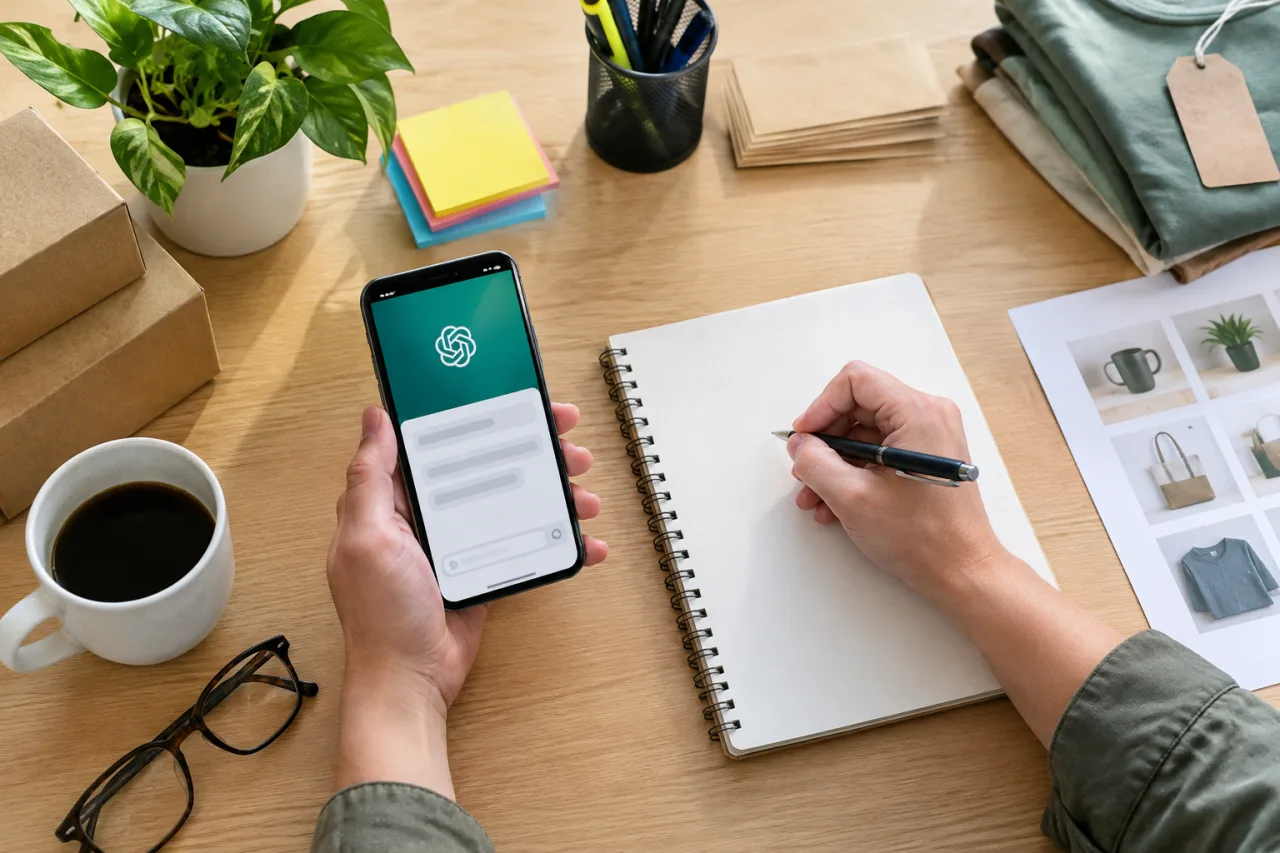
The vendor-neutral playbook of AI for small business, updated November 2026:
Every small-business owner has heard two opposite stories about AI: it replaces a hire, or it is an expensive toy. The verified middle ground is thinner and more useful than either. Adoption surveys now measure what owners actually do, pricing pages state what access actually costs, and the failure modes are documented well enough to plan around. This guide is the vendor-neutral version of how to bring AI into a small business: what it does well, what it costs by real price lists, a first-week setup you can run yourself, and the work you should never hand over. Where a vendor page would promise you a transformation, this one insists you check the math.
What the Adoption Numbers Say
The cleanest current source is Thryv’s 2026 AI and Small Business Adoption Survey, released through Business Wire: AI adoption among US small businesses has risen to 66%, up from 55% a year ago, while 70% of owners admit they need more training to use the technology effectively. Coverage of the same survey reports that owners most often name cost and time savings as the concrete benefits they see. Read those two facts together and the real state of the market appears: most owners are already trying AI, most are saving or spending real money on it, and most are doing it without the training that decides whether the tool pays for itself.
That gap is the strategy for AI for small business training. The technology is not a software purchase — it is a set of work practices with a price tag on each one. The sections below treat each practice as something you can measure: what the task costs today, what the AI-assisted version costs, and what could go wrong if the output ships without a check. An owner who runs those three lines on even two tasks knows within a month whether the technology earns its shelf space.
What AI Does Well in a Small Business — and What It Does Not
Start where the verification is cheap. AI drafting is the strongest fit: customer replies, product descriptions, social captions, follow-up emails and translated messages — tasks where you or a staff member can proofread in a minute and the cost of a weak sentence is low. Summarizing is second: contracts’ plain-English summaries, long supplier emails, review clusters and meeting notes become usable in one pass. Third is the writing-adjacent production work — product listings, image descriptions, web-page copy drafts — where tools generate several variants and you pick and polish one. If you also ship designs or content commercially, the rights around AI-generated assets matter before you sell them; our guide on selling AI art legally covers the platform rules, and the print-on-demand beginner guide shows the production path.
The line to hold is judgment work — and it is the operating rule of AI for small business: verify where the failure is cheap, hold where it is expensive. An AI assistant has no view of your full books, your supplier relationships or your obligations, and the pattern-matching that makes it fluent also makes it confidently wrong. Bank reconciliations, tax filings, staff discipline, pricing structures and customer disputes belong to a human with accountability — use AI to prepare the numbers or the draft email about them, never to close them. That rule alone keeps most of the downside out of the picture.
What It Really Costs: the Honest Math
The question behind every AI for small business pitch is monthly cost; here is the verified answer:
| Route | Cost | What you get |
|---|---|---|
| Free accounts (ChatGPT Free, Gemini Free, Claude Free) | $0 | Chat, search, files, image and doc features on the entry tiers — enough for drafting and summarizing to start |
| One paid assistant | Claude Pro $17/mo billed annually or $20 monthly; higher tiers from $100/mo; ChatGPT’s Go, Plus, Pro and Business tiers also exist, with Business from 2 seats | Higher usage limits, task scheduling and team features for one or few users |
| Local open-source setup | $0 subscription — hardware you own | Private AI on your own laptop or desktop; no per-seat fees, data stays in-house |
The prices above were verified on live pricing pages in November 2026 — Claude’s tiers come straight from Anthropic’s pricing page, and the plan names from OpenAI’s — and prices move quarter to quarter, so re-check before you subscribe. For an owner pricing AI for small business in 2026, that table is the honest summary. The math that decides the purchase is hourly, not monthly. If you and one helper each save four hours a week on drafts and summaries — roughly the kind of time saving owners report, subject to your own verification — and your working hour is worth even the local minimum for your market, the saved time clears a $20 subscription many times over. If, after a month, the tool has saved two hours and cost $20 plus the time you spent checking its output, the honest answer is that this tool has not earned its seat yet. The local-LLM setup guide and the local-versus-cloud cost comparison cover the $0-subscription route for price-sensitive or privacy-sensitive owners, including the break-even math.
The First-Week Setup That Works
AI for small business earns its seat one task at a time, in this order:
- Pick one repetitive task. The best starter is a customer-reply or product-description task you do weekly, with a clear “done” standard — not your books, not your website redesign.
- Open one free account and run that task for three days. Keep a simple count: minutes spent, minutes saved, and every output you had to fix.
- Write two reusable prompts. Tone, format, length, prohibited words — saved so any staff member produces the same result. This is the training the 70% say they never got, in miniature.
- Name the checker. One person signs off on anything customer-facing before it ships — the rule that keeps a confident wrong answer from reaching a buyer.
- Set the data rule. No customer names, no addresses, no ID numbers, no account details into a general AI tool. If a task needs your data, use an enterprise tier or a local setup.
- Add one paid feature only when the count proves it. Subscribe when saved hours beat the price two months in a row — not the day after the first good result.
- Log the baseline before you scale. Hours per task today, hours per task after a month. That ratio, not the demo, decides what spreads to the rest of the shop.
What Never to Hand an AI Assistant
Four categories stay human-controlled in almost every small business. Customer personal data: uploading names with account details into a general chatbot creates a data-protection problem that outlasts any time saving. Financial filings and reconciliations: AI can summarize a receipt or draft a letter to your accountant, but the filing decision carries liability no language model can hold. Legal instruments: contracts, refunds with policy exceptions, employment paperwork — AI drafts are a starting text for a human who owns the consequence. And anything resembling hiring or evaluating staff: the pattern a model learned from other industries does not know your team, and the legal exposure is real. Owners who hold these lines get the upside — speed on the volume work — without the tail risk, and that discipline is what makes AI for small business safe to keep.
How to Tell If AI Is Actually Saving You Money
The AI-for-small-business measurement is one table. Task, hours per week before AI, hours after, monthly subscription cost, and a value per hour you are confident in. A tool pulling its weight shows saved hours valued above its cost plus roughly the same again for checking time. A tool that cannot clear that bar after two full months is not a strategy failure — it is a signal to downgrade to the free tier, switch tasks, or cut it. This is also where the training gap from the survey closes: the owner who measures monthly learns, in ordinary arithmetic, what AI can and cannot do inside their own four walls — knowledge no vendor demo provides.
The Filipino Small-Business Reality
The AI-for-small-business playbook is identical in any currency. Filipino-run shops face the same two facts — the tools are cheap, the training gap is real — with one addition: many of the buyers and sellers sit across borders. An online seller in Cebu, a catering service in Dubai serving OFW clients, and a sari-sari store owner growing into a marketplace stall all need the same starter stack: one assistant for drafting listings and replies, one table of measured hours, and one data rule. Where the business sells AI-assisted creative work, the ownership rules come first — check our guide to who owns AI content before you invoice anything a client may claim exclusively. Cross-border sellers already juggling scam-aware marketplaces know the verify-before-you-pay habit; the same habit protects every AI-generated claim before it reaches a customer. None of this needs a foreign invoice cycle — a phone, a free account and a one-page measurement table start the same way in any currency.
FAQ
How much does AI for small business cost?
The entry cost is zero — every major assistant runs a free tier. A paid plan for one user typically lands between $17 and $20 per month (Claude Pro, verified on the live pricing page in November 2026), with higher-usage tiers from $100 monthly and team plans priced per seat. A local open-source setup removes the subscription entirely if you own suitable hardware.
Is AI worth it for a small business?
When the measured hours beat the price plus checking time, yes — and that test is exactly why you measure before subscribing. The survey data shows most small businesses already use AI; the same data warns that most owners feel undertrained, which is the real variable in AI for small business — the training, not the software.
What should a small business use AI for first?
Repetitive writing: customer replies, product descriptions, follow-up emails and summarized documents. These tasks have cheap verification — one read-through — which is what makes them the safe starting set before anything customer-facing gets automated.
Can I use free AI tools for my business?
Yes — free tools are the entry point of AI for small business, and they cover the starter workloads: drafting, summarizing, translating and listing. The free tiers cover the same core chat and file features with usage limits. Move to a paid plan only when measured saved hours outrun the price two months running.
Is it safe to give an AI chatbot my business data?
General consumer tools are the wrong home for customer records, employee files or account numbers. Keep such data out, or use a business tier with the right controls — and if privacy is the deciding factor, a local setup keeps the data on your own machine.
Will AI replace my staff?
The verified usage pattern says the opposite for most small teams: AI absorbs the repetitive writing and summarizing that staff never had time to hate, freeing the judgment work people are actually for. The hiring risk from AI is a scaling question, not a first-week question.
How do I train my staff to use AI tools safely?
With two documents and one habit: two saved prompts with your tone and format rules, the data rule that bans personal records from general chatbots, and the habit of a named check before anything ships. That closes most of the training gap the national survey found in an afternoon.
Prices and plan features verified November 2026 on the providers’ live pricing pages and change without notice — reconfirm before subscribing. This article is informational and is not financial or legal advice.
Sources and Further Reading
- Thryv — “2026 AI and Small Business Adoption Survey” (via Business Wire)
- Chain Store Age — coverage of the same survey: cost and time savings named top AI benefits
- Anthropic — Claude pricing page (verified November 2026)
- OpenAI — ChatGPT pricing page: Free, Go, Plus, Pro and Business plans
Cite this pagePublished Nov 11, 2026
Agron, E. (2026, November 11). AI for Small Business: What It Really Costs and What It Saves. WorldNgayon. https://worldngayon.com/ai-for-small-business-guide/
Agron, Edmon. “AI for Small Business: What It Really Costs and What It Saves.” WorldNgayon, 11 Nov. 2026, worldngayon.com/ai-for-small-business-guide/.
Agron, Edmon. “AI for Small Business: What It Really Costs and What It Saves.” WorldNgayon, November 11, 2026. https://worldngayon.com/ai-for-small-business-guide/.
Agron, E. (2026) ‘AI for Small Business: What It Really Costs and What It Saves’, WorldNgayon, 11 November. Available at: https://worldngayon.com/ai-for-small-business-guide/.
E. Agron, “AI for Small Business: What It Really Costs and What It Saves,” WorldNgayon, Nov. 11, 2026. [Online]. Available: https://worldngayon.com/ai-for-small-business-guide/
@online{agron2026aifor,
  author       = {Agron, Edmon},
  title        = {{AI for Small Business: What It Really Costs and What It Saves}},
  year         = {2026},
  date         = {2026-11-11},
  organization = {WorldNgayon},
  url          = {https://worldngayon.com/ai-for-small-business-guide/},
  urldate      = {}
}TY - ELEC AU - Agron, Edmon TI - AI for Small Business: What It Really Costs and What It Saves T2 - WorldNgayon PY - 2026 DA - 2026/11/11/ UR - https://worldngayon.com/ai-for-small-business-guide/ Y2 - ER -
Cite the version you read; the page may be updated. Zotero and Mendeley can also import this page directly.